Cybersecurity & Tech · World 02
Read the signal.Understand the system.
A field guide to digital trust: how infrastructure, identity and human decisions create both resilience and attack paths.

trust.boundary Every connection creates an assumption.
evidence.trace A claim becomes useful when its source remains visible.
operator.state Curiosity is a control surface.
Orientation · trust is the shared centre
Four proven ways into one connected system.
These are current editorial groupings, not a frozen taxonomy. Enter through the question that matches your intent.
Signature Artifact · Cyber / Learning
Linux Learning Console
Learn to read what a system tells you. Linux Basics provides ten guided lessons in English, Dutch and French without embedding the learning runtime inside this Hub.
Enter Linux Basicsstudent@darja:~$ whoami
studentstudent@darja:~$ pwd
/home/studentstudent@darja:~$ inspect –signal
STATUS · READY TO LEARN
Featured Intelligence
Three dossiers that explain the world.
A small curated set remains stable enough to represent Cyber. Recent work has its own bounded index below.

How cybersecurity shapes the modern world
Risk, dependence and defence as a system rather than a collection of tools.
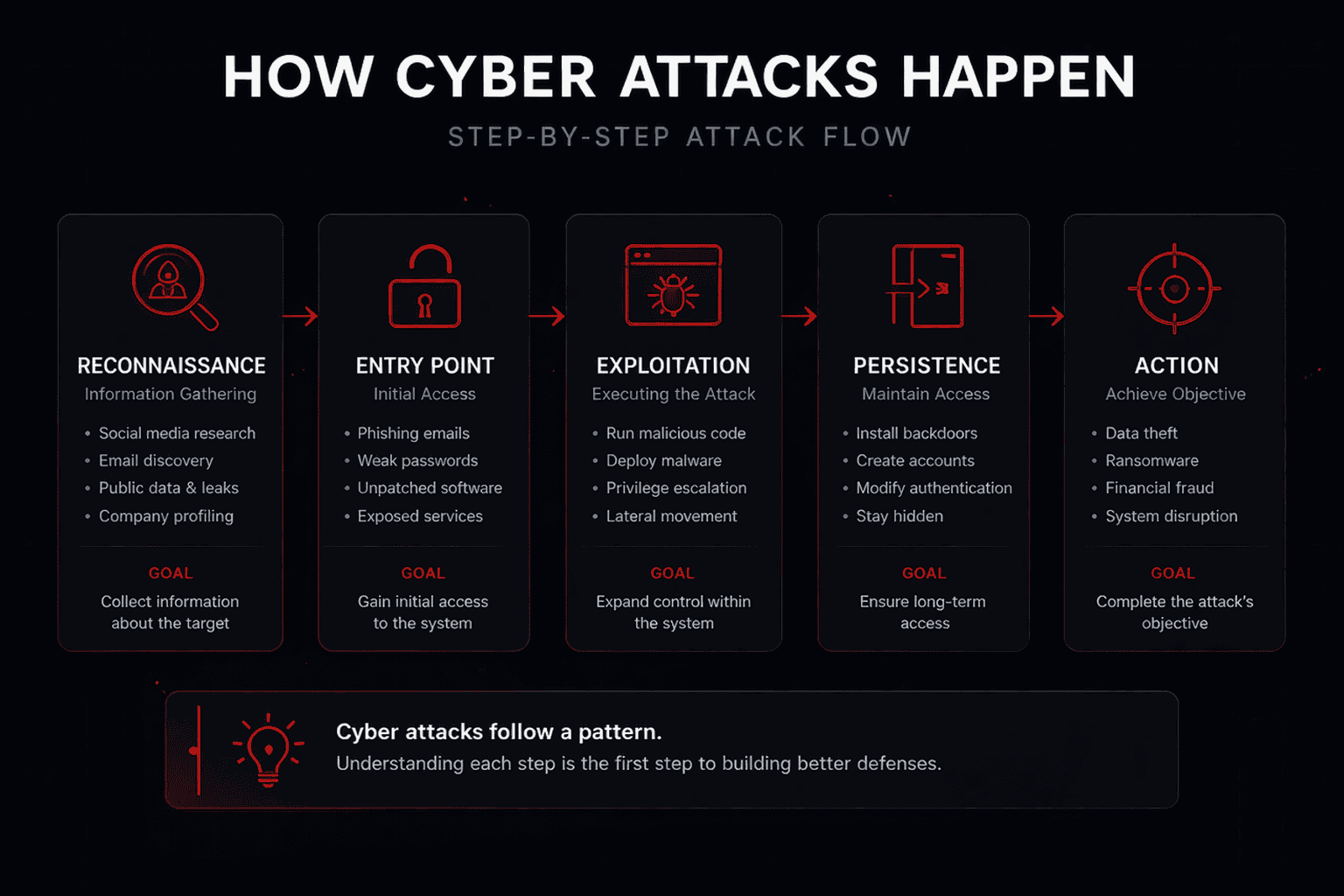 ATTACK PATH · DOSSIER 02
How cyber attacks happen
From an opening to impact, without the mythology.
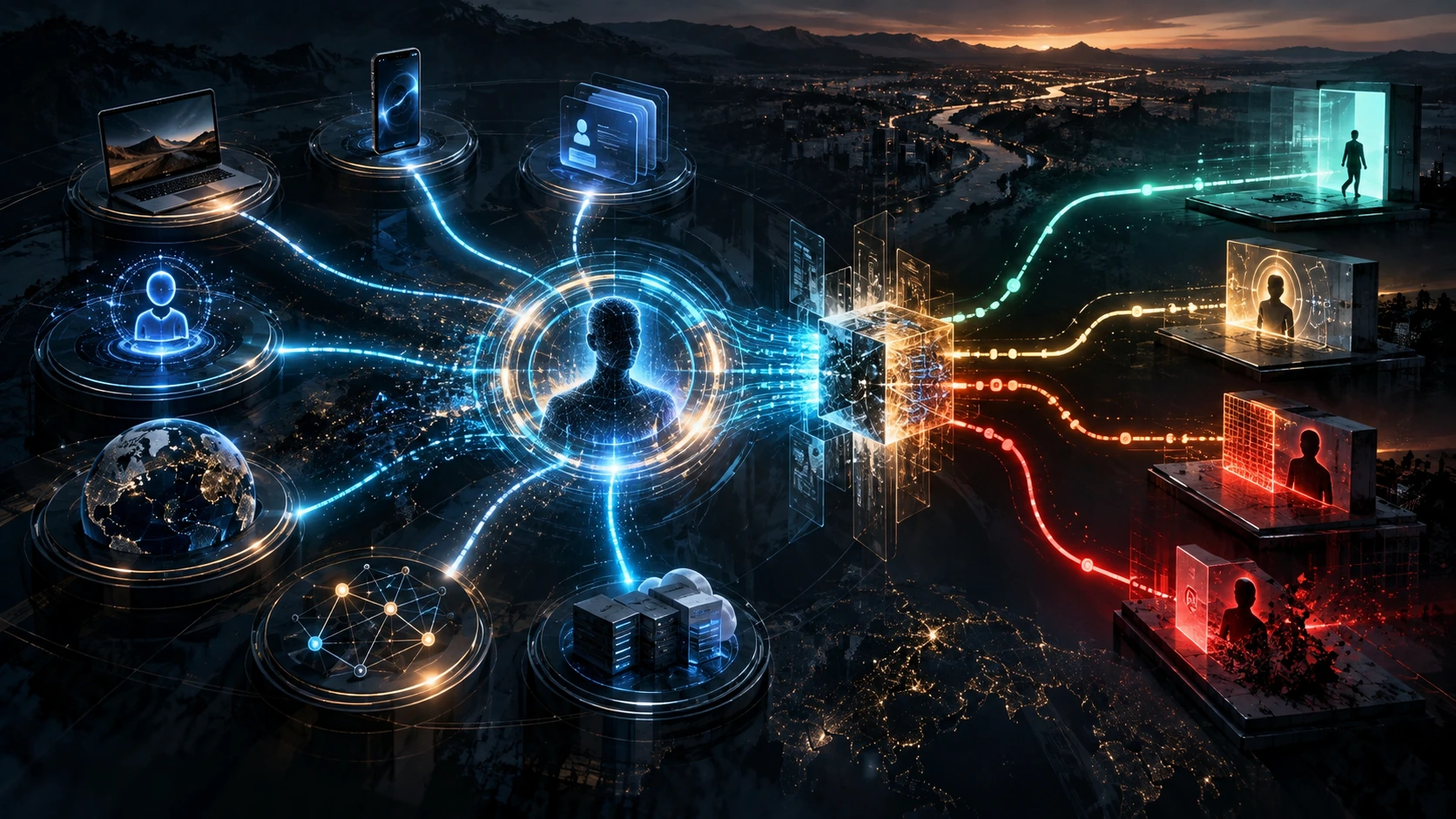 IDENTITY & ACCESS · LIVING DOSSIER 01
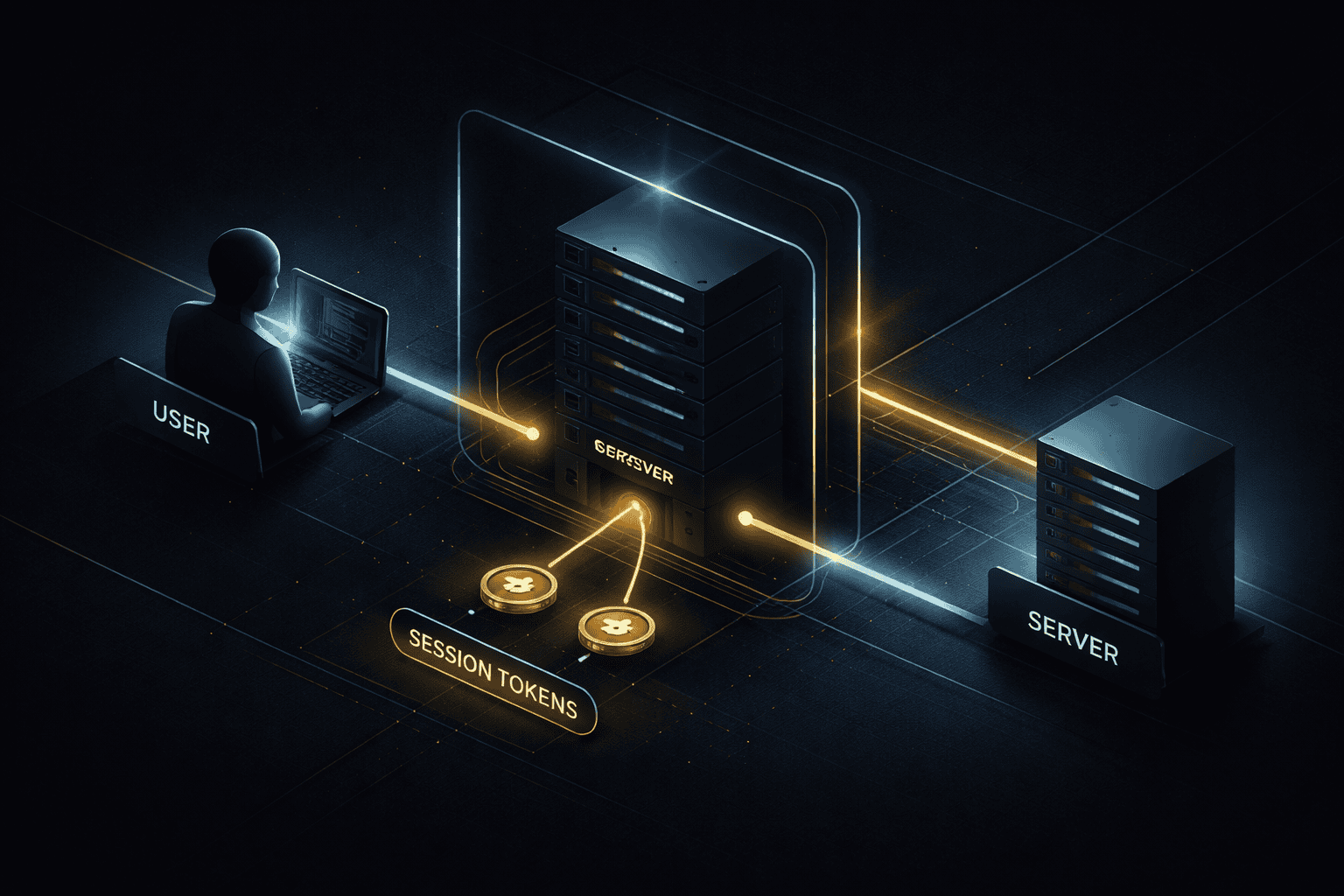
After Login: Zero Trust, Tokens and Revocable Trust in 2026
An evidence-backed model of tokens, sessions, recovery, delegated authority and revocable trust after authentication.
Legends in the stack
Ideas travelled before machines did.
Modern computing grew through mathematics, cryptanalysis, experimental science, mechanical systems and software built under pressure.
- c. 780–850Al-KhwarizmiAlgorithms · algebra · systematic calculation
- c. 801–873Al-KindiFrequency analysis · foundations of cryptanalysis
- 965–1040Ibn al-HaythamExperimental method · optics · evidence-led inquiry
- 1136–1206Al-JazariAutomata · control mechanisms · mechanical ingenuity
- 1815–1852Ada LovelaceAlgorithm before the machine age
- 1906–1992Grace HopperCompiler thinking · abstraction · debugging folklore
- 1912–1954Alan TuringComputation · cryptanalysis · machine intelligence
- born 1936Margaret HamiltonSoftware engineering under mission-critical constraints
Guided Routes
Follow a sequence, not a taxonomy.
Route 01 · Identity under pressure
Route 02 · From lure to takeover
Core Domains · current evidence
A quiet index built to deepen.
Each group exists because real articles support it. No empty hierarchy is created.
Systems & trust
Attack paths
Identity & access
WordPress resilience
Field Layer · Homelab
Where theory meets a controlled environment.
The Homelab is Cyber’s field layer: a place for safe learning, observation and experiments. This gateway publishes no private hostnames, addresses, credentials or infrastructure detail.
Follow related builds in Startup LabACTIVE FIELDS
DORMANT FIELDS
Read the connections.
Public Cyber writing explains how trust, dependency and network boundaries shape a system. This field contains no Homelab configuration.
Read Trust is InfrastructureLearn to inspect safely.
Linux Basics is the public guided learning route. Specific builds and experiments remain owned by Startup Lab.
Open Linux BasicsApplied Work · owned by Startup Lab
Builds keep their status and their owner.
Relevant prototypes, experiments and testbenches can be discovered here without being copied into Cyber or presented as finished products.
Latest Writing · bounded view
Recent signals.
Five current entries; future WordPress queries require an explicit limit, order and empty state.


Commercial Gateway · DD Digital
WordPress Security Quick Check
A focused service for visible WordPress security signals, configuration risks and practical next steps. Scope, intake and delivery remain owned by DD Digital.
Visit the service ownerClosing Gateway
Choose the next useful signal.
Learn in Linux Basics, investigate the Cyber library, or follow work that has entered Startup Lab.