
THE CONTINUITY PROJECT INVESTIGATION CH-001
Research in progress
The Glasses of Omar al-Mukhtar: Can an Object Survive a Historical Rupture?
A research investigation into a difficult provenance question: not whether a later object resembles a remembered relic, but what evidence could connect it to a specified pair of eyeglasses through rupture, custody, institutional transfer and later attribution.
01
Are these Omar al-Mukhtar’s glasses?
It is a deceptively simple question. A pair of eyeglasses can carry an attribution. It can appear in a collection, in a catalogue, in an institutional memory or in later retellings. None of those facts, by themselves, identifies a physical object across time.
CH-001 begins by turning the question around. What evidence connects a later object to a specific pair demonstrably possessed by Omar al-Mukhtar before or at the time of his capture in 1931? The change matters. The first question asks for an answer. The second asks for a genealogy.
That distinction is the working principle of The Continuity Project. Similarity is not continuity. Historical continuity requires demonstrated transmission.
02
The object is not the evidence
A museum label can preserve an attribution. A later author can repeat it. An object can look compatible with a photograph, a remembered description or an expected period style. These are not trivial observations, but they do not demonstrate a path from one specified pair to another.
For this investigation, a physical match and a provenance match are different propositions. Material clues may later narrow the field. A description, an accession number, a transfer list or an image may be relevant. Yet the Framework does not allow resemblance to stand in for descent. The relevant claim becomes stronger only when the path between predecessor and descendant is evidenced.
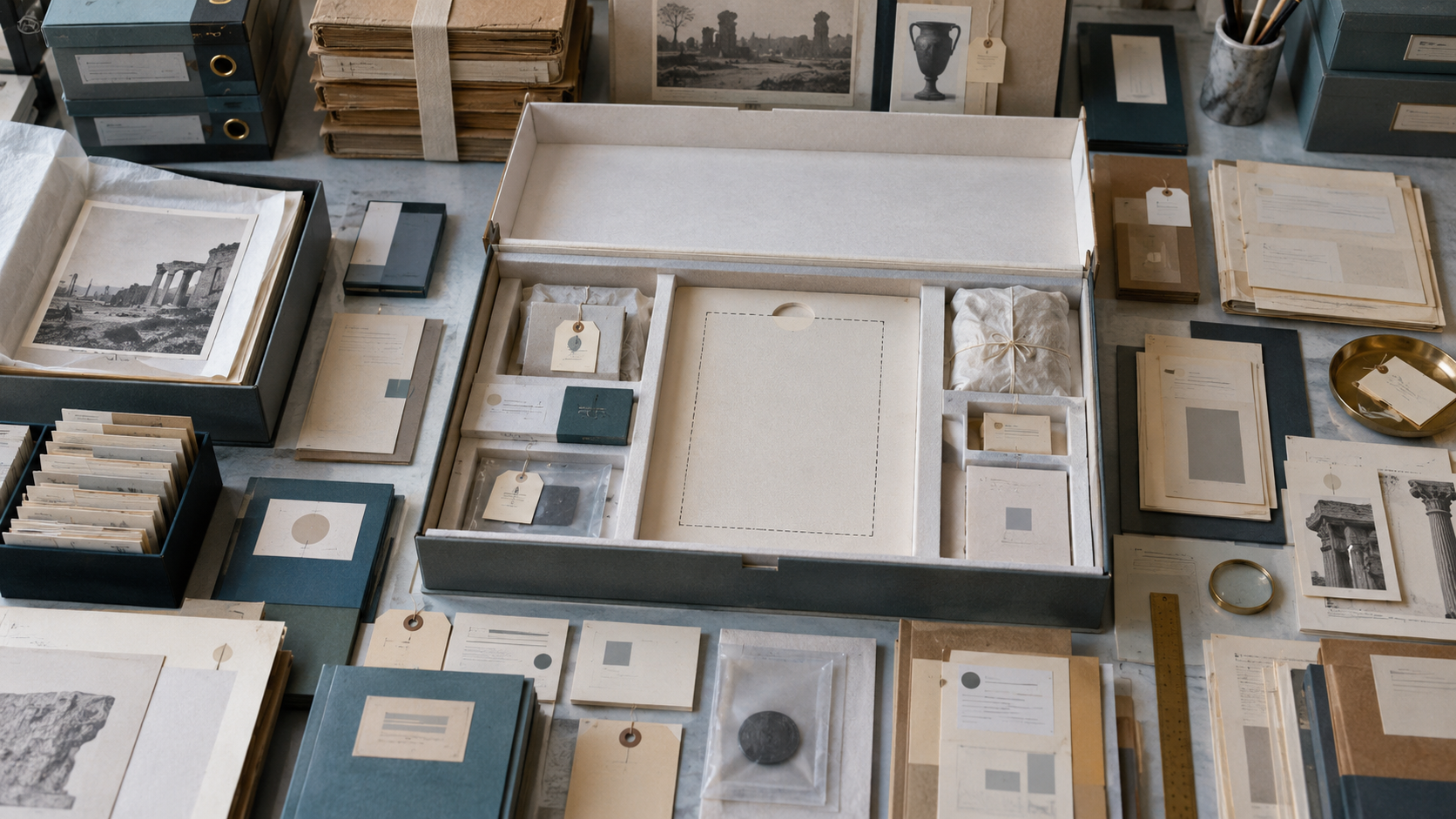
Historical continuity does not require identity across time. It requires demonstrable descent through transmission.
03
Specify the predecessor before following it
The project does not test the broad phrase “the glasses of Omar al-Mukhtar.” Its frozen target property is the identity and provenance of a physical pair of eyeglasses formerly possessed by Omar al-Mukhtar. Physical custody, legal ownership, museum accession, attribution, symbolic meaning and classification as relic or museum object are deliberately kept separate.
That separation prevents a common slide in provenance writing. A later institution may hold an object. The object may be called a relic. Its political or memorial meaning may be powerful. None of this alone answers whether it is the same physical pair.
The case therefore names an alleged predecessor, A, and two candidate descendants: B-Rome, an object attributed in an Italian institutional collection, and B-Tripoli, an object attributed in a Libyan collection. The naming is not authentication. It is a way to make the question testable.
04
Rupture is not a single event
A provenance problem can be obscured when the final capture is treated as the only relevant threshold. The Framework instead asks where an object’s route may have changed: loss, seizure, transport, cataloguing, reclassification, institutional transfer, archive administration or later attribution. Each is a possible event in a system, not proof that it happened to this specified object.
For CH-001, the present records do not enter a custody chain, a transmission edge or a timeline event. The absence of entered evidence is not proof of disappearance. It means the physical route has not been demonstrated in the reviewed project records. The research task is to locate evidence that can discriminate between a gap and a documented passage.
05
Two candidate objects, one provenance problem
The available case specification identifies a Rome-attributed object and a Tripoli-attributed object. It does not establish that either is authentic, that they are related, or that either descends from the same predecessor. It also leaves open the possibility of multiple predecessor pairs.
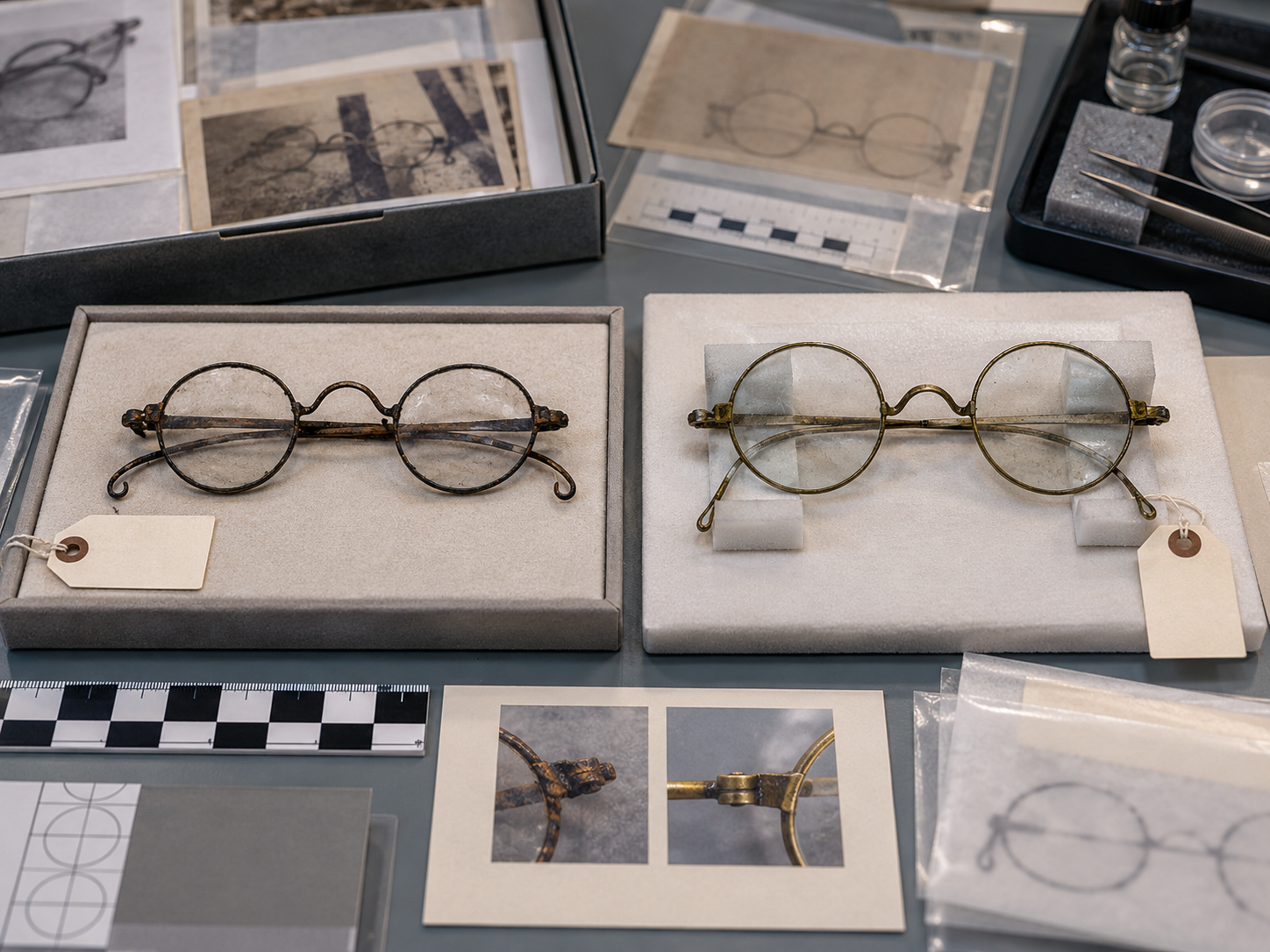
This is why a single, elegant line of descent would be misleading. The evidence may ultimately identify one physical route, two separate routes, an attribution that travelled further than the object, or a claimed line that ended before a later substitution. The article does not add stories about other objects without a reviewed source. In particular, no local case record presently supports an Aleppo object, duplicated wallets, a maker mark, a case description or a photographic comparison.
06
From personal possession to institutional meaning
Objects do not cross historical ruptures alone. If a pair of eyeglasses moved, it would do so through carriers and mechanisms: people, military or administrative custody, cataloguing systems, museum practice, state files, transport and later memory institutions. This is the structural layer of the inquiry.
At each point, the object can acquire another role. A personal possession could be described as captured material, an institutional object, a museum item, a political object or a memory object. These transformations matter for historical interpretation. They do not, however, bridge an unrecorded transfer. A change of label can preserve narrative continuity while leaving physical genealogy unresolved.
Operational view
- Problem
- Not “which glasses are real?” but which specified descendant can be connected to which specified predecessor through demonstrated transmission.
- System
- Personal possession, possible loss or seizure, administration, museum acquisition, cataloguing, state custody, restitution process, national memory, provenance research.
- Weaknesses
- Provenance gaps, duplicate attributions, missing transfer records, catalogue dependence, source-lineage problems and archival silence.
- Leverage points
- Correspondence, accession registers, inventory numbers, object descriptions and cross-file references.
07
The continuity graph
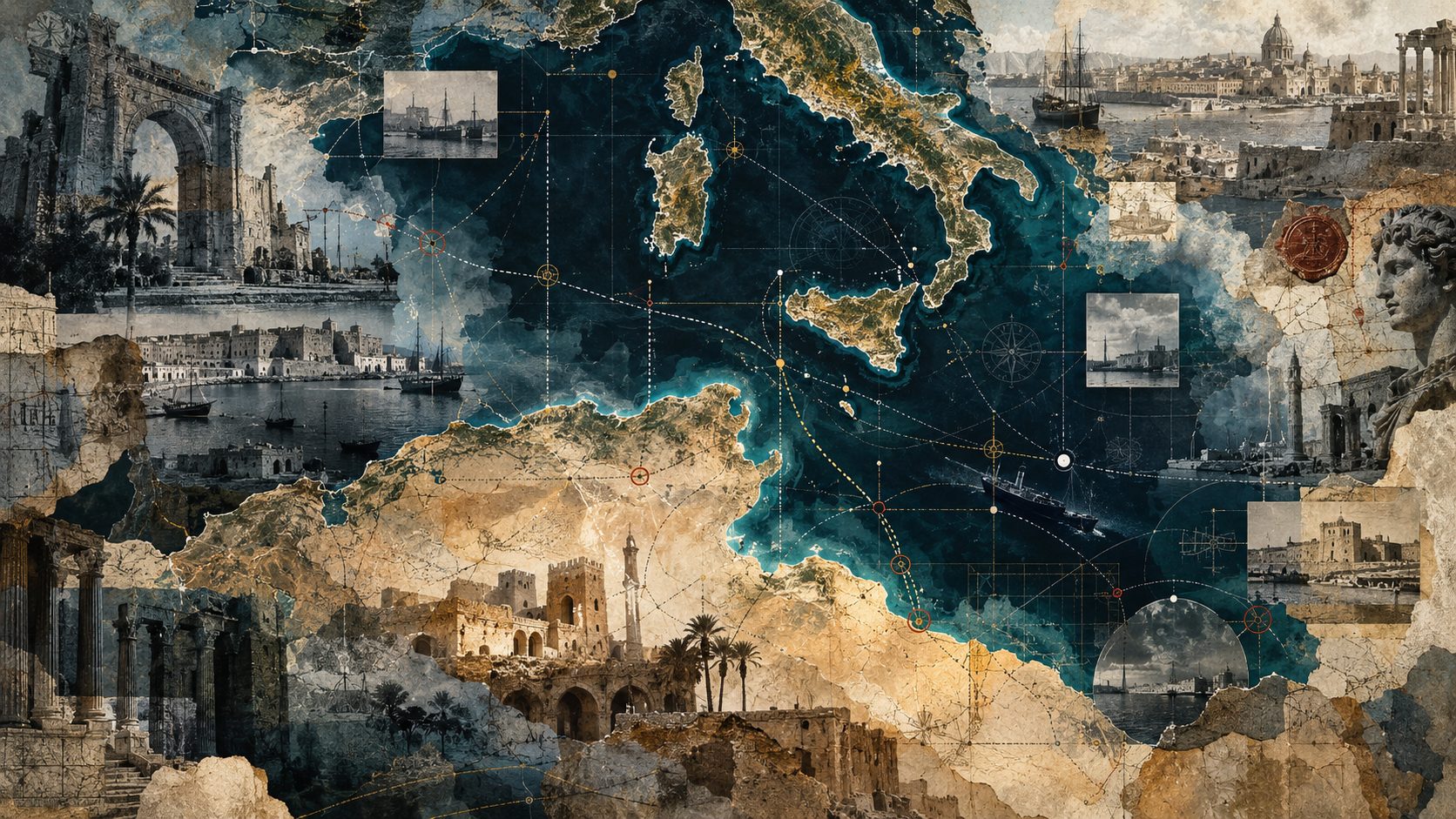
A continuity chain is a research procedure. A continuity graph is a representation of historical relationships. The graph below is intentionally incomplete: its unjoined branches are a record of what the present evidence environment does not demonstrate.

08
The 1955 node is a target, not a conclusion
The primary archival target is Archivio Storico Diplomatico del MAECI, IsIAO, Museo Coloniale, busta 17, fascicolo 174, with priority on sottofascicolo 3, “Restituzione e doni di materiale al governo libico,” dated 1955. The project records the locator. It does not record the contents of the dossier as inspected evidence.
The provisionally accepted Phase 4A assessment classifies the 1955 restitution request as Demonstrated. That status does not identify the dossier’s uninspected contents here, and it does not establish an outcome for any specified object. A request is not authorization. Authorization is not dispatch. Dispatch is not receipt. Until the material is captured, read, critiqued and entered into the evidence ledger, U-07 remains a targeted unknown.
09
Physical continuity and narrative continuity
Physical genealogy asks whether a later pair is the same physical pair, or a descendant of the specified predecessor through a documented transmission path. Attribution genealogy asks a different question: can the persistence of the statement “these are Omar al-Mukhtar’s glasses” itself be traced through catalogues, institutions and retellings?
The second question may become answerable before the first. An attribution can have a history even where the physical provenance remains unresolved. That history can show how institutional meaning changed between colonial, postcolonial and contemporary settings. It cannot be silently promoted into physical continuity.
This distinction also has a human dimension. An attributed relic can matter in public memory because it helps people encounter a historical figure, a struggle or a loss. The emotional and cultural force of that encounter does not remove the obligation to state what its evidence can and cannot carry.
10
Rival descent test
The relevant question is not whether one preferred story sounds plausible. It is whether B could plausibly have arisen without transmission from A. The Framework therefore keeps competing explanations in view.
- H-01B-Rome descends from the specified predecessor.Undemonstrated
- H-02B-Tripoli descends from the specified predecessor.Undemonstrated
- H-03B-Rome and B-Tripoli descend from different predecessor pairs.Indeterminate
- H-04One or both later objects preserve attribution without demonstrated physical-object descent.Undemonstrated
- H-05A claimed line ended and a later attribution or substitution produced apparent survival.Undemonstrated
These are not a ranking. They are a discipline against premature closure. The evidence may eventually support, narrow, disconfirm or leave any of them indeterminate.
11
What would falsify a claim?
CH-001 must be able to fail. An incompatible accession history, a demonstrated earlier provenance to another owner, an impossible chronology, a documented separate pair, or records that contradict a proposed transfer route could disconfirm a specified genealogy. Positive evidence of destruction, loss, substitution or termination could establish discontinuity. Archival silence alone cannot do that work.
The frozen protocol requires relevant chronology, component identity, property, rupture-crossing, transmission, extinction, rival-origin, independence, transformation and source-asymmetry tests. A compelling narrative that fails these tests remains a narrative, not a demonstrated descent.
12
The material object is evidence, when its evidence is available
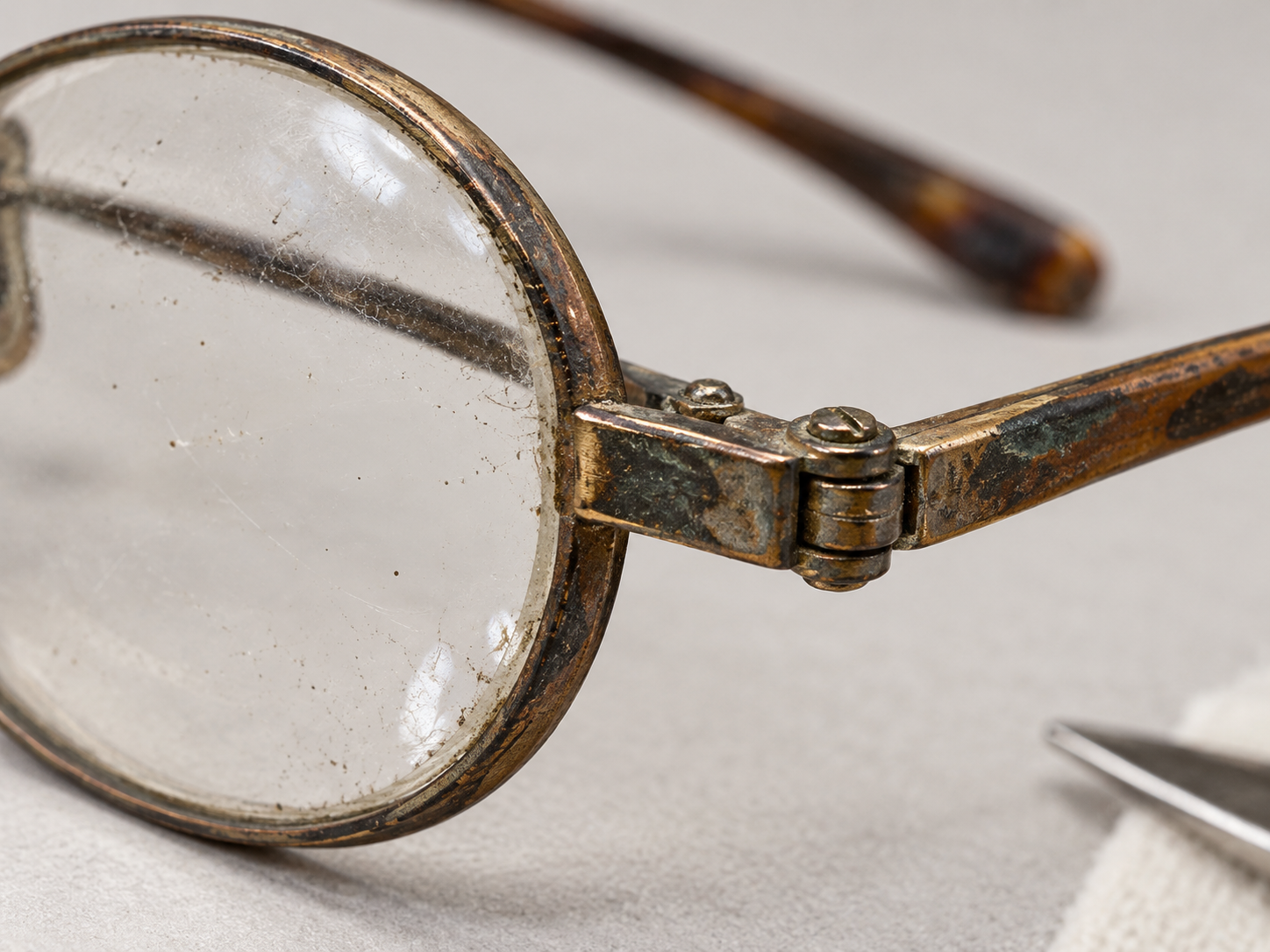
Physical descriptions, marks, cases, photographs and inventory identifiers could eventually help distinguish objects and narrow competing hypotheses. No such item is entered in the reviewed CH-001 evidence ledger for this build. The present article therefore does not infer a match from appearance, repeat an unverified detail or use an illustrative object as proof.
Material evidence would be one part of a case. It would still need to sit beside custody, accession, transfer and source-lineage evidence. Material similarity alone does not demonstrate descent.
13
Current assessment
Known
The pilot’s specified question, candidate nodes, methodological rules and archival locator are recorded.
Supported
The case requires a graph, rival testing and an object-specific distinction between attribution and physical provenance.
Unknown
The physical genealogy of B-Rome and B-Tripoli, their relation to each other, and the outcome of the 1955 process.
Targeted unknown
U-07: the relevant 1955 archival process, beginning with the priority file.
The provisional Phase 4A assessment records the Rome-related chain as Plausible, pending Phase 4B; the Tripoli chain as Undemonstrated; and their relationship as Indeterminate. It records institutional custody as Strongly Supported where documented and legal ownership as Indeterminate where records do not determine title. Neither object can be presented as an authenticated historical pair. The 1955 outcome cannot be presented as a refusal or a return. The Framework cannot be presented as empirically validated. Those are boundaries of the investigation, not shortcomings to write around.
14
Phase 4B: targeted archival verification
The next work is primary-document investigation. Capture comes before interpretation. Folder labels, covers, complete rectos, relevant versos, stamps, signatures, marginalia, lists, receipts, acknowledgements, object identifiers and cross-references must be preserved before a document is reduced to a claim.
Public-safe capture identifiers follow the frozen pattern B17-F174-S3-DOC###-P##. Intake metadata should record title, date, sender, recipient, folio, stamps, object identifiers, inventory identifiers and cross-references. Only then can a source be assessed for what it establishes, what it does not establish and which edges it affects.
Evidence lineage is central. Repeated statements are not independent confirmation when they derive from the same unexamined source. The research flow is therefore: claim, source, source lineage, property, custody event, transmission event, rival explanation and archival test.
15
What this case tests
CH-001 tests more than a difficult object genealogy. It tests whether rival explanations can be held open without flattening the historical stakes, whether a provenance gap can be stated plainly, and whether a framework can guide evidence acquisition without inventing evidence it does not have.
Framework v0.9 is frozen for empirical validation. It is not a verdict awaiting decorative confirmation. It is a set of rules being stressed by a real research problem: historical continuity does not require identity across time. It requires demonstrable descent through transmission.
Systems & Strategy is the parent world for this inquiry. The Continuity Project asks its questions at the object level first, then follows only the connections that the evidence can bear.