The Everyday Atlas · Street & Road → The Café. Lifestyle & Culture · Editorial report.
In short
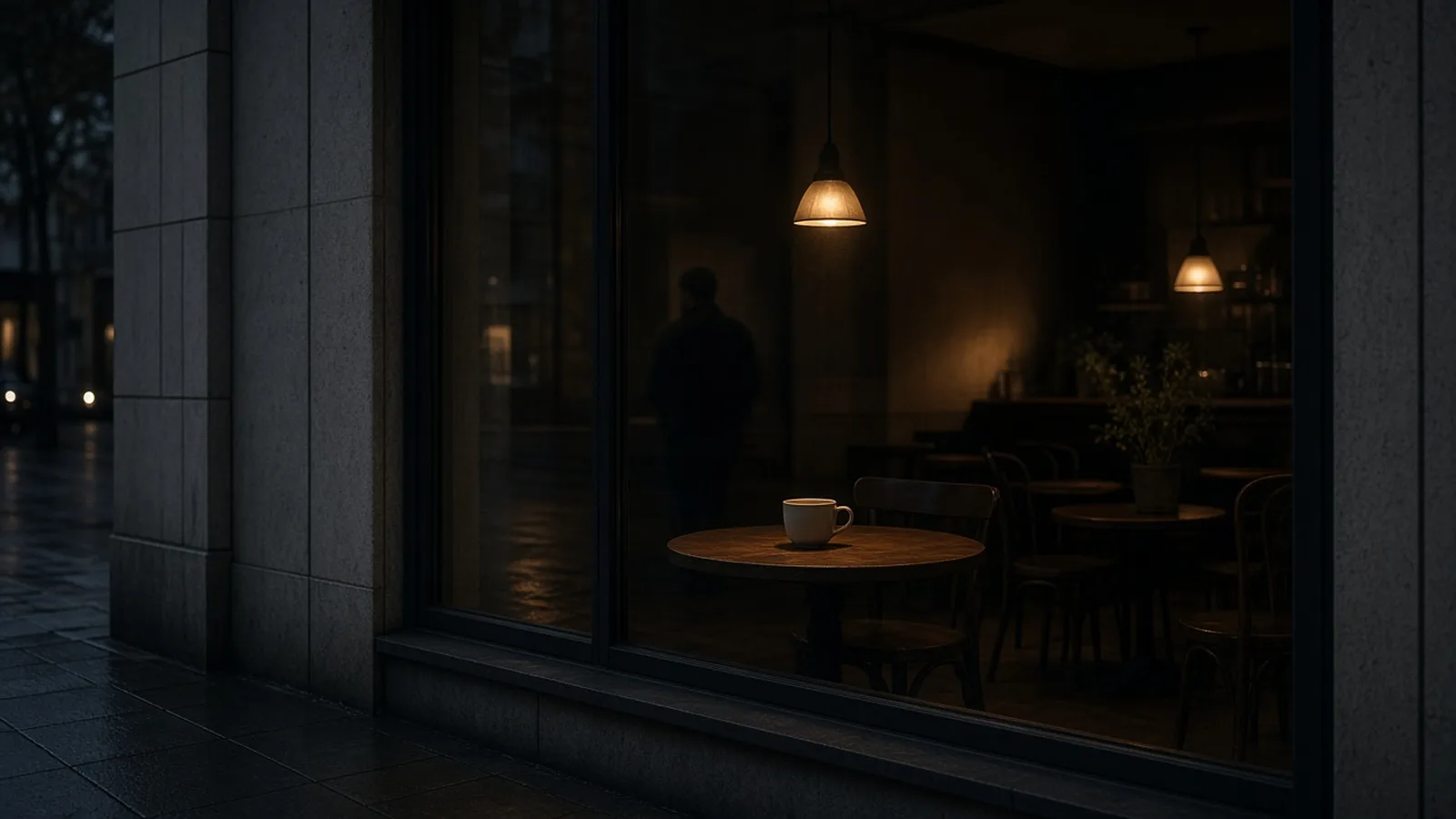
The modern café is one of the most familiar rooms on a street, and one of the easiest to misread. A cup sits on a table. Someone waits, works, meets a friend, or does not sit down at all. From the pavement these can look like the same visit. They are not.
This field note follows the practice, the place and the object. Its argument is simple.
The drink has gone global. The invitation to stay is still made in each room, and it is no longer guaranteed.
The table
A cup is set down. A chair is pulled back, or it is not. A bag takes the second seat. Some people come to meet. Some come to wait. Some come to watch the street through the glass. Some stand at the counter, take a paper cup, and leave before the drink cools.
The café offers a public table. The drink is the reason that can be named. What happens after the order is the real question: how long may a person remain, and with what kind of company, before the visit has to justify itself again.
Look closely and the scene is made of small, repeated objects. The saucer or the paper sleeve. The hook under the table for a bag. The power socket, if there is one, already claimed. Outside, sitting at a stranger’s table without a reason is rarely casual. Inside, it is the ordinary arrangement: a modest purchase in exchange for a place to be.
A room between home and work
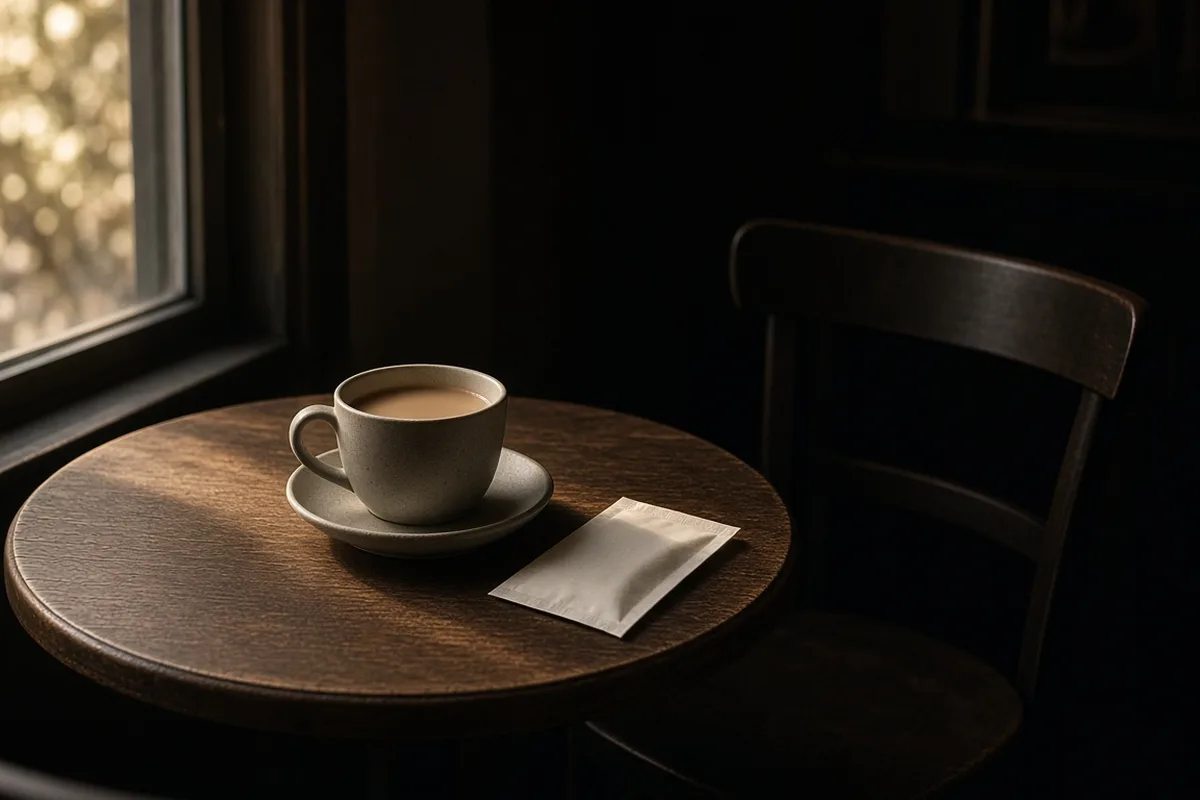
There is no single global café culture. There is a global format: a counter, a short menu, tables that can be shared or claimed, and a drink that can be finished quickly or slowly. The format travels well. What happens inside it does not travel as one culture.
A terrace, a corner café, a coffeehouse with newspapers on a stand, a new coffee bar with a queue to the door: they share the cup. They do not share the same idea of how long a customer may stay, whether a laptop belongs on the table, or whether the room is for regulars, visitors, or people passing through.
The sociologist Ray Oldenburg called places of this kind third places, separate from home and work. He later described them as
havens of sociability where conversation is the main activity and conviviality prevails.
Cafés were among his examples, together with taverns and barbershops. The earlier report on the modern barbershop noted that many shops fit that description well. The café is the room usually given as the example. It does not follow that every café still works that way.
Not every establishment of the right type is a third place. Much depends on how the room is hosted, and on whether people actually use it to meet, linger and talk. A busy café can fail that test while looking successful from the street.
The drink travels. The invitation to stay does not.
A product can be standardised across a hundred streets. A ritual cannot. Beans, machines, paper cups and loyalty apps travel quickly. The regular, the unhurried table, and the right to sit with one order do not. They have to be made in each room: by the furniture, by the price of a single cup, and by whether a person who came alone is left in peace or treated as a problem.
In 2011, Viennese coffee-house culture was inscribed in Austria’s national inventory of intangible cultural heritage. The Austrian UNESCO Commission describes a coffeehouse as a place:
in which time and space are consumed, but only the coffee is listed on the bill.
That sentence names the actual offer. The drink is what can be sold. Time is what the room permits. Where the two come apart — where time is no longer included, or is included only if you keep ordering — the café is still a café, but it is a different kind of room. The deeper history of the coffeehouse as a public institution belongs to Culture & Identity. No article on that history has been published there yet.
Who uses the café now, at which hours, and for what
The Everyday Atlas follows this question for the café. The four uses below are editorial observations: prompts for reading a room, not claims about every café or hour of the day.
The meeting
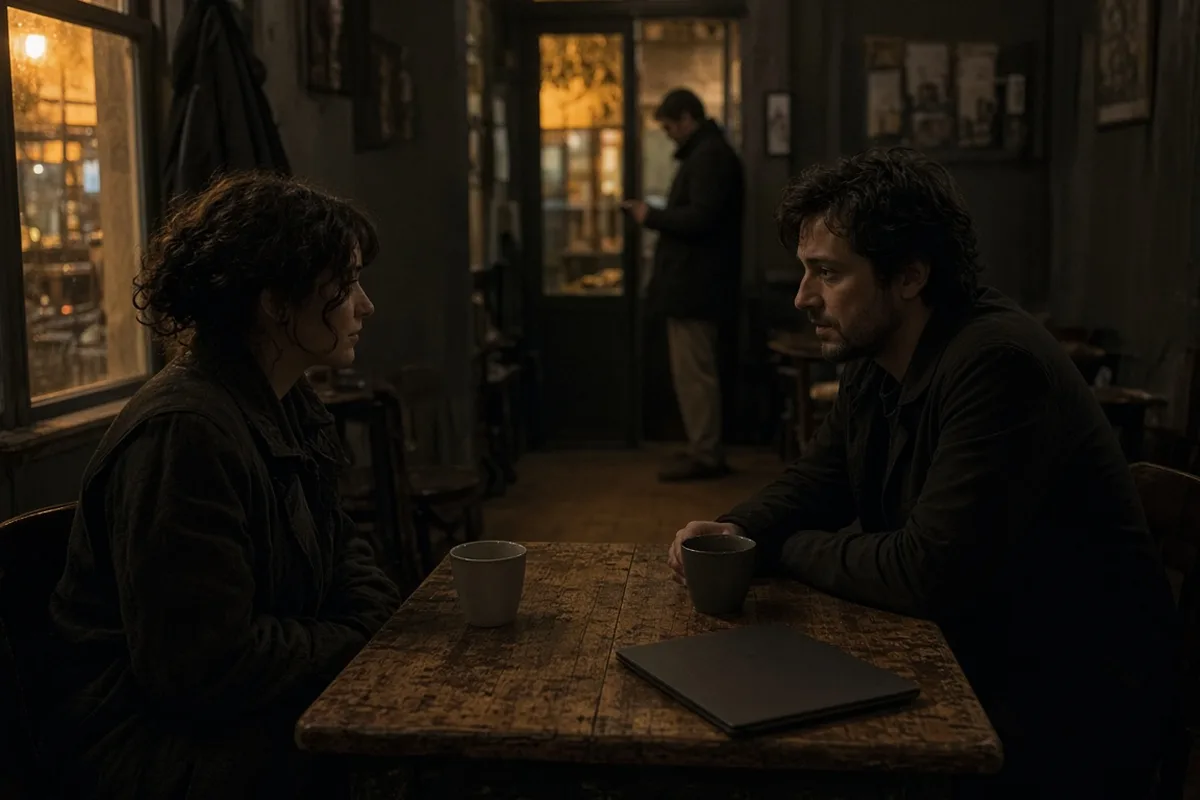
Two people arrive at a time they have already agreed. The table is a temporary office or a temporary living room. The cups mark that the meeting is public enough to be seen, and private enough to be spoken.
The work table
A laptop opens as soon as the order arrives. The café becomes a rented desk, paid for in drinks and chosen for sockets, light and the feeling of being among people without having to speak to them. Conversation is no longer the main activity. Presence is.
The wait
Someone sits with a view of the door, or of a phone. The café is a sheltered interval between two other places. The visit ends when the next appointment begins.
The takeaway
The transaction ends at the counter. There is no table, or the table is only a shelf for lids and sugar. This is still a café in the commercial sense. It is barely a room.
These four uses can occupy the same premises in a single morning. The question is not which of them is the “real” café. The question is which invitation the room is making at the hour you enter it, and who that invitation is for. Do people arrive alone and join others, or arrive alone and protect a table? Both can be legitimate uses of a public room. Only one of them is sociability.
How to read a modern café
Stand just inside the door before you order. Seven things say more than the drinks list.
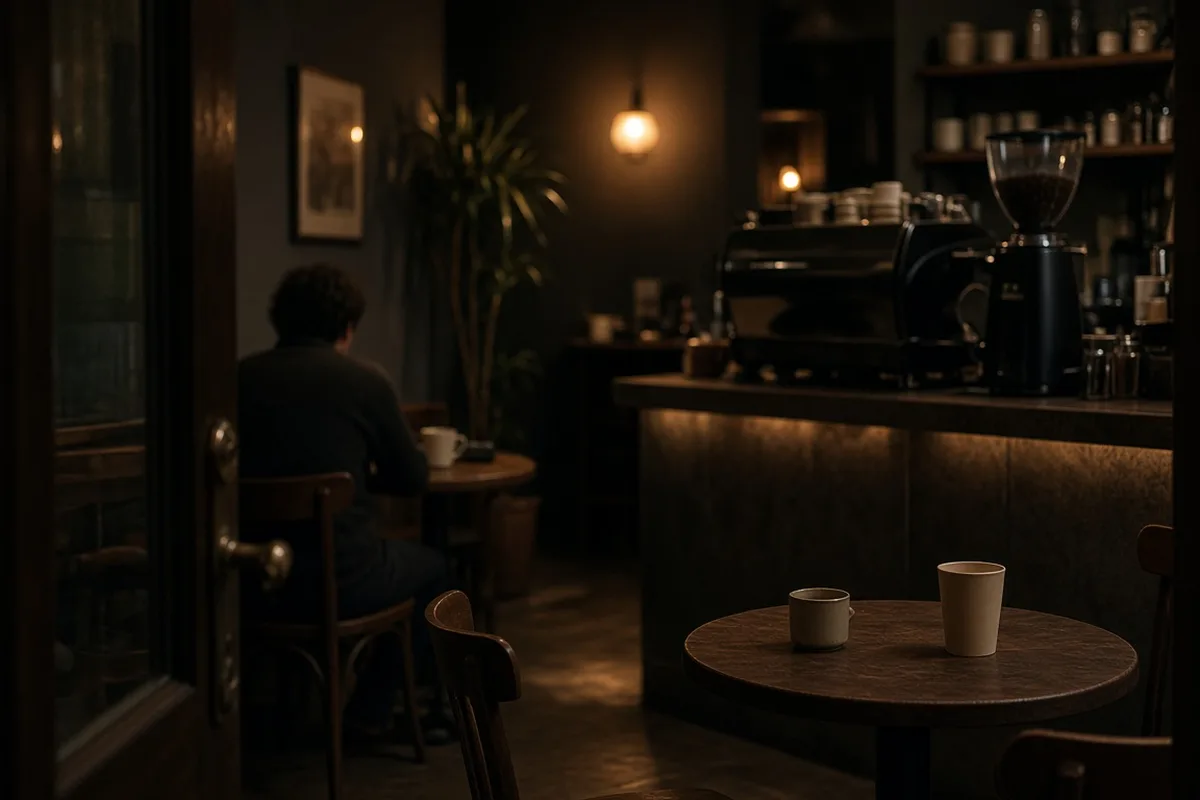
- The second chair. Is it an invitation, or is it already used to hold a bag and close the table?
- Paper cup or ceramic. How long does the room expect you to stay?
- Sockets and headphones. Is the table also a desk?
- A newspaper stand, or only phones. What is the room offering besides a screen?
- The queue and the terrace. Where does the life of the place actually happen?
- One cup, still sitting. Are empty cups cleared as a hint, or left in peace?
- Language and prices on the board. Who the room expects to walk in, and for how long a single order remains comfortable.
These are prompts for attention, not a scoring system. A café can be an excellent place to work and a poor third place, or the reverse. The point is to see what is being practised, not to demand that every cup come with a conversation.
Back to the table
Back to the cup. It looks the same as at the start. By now it carries more than a drink: time, work, waiting, conversation, solitude in public, hospitality, the street.
How long are you invited to stay?
What did you come to do?
Did you come to meet someone, or to be among people?
What would change if the same drink were handed to you at the door?
That is where a purchase becomes a practice, and where a café becomes — or fails to remain — a public room.
Next field notes
Planned means no article exists yet.
- The Modern Barbershop — published
- Coffee — Lifestyle & Culture — Planned
- Tea and the glass — Lifestyle & Culture — Planned
- The café as a public space — Culture & Identity — Planned
Read elsewhere
- Culture & Identity for the café’s history as a public space.
- The Modern Barbershop for another street-level room built around waiting and regulars.
- The Everyday Atlas for the other subjects at the table and on the street.
How this report was made
This is an editorial report, not fieldwork or a survey. Facts with a source are listed below. The four uses of the café and the “how to read” list are editorial observations: prompts for reading a room, not measurements or claims about every café in a city or region.
Sources
- Ray Oldenburg, The Great Good Place, 1989, which introduced the term “third place.” greatgoodplace.org
- Ray Oldenburg, “havens of sociability where conversation is the main activity and conviviality prevails,” in an article for the Encyclopedia of Community, as published at greatgoodplace.org.
- Austrian UNESCO Commission, “Viennese coffee house culture,” inscribed in 2011 in Austria’s national inventory of intangible cultural heritage, including the description of a coffeehouse as a place “in which time and space are consumed, but only the coffee is listed on the bill.” unesco.at
- Darja Rihla, “The Modern Barbershop,” 5 October 2026. darjarihla.com/the-modern-barbershop