I / Immaterial
AI, Data Centers and the New Politics of Scarcity
The answer arrives. The machinery stays elsewhere.
An answer begins appearing before you have decided what to do with it. A sentence, a correction, a small piece of code. The interface gives almost nothing away about the machinery behind it. There is no sound of a pump, no visible cable, no indication of the weather outside the building where the calculation runs.
That distance is part of the service. You do not need to understand a substation to ask a question. Yet the ease of the exchange can make the answer seem detached from the conditions that produced it.
Understanding AI data center water use begins with making those conditions visible.
II / Reveal
Those conditions are becoming harder to overlook. The International Energy Agency estimates that data centers used 485 terawatt-hours of electricity in 2025. Its central outlook puts their demand at about 950 TWh in 2030, around 3% of the global total. These are figures for the entire data-center sector, not for AI alone. The agency finds faster growth in electricity demand at AI-focused facilities, a narrower category. IEA, 2026
The distinction matters. Data centers also support storage, business software and ordinary internet services. Accelerated computing describes another overlapping category of computation, while an individual AI workload is a task running within infrastructure. A total for one cannot simply become a footprint for another.
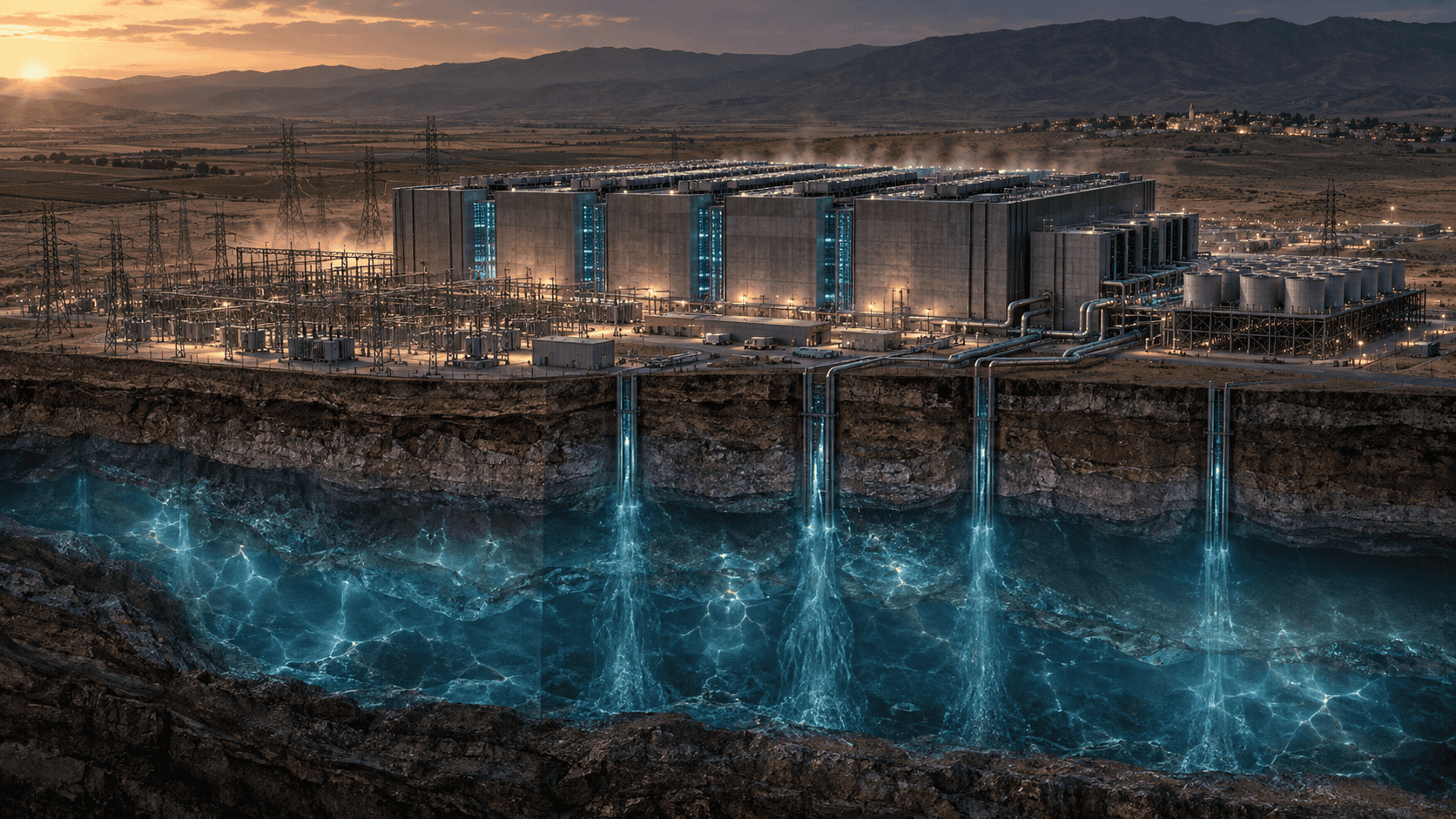
The physical footprint therefore cannot be read from the model’s name alone. The same service depends on a particular combination of hardware, electricity supply, cooling and network connections. Its apparent availability everywhere rests on equipment installed somewhere.
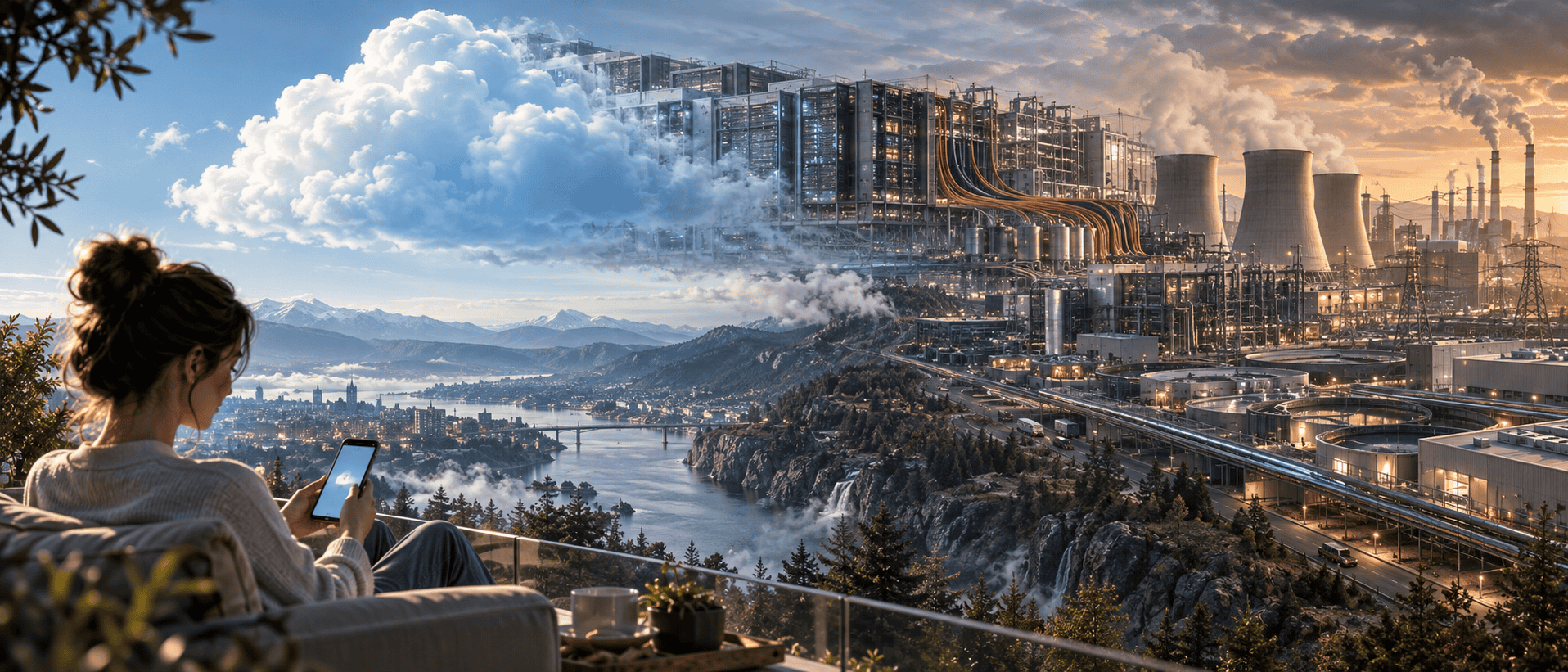
What connects them is their dependence on things outside the interface: electricity, equipment, cooling, networks and people able to keep them working. This is systems thinking applied to physical infrastructure. Follow those dependencies and the question changes. It becomes less about the apparent weight of an answer and more about what must remain available for that answer to arrive.
Follow the heat
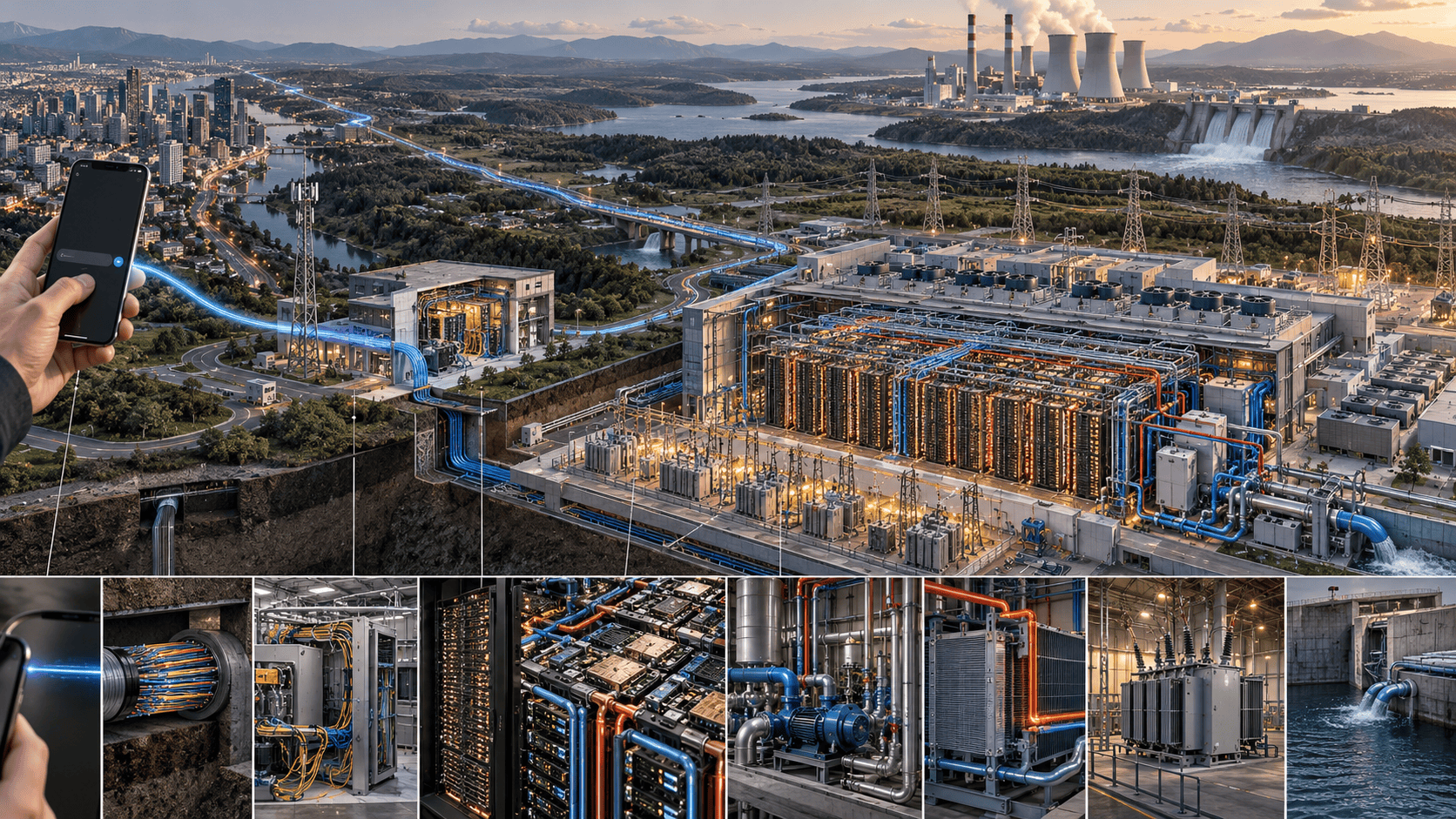
Electricity powers the computation. As processors, memory and supporting equipment operate, they produce heat. Cooling systems must move that heat away from components and ultimately release it beyond the facility. Cooling itself also requires energy. This is the physical sequence underneath the digital exchange. IEA, infrastructure analysis
III / Heat
There are several stages hidden inside the word cooling. Heat can pass from a chip into air or into liquid circulating through a cold plate. A liquid loop carries heat elsewhere, commonly through heat exchangers into another part of the cooling system. The final stage is heat rejection: transferring that heat to the surroundings.
Water may participate in that process, but it does not have to play the same role at every stage. A sealed loop carrying heat inside a building is different from water evaporating at a cooling tower outside it. Knowing that a facility uses direct-to-chip liquid cooling tells us something about heat capture. It does not, by itself, reveal how the facility rejects heat. IEA, cooling analysis; The Green Grid
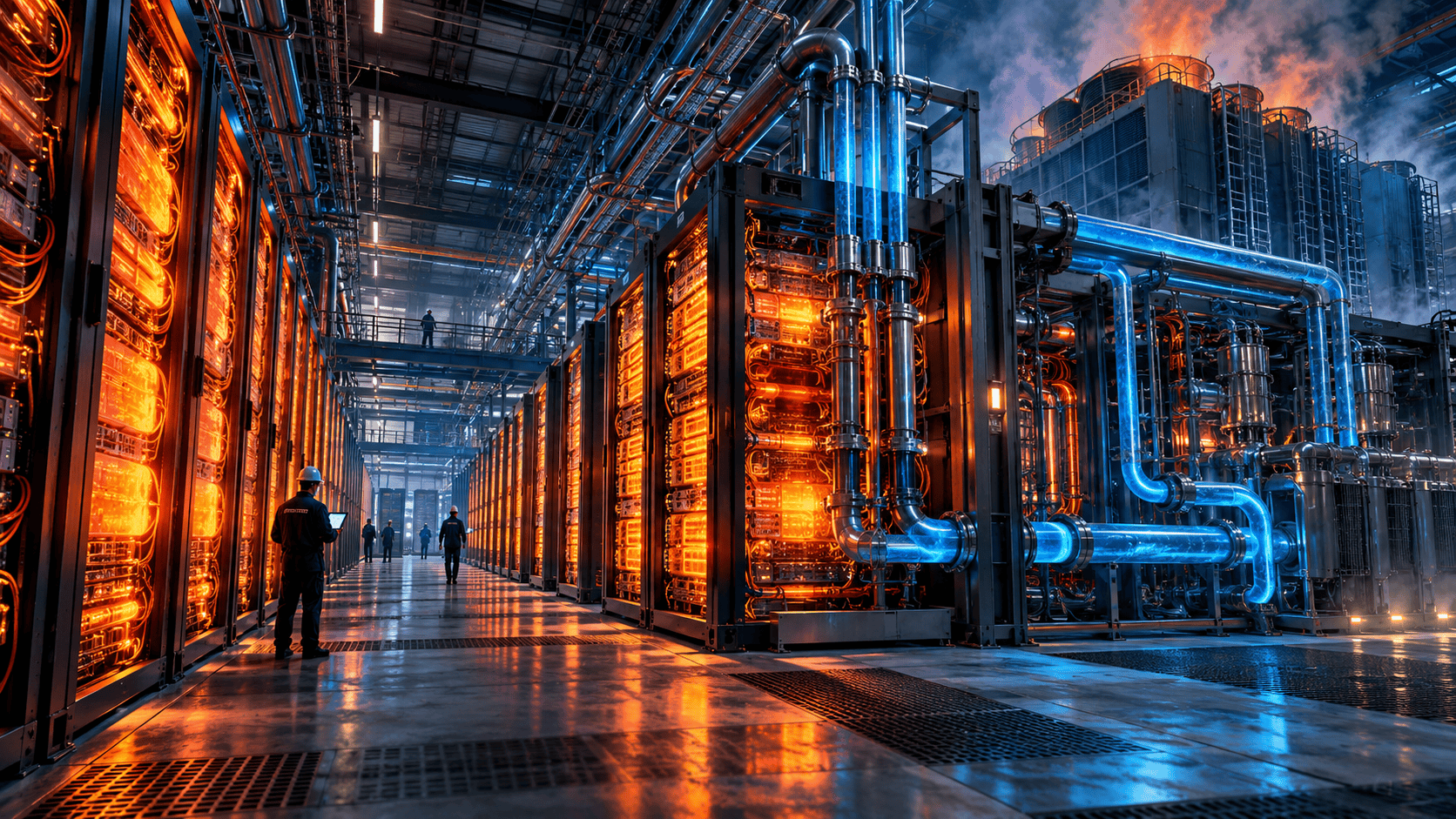
The distinction is easy to lose because the server is the visible object of investment. Cooling and power equipment appear to be support systems. Operationally, they set the conditions under which the server can work at all.
A building full of accelerators is therefore an incomplete description of computing capacity. Its useful capacity also depends on what the electrical connection can supply, what the cooling system can remove, and how those limits behave during difficult conditions. The machine is larger than the rack.
Which water are we counting?
Before asking how much water AI uses, ask what the number includes.
Withdrawal is water taken from a groundwater or surface-water source. Consumption is the portion that is not immediately available for further use, for example because it evaporates. Return flow is water that reaches surface water or groundwater again after use. These categories describe different parts of a water balance. A large withdrawal is not automatically an equally large consumption. Nor does consumption mean that water has ceased to exist. USGS terminology
For a community, location, timing and water quality matter as well. Returning water somewhere else or after the period of greatest need does not necessarily restore the same practical access. That is a further question about local conditions, not something a national total can answer.
There is also a boundary around the facility. Direct operational water use may include cooling. Indirect water use can arise where its electricity is generated. Manufacturing the equipment belongs to another account again. Adding these figures requires compatible definitions and care to avoid counting the same water twice.
Water Usage Effectiveness, or WUE, divides annual site water use by the electricity used by IT equipment, expressed in litres per kilowatt-hour. The original metric distinguishes site WUE from a source measure that also includes electricity-related water. The numerator in a company’s reporting still needs inspection. WUE is neither water per useful answer nor a measure of local scarcity. Original WUE paper
A falling ratio can coexist with rising total use when the activity underneath it grows. An annual average can also hide a difficult season. Neither observation makes the metric useless. It establishes what other evidence is needed beside it.
There is a separate question about what the computation achieves. A facility can be efficient at supporting IT equipment without telling us whether the work running there is valuable, necessary or well designed. WUE has an energy denominator, not a measure of human benefit. Deciding whether an expansion is worthwhile therefore requires an account of its purpose alongside an account of its resource demands. The meter can inform that judgment; it cannot make it.
This is why a universal claim that a short prompt consumes half a litre is misleading. In their 2025 assessment, Lei, Lu, Shehabi and Masanet identify substantial variation with server efficiency, utilization, cooling, climate, electricity supply and equipment characteristics. Their work makes system choices central to the calculation. It does not give every prompt a fixed water price. Berkeley Lab research record
The task itself also needs definition. A short text response, extended reasoning and video generation need not require comparable amounts of computation or energy. Counting each as one request can conceal that difference before water is even considered. IEA, task energy
The better number comes with a boundary attached: which workload, which equipment, which site, which period, and which water?
Cooling changes the equation
Design choices can change the answer materially.
Evaporative heat rejection uses evaporation to carry heat away. Dry systems release heat to air without relying on that evaporation. Hybrid systems can combine approaches as conditions change. The electricity needed to achieve a given cooling task depends on the equipment, operating temperatures and climate. Avoiding on-site evaporation can involve an energy trade-off, whose upstream consequences depend on the electricity supply. The Green Grid
Microsoft offers a useful, explicitly vendor-reported example. In June 2026, it described a change in WUE from 2.3 litres per kWh in its early data-center generations to 0.27 in 2025. That is a multi-generation intensity comparison. It does not establish an equivalent reduction in total water use. Microsoft, June 2026
The company also describes new designs intended to avoid water evaporation for cooling. Its earlier technical explanation distinguishes this from other building water uses and acknowledges an electricity trade-off when replacing evaporative systems. A bounded cooling-design claim cannot stand in for a claim about every facility, electricity generation or equipment manufacturing. Microsoft, December 2024
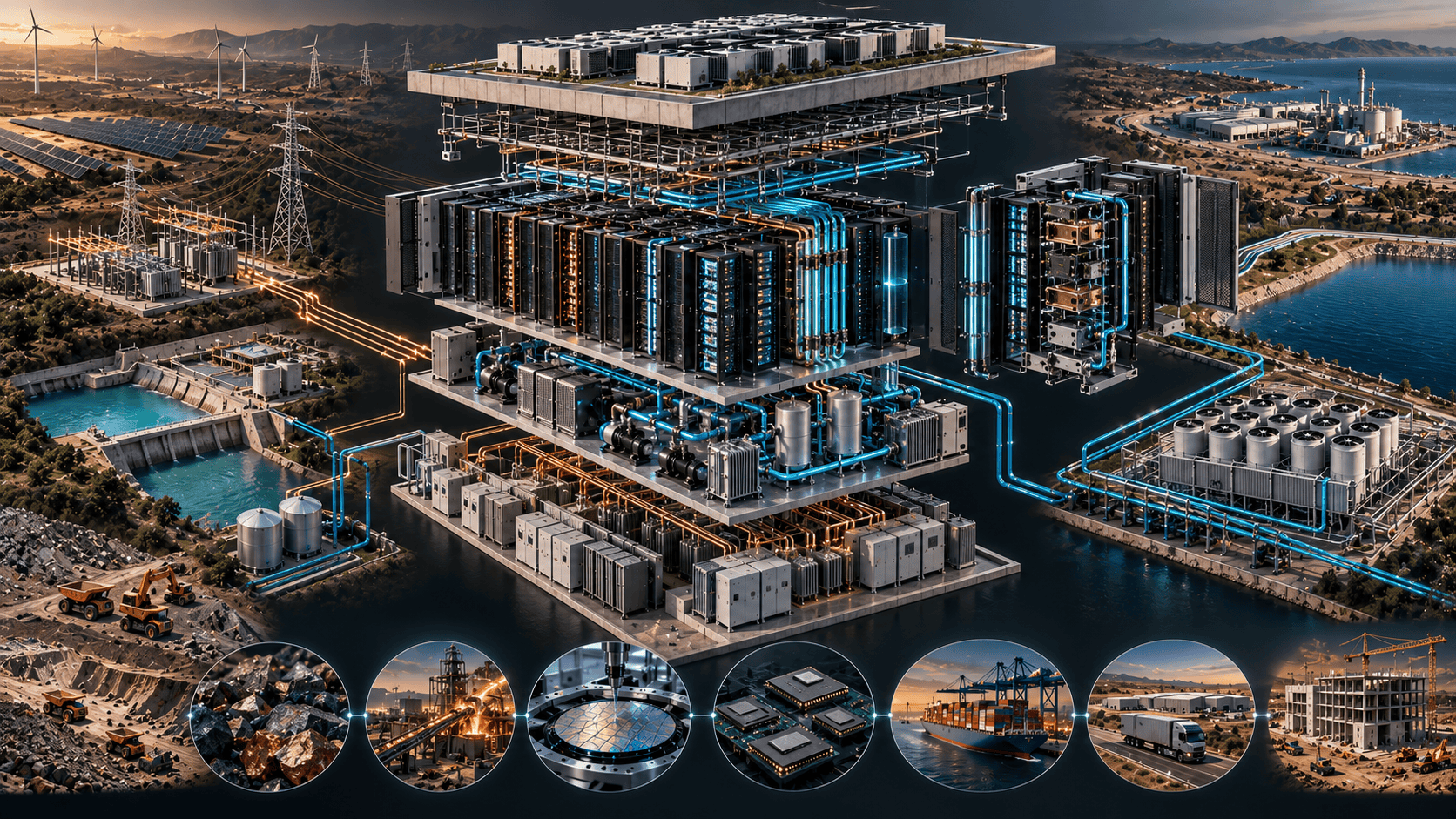
Water source matters too. Reclaimed or other non-potable water can reduce reliance on drinking-water supplies. It does not make evaporation disappear, and assessing the benefit still requires knowing what else could use that water.
The label closed loop answers only part of this inquiry. Following the heat beyond that loop reveals whether the final system depends on evaporation, mechanical cooling or a changing combination. Following the water supply reveals another dependency: the treatment and distribution needed to make that source usable.
These are choices for engineering and public scrutiny. Capital costs, energy availability and local water conditions belong in the same decision, even when different organizations are responsible for them. A design that looks attractive at the facility meter may shift a burden upstream, an example of the indirect consequences in complex systems. Another may justify greater electrical demand to protect a constrained local water source. The appropriate judgment needs a place and a set of conditions.
IV / Scarcity
The same workload, a different place
Imagine the same computational task carried out under two different operating conditions. The equipment is not equally efficient. The electricity comes from different generators. One cooling system needs evaporation during a hot period; another rejects heat without it. The task can be comparable while its resource requirements differ. This is a conceptual comparison, not a claim about how a particular service routes your request. Workload determinants
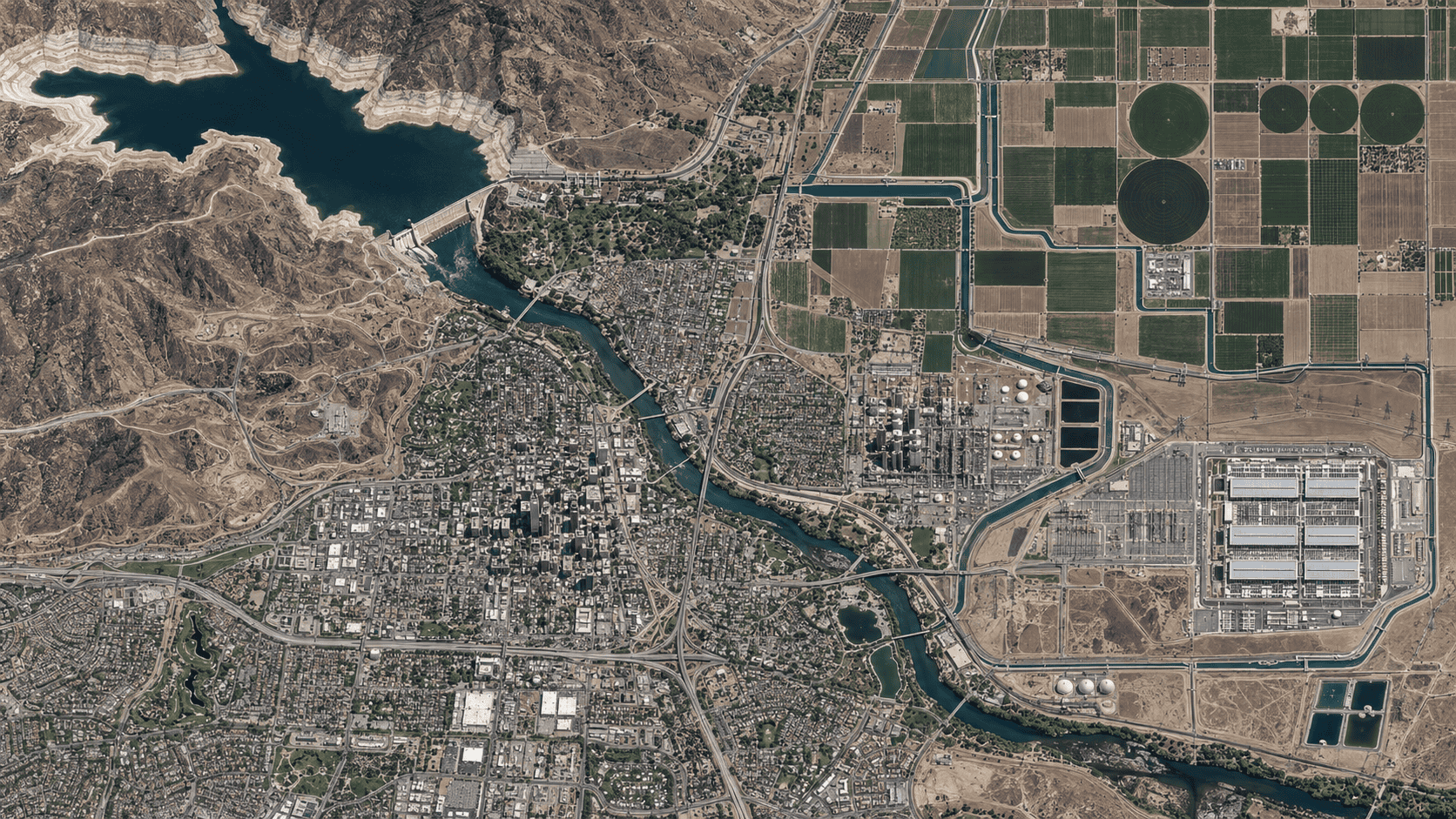
The consequences can differ even when the volume is similar. A quantity measured over a year does not say how much was required during drought, what source supplied it, or whose existing needs were constrained. Those are questions for site-level evidence and allocation decisions.
Consider a hot, dry period in which cooling demand rises while water availability falls. If those pressures coincide, an annual average can conceal the conditions that matter most for reliability. This is a scenario to test against local operating records, not a description of every facility. The important comparison is between what the system needs and what its surroundings can supply during the same period.
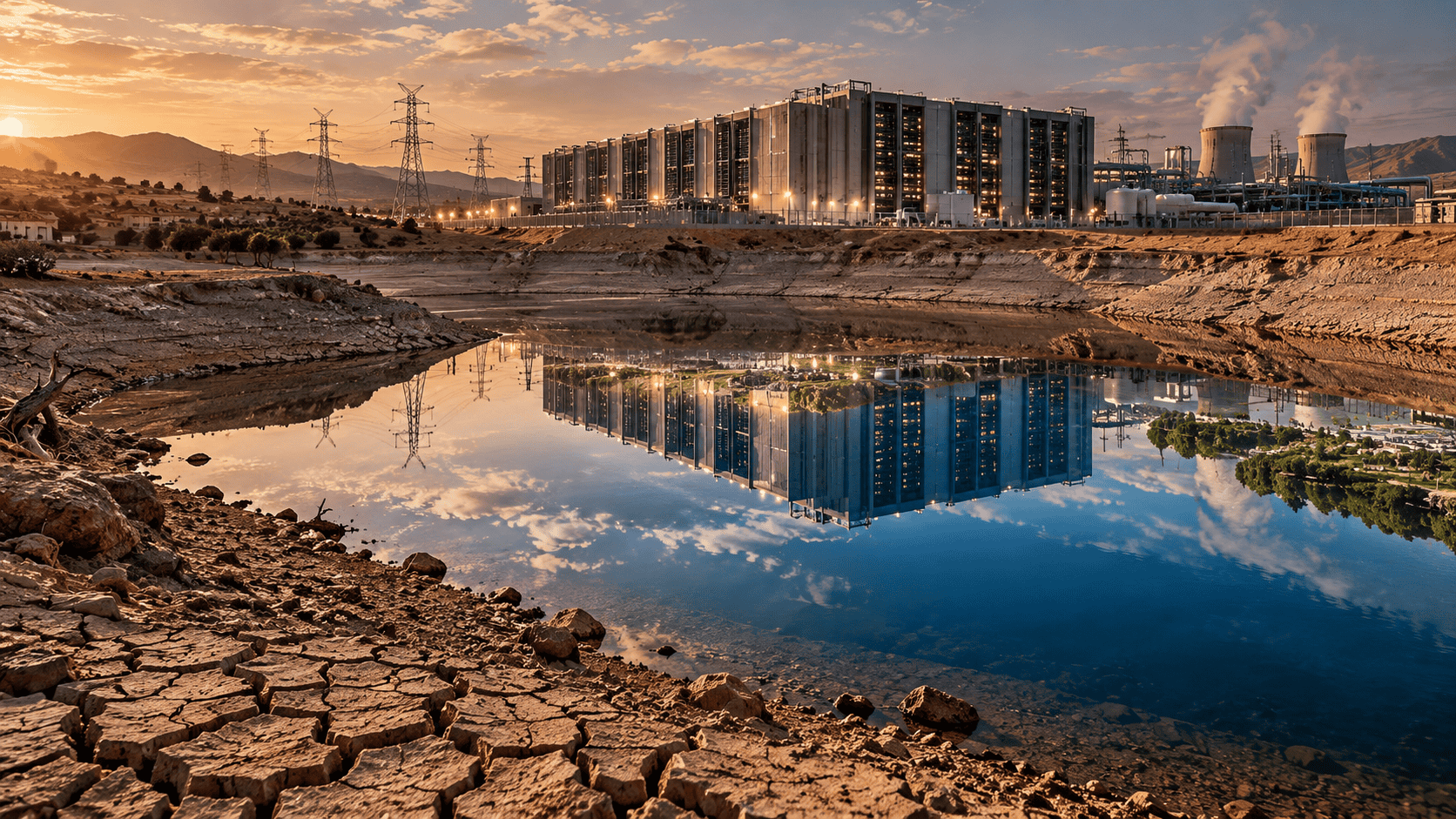
The same caution applies to replenishment. Microsoft reports that its global replenishment exceeded its withdrawals in fiscal 2025. Such accounting needs to be read on its stated terms. A global balance alone does not demonstrate relief in each affected basin at the time water was needed there. Microsoft’s reported position
Once location enters the discussion, environmental accounting becomes a question of institutions. Who can authorize a new demand? What conditions apply during shortage? Which measurements become public? Who can require changes when actual operation differs from the proposal?
An investment can bring useful computing capacity while requiring additional grid or water infrastructure. The assessment should identify who finances those additions, who maintains them, and which users receive priority during shortage. Expected benefits deserve scrutiny alongside expected burdens. Neither should disappear into an aggregate claim about growth or efficiency.
V / Planetary system
Place also matters before the task can run.
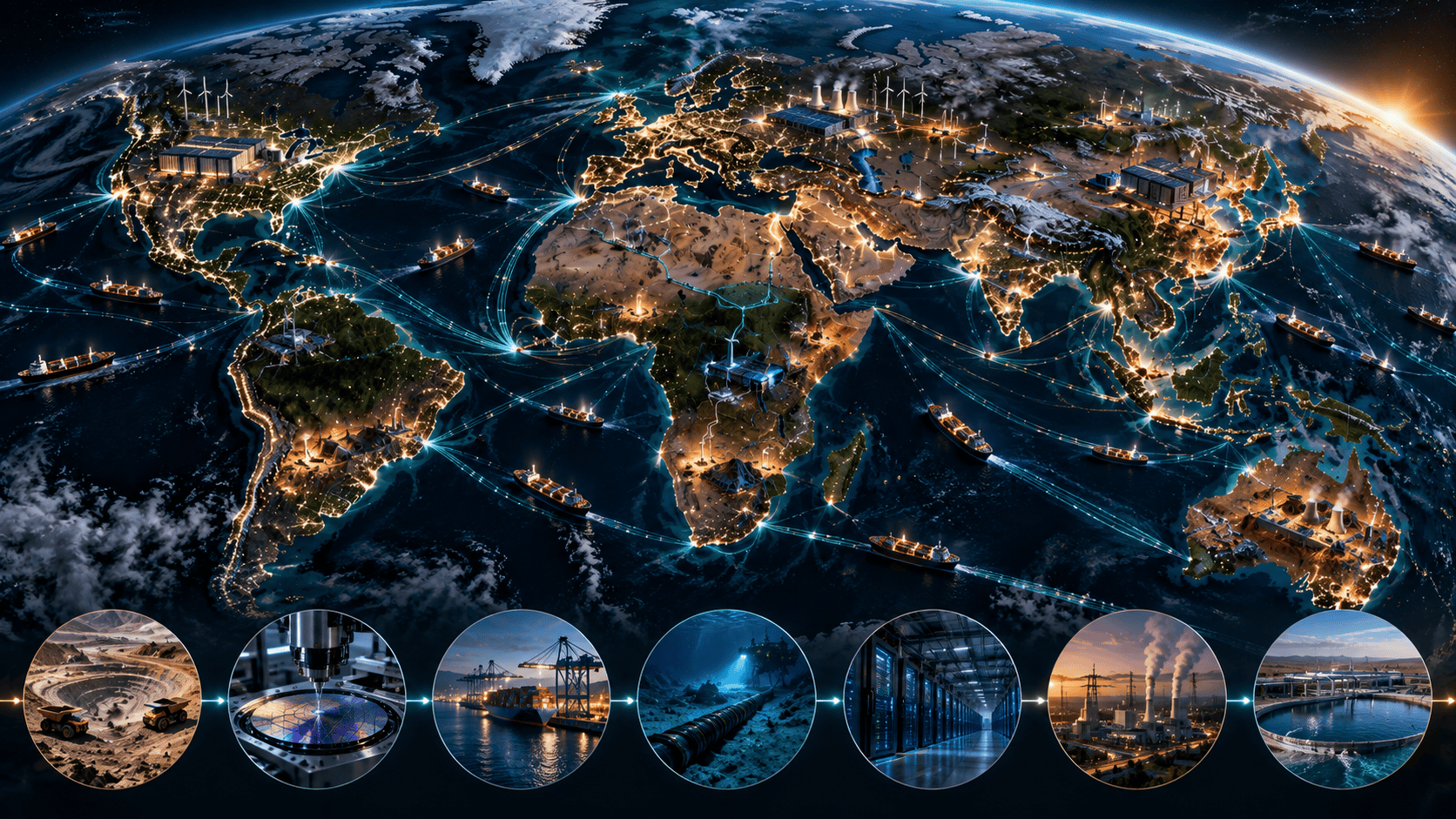
The hardware itself arrives through a production system. Semiconductor fabrication uses ultrapure water, as manufacturers’ process descriptions illustrate. That resource use occurs before an installed accelerator serves a workload. Attributing a share of it to a task requires a lifecycle method; it cannot be described as manufacturing fresh chips for each query. Manufacturing example: Winbond
A facility’s operating water meter cannot reveal that manufacturing history. Nor can a factory’s annual water total be assigned to an individual answer without accounting for the equipment produced and its use over time. Keeping these accounts separate makes the full dependency easier to examine, rather than making manufacturing disappear from the discussion.

Advanced packaging is another dependency. TSMC’s CoWoS description shows how logic and high-bandwidth memory are integrated. The OECD describes a semiconductor chain marked by geographic specialization and concentrated inputs. Ownership of a server does not reproduce the industrial capabilities needed to replace it. TSMC technology description; OECD semiconductor mapping
VI / Tunisia
Tunisia already knows this dependency
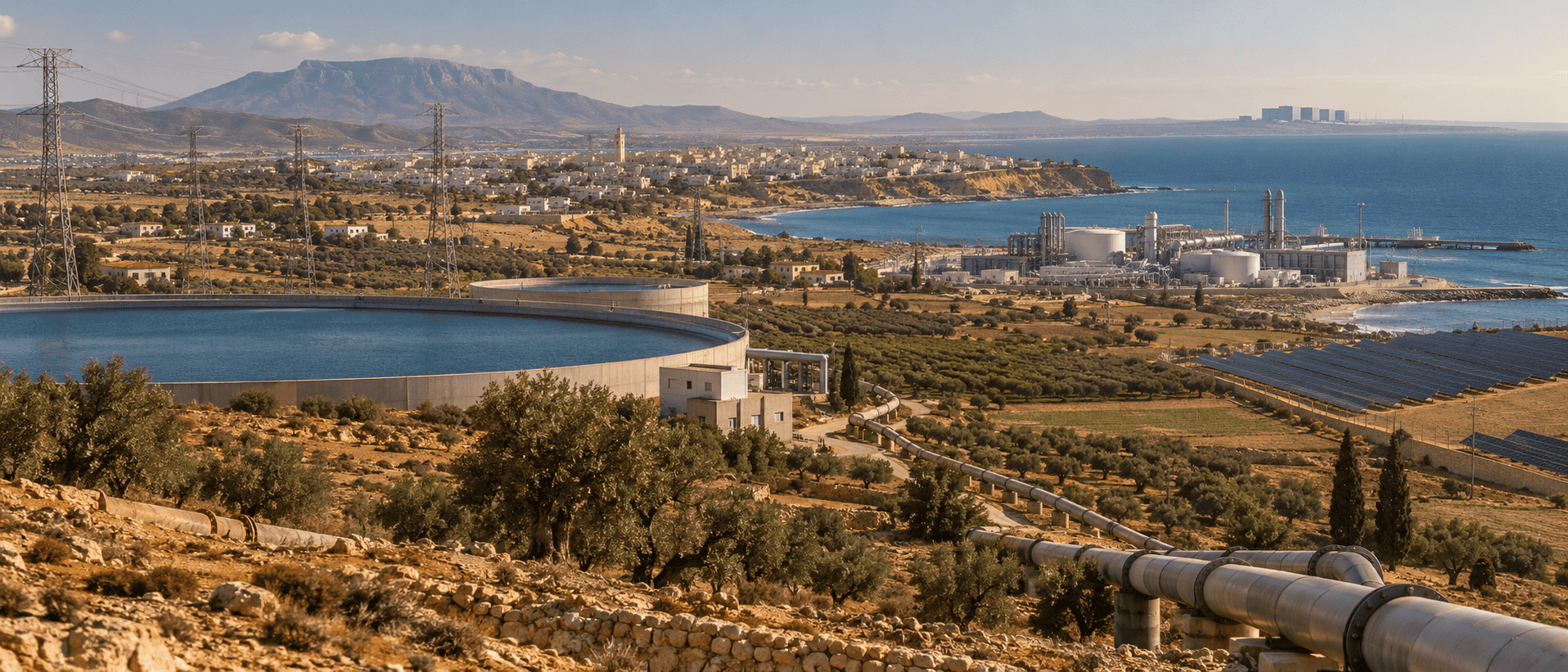
In Tunisia, the relationship between water, energy and dependable service is already a practical concern. It offers a way to understand infrastructure dependence before adding another demand to the picture.
Darja Rihla’s history of Tunisia gives historical context to the relationship between geography and institutions. Here, the focus is on contemporary water and energy services.
FAO records renewable water availability of about 390 cubic metres per person in 2020. That is a national resource indicator, not a household allocation or a measurement of what reaches a tap today. Agriculture accounts for the dominant share of withdrawals. FAO, Tunisia
Water scarcity is also a problem of systems between the source and the user. The World Bank’s potable-water project documentation identifies drought pressures, service constraints and losses in networks. A resource can be scarce before it enters a pipe and become less reliably available because of the condition of that pipe. World Bank project context
For a household facing an interruption, reliability means being able to plan washing and cooking. For irrigation, timing affects whether water is available when a crop needs it. The existing Tunisia Heatwave essay approaches the broader question of living within environmental limits from another direction.
Desalination can expand supply, while adding treatment and pumping requirements that depend on electricity. That connects water resilience to an energy system with dependencies of its own. Tunisia’s energy ministry reports a primary-energy independence ratio of 34% for the first half of 2026, counting gas transit royalties as national resources. It is a ratio of primary resources to consumption, not the percentage of electricity generated domestically. ONEM, June 2026 bulletin
Additional water-treatment capacity therefore has to be considered alongside the electricity, distribution and maintenance that make it useful. A plant and the service it enables are different things. The connection to AI lies in this dependence between layers: efficient servers cannot sustain a service if essential power, cooling or connectivity becomes unavailable. Tunisia’s water challenges make that relationship legible; they are not evidence that AI caused those challenges.
Trace the dependencies behind sovereignty
- Water security
- Treatment and pumping depend on electricity. Distribution and maintenance turn available water into a dependable service.
- Energy sovereignty
- Generation, connections, transformers and maintenance support the grid. Installed capacity alone does not establish continuity.
- Compute sovereignty
- Chips, electricity, cooling, connectivity and replacement parts must remain available. Ownership of a facility does not secure every supplier or operating condition.
These are connected infrastructure questions. The comparison does not rank policies or simulate resource allocation.
What an investment announcement can and cannot change
The scale of a financing announcement can obscure the slower work it enables.
In March 2026, the World Bank approved $332.5 million for the first phase of a Tunisian water program. It combines irrigation and potable-water interventions. Planned work includes network rehabilitation and smart metering, alongside an expansion of Zarat’s desalination capacity from 50,000 to 100,000 cubic metres a day. The potable-water interventions are expected to benefit 2.3 million people. These are program intentions and targets, not results established by the announcement. World Bank, April 2026
Meters can help reveal where water goes. Rehabilitation can address physical weaknesses. Additional treatment capacity can expand what a network has to distribute. Whether these changes produce dependable service must be assessed through implementation and operation.
That means asking less glamorous questions. Were the works completed? Do the instruments function? Can the operator act on the information? Is maintenance funded, and does service remain reliable under stress? A capacity figure describes a plant’s potential output under specified conditions. It does not alone establish what reaches a household consistently.
Energy investment deserves the same distinction. The World Bank’s $430 million TEREG program, announced through a financing agreement in November 2025, supports renewable-energy development and improvements to the electricity sector. Its objectives should not be reported as already achieved. World Bank, TEREG
The point is to give investment a fair test. An announcement establishes an intention; financing enables work; construction produces an asset; commissioning tests whether it can operate. Maintenance and service records show whether that capability persists. Evidence at one stage does not establish the next. That sequence also applies when the announced asset is a data center: a promised building and a dependable service occupy different stages of reality.
Who controls the conditions of intelligence?
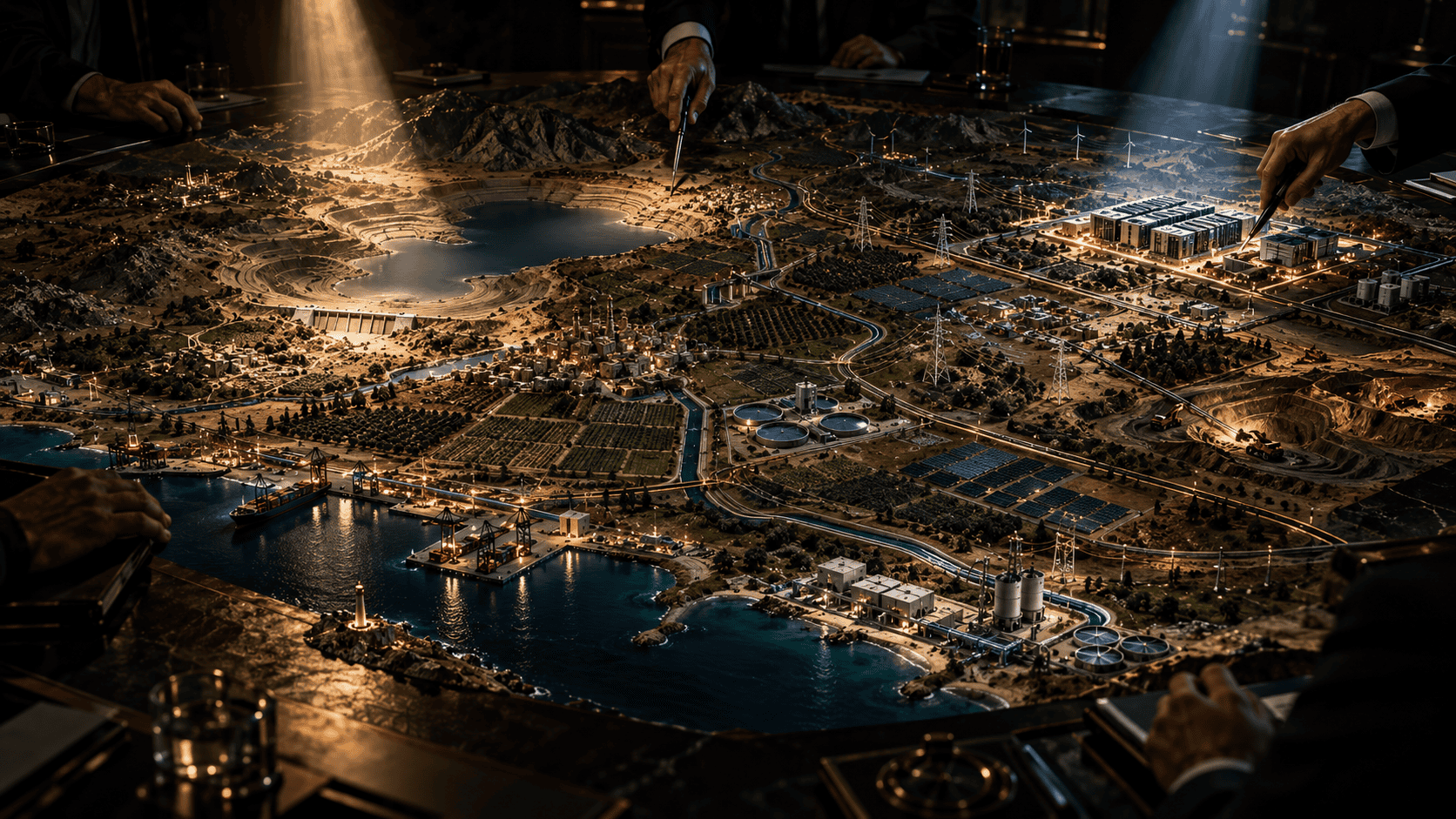
Power and water lead toward a broader strategic question: who controls the conditions under which intelligence remains available?
The Carthage Network Power essay offers a historical comparison at the level of routes and dependence. Ancient maritime power and modern chip supply chains retain different technologies, institutions and conditions.
Electricity connections, transformers and generation capacity also constrain expansion. The IEA’s analysis treats these alongside computing equipment, and its electricity outlook includes several generation technologies. A plan for compute has to meet a real grid. IEA, infrastructure constraints
Cloud services introduce further questions about suppliers, legal jurisdiction and practical control. The European Commission’s Sovereign Cloud Framework considers several dimensions of sovereignty, including operational, legal and supply-chain factors. It offers an example of assessing dependence beyond the address of a building. European Commission
This connects to cybersecurity as protection of digital infrastructure: continuity also depends on the physical systems that keep a service available.
Applied more broadly, that suggests concrete tests. Can an organization recover its data and restore service? Can it change providers without an unmanageable interruption? A portable copy of the data is only one part of that test: the receiving system must also be able to run the service. What remains dependent on proprietary software, replacement parts or a particular electricity supply?
A domestic facility can remain deeply dependent on external suppliers. An overseas service can offer useful contractual and technical forms of control. Neither conclusion should be assumed from location alone. Sovereignty becomes more meaningful when it describes capabilities that can be examined, including the ability to recover when an important relationship fails.
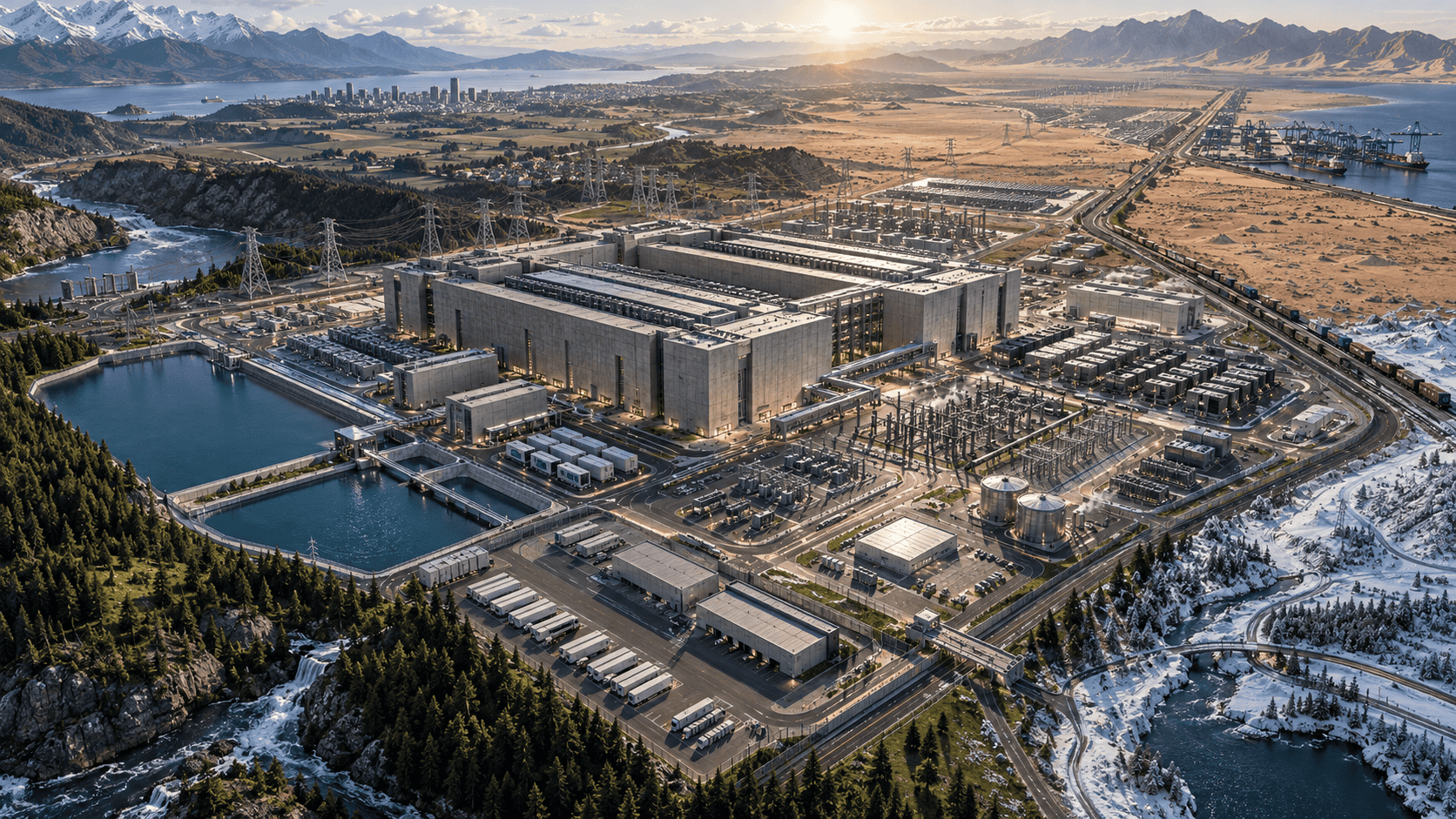
This also changes what counts as a useful expansion. More installed equipment may increase capacity while leaving a critical dependency untouched. An alternative supplier, a workable recovery arrangement or a stronger electricity connection may address a different weakness. Which matters most depends on the failure being considered. Strategic infrastructure decisions need that specificity before ownership, scale or national ambition can tell us much about resilience.
VII / Watershed
An intelligence worth locating
The answer on the screen does not need to carry a diagram of every system behind it. The decisions that expand those systems do need to make their dependencies visible.
AI can also help operate infrastructure. The IEA identifies applications in monitoring electricity equipment and making better use of grid capacity. IEA, energy-system applications That possibility deserves evaluation through actual performance against a defined alternative. A useful application still has a resource footprint; demonstrating its benefit requires evidence about both sides of the comparison.
Start with the electricity: its source, the connection required, and what happens when demand strains the grid. Follow the heat through the actual cooling architecture. Ask which water is measured, when it is needed, and what rules apply during drought. A favourable annual average should begin that inquiry rather than finish it.
Then follow control. Identify the critical suppliers, the recovery arrangements and the practical alternatives. Ask who receives the benefits of the service and who pays for the infrastructure expansion. Distinguish a modeled forecast from an operating record, an efficiency ratio from an absolute volume, and a financing decision from dependable delivery.
Those questions leave room for different decisions in different places. They also create obligations that can be checked after the announcement has passed.
Intelligence Has a Watershed
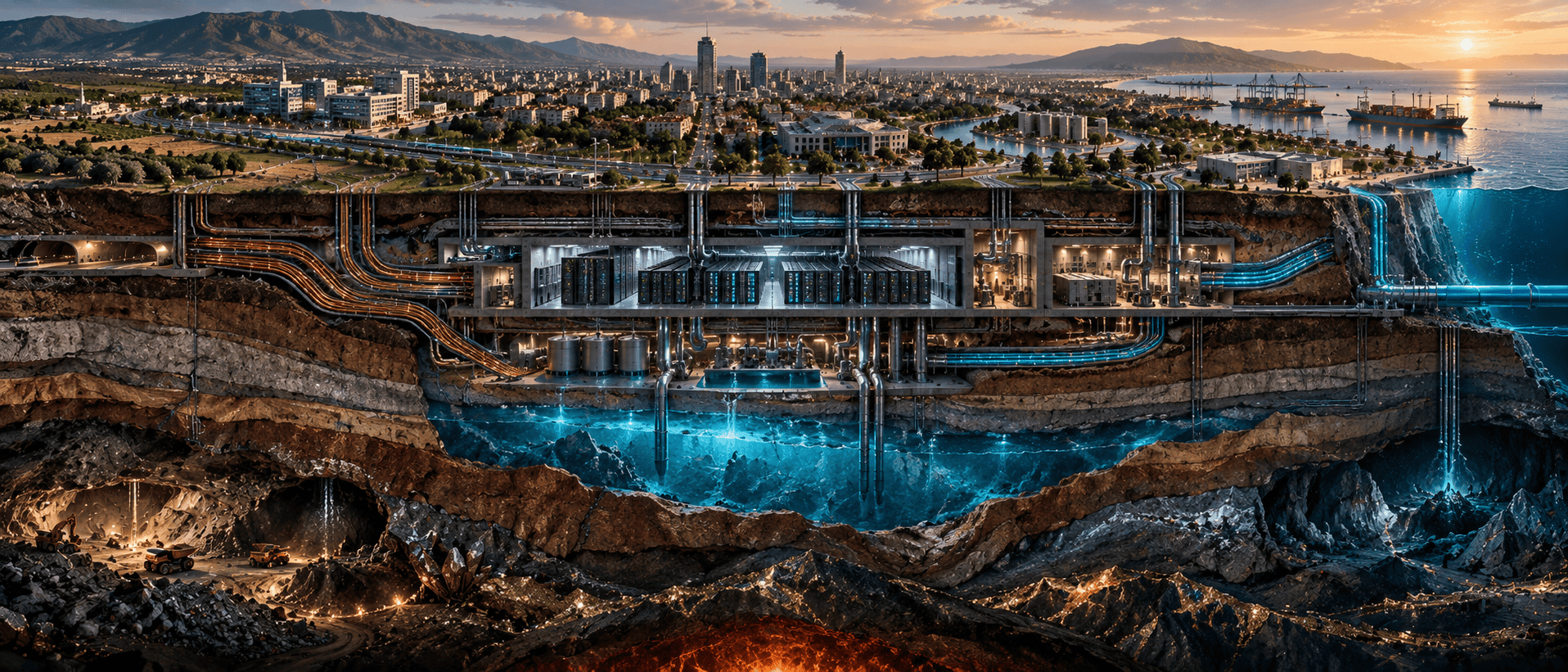
The cloud has an address, although the interface rarely shows it. Somewhere, electricity enters equipment. Heat must leave. People maintain the systems that make both movements possible. To decide what kind of intelligence is worth building, we need to locate those conditions, and the people whose lives already depend on them.