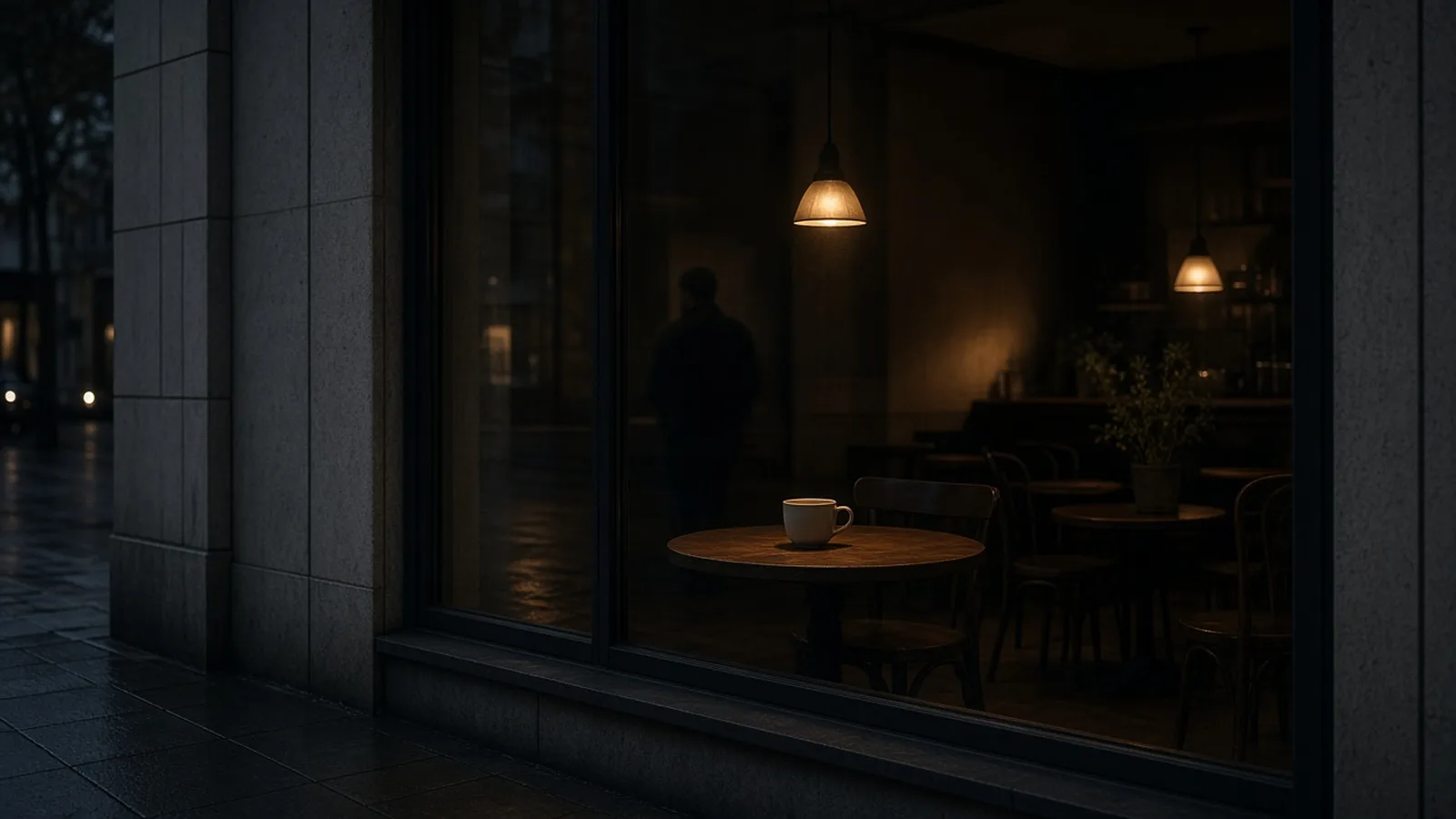
Category: Lifestyle & Culture

  • The Modern Café

    The Modern Café

    The Everyday Atlas · Street & Road → The Café. Lifestyle & Culture · Editorial report.

    In short

    The modern café is one of the most familiar rooms on a street, and one of the easiest to misread. A cup sits on a table. Someone waits, works, meets a friend, or does not sit down at all. From the pavement these can look like the same visit. They are not.

    This field note follows the practice, the place and the object. Its argument is simple.

    The drink has gone global. The invitation to stay is still made in each room, and it is no longer guaranteed.

    The table

    A cup is set down. A chair is pulled back, or it is not. A bag takes the second seat. Some people come to meet. Some come to wait. Some come to watch the street through the glass. Some stand at the counter, take a paper cup, and leave before the drink cools.

    The café offers a public table. The drink is the reason that can be named. What happens after the order is the real question: how long may a person remain, and with what kind of company, before the visit has to justify itself again.

    Look closely and the scene is made of small, repeated objects. The saucer or the paper sleeve. The hook under the table for a bag. The power socket, if there is one, already claimed. Outside, sitting at a stranger’s table without a reason is rarely casual. Inside, it is the ordinary arrangement: a modest purchase in exchange for a place to be.
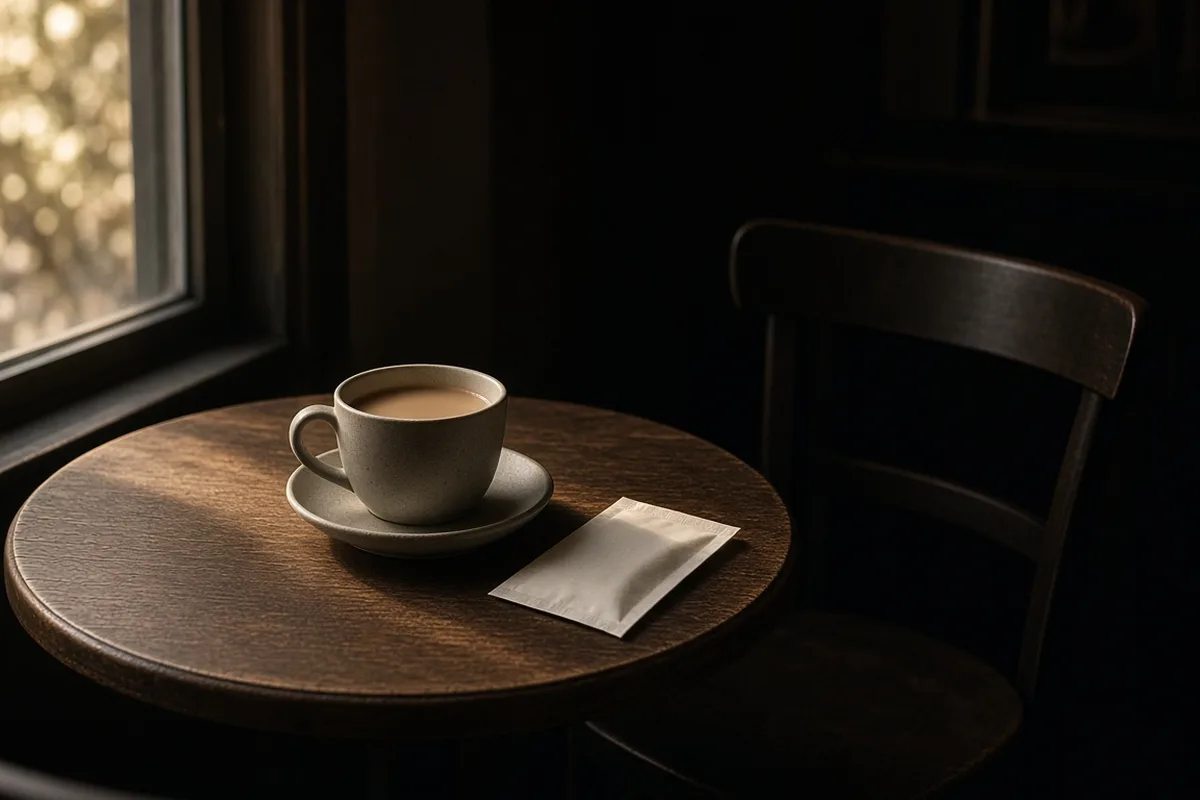
    A quiet modern café table by the window, a ceramic cup on a saucer, in dark muted tones and warm low light.
    The public table: a modest purchase in exchange for a place to be.

    A room between home and work

    There is no single global café culture. There is a global format: a counter, a short menu, tables that can be shared or claimed, and a drink that can be finished quickly or slowly. The format travels well. What happens inside it does not travel as one culture.

    A terrace, a corner café, a coffeehouse with newspapers on a stand, a new coffee bar with a queue to the door: they share the cup. They do not share the same idea of how long a customer may stay, whether a laptop belongs on the table, or whether the room is for regulars, visitors, or people passing through.

    The sociologist Ray Oldenburg called places of this kind third places, separate from home and work. He later described them as

    havens of sociability where conversation is the main activity and conviviality prevails.

    Cafés were among his examples, together with taverns and barbershops. The earlier report on the modern barbershop noted that many shops fit that description well. The café is the room usually given as the example. It does not follow that every café still works that way.

    Not every establishment of the right type is a third place. Much depends on how the room is hosted, and on whether people actually use it to meet, linger and talk. A busy café can fail that test while looking successful from the street.

    The drink travels. The invitation to stay does not.

    A product can be standardised across a hundred streets. A ritual cannot. Beans, machines, paper cups and loyalty apps travel quickly. The regular, the unhurried table, and the right to sit with one order do not. They have to be made in each room: by the furniture, by the price of a single cup, and by whether a person who came alone is left in peace or treated as a problem.

    In 2011, Viennese coffee-house culture was inscribed in Austria’s national inventory of intangible cultural heritage. The Austrian UNESCO Commission describes a coffeehouse as a place:

    in which time and space are consumed, but only the coffee is listed on the bill.

    That sentence names the actual offer. The drink is what can be sold. Time is what the room permits. Where the two come apart — where time is no longer included, or is included only if you keep ordering — the café is still a café, but it is a different kind of room. The deeper history of the coffeehouse as a public institution belongs to Culture & Identity. No article on that history has been published there yet.

    Who uses the café now, at which hours, and for what

    The Everyday Atlas follows this question for the café. The four uses below are editorial observations: prompts for reading a room, not claims about every café or hour of the day.
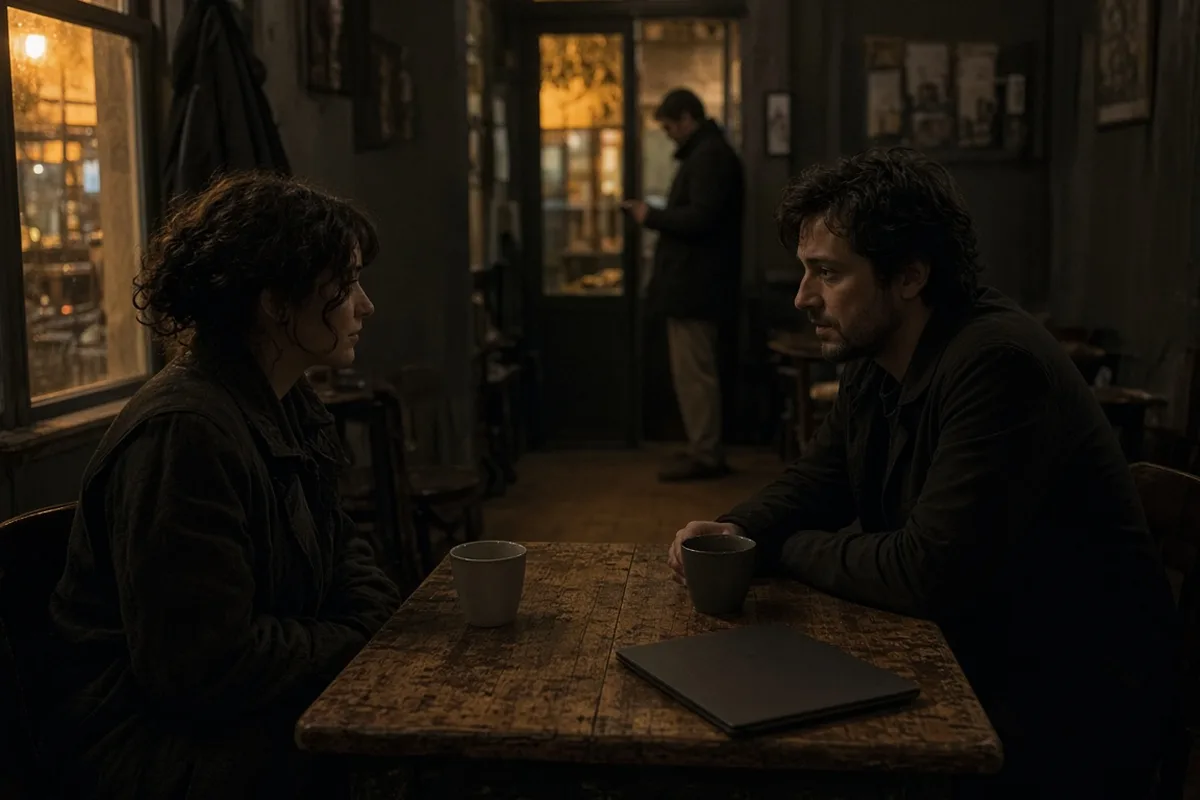
    Two people talking at a café table in a dim room, cups between them, warm light from the street through the glass.
    One room, several uses: a meeting, a wait, or a table kept for work.

    The meeting

    Two people arrive at a time they have already agreed. The table is a temporary office or a temporary living room. The cups mark that the meeting is public enough to be seen, and private enough to be spoken.

    The work table

    A laptop opens as soon as the order arrives. The café becomes a rented desk, paid for in drinks and chosen for sockets, light and the feeling of being among people without having to speak to them. Conversation is no longer the main activity. Presence is.

    The wait

    Someone sits with a view of the door, or of a phone. The café is a sheltered interval between two other places. The visit ends when the next appointment begins.

    The takeaway

    The transaction ends at the counter. There is no table, or the table is only a shelf for lids and sugar. This is still a café in the commercial sense. It is barely a room.

    These four uses can occupy the same premises in a single morning. The question is not which of them is the “real” café. The question is which invitation the room is making at the hour you enter it, and who that invitation is for. Do people arrive alone and join others, or arrive alone and protect a table? Both can be legitimate uses of a public room. Only one of them is sociability.

    How to read a modern café

    Stand just inside the door before you order. Seven things say more than the drinks list.
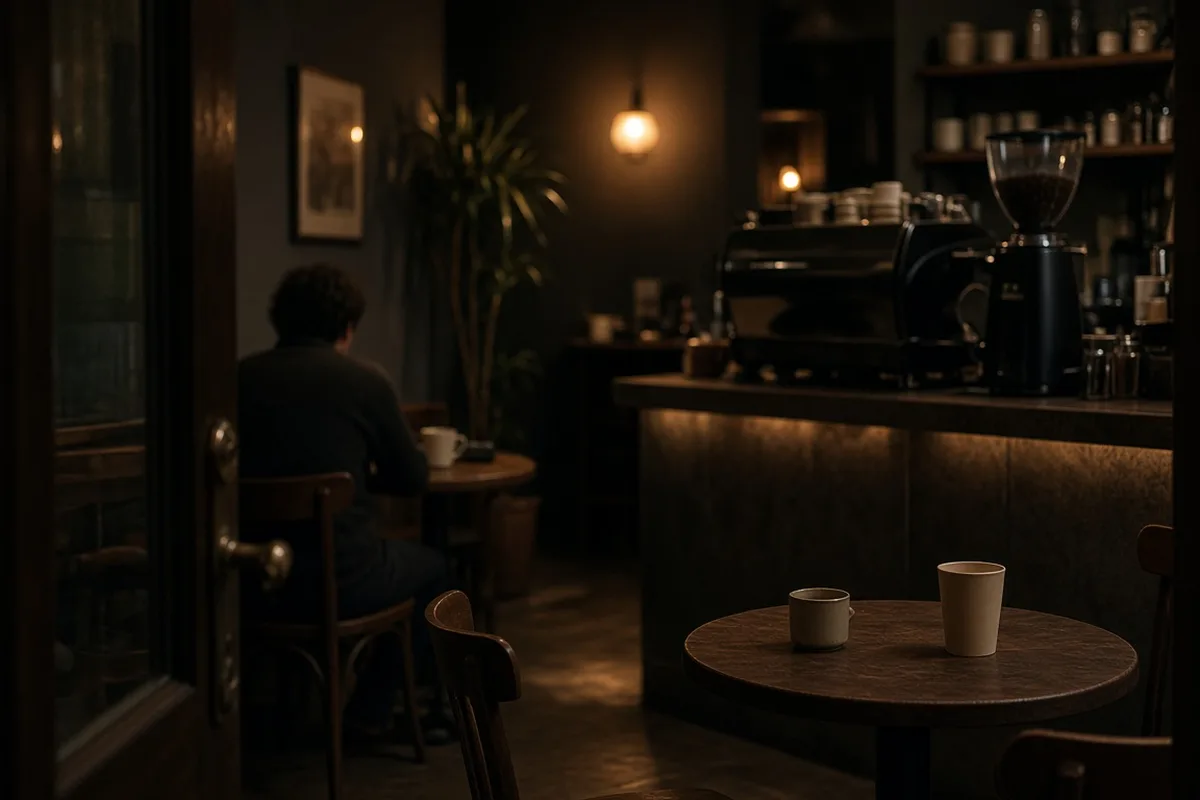
    The view just inside a café door: tables, a counter, and mixed ceramic and paper cups, in warm low light.
    Stand just inside the door before you order. The room has already begun to answer.
    1. The second chair. Is it an invitation, or is it already used to hold a bag and close the table?
    2. Paper cup or ceramic. How long does the room expect you to stay?
    3. Sockets and headphones. Is the table also a desk?
    4. A newspaper stand, or only phones. What is the room offering besides a screen?
    5. The queue and the terrace. Where does the life of the place actually happen?
    6. One cup, still sitting. Are empty cups cleared as a hint, or left in peace?
    7. Language and prices on the board. Who the room expects to walk in, and for how long a single order remains comfortable.

    These are prompts for attention, not a scoring system. A café can be an excellent place to work and a poor third place, or the reverse. The point is to see what is being practised, not to demand that every cup come with a conversation.

    Back to the table

    Back to the cup. It looks the same as at the start. By now it carries more than a drink: time, work, waiting, conversation, solitude in public, hospitality, the street.

    How long are you invited to stay?

    What did you come to do?

    Did you come to meet someone, or to be among people?

    What would change if the same drink were handed to you at the door?

    That is where a purchase becomes a practice, and where a café becomes — or fails to remain — a public room.

    Next field notes

    Planned means no article exists yet.

    • The Modern Barbershop — published
    • Coffee — Lifestyle & Culture — Planned
    • Tea and the glass — Lifestyle & Culture — Planned
    • The café as a public space — Culture & Identity — Planned

    Read elsewhere


    How this report was made

    This is an editorial report, not fieldwork or a survey. Facts with a source are listed below. The four uses of the café and the “how to read” list are editorial observations: prompts for reading a room, not measurements or claims about every café in a city or region.

    Sources

    • Ray Oldenburg, The Great Good Place, 1989, which introduced the term “third place.” greatgoodplace.org
    • Ray Oldenburg, “havens of sociability where conversation is the main activity and conviviality prevails,” in an article for the Encyclopedia of Community, as published at greatgoodplace.org.
    • Austrian UNESCO Commission, “Viennese coffee house culture,” inscribed in 2011 in Austria’s national inventory of intangible cultural heritage, including the description of a coffeehouse as a place “in which time and space are consumed, but only the coffee is listed on the bill.” unesco.at
    • Darja Rihla, “The Modern Barbershop,” 5 October 2026. darjarihla.com/the-modern-barbershop

    ← Back to Lifestyle & Culture

  • The Modern Barbershop

    The Everyday Atlas Street & Road to The Barbershop

    Grooming, Style and the Social Life of Men

    From Lagos to Seoul, Tunis to São Paulo, London to Lahore, Kingston to Tokyo.

    Lifestyle & CultureEditorial reportOne chair, many worlds

    Plate I. One chair before a mirror. An empty barber chair seen from behind, facing a mirror. The mirror reflects a tiled wall, a hairstyle poster, a football sticker and a bright doorway to the street. On the counter stand a tea glass, clippers, a product bottle, a phone and a folded towel.
    Plate I One chair before a mirror. Tiles, clippers, a towel, a poster, a tea glass, a football sticker, a bottle, a phone: a room that could stand in many countries and belongs to none of them. Authored drawing, not a photograph.

    In short

    The barbershop is one of the few rooms that exists in almost every city on earth and still feels local in each of them. This report follows the camera outward, from the face in the mirror to the chair, the shop, the street, the routes of migration and the world, and then back to the chair.

    Its argument is simple. The technique has gone global. The room has stayed local.

    Scale: the face

    I. The chair

    A man sits in a chair.

    A cape closes around his neck.

    Clippers begin.

    For the next twenty minutes, very little is asked of him. He does not have to perform, decide or explain much. He has to sit still, keep his head where the barber puts it, and trust a stranger with a blade near his ear.

    That trust is the first thing a barbershop offers. The haircut comes second.

    Look closely and the scene is made of small, repeated objects. The paper strip around the neck. The cape snapped shut at the back. The clipper guard clicked into place. The edge of the mirror, where the client watches the barber’s face as much as his own. The barber’s hand resting on the crown of a head, as if it were the most ordinary thing in the world.

    Outside the shop, touching another man’s head is rarely casual. Inside, it is handed over every few weeks, without ceremony.

    1. 01 · Cape
    2. 02 · Neck strip
    3. 03 · Clipper
    4. 04 · Mirror edge
    5. 05 · The barber’s hand
    Close-ups. Five details that are the same in Tunis and Tokyo. Authored drawings.

    Scale: the shop

    II. A global room

    There is no single global barber culture.

    There is a global format: a chair that turns and tilts, a mirror, a set of tools, one person who cuts and another who waits. The format travels well. What happens inside it does not travel as one culture.

    A barbershop in Tunis, a barbing salon in Lagos, a berber in Istanbul, a tokoya in Tokyo and a barbearia in São Paulo share the chair. They do not share the same conversation, the same music, the same idea of a good finish, or the same sense of how long a customer may stay without buying anything.

    The modern barbershop is also a story of movement. Barbers move with migration and carry their shop culture with them. On many European high streets the barbershops speak the languages of those routes: Turkish, Kurdish, Arabic, Amazigh languages, the French of West Africa, the English of the Caribbean. In the United States, the historian Quincy T. Mills has shown how Black barbers and barbershops became institutions in their own right, shaped by segregation, enterprise and community life.

    The Global Barber Route Eleven places, one lens each.

    1. Tunisneighbourhood continuity
    2. Lagosprecision and enterprise
    3. Kingstonsound and community
    4. New Yorkdiaspora and technique
    5. Londonthe high-street mix
    6. Istanbulritual and service
    7. Lahorethe street chair
    8. Seoulgrooming and changing masculinity
    9. Tokyolicence and precision
    10. Jakartalearning from the screen
    11. São Paulobarbearia and street style
    One lens per place. A lens is what this report looks at there, not a description of everyone who lives there.

    Scale: the neighbourhood

    III. Regional worlds

    The chair is the same. The room around it changes. Seven scenes follow, each read as a field guide: what to look for, not a verdict on a region.

    A neighbourhood barbershop facade with an open arched door, a sign in French and Arabic, a striped awning, a tiled base and a chair outside for regulars. COIFFURE حلاق
    Scene 1 The door stays open; the chair is visible from the pavement.

    North Africa

    Tunis · Algiers · Casablanca · Cairo

    In the cities of North Africa, the barbershop is often a neighbourhood fixture rather than a destination. It opens onto the street. Men greet the barber without needing a haircut, and in one afternoon the chair can hear Arabic in its local forms, French and, in parts of the Maghreb, Tamazight.

    Continuity matters here. A man can keep the same barber for decades, and a son can inherit him.

    Look for

    • the sign in two scripts
    • the open door and the chair visible from outside
    • the radio or television tuned to football
    • regulars who come in to talk, not to be cut
    A waiting bench with three customers, a speaker in the corner sending out sound waves, and a clock on the wall.
    Scene 3 The bench is an audience. Who controls the music controls the room.

    The Caribbean

    Kingston · Port of Spain · Bridgetown

    Music arrives before the haircut. A speaker in the corner, a playlist the barber controls, customers who stay longer than they need to because the conversation is good. In Caribbean shops, and in the Caribbean diaspora of London, Toronto and New York, the barbershop is a place where sound, argument and news circulate together.

    Look for

    • who chooses the music
    • the waiting bench as an audience
    • a haircut timed around a match or a song

    Türkiye and the Middle East

    Istanbul · Beirut · Amman · Riyadh · Dubai

    Here the beard is architecture. The cheek line is set high or low, the neckline sharp, the moustache shaped as a decision of its own. The service is often longer than the cut: hot towels, a straight razor, threading on the cheeks in some shops, a splash of cologne at the end, tea that arrives without being ordered.

    The Turkish barber has become an export in its own right. “Turkish barber” is now a sign on streets far from Türkiye.

    A diagram of beard architecture with four numbered lines: the cheek line, the moustache, the neckline and the fade from hair into beard. 1 2 3 4
    Scene 4 Beard architecture.
    1. Cheek line: high, low or natural
    2. Moustache: shaped on its own
    3. Neckline: where the beard ends
    4. The fade from hair into beard
    A street barber’s corner: a mirror nailed to a wall beside a tree, a wooden chair, a stool with a tool case, a large umbrella and a hand-written price board. CUT SHAVE MASSAGE
    Scene 5 The barbershop does not always need a shop.

    South Asia

    Lahore · Karachi · Delhi · Dhaka

    The barbershop does not always need a shop. On pavements and under trees, a chair, a mirror fixed to a wall and a small case of tools can be enough. Street barbers and small salons work a few doors away from branded chains, and a straight-razor shave or a head massage can be part of the same visit as a fade.

    Look for

    • the mirror on the wall
    • the price written by hand
    • the head massage at the end
    • cricket on somebody’s phone

    East Asia

    Seoul · Tokyo · Osaka · Taipei

    Precision becomes a style of its own. In Japan, the line between barber and hairdresser is a matter of licence: barbers (rihatsushi) and hairdressers (biyoshi) hold separate licences, and only barbers are licensed to shave.

    In Seoul, the lens of this report is grooming and how ideas of masculinity change: what happens when men’s haircuts, skincare and style are discussed openly rather than quietly.

    Look for

    • the consultation before the cut
    • the shampoo as part of the service
    • reference photos on the barber’s tablet
    A precision diagram: a head in profile with guide lines at 0, 45 and 90 degrees, and a comb and scissors aligned on the 45 degree line. 0° 45° 90°
    Scene 6 Elevation and angle: precision as a visible style.
    A street-facing barbershop with large painted lettering reading Barbearia, a football shirt in the window, and a head seen from behind with lines shaved into the hair. BARBEARIA 10
    Scene 7 The street comes inside: lettering, football, lines shaved into hair.

    Latin America

    São Paulo · Rio de Janeiro · Bogotá · Mexico City

    The barbería and the barbearia bring the street inside: painted lettering, football shirts, reggaeton and funk, designs shaved into the side of the head. In Brazil the barbershop is a recognised small-business model: Sebrae, the national agency for micro and small businesses, publishes a dedicated guide to opening one and describes men’s grooming as a market in clear expansion.

    Look for

    • freestyle lines shaved into hair
    • the shop’s own logo on caps and shirts
    • the Saturday queue

    IV. The shop is where the haircut becomes culture.

    • conversation
    • music
    • ritual
    • work
    • style
    • belonging

    A haircut can be done anywhere. Culture needs a room, a few regulars and time.

    Scale: the current

    V. The barber’s phone changed everything

    Then: comb, scissors, razor

    1. Apprenticeship
    2. Migration
    3. Video
    4. Global circulation

    Now: the phone

    For most of its history, barbering was learned standing next to someone. An apprentice swept the floor, watched, held the hand mirror, and was trusted with a neckline long before he was trusted with a full cut. Technique travelled at the speed of people: a barber moved to another city or another country and took his hands with him.

    The phone changed that speed. A barber in Jakarta can watch a technique filmed in São Paulo in the morning and try it in the afternoon. A fade tutorial, a beard sculpt, a new way to use a foil shaver: all of it circulates as short video.

    The phone is also the shop’s window, its booking desk and its portfolio. Often the finished cut is photographed before the client leaves the chair.

    None of this ends apprenticeship. It adds a second, global classroom to the local one.

    Scale: the city

    VI. The fade went global

    A head in profile. The hair moves in steps from long on top to skin at the neck, marked with clipper guard numbers 3, 2, 1, half and 0. 3 2 1 ½ 0
    Plate II The fade as a graphic principle: long to short, top to skin, guard by guard.

    Global technique. Local expression.

    The fade is a simple idea: hair that moves from longer to shorter, from the top to the skin, without a visible line. Done well, it is a gradient made with clippers, guards and patience.

    Few cuts show as clearly how a technique becomes global while its expression stays local. The same fade carries a hard part in one city and a curly top in another. It meets a lined beard, a shaved design, a conservative taper for the office or a skin fade that says weekend.

    • Lagos
    • Casablanca
    • London
    • Riyadh
    • São Paulo
    • Jakarta
    • Paris
    • Lahore
    • Melbourne

    Scale: the world

    VII. The beard went global too

    Beards follow fashion cycles. In the early 2010s, full beards spread through cities that had been mostly clean-shaven for decades, and barbers rebuilt their services around them: trims, shaping, oils, balms and hot towels.

    Fashion may also explain why the beard comes and goes. In a 2014 experiment published in Biology Letters, participants rated faces after seeing sets in which beards were either common or rare. Heavy stubble and full beards were judged more attractive when they were rare, and clean-shaven faces were judged more attractive when they were rare. A style can lose its edge simply because everyone has adopted it.

    The same beard does not mean the same thing everywhere. A full beard can be fashion in one street and faith in the next. A moustache can signal a generation, a profession, a tradition or nothing at all. The barber shapes the hair; the meaning is supplied by the world around it.

    That meaning, its history and its symbolism, belongs to Culture & Identity. Here the beard is practice: what is done to it, where, and with what.

    Scale: the world

    VIII. Products travel. Rituals resist.

    What travels fast

    • clippers
    • beard oil
    • pomade
    • razors
    • tutorials
    • brands

    What travels slowly

    • conversation
    • hospitality
    • father and son
    • walk-ins
    • tea
    • silence
    • trust

    A product can be on shelves in a hundred countries tomorrow. A clipper model, a beard oil, a pomade or a tutorial needs only shipping or a signal.

    A social ritual moves at the speed of people. Conversation, hospitality, the father who brings his son, the walk-in greeted by name, the tea, the silence a regular is allowed, trust: none of it can be shipped. It has to be built in each room, and it can stay local for generations.

    That is the difference between consumption and culture. Lifestyle & Culture looks for the second inside the first.

    Scale: the family

    IX. Father, son and barber

    A father and a young boy seen from behind, waiting on a bench. The boy’s feet do not reach the floor.
    Plate III Waiting. The boy’s feet do not reach the floor yet. A place for a documentary photograph later.

    A boy’s first haircuts are someone else’s decision. He is lifted onto a booster seat or a board across the arms of the chair. His father watches in the mirror. The barber talks to the father about the boy, and to the boy about football.

    Years later the roles shift. The boy chooses his own cut, then his own barber. Sometimes he chooses his father’s barber, and the shop becomes a thread between generations: the same chair, the same hands, another head.

    The barber cuts time into appointments.

    Every two weeks, every three weeks. Before Eid, before Christmas, before a wedding, a job interview, the first day of school. A life can be measured in haircuts, and the barber is often the one person who has seen all of them.

    Scale: the street

    X. The shop as a social room

    A place for men without requiring a reason.

    The waiting area of a barbershop: a television showing a football match, two men on a bench, a low table with tea glasses and a phone face up, a third man standing who is not having a haircut, and a coffee machine on the counter.
    Plate IV The bench, the match, the tea, the phone, and the man who is not here for a haircut.

    Leave the chair for a moment and look at the bench. A television on a bracket. A football match nobody is fully watching. Coffee, or tea in small glasses. Phones face up on the table. A man who came in with his cousin and is not being cut at all.

    The sociologist Ray Oldenburg called places like this third places, separate from home and work: “havens of sociability where conversation is the main activity and conviviality prevails.” Many barbershops fit that description better than the cafés that are usually given as examples.

    Research on Black barbershops in the United States shows how much can happen on that bench. In Barbershops, Bibles, and BET (2004), the political scientist Melissa Harris-Lacewell studied how everyday talk in spaces such as barbershops shapes political thought. Quincy T. Mills traced the barbershop as a Black business and public space across American history.

    This is social infrastructure. It is rarely planned as such. It is built one regular at a time.

    Scale: the current

    XI. The barber becomes a brand

    1. Chair
    2. Instagram
    3. Booking
    4. Academy
    5. Global audience

    A successful barber now often runs more than a chair. The cut becomes content, the content becomes a following, the following becomes bookings, and some barbers turn their technique into courses, products and seminars abroad. A local craftsman can have a global audience without leaving his street.

    That changes the economics of the craft, and it changes the room. When any cut may be filmed, lighting matters, mirrors are placed for the camera and the client is also an image. Look for the ring light: it is the newest piece of barbershop furniture.

    Scale: memory

    XII. Scent and sound

    What does a barbershop remember?

    Sound

    • Afrobeats
    • Raï
    • Reggaeton
    • Arabic pop
    • K-pop
    • Football commentary
    • The clipper on the neck

    Scent

    • citrus
    • menthol
    • talc
    • oud
    • aftershave
    • lemon cologne

    Culture is often stored like this. Not as a theory. As scent.

    Memories of a barbershop rarely begin with the haircut. They begin with a smell, a song, a voice on the radio, the buzz of a clipper on the back of the neck.

    Scale: the street

    XIII. The shop window: how to read a barbershop

    Stand outside and read the window before you go in. Seven things say more than the price list.

    A drawn barbershop front with seven numbered observations: a football shirt, a ring light, an old razor, a booking QR code, a coffee machine, a hairstyle poster and a sign in several languages. BARBER KAPPER BERBER حلاق 1 2 3 4 5 6 7
    Plate V How to read a barbershop. Seven observations from the pavement.
    1. Football shirt. Which club, which country, which generation.
    2. Ring light. The shop is also a studio.
    3. Old razor. Kept for the ritual, or for the memory of the founder.
    4. Booking QR code. Walk-ins welcome, or not.
    5. Coffee machine or tea glasses. How long you are invited to stay.
    6. Hairstyle poster. Which styles the shop thinks you want, and from which decade.
    7. Language on the wall. Who the shop expects to walk in.

    Scale: back to the face

    XIV. One chair, many worlds

    Back to the chair. It looks the same as at the start. By now it carries more than a client.

    The same empty barber chair as at the start of the report.
    Around the chair:
    • migration
    • technology
    • masculinity
    • craft
    • fashion
    • memory
    • community
    • entrepreneurship

    How do you want it?

    • How do you want to present yourself?
    • What do you carry from where you come from?
    • What have you borrowed from somewhere else?
    • What has your generation changed?
    • What still feels like you?

    That is where grooming becomes culture.

    Continue the barber journey

    Next field notes

    Planned means no article exists yet. Links appear here when a field note is published.

    1. A History of the BarbershopCulture & IdentityPlanned
    2. The World’s Most Famous BarbershopsLifestyle & CulturePlanned
    3. Barbers Who Changed the CraftLifestyle & CulturePlanned
    4. Barber Cultures of North AfricaLifestyle & CulturePlanned
    5. The Turkish BarberLifestyle & CulturePlanned
    6. The Black BarbershopLifestyle & CulturePlanned
    7. From Barbers to Hairdressers: The Women’s SalonLifestyle & CulturePlanned
    8. Why Was Barbarossa Called Red Beard?Culture & IdentityPlanned

    Sources

    1. James McDougall, A History of Algeria, Cambridge University Press, 2017, chapter 1. Cambridge Core
    2. Agostino Veneziano, Khair ad-Din Barbarossa, engraving, 1535, Rijksmuseum, RP-P-1950-676. Rijksmuseum
    3. Anonymous, Italian, Hayreddin Barbarossa, Ottoman admiral, woodcut with additions in pen and ink, about 1530 to 1560, The Metropolitan Museum of Art, 50.514.8. The Met
    4. Frederick I, Holy Roman emperor, Encyclopædia Britannica. Britannica
    5. barber (n.), Online Etymology Dictionary. Etymonline
    6. Zinnia J. Janif, Robert C. Brooks and Barnaby J. Dixson, “Negative frequency-dependent preferences and variation in male facial hair”, Biology Letters 10 (4), 2014, 20130958. doi:10.1098/rsbl.2013.0958
    7. Quincy T. Mills, Cutting Along the Color Line: Black Barbers and Barber Shops in America, University of Pennsylvania Press, 2013. De Gruyter Brill
    8. Melissa V. Harris-Lacewell, Barbershops, Bibles, and BET: Everyday Talk and Black Political Thought, Princeton University Press, 2004. De Gruyter Brill
    9. Ray Oldenburg, The Great Good Place, 1989, and his definition of third places. greatgoodplace.org
    10. Web Japan (Ministry of Foreign Affairs of Japan), The Art of Hairstyling in Japan, 2025. web-japan.org
    11. SFO Museum, Extra ’O’! African Barbershop and Hairdressing Signs, 2020. SFO Museum; exhibition summary by Indigo Arts
    12. Sebrae, Ideia de negócio: Barbearia. Sebrae (PDF)