
How Cybersecurity Shapes the Modern World
Cybersecurity shapes the modern world by protecting the invisible digital infrastructure that modern societies depend on for communication, finance, healthcare, energy, logistics, and governance.

How Cybersecurity Shapes the Modern World
How cybersecurity shapes the modern world begins with a simple observation: modern civilization now runs on digital systems that most people never see directly. Payments clear through networked platforms. Hospitals rely on digital records. Governments coordinate through large administrative systems. Energy networks, logistics chains, and communication platforms all depend on software, data flows, and connected infrastructure.
Cybersecurity shapes the modern world because it protects the operational layer beneath daily life. Without that protective layer, efficiency turns into fragility. Convenience turns into dependence. Interconnection turns into exposure.
That is why cybersecurity is no longer a niche technical issue. It is a structural condition of modern social order.
Digitalization Turned Infrastructure into Attack Surface
To understand why cybersecurity shapes the modern world, we must first understand what digitalization has done to society. Over the past decades, nearly every sector has become dependent on digital infrastructure. Banking systems process transactions at planetary scale. Hospitals store and move medical data digitally. Public administration, transport systems, education, supply chains, and media all operate through connected platforms.
This digitalization created speed, scale, coordination, and convenience. It also created systemic vulnerability. When a society becomes dependent on digital infrastructure, its critical functions inherit the weaknesses of that infrastructure.
Why Cybersecurity Became Central
Complexity expanded
Cloud environments, APIs, software supply chains, identity systems, and connected devices dramatically widened the attack surface.
Digital assets gained value
Data, financial transactions, credentials, and intellectual property created strong incentives for cybercrime.
States entered cyberspace
Governments increasingly treat cyber capabilities as tools of espionage, disruption, and strategic competition.
Humans remain attack vectors
Phishing, deception, and social engineering show that many successful intrusions exploit behavior more than code.
Together these forces created a permanent cyber environment in which attackers, defenders, institutions, and infrastructures continuously adapt to one another.
Cybersecurity as a Complex System
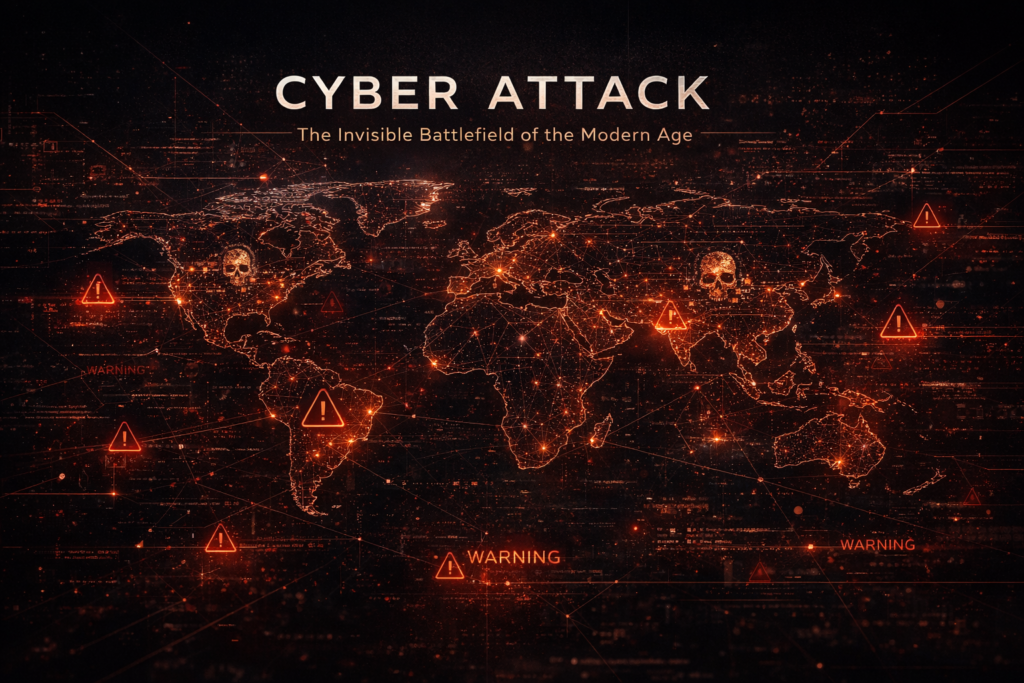
Cybersecurity cannot be understood through isolated incidents alone. Modern digital infrastructure behaves like a complex system: many interacting components, distributed dependencies, and outcomes that are difficult to predict from individual parts. A weakness in one supplier can expose hundreds of firms. A compromised update can reach thousands of systems at once. A single credential theft can unlock wider institutional access. Authentication is not the end of the trust decision: session state and tokens can preserve authority after login, which is why post-login trust must remain continuously revocable.
This is why the logic explained in The Hidden Logic of Complex Systems matters here. In cybersecurity, outcomes rarely follow intentions cleanly. A tool built for efficiency can enlarge systemic exposure. A defensive control in one layer may shift attackers toward a softer dependency in another.
Cybersecurity shapes the modern world because digital risk is now networked, distributed, and cumulative.
Read this pillar alongside What Is a Complex System?, Feedback Loops in Systems, Emergence in Complex Systems, and The Hidden Logic of Complex Systems to see why cyber risk behaves like infrastructure-level systems risk.
Cybersecurity Runs on Feedback Loops
Cybersecurity is shaped by reinforcing and balancing loops. The logic outlined in Feedback Loops in Systems applies directly.
Attack success attracts more attack
Profitable ransomware campaigns attract imitators, tooling improves, underground services expand, and the ecosystem becomes more capable.
Defense reduces exposure
Monitoring, patching, segmentation, user training, and incident response reduce the attacker’s room to operate and push systems back toward stability.
Once you see cybersecurity through feedback, cyber incidents stop looking random. They start looking like the visible output of deeper system dynamics.
Threat Landscapes Are Emergent
Cybersecurity also displays the logic described in Emergence in Complex Systems. No single actor designed the global cyber threat environment as a whole. It emerged from millions of interacting incentives: software complexity, state competition, criminal markets, automation, user behavior, platform dependence, and data concentration.
The result is a constantly shifting environment in which new patterns appear without central direction. Botnet structures, phishing waves, zero-day trading, and coordinated influence operations all show how local decisions can generate global cyber behavior.
The Human Factor Is Not Secondary
Despite the technical framing, many cybersecurity failures begin with human decisions. Staff click phishing links. Leaders delay updates. Organizations prioritize convenience, speed, or growth over resilience. Security culture remains uneven, and attackers know it.
This means cybersecurity shapes the modern world not only through firewalls and encryption, but through institutional discipline, awareness, incentives, and trust boundaries. Human behavior is part of the system, not a side issue.
Cybersecurity Is Now a Governance Question
As more critical functions move online, cybersecurity becomes inseparable from governance. Boards must treat it as operational risk. Governments must treat it as resilience policy. Hospitals, transport networks, banks, utilities, and educational institutions must treat it as continuity infrastructure.
Useful public references on this broader institutional dimension include the Cybersecurity and Infrastructure Security Agency, the European Union Agency for Cybersecurity, and the NIST Cybersecurity Framework. These help show that cybersecurity is now embedded in national and organizational resilience planning, not only in technical operations.
What This Means for the Future of Society
Artificial intelligence, cloud concentration, industrial control systems, digital identity infrastructure, and the Internet of Things will deepen dependency on networked systems. That means the answer to how cybersecurity shapes the modern world will only grow more consequential.
The future challenge is not merely stopping attacks. It is maintaining trust, continuity, and resilience inside an increasingly complex digital civilization.
The Clear Position
My position is that cybersecurity has evolved from a technical specialty into a foundational condition of modern civilization. It shapes economic resilience, institutional legitimacy, geopolitical stability, and everyday social trust. To treat cybersecurity as a back-office function is to misunderstand the architecture of the present.
Continue through the systems architecture
Move from cyber infrastructure into the deeper logic of complexity, feedback, emergence, and system behavior.