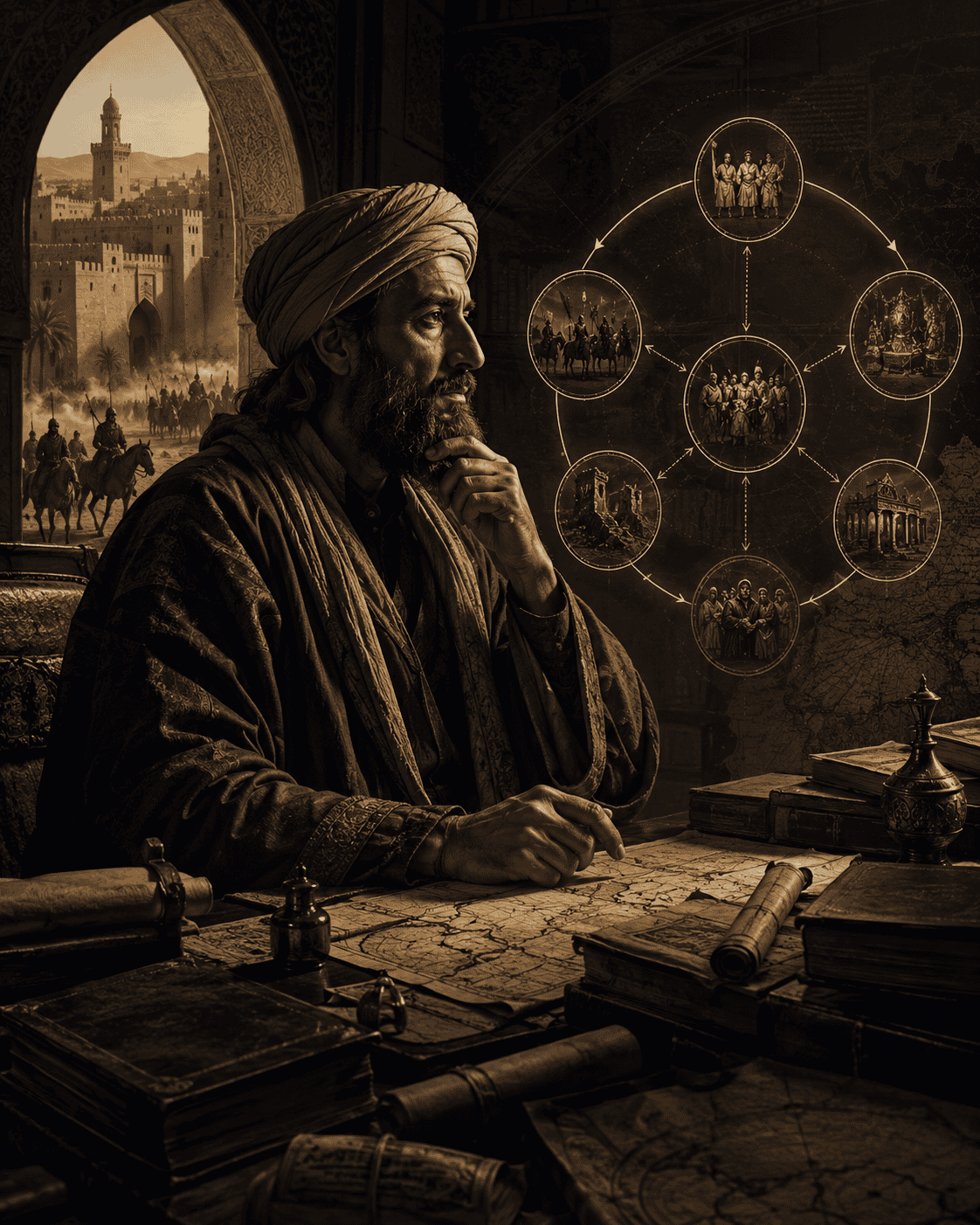
Ibn Khaldun and the Cycle
Ibn Khaldun watched dynasties fracture and asked why power often looks strongest just before it begins to decay. He did not see history as a loose chain of kings, battles, and accidents. He saw a structure beneath events: cohesion hardens a group, conquest expands it, wealth softens it, and a harder force eventually replaces it.
The cluster this pillar anchors
This post is the structural centre of the Empires Need Stories cluster. Each post in the cluster connects back to the asabiyyah framework established here. The cluster grows as new posts are published.
The master framework: asabiyyah, institutional entropy, fiscal decline, maintenance overload, and why civilizations follow a predictable arc from cohesion to replacement.
Narrative legitimacy as psychological infrastructure. What happens when the story breaks before the army does.
Maritime asabiyyah, elite decay, network power, and why technical sophistication cannot replace civic cohesion.
Online communities as frontier groups: high-cohesion outsiders disrupting low-solidarity legacy institutions.

The Muqaddimah was not only history. It was a science of civilization.
The Muqaddimah, written in 1377 during Ibn Khaldun’s retreat at Qal’at Ibn Salama in present-day Algeria and later revised in Tunis, was the introduction to his larger universal history, the Kitab al-Ibar. But it became something more independent and more dangerous: an attempt to identify the structural laws beneath civilization itself.
Ibn Khaldun called this field ilm al-umran: the science of human civilization, social organization, settlement, power, labor, economy, and decline. He was not satisfied with chronicles that copied court narratives or repeated heroic myths. He wanted method. He criticized traditional historiography because it often accepted reports without testing whether they fit the material limits of geography, economy, population, psychology, and institutional capacity.
This is why Ibn Khaldun belongs inside a modern systems architecture conversation. He treated civilization as a dynamic system with inputs, constraints, feedback loops, failure modes, and phase changes. Rulers, battles, and dynasties were visible outputs. The deeper system was cohesion, production, climate, taxation, legitimacy, and institutional memory.
The Muqaddimah is not merely a historical text. It is an early diagnostic engine for human systems: how groups coordinate, scale, harden, extract, fragment, and get replaced.
Ibn Khaldun turned civilizational decline into a structural law
Most historical writing begins with the visible surface: a ruler takes power, a city expands, an army marches, a dynasty falls. Ibn Khaldun began somewhere colder. He asked why the same sequence seemed to repeat across different lands, peoples, climates, and courts. Hard groups rise from the frontier. They conquer softer settled societies. They build law, taxation, armies, palaces, and administrative order. Their children inherit the structure. Their grandchildren inherit the comfort. Then the inner force that made the system possible begins to disappear.
His answer was not nostalgia for austerity. It was a systems claim. Power begins before institutions. It begins in the bond that allows people to absorb hardship together, obey under pressure, trust one another without paperwork, and sacrifice for a common future. This bond is asabiyyah. When it is strong, a group can coordinate faster than richer enemies. When it weakens, even wealthy states become brittle because their institutions no longer carry living loyalty.
The cycle starts in the frontier condition. Scarcity, danger, mobility, exposure, and dependence make social life severe. People cannot afford ornamental status games because survival is collective. Narrative also matters here. The group tells itself a story about origin, loyalty, honor, divine mission, tribe, reform, or revenge. That story is not decorative. It converts hardship into meaning and binds the group psychologically.
Victory changes the structure. The frontier group becomes a ruling class. It must collect taxes, govern cities, manage succession, distribute offices, and convert raw cohesion into durable administration. This is the consolidation phase. The first generation still remembers danger, so institutions remain connected to the discipline that built them.
Then prosperity alters incentives. Luxury is not merely wealth. It is the condition in which status, comfort, court politics, bureaucracy, and inherited entitlement begin to replace shared danger. The ruling group still possesses symbols of power, but the invisible infrastructure has weakened. The state can look grand while its internal coordination decays. In Darja Rihla terms, Ibn Khaldun was reading history as a complex system: cohesion creates expansion, expansion creates wealth, wealth weakens cohesion, weakened cohesion invites replacement.
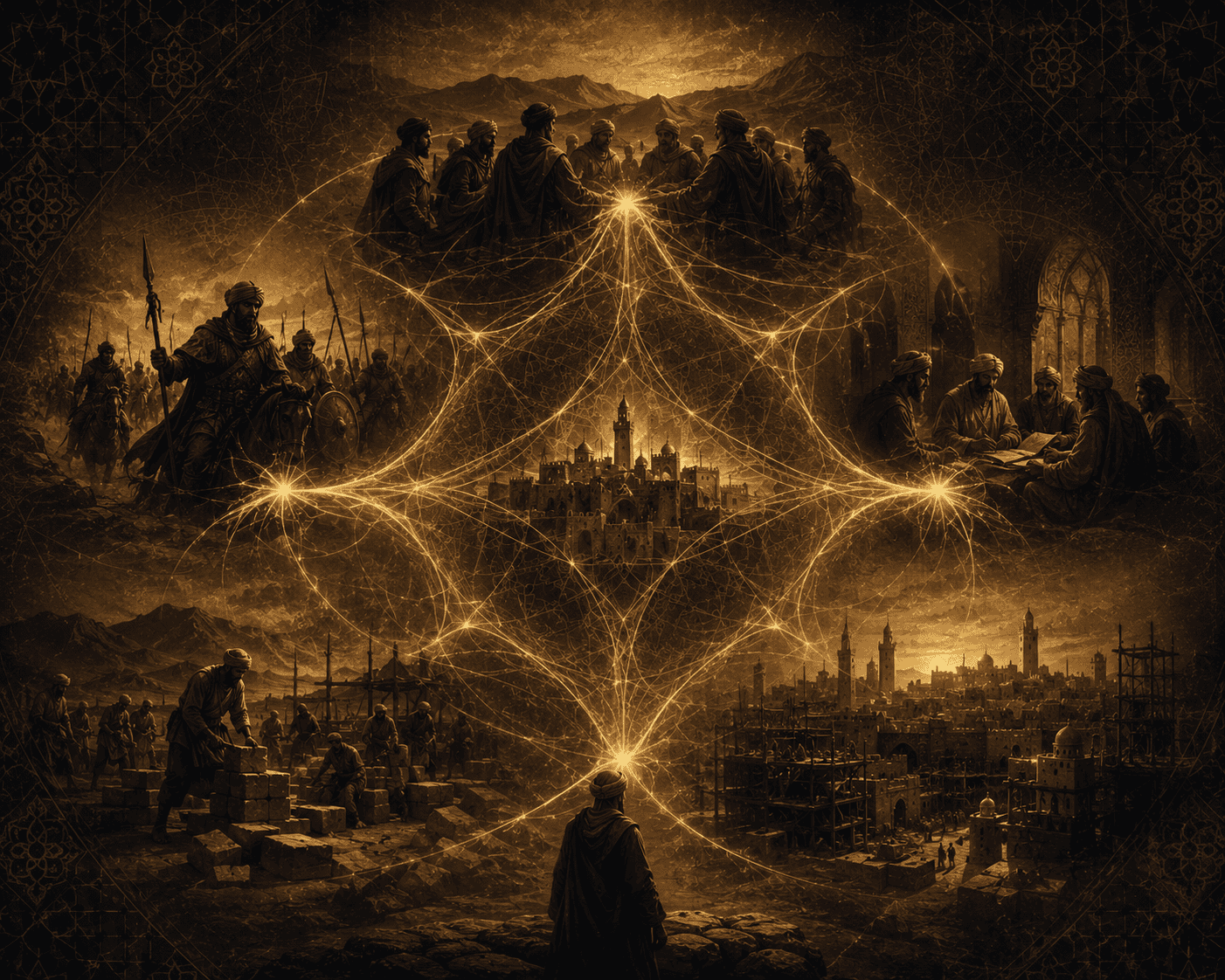
Asabiyyah is not simply solidarity. It is the social anti-entropy that holds complexity together. It is the zero-layer force beneath armies, courts, companies, software teams, security programs, institutions, and states.
Institutions are stored cohesion, not living cohesion
The most important upgrade to Ibn Khaldun is not to reduce asabiyyah to tribal feeling. It is to read it as negative entropy. Every complex system tends toward disorder unless energy keeps it coordinated. In human systems, that energy is not only money, command, or policy. It is trust, shared discipline, common memory, credible leadership, and the willingness to absorb cost for the group.
An institution is what happens when living cohesion becomes structure. A movement becomes a party. A war band becomes an army. A founder team becomes a company. A security culture becomes policy. A working codebase becomes architecture. The structure is useful because it stores past coordination. But stored cohesion is not the same as living cohesion.
This distinction explains why late systems often look strongest near decay. They still have buildings, titles, dashboards, rituals, compliance documents, diagrams, budgets, and historical prestige. But the social energy that once made those forms meaningful has thinned. The institution is still standing. The internal force that made it adaptive is no longer regenerating.
Geography, climate, and the forging of asabiyyah
Ibn Khaldun did not treat geography as decoration. Climate, terrain, mobility, and scarcity shape the social psychology of groups. Harsh environments impose consequences. They make dependency visible. They reduce the space for theatrical comfort. In desert, mountain, and frontier conditions, cohesion is not a moral slogan. It is a survival technology.
The Maghreb gave Ibn Khaldun a living laboratory. The Sahara produced mobile discipline, long-distance endurance, and religious austerity. The High Atlas produced hard mountain cohesion, outsider energy, and reformist intensity. Ifriqiya and the coastal cities produced trade, scholarship, administration, and refinement, but also the softening that comes when order becomes inherited.
The Almoravids rose from the Saharan and western Maghrebi frontier in the eleventh century. Their force came from Berber tribal cohesion, Maliki reform, ribat discipline, and hard environmental pressure. The Almohads later rose from the High Atlas with a different ideological engine, but the same Khaldunian mechanism: frontier austerity became political force.
The modern bridge is direct. Climate stress, migration, supply chains, energy systems, and urban fragility still shape institutional resilience. Systems built in comfort often assume continuity. Systems forged under pressure often preserve deeper coordination until success makes that pressure disappear.
The eight structural phases of Ibn Khaldun’s cycle
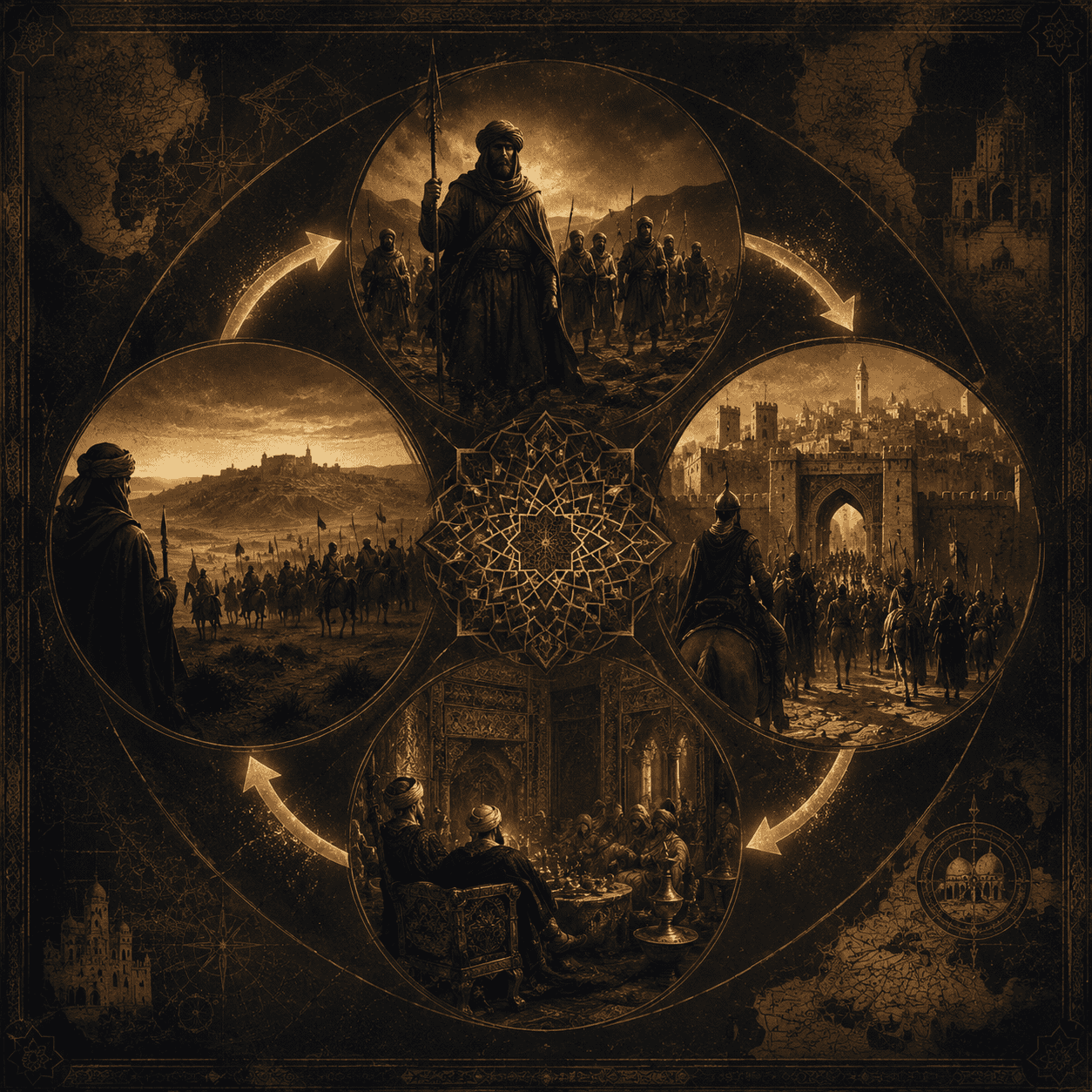
Ibn Khaldun’s cycle can be read through eight recurring structural phases. Each phase has its own strength, psychological atmosphere, institutional logic, and failure mode.
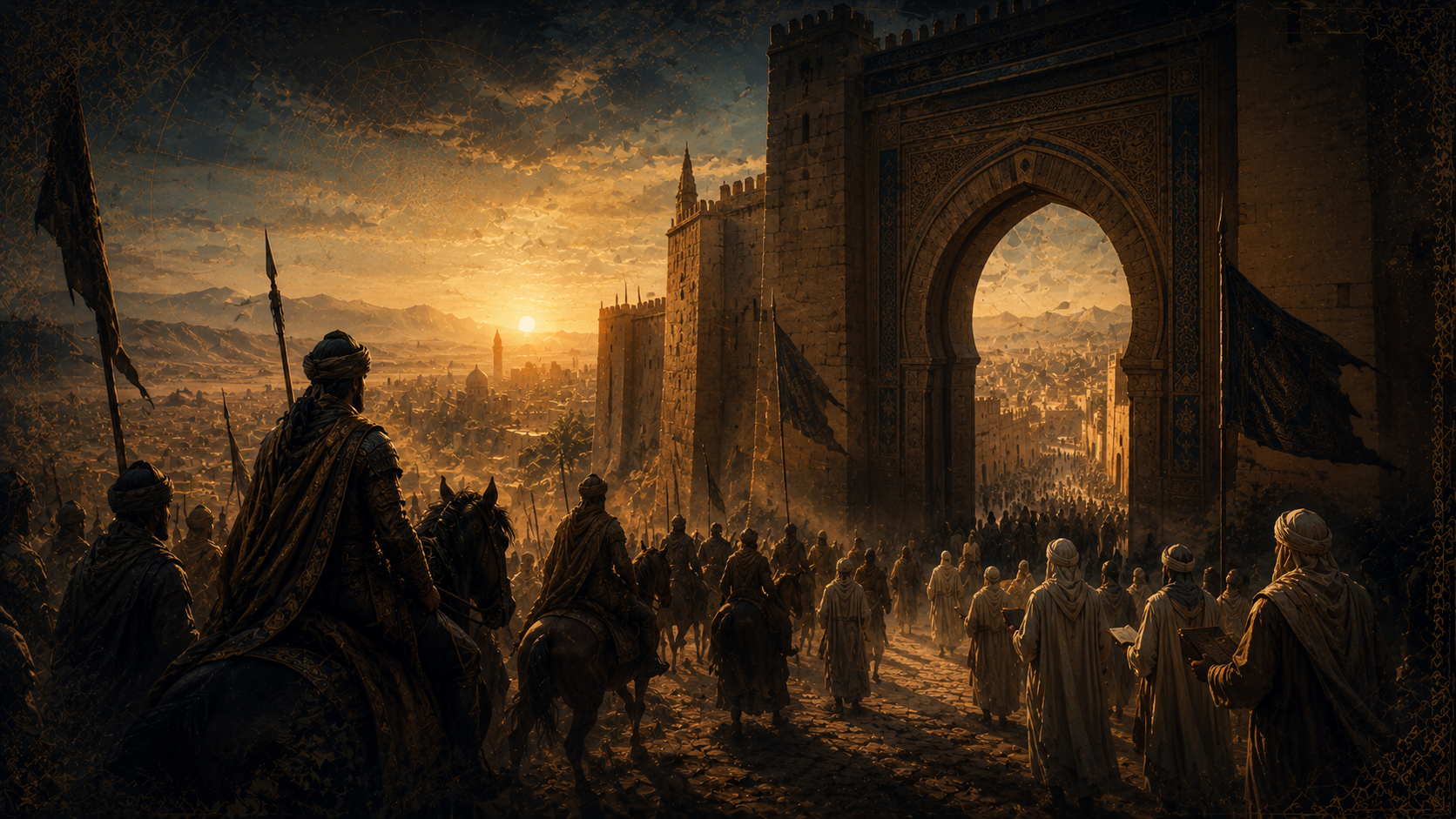
 Phase 01
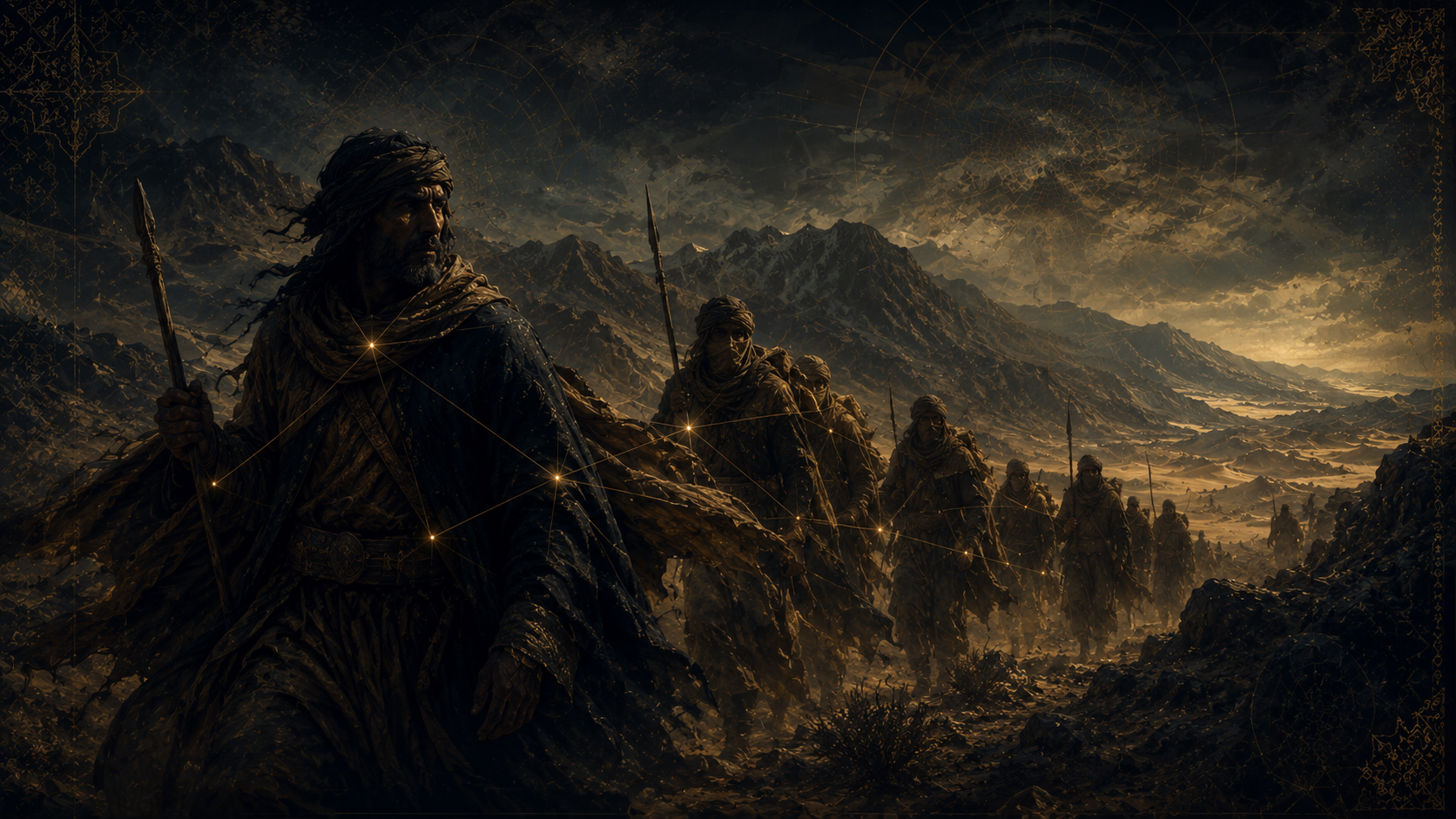
Frontier Strength
Phase 01
Frontier Strength
High hardship. High trust. Low luxury.
Frontier life creates discipline because survival depends on the group. Trust is dense and loyalty is direct.
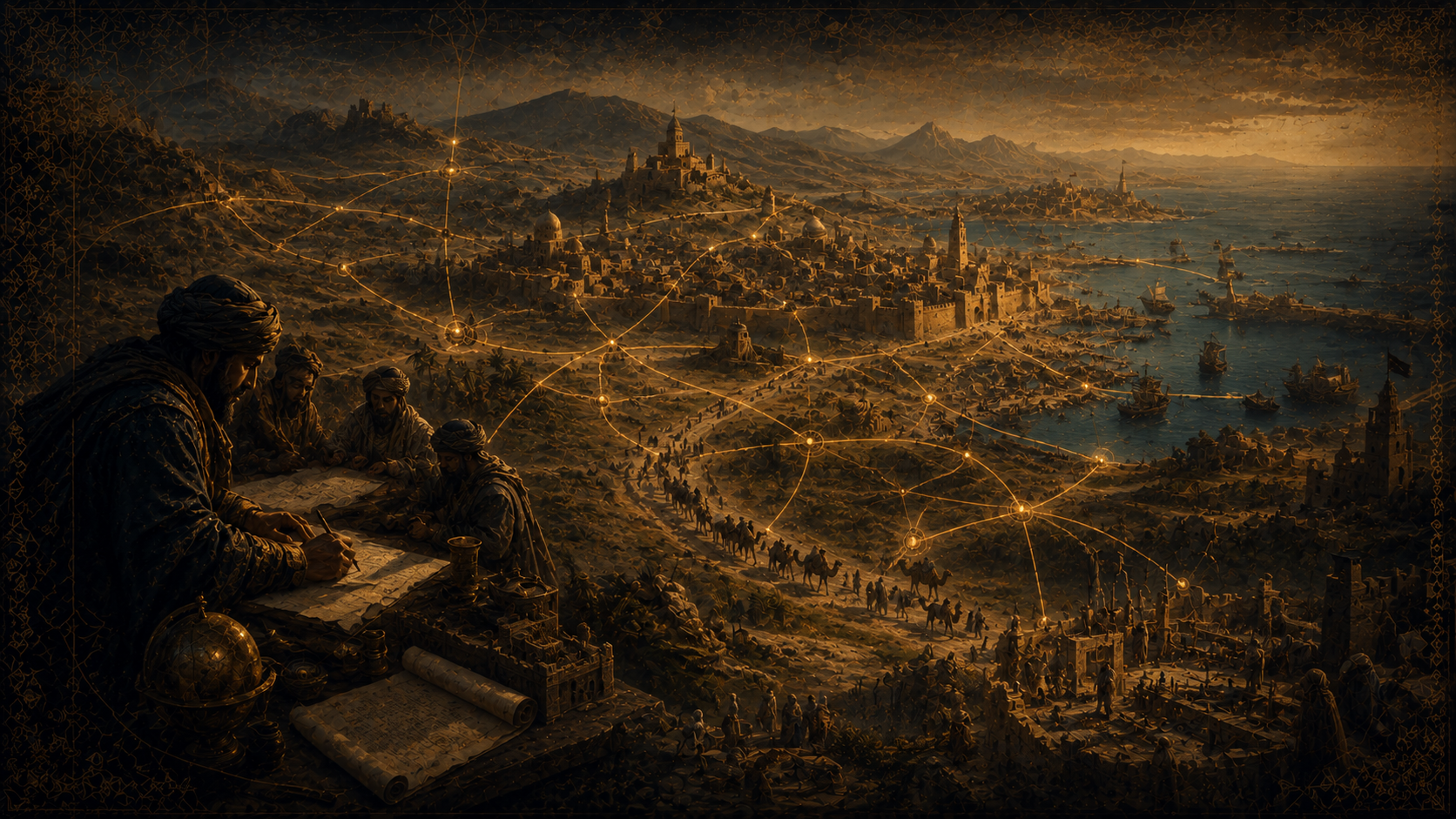
 Phase 02
Conquest and Consolidation
Phase 02
Conquest and Consolidation
Power secured. Institutions built.
The founding group turns cohesion into rule. Institutions still carry the pressure and memory of conquest.
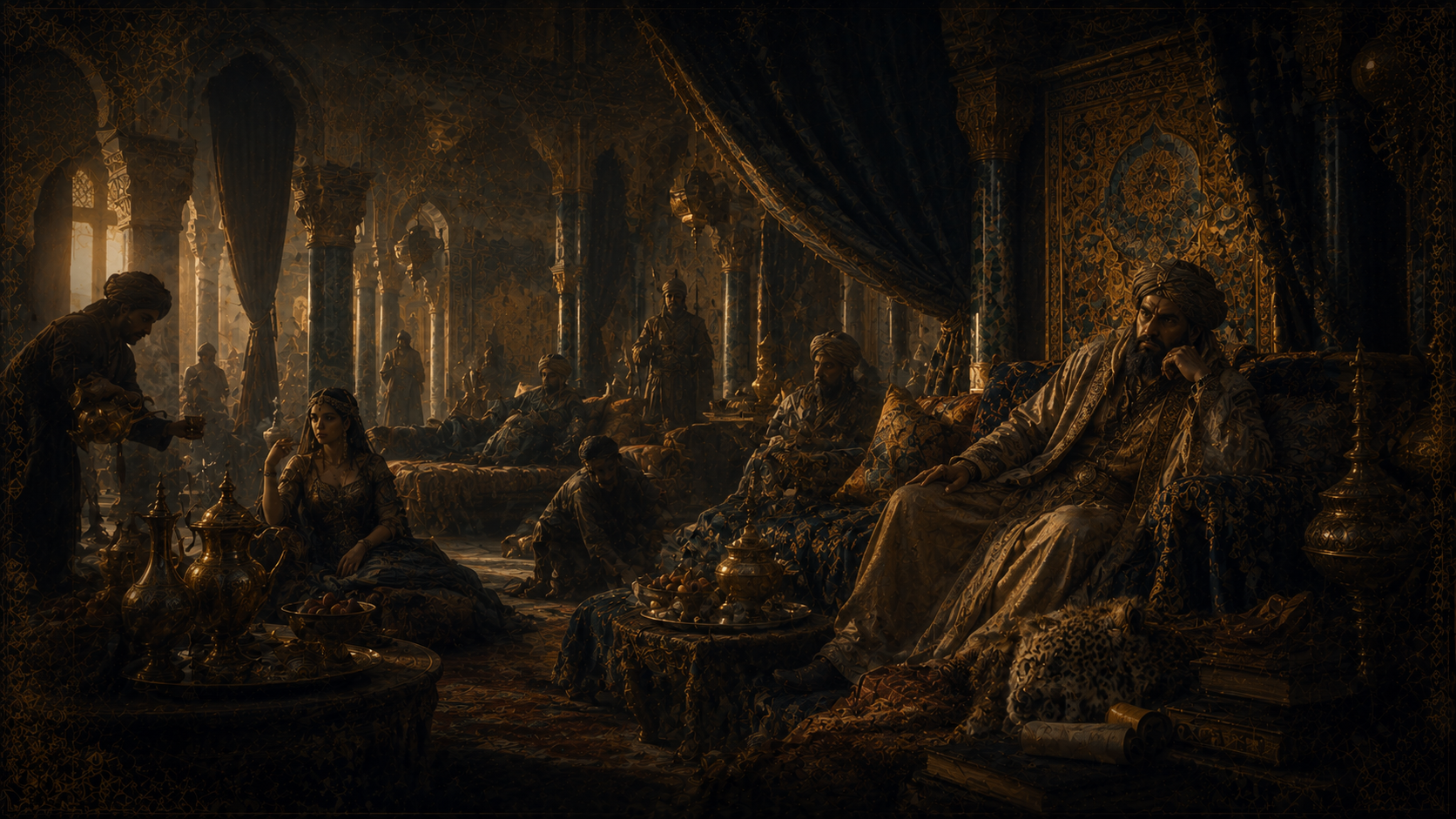
 Phase 03
Expansion and Administration
Phase 03
Expansion and Administration
Territory expands. Complexity rises.
Power becomes offices, law, taxation, and command. The system grows while the founding mission still gives it direction.
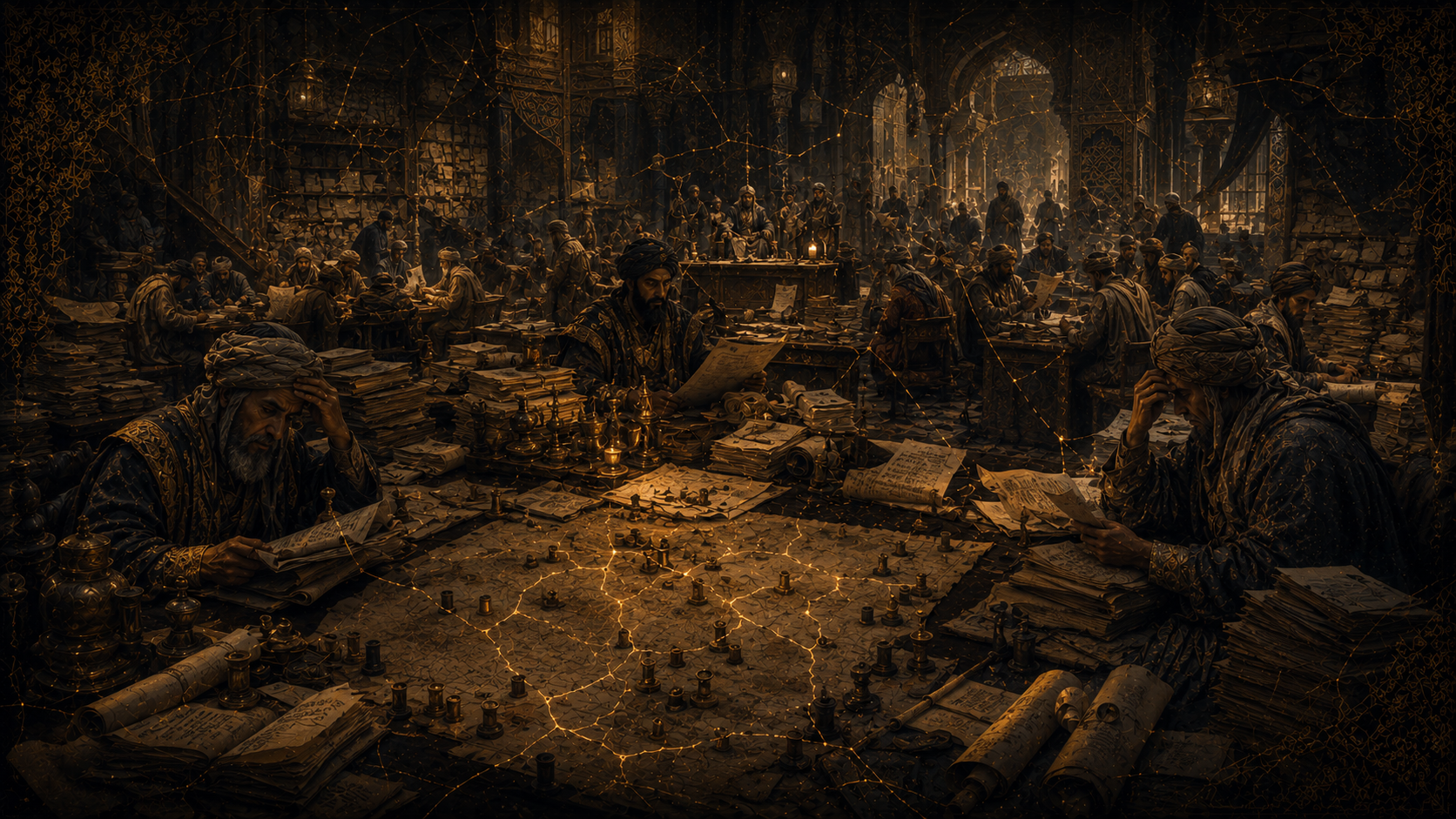
 Phase 04
Luxury and Comfort
Phase 04
Luxury and Comfort
Comfort replaces discipline.
Prosperity softens the habits that created power. Sacrifice becomes memory instead of practice.
 Phase 05
Bureaucracy and Fragmentation
Phase 05
Bureaucracy and Fragmentation
Process replaces trust.
Administrative layers multiply as cohesion weakens. Factions begin to replace shared purpose.
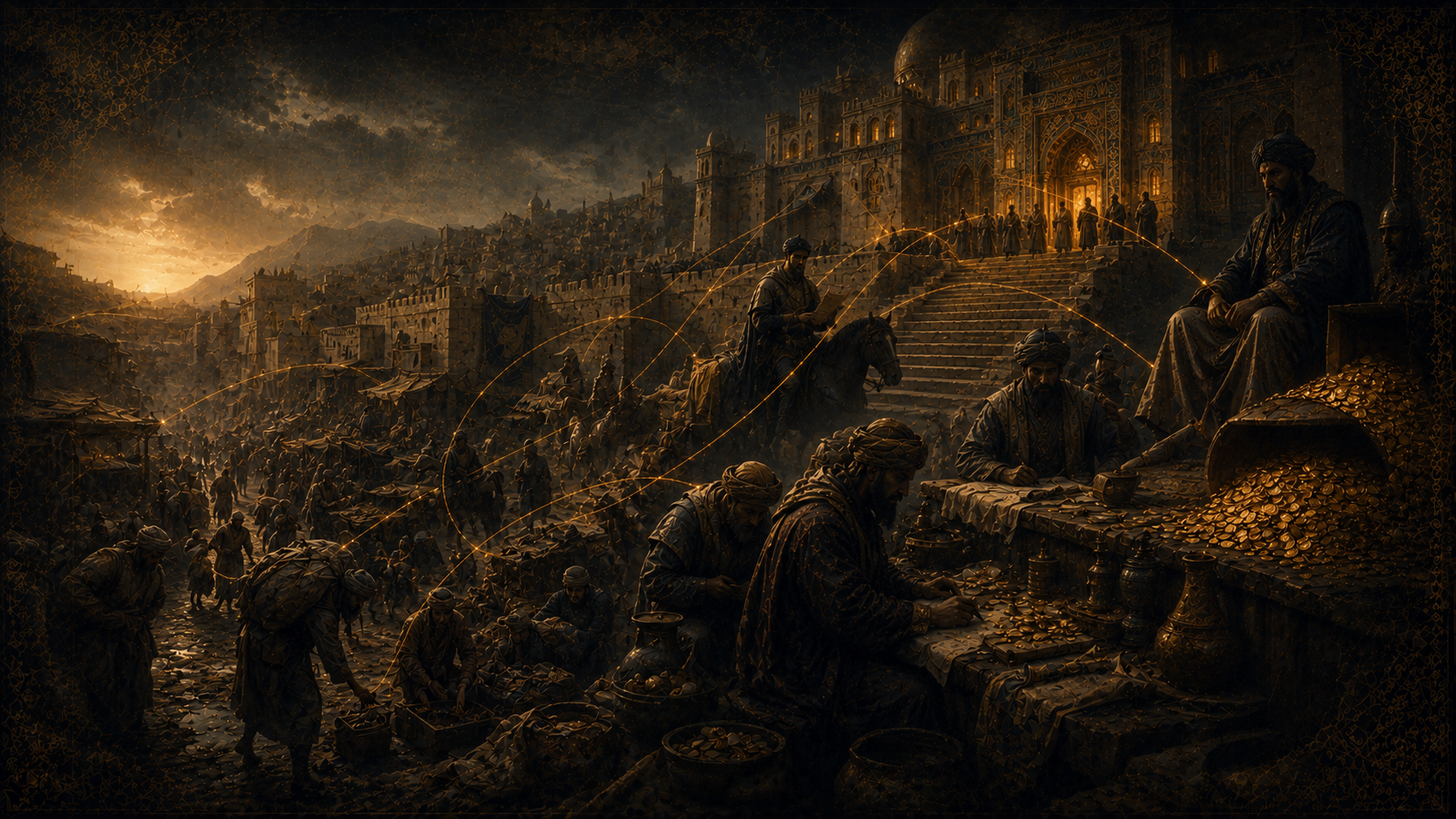 Phase 06
Fiscal Strain and Overreach
Phase 06
Fiscal Strain and Overreach
Taxes rise. Revenue falls.
The state extracts more to preserve a weakening system. Trust, production, and compliance decline together.
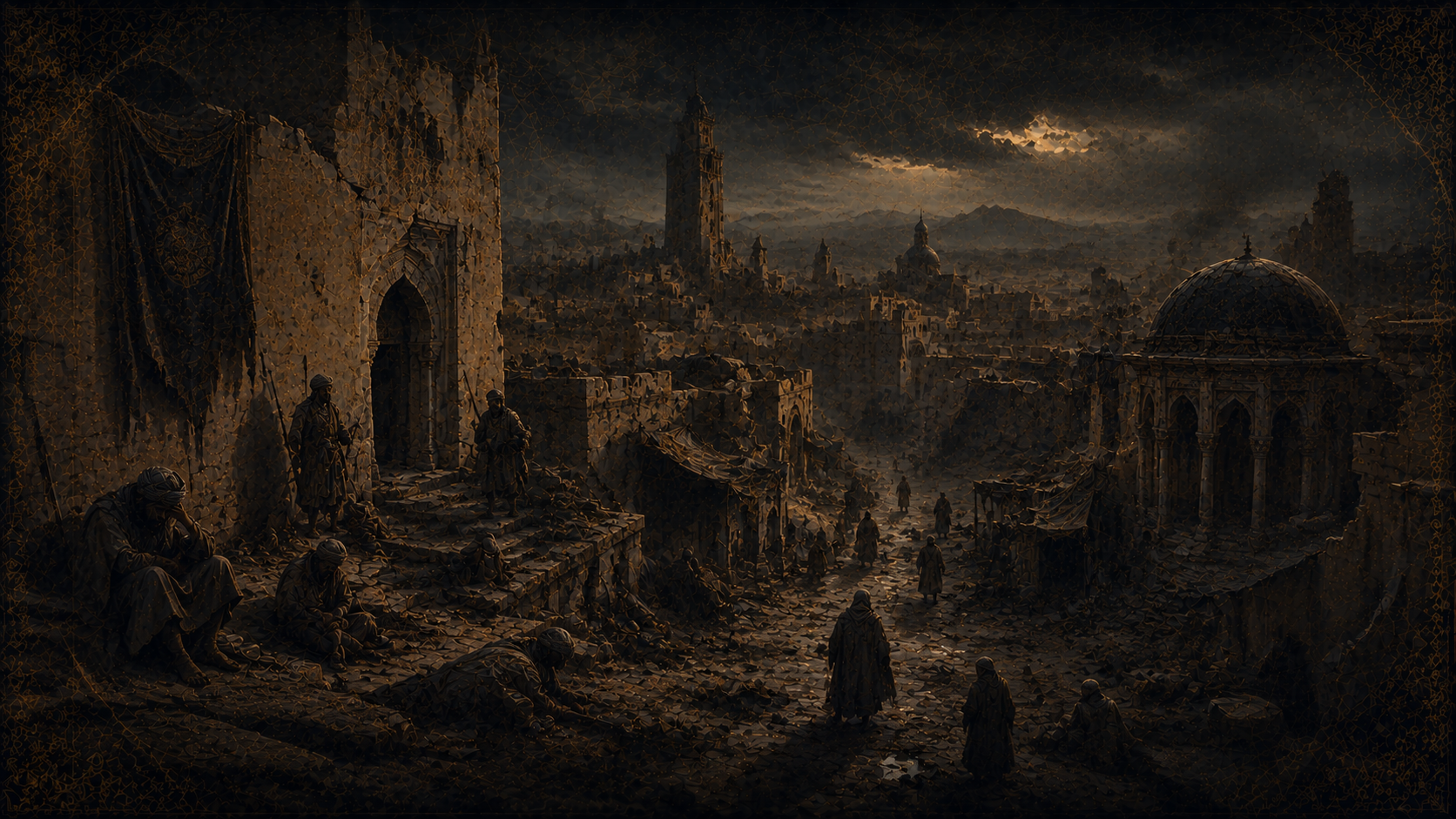 Phase 07
Collapse and Disintegration
Phase 07
Collapse and Disintegration
Institutions lose force.
The forms of power remain after their inner force has faded. Succession conflict and external pressure expose the hollow centre.
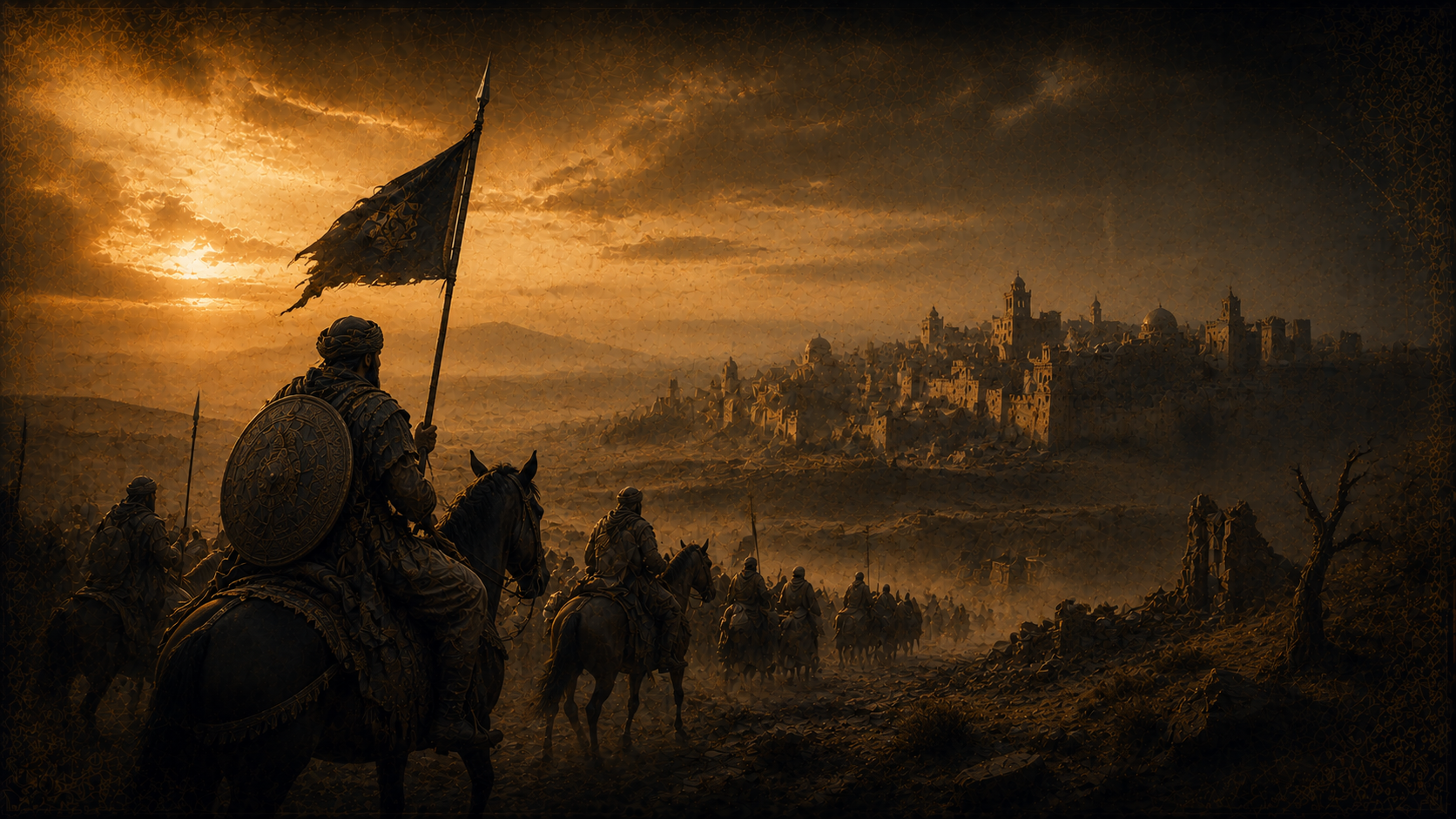 Phase 08
Replacement and Renewal
Phase 08
Replacement and Renewal
A harder group emerges.
A more cohesive outsider replaces the softened order. The cycle resets through renewed discipline and collective force.
Ibn Khaldun observed that dynasties carry their decline inside their success. The force that wins power is slowly consumed by the comfort that power creates.
Ibn Khaldun, Muqaddimah (1377)
The cycle Ibn Khaldun saw in the Maghreb and beyond
Ibn Khaldun was not building theory from a quiet distance. He lived inside the turbulence he explained. The Maghreb and al-Andalus gave him repeated examples of frontier power turning into dynastic power, then losing the discipline that produced it. Desert, mountain, coast, tribe, city, trade, and court were not background scenery. They were the operating environment of his thought.
The Almoravids rose in the eleventh century from the Saharan and western Maghrebi frontier. Their strength came from religious reform, Berber tribal cohesion, military austerity, and movement across hard terrain. They expanded across Morocco and into al-Andalus because their social density was greater than that of many richer settled powers. Their early force was not urban luxury. It was disciplined asabiyyah turned into conquest.
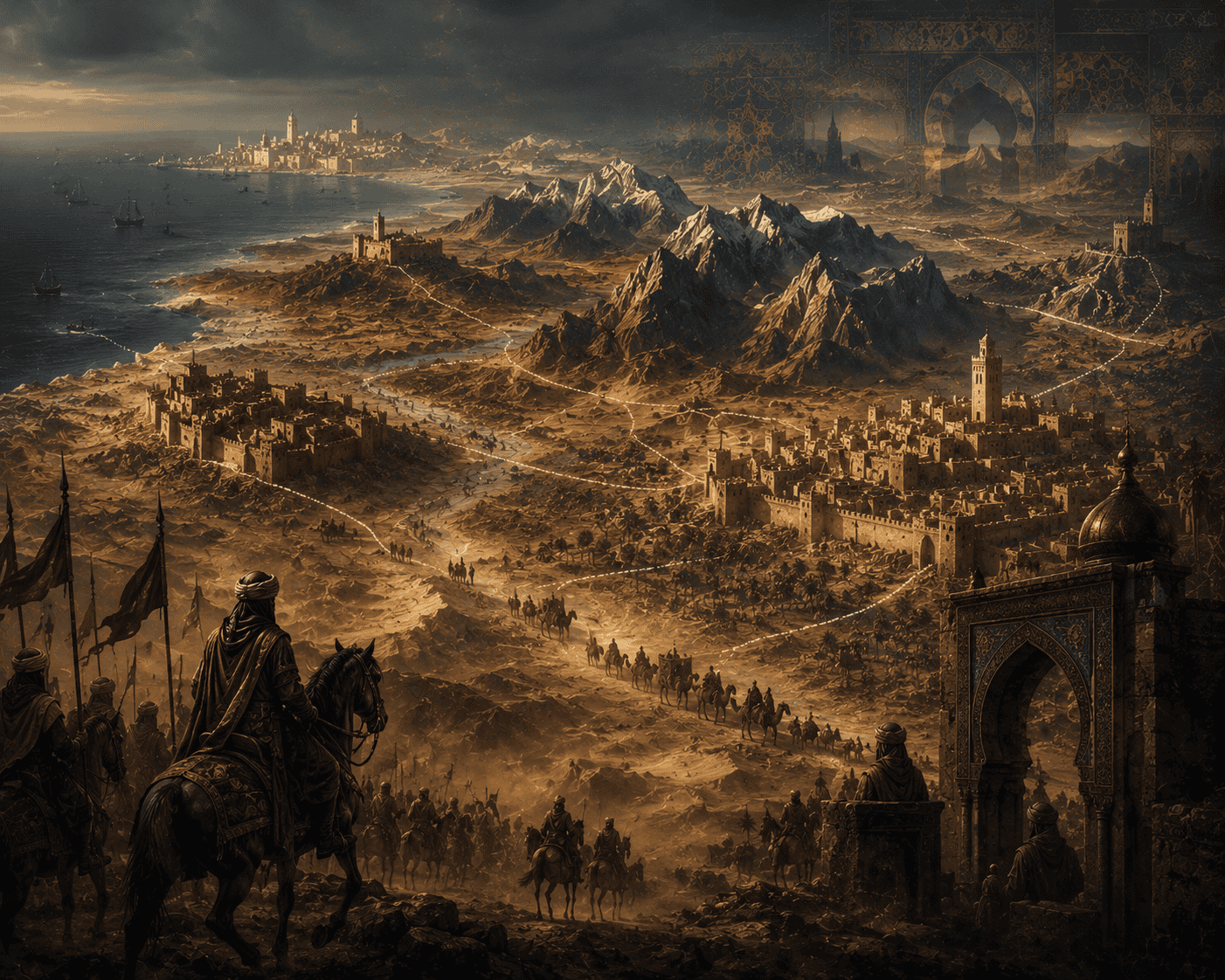
Once the Almoravids ruled cities, the mechanism shifted. Administration, taxation, court culture, urban settlement, and political compromise became unavoidable. The same movement that had been sharpened by frontier pressure became softened by the responsibilities and temptations of rule. Their decline opened space for the Almohads, another Berber reform movement with renewed ideological intensity and stronger cohesion. The replacement was not random. It followed the pattern Ibn Khaldun described: a harder group enters history where an incumbent group has lost its inner force.
The Almohads then repeated the pattern at a larger scale. They rose through mission, discipline, and collective identity. They built imperial reach across North Africa and al-Andalus. But imperial success brought succession struggles, elite competition, city politics, and administrative weight. Force became form. Solidarity became hierarchy. The Hafsid dynasty in Ifriqiya, centered around Tunis, inherited part of this fractured world and became another case in the Maghrebi rhythm of consolidation, prestige, faction, and vulnerability.
This matters for Darja Rihla because the Maghreb was not merely a location for Ibn Khaldun. It was his laboratory. The same structural eye can be turned toward Carthage and network power, where maritime wealth, ports, trade, and technical sophistication could not remove the deeper question of civic cohesion.
The Mongol case shows the same mechanism on a continental scale. Mongol power began with extraordinary nomadic cohesion, discipline, mobility, and command loyalty inside a severe environment. That cohesion produced rapid conquest across Eurasia. Yet conquest forced settlement, administration, succession politics, regional division, and court formation. The original frontier engine could not remain unchanged once it became imperial machinery. The empire fragmented into successor states because the force that conquered space could not indefinitely govern the weight of what it had conquered.
Almoravid and Almohad reform systems generated new asabiyyah
The Almoravids and Almohads were not simply dynasties. They were reform systems. The Almoravid movement gathered power through Abdallah ibn Yasin, Maliki discipline, ribat culture, and the moral severity of the Saharan frontier. It fused tribal solidarity with legal-religious reform and turned scattered energy into political direction.
The Almohads came later through a different ideological architecture. Ibn Tumart’s doctrine of tawhid created a sharper universal mission, a disciplined movement, and a reformist language capable of challenging an incumbent order that had begun to look compromised. In Khaldunian terms, ideology acted as a cohesion multiplier. It did not replace asabiyyah. It intensified it.
This pattern survives in modern systems. Startups, activist networks, open-source ecosystems, insurgent political movements, and security teams all require more than competence. They need a shared story that converts effort into meaning. Without that story, coordination becomes expensive. With it, people absorb cost before bureaucracy has to compel them.
Almohad architecture turned ideology into stone
Architecture is not only aesthetic. It is social energy given durable form. The Kutubiyya Mosque in Marrakesh, the Giralda in Seville, the Hassan Tower in Rabat, and the geometric language of Almohad monumental design show how doctrine, power, labor, and collective identity become infrastructure.
In this sense, architecture is frozen asabiyyah. A monument survives after the founding intensity has faded. It stores discipline, technical skill, symbolic order, and institutional ambition in material form. But the survival of the structure does not guarantee the survival of the will that built it.
This is one of the deepest infrastructure lessons in Ibn Khaldun. Roads, ports, mosques, walls, software platforms, security architectures, and states can outlive the social energy that created them. Late systems inherit the artifact but not always the discipline. They occupy the monument while forgetting the furnace.
Ibn Khaldun’s core claim is that civilizations rise through shared discipline, institutionalize that discipline into power, then decay when comfort dissolves the cohesion that made power possible.
Labor, infrastructure, and the maintenance trap
Ibn Khaldun treated labor as the source of value because human effort transforms raw material into social wealth. Land alone does not create civilization. Resources alone do not produce institutions. Wealth is crystallized effort, and capital is stored labor organized across time.
Early systems are dominated by kinetic labor. They build, move, conquer, design, invent, and expand. Their energy is outward. Their structures are still close to purpose. People remember why the work matters because the work is connected to survival, mission, or founding pressure.
Late systems are dominated by static labor. They maintain layers. They preserve procedures. They service debt, repair complexity, defend reputation, manage inherited architecture, and keep old machinery operational. The system may still consume enormous effort, but more of that effort goes into preserving the system itself.
This is the maintenance trap. Empires experience it as administrative burden and infrastructure exhaustion. Companies experience it as process overload. Software teams experience it as technical debt. Security teams experience it as compliance theater and alert fatigue. Late systems spend more energy preventing collapse than generating vitality.
Ibn Khaldun on taxation: fiscal entropy and the extraction spiral
Ibn Khaldun did not separate political cohesion from economic production. For him, the fiscal health of a dynasty was a visible symptom of its internal condition. Early dynasties collect high revenue from low tax rates because the population still believes the ruling order is connected to collective purpose. Production expands, trade moves, compliance remains bearable, and the state receives more because it demands less.
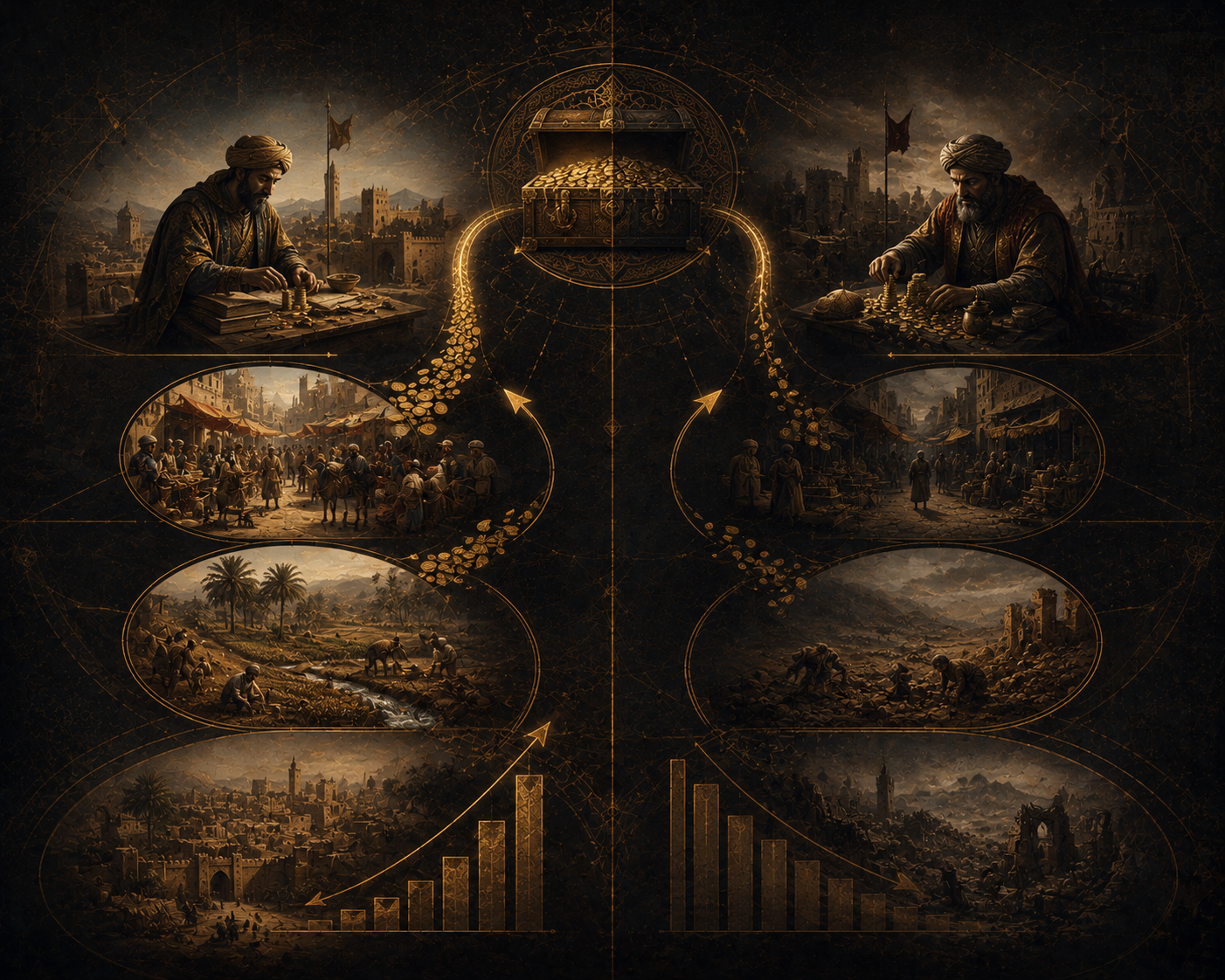
Late dynasties invert the mechanism. As court luxury, bureaucracy, military expense, and elite consumption rise, rulers increase tax burdens to preserve a system that is losing its living force. The state demands more from a society that trusts it less. Production weakens. Evasion rises. Compliance becomes reluctant. Revenue falls precisely when extraction becomes more aggressive.
The reason is structural: asabiyyah governs both the willingness to produce and the willingness to comply. A cohesive society does not merely fight better. It works, trades, pays, builds, and cooperates with less friction. Ibn Khaldun also treated labor as the source of value, because human effort transforms raw material into social wealth. Division of labor expands when trust expands. As cohesion weakens, economic complexity turns from shared productivity into administrative drag.
This is why his fiscal theory belongs beside modern systems thinking. Arthur Laffer named the Laffer Curve in 1974, but Ibn Khaldun described the same revenue dynamic in 1377. Modern institutions show the same pattern when bureaucratic overhead and compliance debt grow faster than usefulness. The system extracts more effort while producing less vitality.
The same death spiral appears in digital platforms. A young platform grows by creating value, reducing friction, and giving participants room to build. A late platform often shifts toward extraction: more fees, more ads, more lock-in, more algorithmic control, more monetization of trust. The productive base weakens because the platform begins taxing the ecosystem that made it powerful.
397 years earlier than the Laffer Curve, Ibn Khaldun identified the same mechanism.
At the beginning of a dynasty, taxation is light and total revenue is high; toward the end of a dynasty, taxation becomes heavy and total revenue declines because production, trust, and compliance have been damaged.
Ibn Khaldun’s three-generation arc becomes a predictive model
Ibn Khaldun treated decline as a generational tendency, not a mechanical clock. The pattern matters because memory weakens when comfort becomes normal. In Darja Rihla terms, the three generations form a state machine: builders create the system, managers preserve it, consumers inherit it without carrying its original discipline.
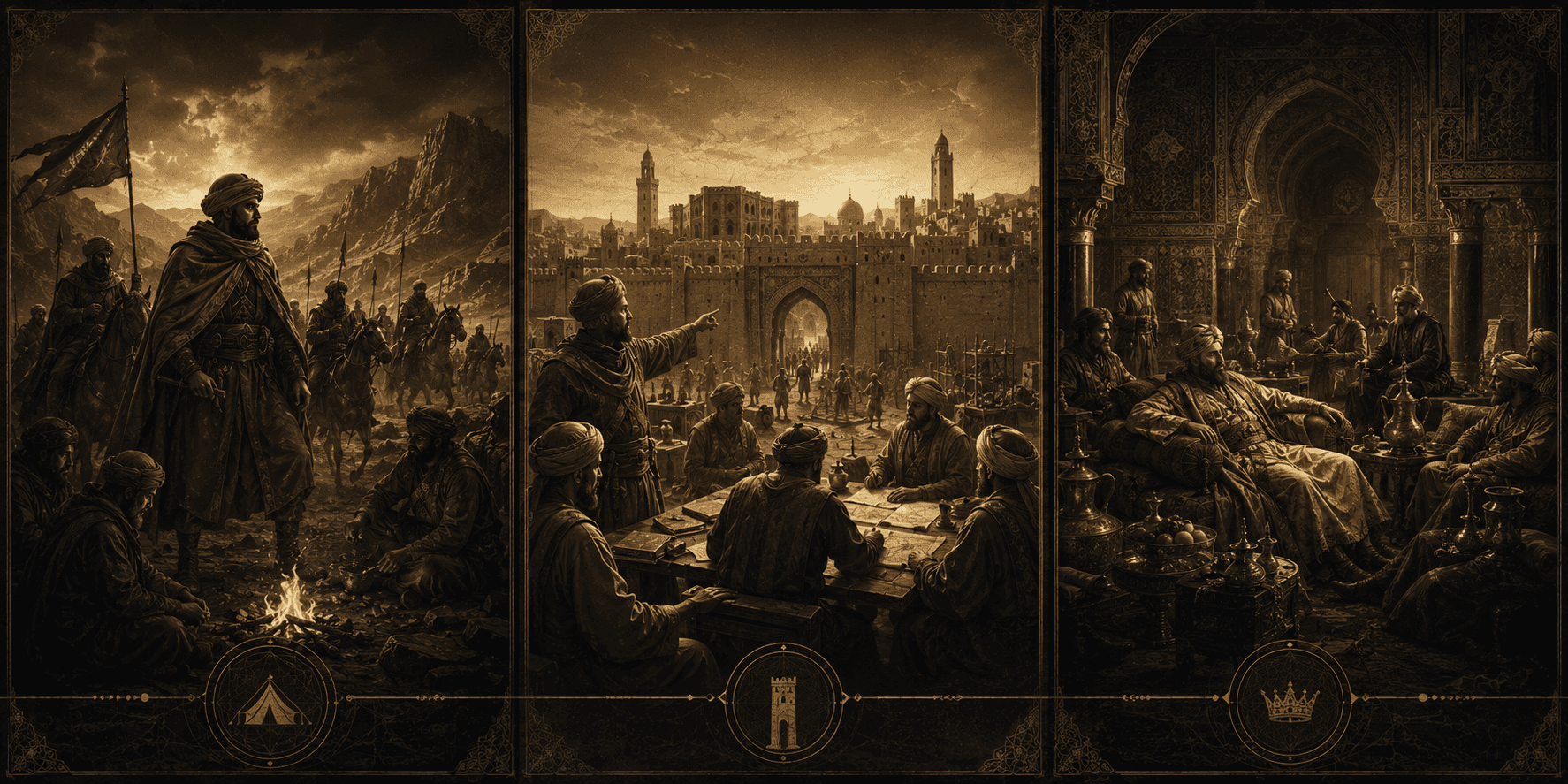
The first generation built under pressure. Leadership is direct, sacrifice is recent, and authority is tied to danger survived together. Members remember hunger, risk, movement, and dependence. Duty is not yet ceremonial because the cost of failure is still vivid.
The second generation manages what was built. It can still be competent because it was raised near the founders and often understands the language of discipline. But it is already removed from the original conditions. Bureaucracy begins to substitute for direct loyalty.
The third generation knows the benefits without knowing the furnace that produced them. Hardship becomes a story, not an operating memory. The institution begins to exist for its heirs rather than through them. Status replaces service, and power becomes inheritance instead of responsibility.
The Mughal Empire gives the arc another form. Babur entered North India as a frontier conqueror with military discipline and outsider force. Akbar consolidated that inheritance into imperial administration, legitimacy, and scale. After Aurangzeb, the empire entered fragmentation as succession conflict, regional autonomy, fiscal pressure, and elite strain exposed the weakening centre.
Software architecture through Ibn Khaldun
A codebase also moves through a Khaldunian lifecycle. It begins as a frontier system: a small team, high trust, low process, direct ownership, and a simple architecture shaped by urgency. The early code may not be perfect, but it is alive. The people building it understand the whole system because the system is still close to the mission.
Then success creates scale. More users arrive. More features appear. More teams touch the same surface. The architecture must formalize. Documentation, interfaces, permissions, release processes, infrastructure, security controls, and observability become necessary. This is the consolidation phase of software.
Decay begins when structure separates from purpose. Teams inherit services they did not design. Nobody fully owns the old decisions. Complexity becomes political. Technical debt becomes institutional debt. Meetings replace shared understanding. Roadmaps preserve the machine instead of renewing it. The codebase still runs, but its asabiyyah has weakened.
Eventually a leaner system appears: a rewrite, a competitor, an open-source alternative, a simpler protocol, or a new architecture built by a smaller group with higher trust and lower overhead. The old system is not defeated only by code. It is defeated by a group with fresher cohesion.
Cybersecurity begins as institutional cohesion
Cybersecurity makes the Khaldunian pattern visible because technical controls only work when social systems maintain them. A fragmented organization with weak ownership is easier to manipulate than one with living discipline. Tools matter, but tools are maintained by people. Policies matter, but policies must survive contact with incentives, fatigue, hierarchy, and confusion.
A security program without asabiyyah becomes a shell. Dashboards glow. Controls are documented. Training exists. Compliance reports are filed. But responsibility diffuses across departments. Nobody fully owns the risk. The attacker does not need to defeat the entire system. The attacker only needs to find the seam where cohesion has failed.
This is why the real attack surface is institutional fragmentation. Phishing, insider threat, social engineering, misconfiguration, shadow IT, and delayed patching are not only technical problems. They are signs of coordination decay. Darja Rihla treats cybersecurity and technology as part of a wider civilizational problem because systems fail first as human systems.
Digital Bedouins and the future of power
The modern frontier is not only desert, steppe, mountain, or sea. It is also digital. Decentralized teams, encrypted communities, open-source ecosystems, blockchain networks, remote-first founders, and protocol movements often behave like frontier groups inside the old institutional landscape.
They have low overhead, high mission density, rapid coordination, outsider contempt for inherited excuses, and a willingness to absorb cost before institutions understand what is happening. Their advantage is not simply technology. It is cohesion under pressure.
But Ibn Khaldun prevents romanticism. Digital Bedouins can also become settled powers. The open network becomes a foundation. The foundation becomes a bureaucracy. The protocol becomes a governance war. The startup becomes a compliance machine. The insurgency becomes the incumbent. The cycle does not disappear online. It accelerates.
Empires need stories because narrative lowers coercion costs
Narrative legitimacy is the psychological layer of asabiyyah. A system with a believable story does not need to force every action through command. People comply because the system still feels connected to meaning, order, mission, justice, origin, reform, survival, or destiny.
When the story is alive, legitimacy lowers friction. It reduces enforcement costs. It makes sacrifice intelligible. It explains why people should endure hardship for something larger than themselves. When the story breaks, the system must replace belief with management, propaganda, surveillance, incentives, or coercion.
This is why late empires often become louder as they become weaker. They produce more ceremony because natural loyalty has declined. They repeat the story because fewer people live inside it. The myth becomes a performance after it stops being a binding force.
The mechanism survives because institutions still depend on cohesion
The value of Ibn Khaldun is not that every modern organization is a medieval dynasty. The value is that the mechanism still appears wherever human groups build systems. A political party begins as a movement with shared risk, direct loyalty, and ideological clarity. If it succeeds, it becomes an institution. Then it must manage offices, donors, procedures, factions, public language, and reputation. The mission does not disappear immediately. It becomes one layer among many.
Startup culture often imitates the frontier phase. Small teams work under pressure, absorb personal cost, and move quickly because trust is dense. They do not need heavy process because the group understands the mission directly. When scale arrives, management replaces intimacy. Process replaces trust. The structural question becomes whether the organization can preserve enough asabiyyah while growing, or whether growth itself begins the entropy.
Systems thinking gives this pattern a modern vocabulary. Ibn Khaldun gives it historical depth. Collapse is rarely one clean event. It is usually a process of weakened feedback loops, misaligned incentives, declining trust, detached leadership, and institutions that continue to perform legitimacy after they have lost living force. That is why this essay belongs beside the wider Darja Rihla work on systems thinking in a complex world.
1. What does Ibn Khaldun mean by asabiyyah?
2. According to Ibn Khaldun, what weakens asabiyyah over time?
3. Which dynasties did Ibn Khaldun use as direct evidence for his cycle in North Africa?
4. What is the best modern translation of asabiyyah in systems terms?
5. What does Ibn Khaldun’s model predict follows civilizational collapse?
Score:
Where is your system in the cycle?
Apply these signals to any organization, institution, political movement, software system, security team, platform, or digital community you are part of. Ibn Khaldun did not prescribe easy remedies. He described structure. Recognizing the stage is the beginning of any serious response.
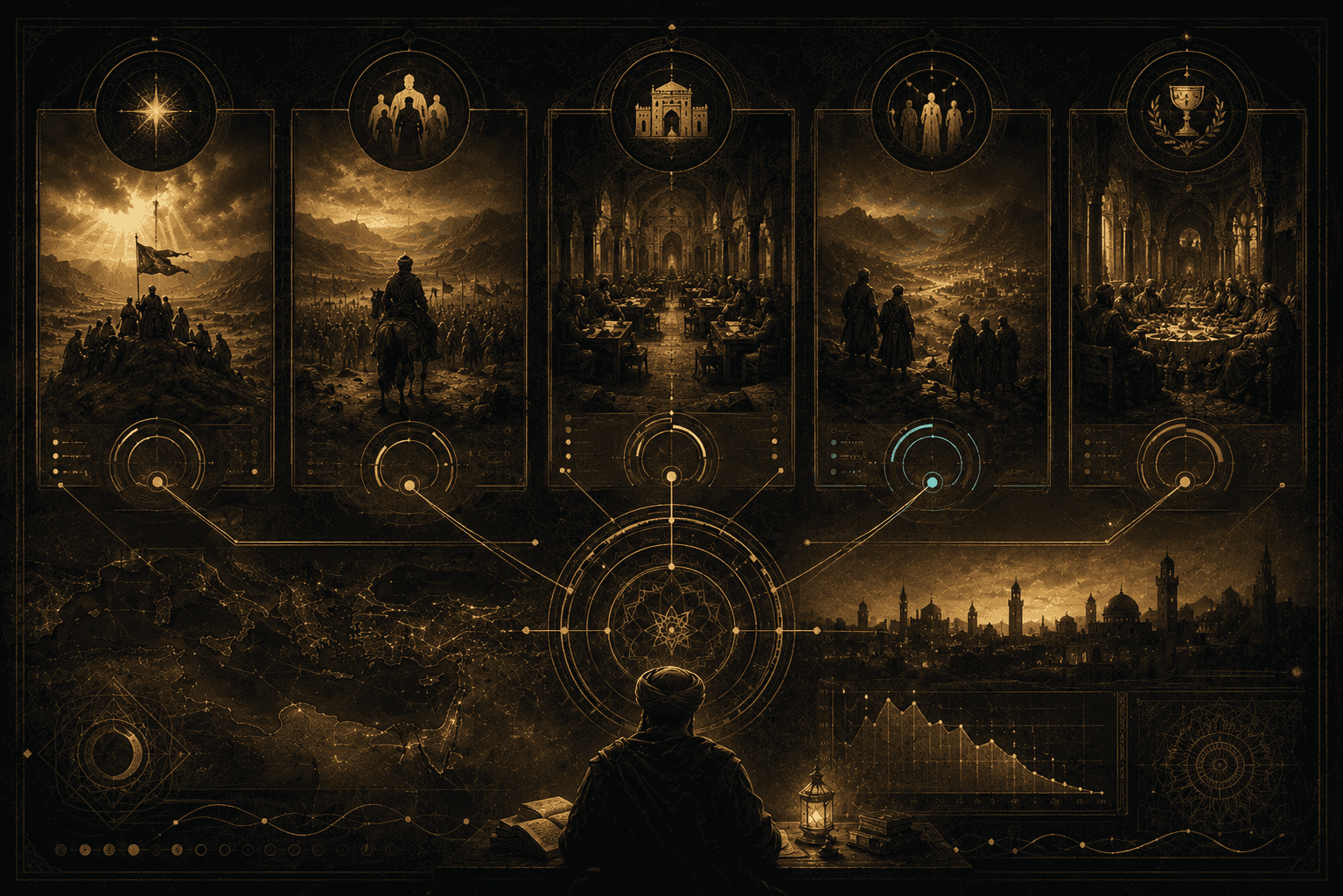
Do members still operate from a shared mission they would sacrifice for, or are they preserving an inherited structure because it already exists? Frontier groups run on mission because survival and purpose remain connected. Late-cycle institutions run on memory, ritual, and the prestige of earlier sacrifice.
Is leadership close to operational reality, or insulated by layers of management, language, ceremony, and reporting? Ibn Khaldun observed that the moment rulers stop sharing the pressures of the governed, cohesion begins its final erosion. Distance makes failure easier to rationalize.
Is administrative complexity growing faster than the value it produces? Late-cycle institutions generate process to fill the space left by declining trust. When documentation replaces ownership, the system may still look controlled while its real responsiveness is collapsing.
How much energy goes into creating new value compared with preserving old structure? When maintenance consumes imagination, the system has entered the preservation trap. This appears as technical debt, compliance fatigue, infrastructure exhaustion, and endless internal coordination.
Is the system creating value, or monetizing inherited trust? Late systems often raise taxes, fees, friction, reporting burdens, ads, or internal demands while producing less vitality. Extraction rises when legitimacy falls.
Are smaller, newer, less comfortable groups outperforming the incumbent on the dimensions the incumbent has stopped caring about? A frontier group does not announce itself as destiny. It appears first as discipline, speed, hunger, and contempt for inherited excuses.
Does the system still have a story people believe, or does it rely on branding, ceremony, compliance, and repetition? When natural loyalty fades, propaganda expands. Narrative failure increases coercion costs.
What does the group optimize for: survival and mission, or comfort and status? Ibn Khaldun did not moralize about luxury. He observed that it reliably reorganizes incentives away from collective durability and toward private insulation.
Signals 1, 2, and 6 pointing toward shared mission, close leadership, and outsider hunger suggest frontier or consolidation energy. Signals 3, 4, 5, 7, and 8 dominating suggest descent. The cycle does not wait for recognition.
Power does not last because it appears permanent. It lasts when the people inside the system still believe, sacrifice, coordinate, maintain, defend, and renew. Ibn Khaldun gives Darja Rihla a civilizational laboratory: history becomes structure, structure becomes diagnosis, and diagnosis becomes strategy.
From history to systems intelligence
The purpose of this article is not to leave Ibn Khaldun inside the fourteenth century. It is to carry his method into every system that rises, coordinates, hardens, extracts, fragments, and gets replaced. Empires, startups, codebases, security programs, platforms, bureaucracies, and digital communities all face the same structural question: can they preserve living cohesion while scaling complexity?
Darja Rihla treats history as a diagnostic archive. Carthage becomes a study in network power and elite strain. The Almoravids become a study in frontier cohesion. Almohad architecture becomes a study in frozen asabiyyah. Taxation becomes a theory of extraction spirals. Cybersecurity becomes an institutional cohesion problem. Software architecture becomes a map of technical debt and social decay.
This is the wider frame: history is not only memory. It is a laboratory for survival, coordination, infrastructure, and institutional resilience.
Ibn Khaldun: common questions
Asabiyyah is Ibn Khaldun’s concept of group solidarity, collective discipline, and shared social force. It is not simply solidarity but the invisible bond that makes coordinated action, institutional building, and collective survival possible. In systems terms, it is social anti-entropy: the force that keeps complexity from falling apart.
Ibn Khaldun was one of the first thinkers to treat history as a system with structural causes rather than a sequence of events driven by rulers and battles. His method anticipated sociology, institutional economics, systems theory, and civilizational analysis by several centuries.
Groups rise through discipline and shared purpose, build institutions during their peak, then decline as luxury, bureaucracy, extraction, and inherited comfort replace the solidarity that built them. When cohesion collapses, so does the capacity to maintain and defend what was built.
Cybersecurity depends on institutional discipline, trust, and shared ownership of security responsibilities. An organization with weak internal cohesion is easier to manipulate through phishing, social engineering, insider threat, and misconfiguration than a technically advanced but fragmented one.
The Muqaddimah is the introduction to Ibn Khaldun’s larger universal history, the Kitab al-Ibar. Written in 1377 during a period of seclusion in Qal’at Ibn Salama in western Algeria, it stands alone as one of the most rigorous pre-modern attempts to treat civilization as something governed by observable structural laws.
Ibn Khaldun described three generations as the typical arc: roughly 100 to 120 years. This is a structural tendency, not a fixed law. Some dynasties collapse faster. Others extend the plateau through external pressure, reform, or renewed ideological intensity.
Ibn Khaldun connects the civilizational, the institutional, and the structural. Darja Rihla builds on the same logic across culture, cybersecurity, infrastructure, software systems, and strategic diagnosis.