The VOC Was a Belief System Before It Was a Company
The VOC belief system did not spread through ideology or scripture. It spread through ledgers, charters, and share certificates – instruments that taught millions of people to place their trust not in kings or gods, but in an abstract, immortal institution. Understanding how that shift happened is understanding how the modern world was built.
Philosophy & Legacysystems doctrine · institutional power · maritime history · cybersecurity12 min read
Institutions scale when their rules begin to behave like natural systems.
Foundation
The VOC Belief System: From Blood to Protocol
Before 1602, power was personal. A Venetian merchant trusted his partner because he knew his family. A Carthaginian trader sealed agreements through kinship networks and sworn oaths. A Hanseatic guild member paid his dues to a community of faces, not a board of anonymous investors. Trust was human, embodied, and bounded by geography and mortality.
The VOC belief system dissolved all of that. When the States-General of the Dutch Republic chartered the Vereenigde Oost-Indische Compagnie in 1602, they did not simply create a trading company. They created a protocol for civilization-scale trust: a legal architecture that allowed strangers, separated by oceans and centuries, to coordinate around an abstract entity that could not bleed, could not die, and could not be bribed with wine or kinship.
The Darja Rihla doctrine is clear on this: the architecture of complex systems is never about what moves through the network. It is about how trust is verified across it. The VOC belief system solved that problem first, and everything that followed from modern finance to cloud infrastructure is an elaboration of its answer.
Financial systems become durable when they disappear into culture and infrastructure.
Concept · Protocol Trust
The shift from trust anchored in persons, family, blood, oath, and presence, to trust anchored in systems: archives, ledgers, charters, and certificates. The VOC belief system was the first institution to achieve this at civilizational scale. It is one of the founding acts of modernity.
Framework
The Trust Stack: Six Layers of Institutional Scale
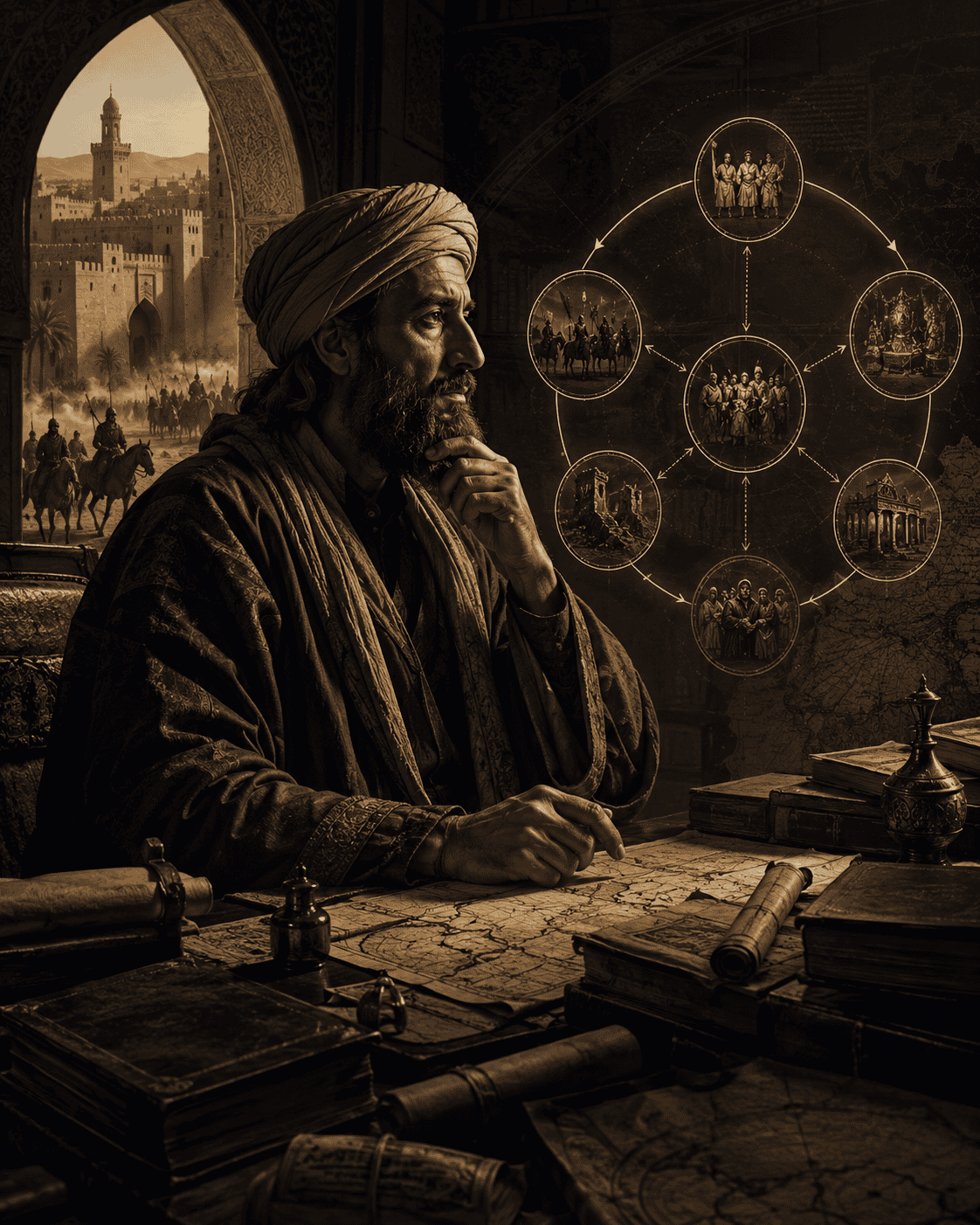
The VOC belief system did not emerge from genius alone. It was assembled, layer by layer, from existing Dutch capacities, each one amplifying the next. Understanding the architecture explains why it worked and why modern systems replicate it so faithfully.
Cultural Kernel
Discipline, deferred gratification, and profit as moral signal.
Calvinism did not cause the VOC belief system. But it helped create the cohesion architecture that made it possible: sober capital, reinvested surplus, procedural trust, and a merchant class trained to see discipline as destiny.
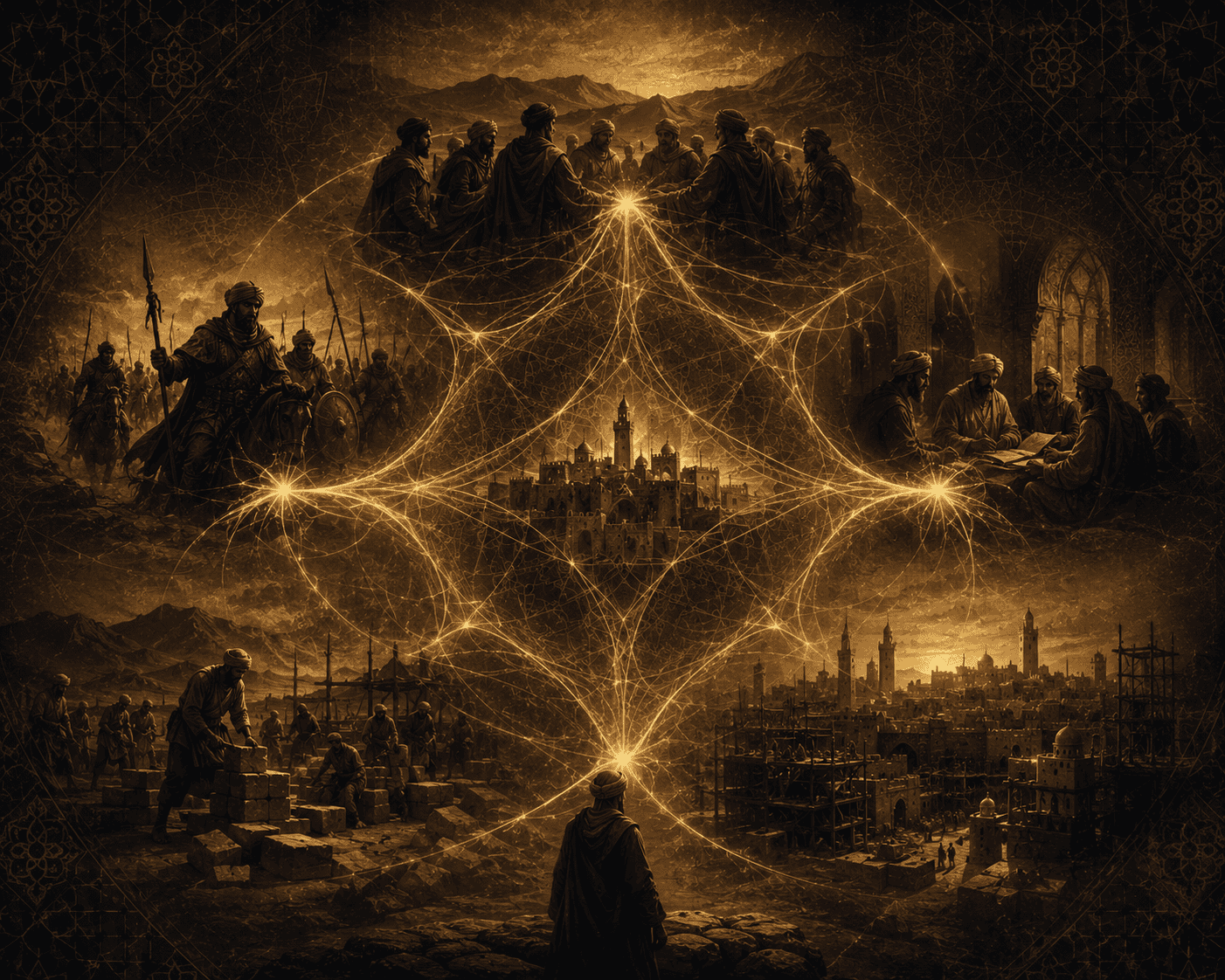
Financial Abstraction
Permanent capital and transferable shares made trust liquid.
Before the VOC, capital followed voyages. The VOC belief system locked capital inside an institution and made ownership transferable. The company could now outlive investors, captains, directors, and fleets.
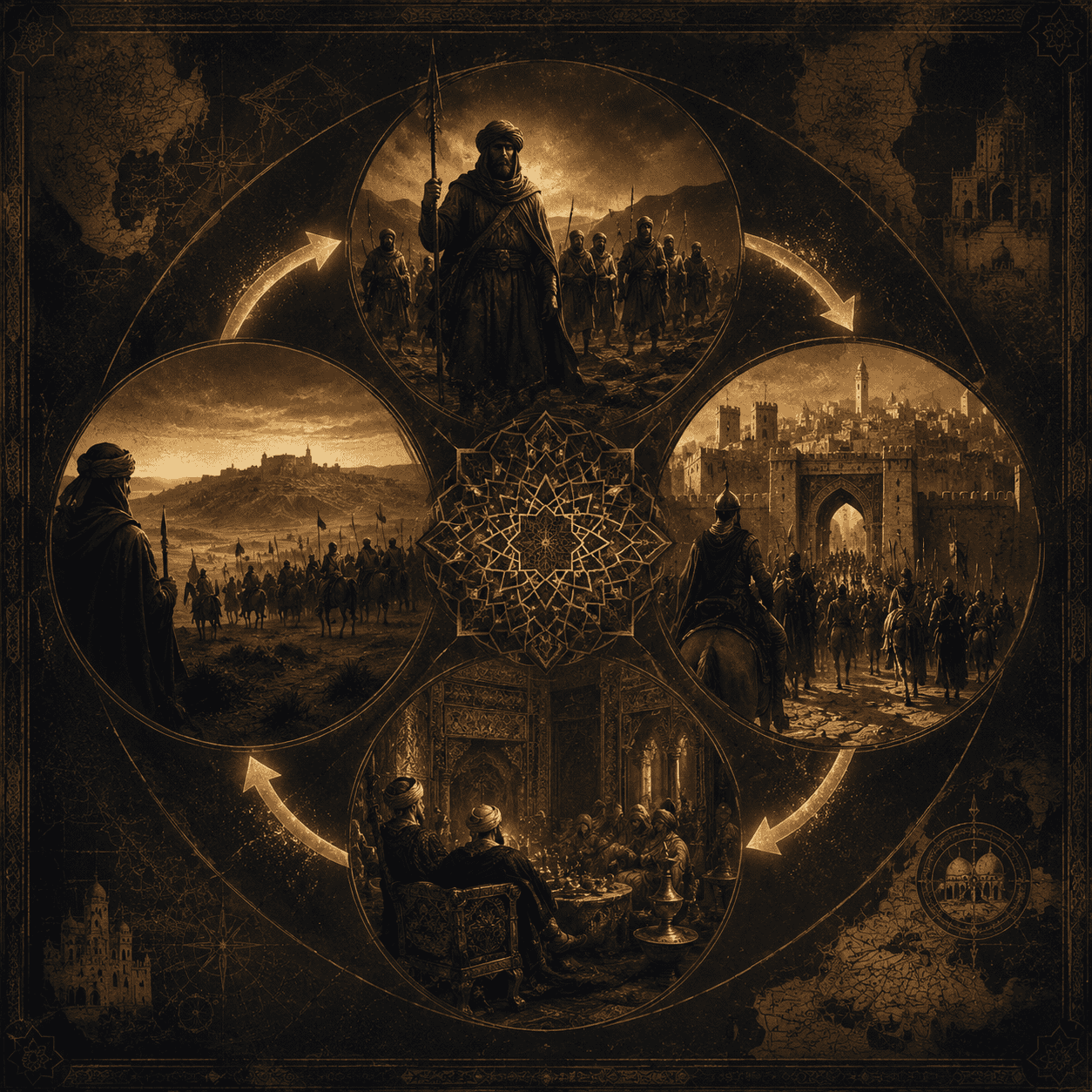
Juridical API
The Dutch Republic delegated war, treaties, territory, and justice.
The VOC charter exported sovereignty through a corporate interface. The company became a state that could file accounts, wage war, sign treaties, and administer distant territories.
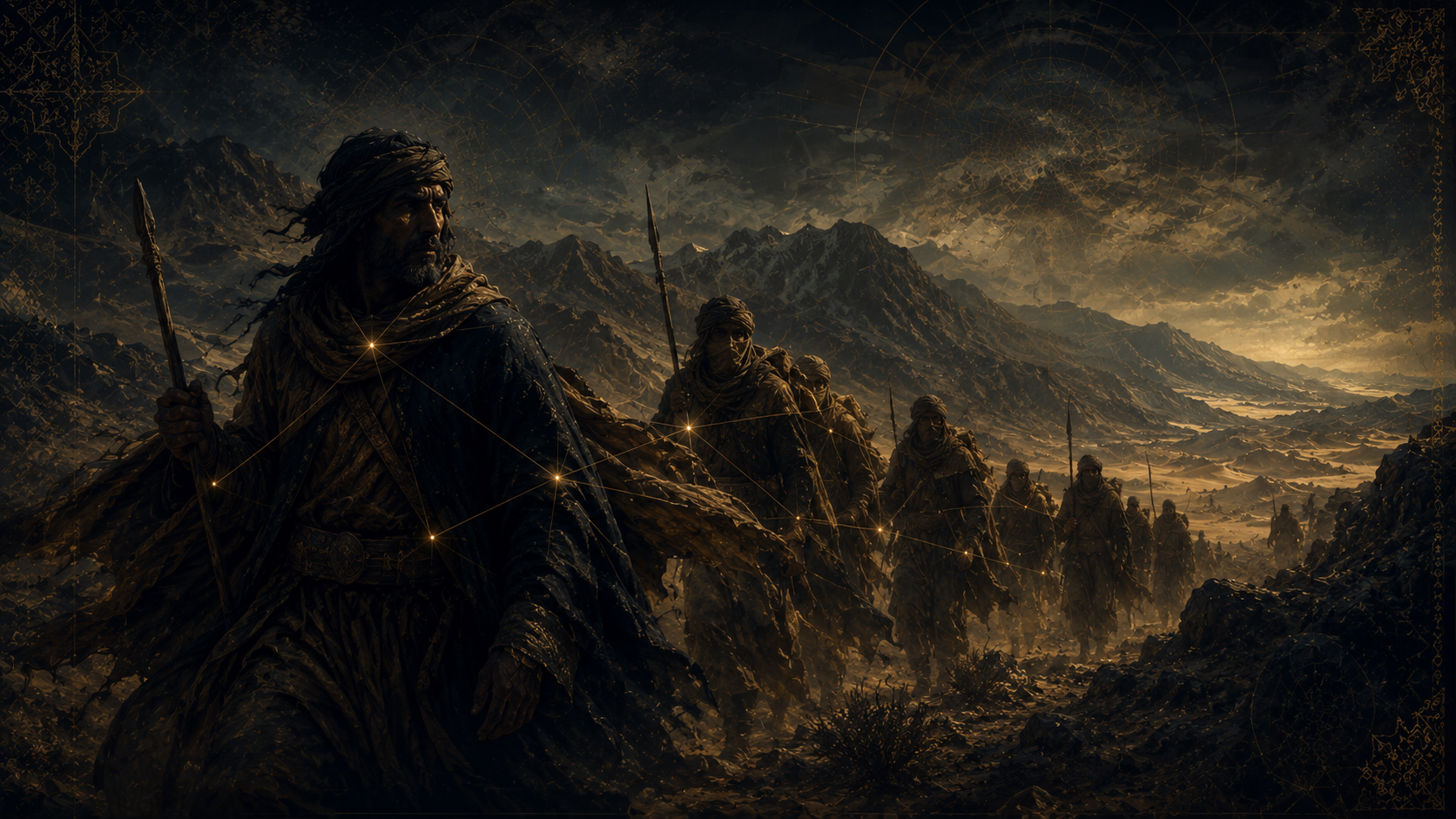
Infrastructure Compression
Ports and stations became latency reduction nodes in a global network.
The VOC did not conquer geography. It administered it through resupply nodes, repair depots, intelligence hubs, and coercive checkpoints. Infrastructure made distance governable.
Trade networks often outlive the political structures that created them.
L5 · Data LayerThe Archive as Weapon
The VOC belief system produced one of the most comprehensive archives of maritime, commercial, and geographic data in the world. Whoever held the logbooks held the routes. The data layer was not a record of the empire. It was the instrument of control.
L6 · Institutional ImmortalityThe System Outlives the People
When a VOC director died, the company continued. When a fleet sank, the company continued. When wars reshaped Europe, the company continued. This was not resilience by accident. It was designed immortality.
Doctrine · The Share Certificate as a Form of Faith
A VOC share was not a claim on ships or pepper. It was a claim on the future continuity of a system. Buying one required you to believe that an abstract legal entity would outlast your own life. That act of belief, repeated by thousands of investors, is what made the VOC function as a civilization.
System Revelation
Banda: Where the VOC Belief System Rewrote Reality
Extraction systems reshape landscapes long before they reshape politics.
Every belief system eventually confronts a moment where its internal logic collides with human reality. For the VOC belief system, that moment was the Banda Islands in 1621.
The Banda archipelago in the Maluku sea was, at that time, the only place on earth where nutmeg and mace grew in commercial quantities. The VOC had promised its investors a monopoly. The Bandanese, a maritime trading people with centuries of commercial relationships across Asia, declined to honor that monopoly. They sold to whoever offered better terms. From the Bandanese perspective, this was rational commerce. From the VOC perspective, it was a systems error.
Jan Pieterszoon Coen’s response was not emotionally chaotic. It was administratively rational. Between 1609 and 1621, VOC campaigns destroyed or displaced an estimated 90 percent of the Banda population. The islands were then repopulated with enslaved labor and managed by perkeniers: Dutch operators who held plantation licenses from the VOC.
Doctrine Warning · The Abstraction Wall
Banda reveals what happens when a system’s internal logic becomes more real to its operators than the human world outside. In Amsterdam, directors saw dividend projections. In Batavia, administrators saw supply chain reports. On Banda, soldiers executed orders. Nobody saw the complete picture. The system fragmented moral responsibility until nobody felt personally accountable for any of it.
The genocide was not an act of passion. It was an act of optimization. The Bandanese were not enemies to be defeated. They were variables that disrupted a function.
Darja Rihla Doctrine on the Banda Conversion
The Perkenier Stack: The First Platform Dependency Model
The perkenier system that replaced the Bandanese trading networks was structurally remarkable. The VOC provided infrastructure, military security, and exclusive distribution. The perkeniers provided labor and local management. In exchange, perkeniers were required to sell all their nutmeg to the VOC at prices set by the VOC. They could not trade with anyone else.
This is platform logic. It predates the App Store by centuries, but the architecture is familiar: access to a captive market, controlled through infrastructure ownership, with the platform extracting margin from every transaction while the operator bears production risk. The perkenier thought he was a free citizen building a business. He was an API-dependent contractor inside someone else’s system.
Concept · The Banda Conversion
The process by which a living, high-entropy ecosystem, characterized by distributed relationships, flexible exchange, and human negotiation, is reduced to a low-entropy administrative grid: auditable, controllable, predictable, and extractable. Systems scale by flattening reality into manageable objects.
Modern Layer
Cybersecurity as Maritime Governance
Modern digital trust networks inherit more from maritime systems than they appear to admit.
The most counterintuitive layer of this doctrine is also the most structurally precise. The architecture of modern cybersecurity is not a product of the digital age. It is a translation of maritime governance into digital infrastructure.
Both systems are built to solve the same problem: trusted movement through hostile environments. A VOC fleet crossing the Indian Ocean and a data packet crossing the internet face structurally identical challenges: identity verification, payload protection, routing through adversarial territory, and logging every transaction for later audit.
The VOC did not merely move spices. It scaled trust, governance, contracts, risk, information, and belief across oceans. Modern digital platforms operate similarly. They transform human coordination into abstract infrastructure. A cloud platform, app store, payment processor, or certificate authority is not simply a service provider. It is institutional software: an administrative belief system that decides who can enter, what can move, which identities are trusted, and which forms of exchange become legitimate.
VOC · Convoy SystemVPN / Secure Tunnel
Armed convoys protected cargo through waters controlled by rival powers. Secure tunnels encrypt and route data through networks controlled by adversaries.
VOC · Charter and SealCertificate / PKI
A VOC seal verified a captain’s authority without the Heeren XVII being physically present. A TLS certificate verifies a server’s identity without the certificate authority being present.
VOC · FactorijEdge Server / HSM
Each fortified trading station was a trusted point of interaction inside an untrustworthy region. Edge servers and Hardware Security Modules perform the same function.
VOC · Nutmeg MonopolyVendor Lock-in
Control the source, control the market. The Banda monopoly made the VOC indispensable by eliminating alternatives. Cloud vendor lock-in uses the same logic.
Doctrine · Cybersecurity Is Maritime Governance
Cybersecurity is the continuation of maritime governance by digital means. The shift from seals to certificates, from convoys to VPNs, from factorijen to edge servers, is not metaphor. It is the same institutional logic operating in a different medium.
This connects directly to the systems thinking framework at the core of Darja Rihla. The VOC belief system’s lasting innovation was not its ships or its spices. It was its verification architecture: a set of protocols that allowed trust to operate at scale without requiring personal knowledge of any individual actor.
Civilizational Law
The Entropy Engine: Why Systems That Outlive Humans Eventually Destroy Themselves
The Ibn Khaldun framework at Darja Rihla provides the terminal equation. His theory of asabiyyah, the social cohesion and collective energy that builds institutions, describes a cycle that the VOC followed with mechanical precision.
Phase 1 · FoundingHigh Asabiyyah
The early VOC was built by merchants who understood the sea, the cargo, and the risk. High cohesion. Direct operational knowledge. Decisions made by people who knew what a sinking ship actually meant.
Phase 2 · ExpansionInstitutionalization
Success produces bureaucracy. Bureaucracy produces procedure. Procedure replaces judgment. The system begins to serve its own administrative logic rather than its original purpose.
Phase 3 · AbstractionElite Detachment
The bewindhebbers in Amsterdam become rent-seekers. Dividends are extracted from an empire they can no longer understand. Operational reality is replaced by financial reporting.
Phase 4 · CollapseAdministrative Obesity
The VOC dissolved in 1799, bankrupt and institutionally exhausted. Not because it ran out of spices, but because the abstraction layer had become heavier than the infrastructure could support.
Why This Matters
The Ibn Khaldun entropy cycle is observable in large institutions: corporations, states, platforms, and empires. The question is never whether a system will enter the abstraction phase. The question is how long it takes, and what the abstraction cost will be for the people operating inside and beneath the system.
Knowledge Check
Test the VOC Belief System Doctrine
VOC Belief System · Doctrine Assessment
What was the VOC’s most structurally significant innovation?
What does the Banda Conversion describe in Darja Rihla doctrine?
The perkenier system most closely resembles which modern structure?
Score:
Framework
Is It a Company or a Belief System? The Diagnostic Engine
The institutional architecture the VOC belief system pioneered did not disappear when the company dissolved in 1799. It was inherited. The indicators below are drawn from the VOC’s structural profile. Apply them to any institution, corporate, governmental, or digital, and assess the answer honestly.
The VOC controlled the ports, supply chains, and fortified nodes. Without VOC infrastructure, trade in the Indo-Pacific could not operate at scale. When the infrastructure is yours, the dependency is theirs.
The VOC controlled what counted as legitimate commerce in the regions it dominated. Today, payment processors decide what commerce is acceptable. App stores decide what software can exist. Certificate authorities decide what servers are trusted.
The VOC’s Heeren XVII changed composition constantly. Individual directors died, retired, and were replaced. The system continued. That is institutional immortality.
The VOC turned the Banda Islands into rows in a ledger: nutmeg production per perkenier, shipping costs per route, profit per year. Every modern platform performs a related operation when human attention becomes engagement data.
The VOC’s true product was not nutmeg. It was the belief that your investment would retain value across decades, that the institution would persist, and that the system was stable.
Doctrine
The Final Doctrine: Empires No Longer Needed Kings
The VOC belief system completed a civilizational transition. Power no longer needed a person at its center. No king. No dynasty. No sacred bloodline. Only protocol, ledger, charter, and archive: instruments that could outlive any human being and continue generating compliance, profit, and order across generations.
Banda was not an aberration. It was the doctrine made visible. When the system’s internal logic becomes more real than human reality, the system begins to rewrite the world rather than serve it. That process did not end in 1621. The actors change. The architecture persists.
The most important question for anyone studying philosophy and the nature of institutional power is not historical. It is diagnostic: at what point does the institution you work inside, invest in, or depend upon cross the threshold from company to belief system?
Final Doctrine
Empires no longer needed kings once systems learned how to outlive humans. The VOC belief system was the proof of concept. The cloud is the current iteration. The architecture is the same. Only the medium has changed.
Historical Scale
The Scope of the First Trust Machine
VOC Share Capital at Founding, 1602
0 in founding capital.
VOC Operational Years
0 of continuous operation, outlasting every human who built it.
Estimated Banda Population Lost, 1621
Approximately 0 of the indigenous Banda population.
Doctrine Network
Connected Essays
The VOC belief system is part of a larger Darja Rihla doctrine: civilizations are not held together by territory alone, but by cohesion architecture, institutional memory, scalable trust, network legitimacy, and the abstraction layers that turn human proximity into civilizational infrastructure.
The VOC belief system is one node in a larger civilizational analysis. Follow the complete architecture from Carthage to the cloud across the Darja Rihla cluster map.
Philosophy & Legacy · Civilizational Systems Intelligence
Ibn Khaldun and the Cycle
Ibn Khaldun watched dynasties fracture and asked why power often looks strongest just before it begins to decay. He did not see history as a loose chain of kings, battles, and accidents. He saw a structure beneath events: cohesion hardens a group, conquest expands it, wealth softens it, and a harder force eventually replaces it.
Philosophy & LegacyIbn Khaldun · Muqaddimah · Asabiyyah · Systems Architecture18 min read
Civilizational Systems Intelligence · Cluster
The cluster this pillar anchors
This post is the structural centre of the Empires Need Stories cluster. Each post in the cluster connects back to the asabiyyah framework established here. The cluster grows as new posts are published.
Pillar · LiveIbn Khaldun and the Cycle
The master framework: asabiyyah, institutional entropy, fiscal decline, maintenance overload, and why civilizations follow a predictable arc from cohesion to replacement.
Supporting · In progressWhy Empires Need Stories More Than Armies
Narrative legitimacy as psychological infrastructure. What happens when the story breaks before the army does.
Ibn Khaldun connects philosophy, civilization, systems thinking, and institutional power.
The operating manual
The Muqaddimah was not only history. It was a science of civilization.
The Muqaddimah, written in 1377 during Ibn Khaldun’s retreat at Qal’at Ibn Salama in present-day Algeria and later revised in Tunis, was the introduction to his larger universal history, the Kitab al-Ibar. But it became something more independent and more dangerous: an attempt to identify the structural laws beneath civilization itself.
Ibn Khaldun called this field ilm al-umran: the science of human civilization, social organization, settlement, power, labor, economy, and decline. He was not satisfied with chronicles that copied court narratives or repeated heroic myths. He wanted method. He criticized traditional historiography because it often accepted reports without testing whether they fit the material limits of geography, economy, population, psychology, and institutional capacity.
This is why Ibn Khaldun belongs inside a modern systems architecture conversation. He treated civilization as a dynamic system with inputs, constraints, feedback loops, failure modes, and phase changes. Rulers, battles, and dynasties were visible outputs. The deeper system was cohesion, production, climate, taxation, legitimacy, and institutional memory.
Darja Rihla frame
The Muqaddimah is not merely a historical text. It is an early diagnostic engine for human systems: how groups coordinate, scale, harden, extract, fragment, and get replaced.
The cycle
Ibn Khaldun turned civilizational decline into a structural law
Most historical writing begins with the visible surface: a ruler takes power, a city expands, an army marches, a dynasty falls. Ibn Khaldun began somewhere colder. He asked why the same sequence seemed to repeat across different lands, peoples, climates, and courts. Hard groups rise from the frontier. They conquer softer settled societies. They build law, taxation, armies, palaces, and administrative order. Their children inherit the structure. Their grandchildren inherit the comfort. Then the inner force that made the system possible begins to disappear.
His answer was not nostalgia for austerity. It was a systems claim. Power begins before institutions. It begins in the bond that allows people to absorb hardship together, obey under pressure, trust one another without paperwork, and sacrifice for a common future. This bond is asabiyyah. When it is strong, a group can coordinate faster than richer enemies. When it weakens, even wealthy states become brittle because their institutions no longer carry living loyalty.
The cycle starts in the frontier condition. Scarcity, danger, mobility, exposure, and dependence make social life severe. People cannot afford ornamental status games because survival is collective. Narrative also matters here. The group tells itself a story about origin, loyalty, honor, divine mission, tribe, reform, or revenge. That story is not decorative. It converts hardship into meaning and binds the group psychologically.
Victory changes the structure. The frontier group becomes a ruling class. It must collect taxes, govern cities, manage succession, distribute offices, and convert raw cohesion into durable administration. This is the consolidation phase. The first generation still remembers danger, so institutions remain connected to the discipline that built them.
Then prosperity alters incentives. Luxury is not merely wealth. It is the condition in which status, comfort, court politics, bureaucracy, and inherited entitlement begin to replace shared danger. The ruling group still possesses symbols of power, but the invisible infrastructure has weakened. The state can look grand while its internal coordination decays. In Darja Rihla terms, Ibn Khaldun was reading history as a complex system: cohesion creates expansion, expansion creates wealth, wealth weakens cohesion, weakened cohesion invites replacement.
Concept · Asabiyyah as negative entropy
Asabiyyah is not simply solidarity. It is the social anti-entropy that holds complexity together. It is the zero-layer force beneath armies, courts, companies, software teams, security programs, institutions, and states.
Asabiyyah is the invisible social force behind visible power.
The zero layer
Institutions are stored cohesion, not living cohesion
The most important upgrade to Ibn Khaldun is not to reduce asabiyyah to tribal feeling. It is to read it as negative entropy. Every complex system tends toward disorder unless energy keeps it coordinated. In human systems, that energy is not only money, command, or policy. It is trust, shared discipline, common memory, credible leadership, and the willingness to absorb cost for the group.
An institution is what happens when living cohesion becomes structure. A movement becomes a party. A war band becomes an army. A founder team becomes a company. A security culture becomes policy. A working codebase becomes architecture. The structure is useful because it stores past coordination. But stored cohesion is not the same as living cohesion.
This distinction explains why late systems often look strongest near decay. They still have buildings, titles, dashboards, rituals, compliance documents, diagrams, budgets, and historical prestige. But the social energy that once made those forms meaningful has thinned. The institution is still standing. The internal force that made it adaptive is no longer regenerating.
Environmental pressure
Geography, climate, and the forging of asabiyyah
Ibn Khaldun did not treat geography as decoration. Climate, terrain, mobility, and scarcity shape the social psychology of groups. Harsh environments impose consequences. They make dependency visible. They reduce the space for theatrical comfort. In desert, mountain, and frontier conditions, cohesion is not a moral slogan. It is a survival technology.
The Maghreb gave Ibn Khaldun a living laboratory. The Sahara produced mobile discipline, long-distance endurance, and religious austerity. The High Atlas produced hard mountain cohesion, outsider energy, and reformist intensity. Ifriqiya and the coastal cities produced trade, scholarship, administration, and refinement, but also the softening that comes when order becomes inherited.
The Almoravids rose from the Saharan and western Maghrebi frontier in the eleventh century. Their force came from Berber tribal cohesion, Maliki reform, ribat discipline, and hard environmental pressure. The Almohads later rose from the High Atlas with a different ideological engine, but the same Khaldunian mechanism: frontier austerity became political force.
The modern bridge is direct. Climate stress, migration, supply chains, energy systems, and urban fragility still shape institutional resilience. Systems built in comfort often assume continuity. Systems forged under pressure often preserve deeper coordination until success makes that pressure disappear.
The eight phases
The eight structural phases of Ibn Khaldun’s cycle
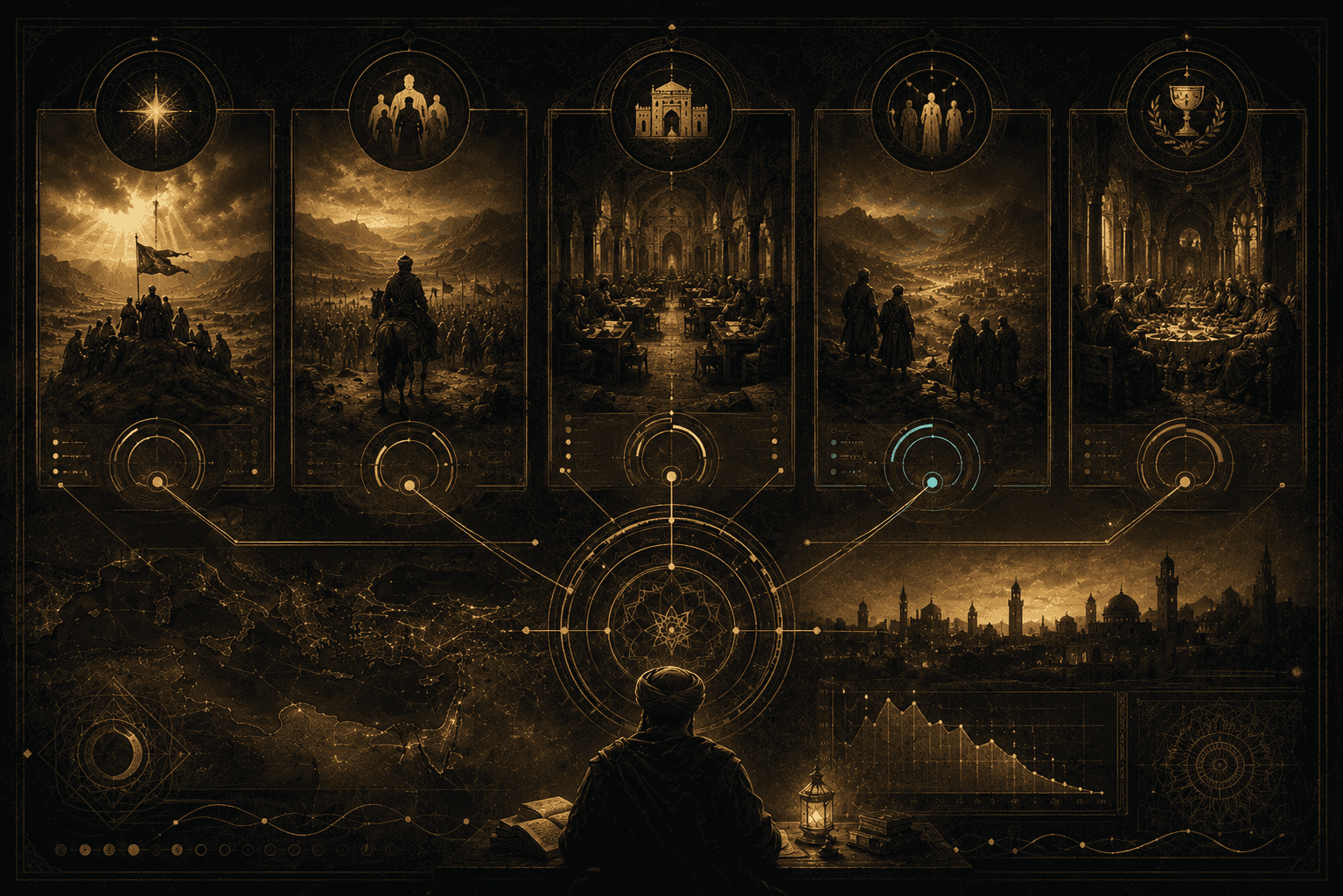
Ibn Khaldun’s cycle can be read through eight recurring structural phases. Each phase has its own strength, psychological atmosphere, institutional logic, and failure mode.
The structural phases of Ibn Khaldun’s cycle: frontier strength, consolidation, expansion, luxury, fragmentation, fiscal strain, collapse, and renewal.
Phase 01Frontier Strength
High hardship. High trust. Low luxury.
Frontier life creates discipline because survival depends on the group. Trust is dense and loyalty is direct.
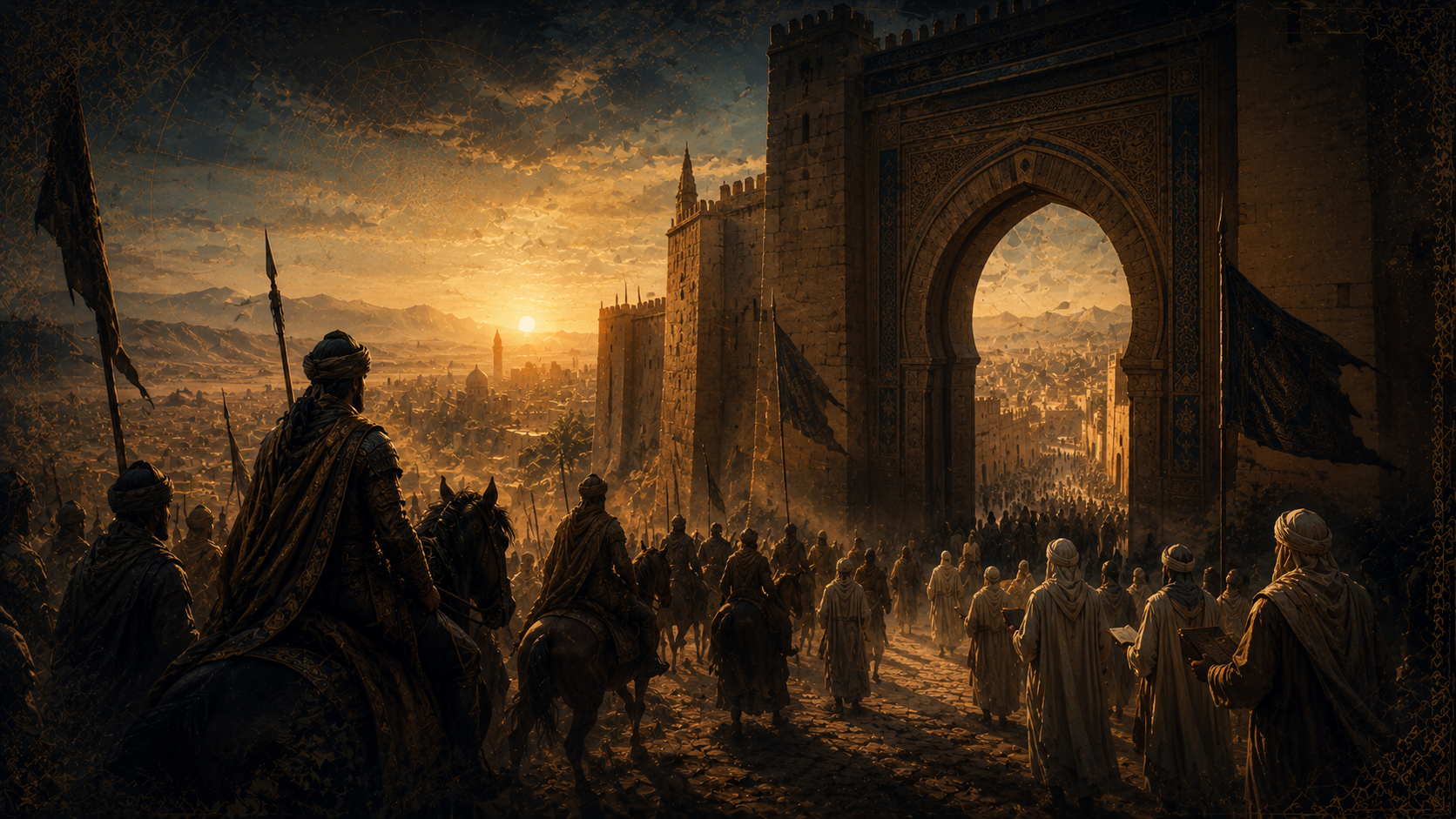
Phase 02Conquest and Consolidation
Power secured. Institutions built.
The founding group turns cohesion into rule. Institutions still carry the pressure and memory of conquest.
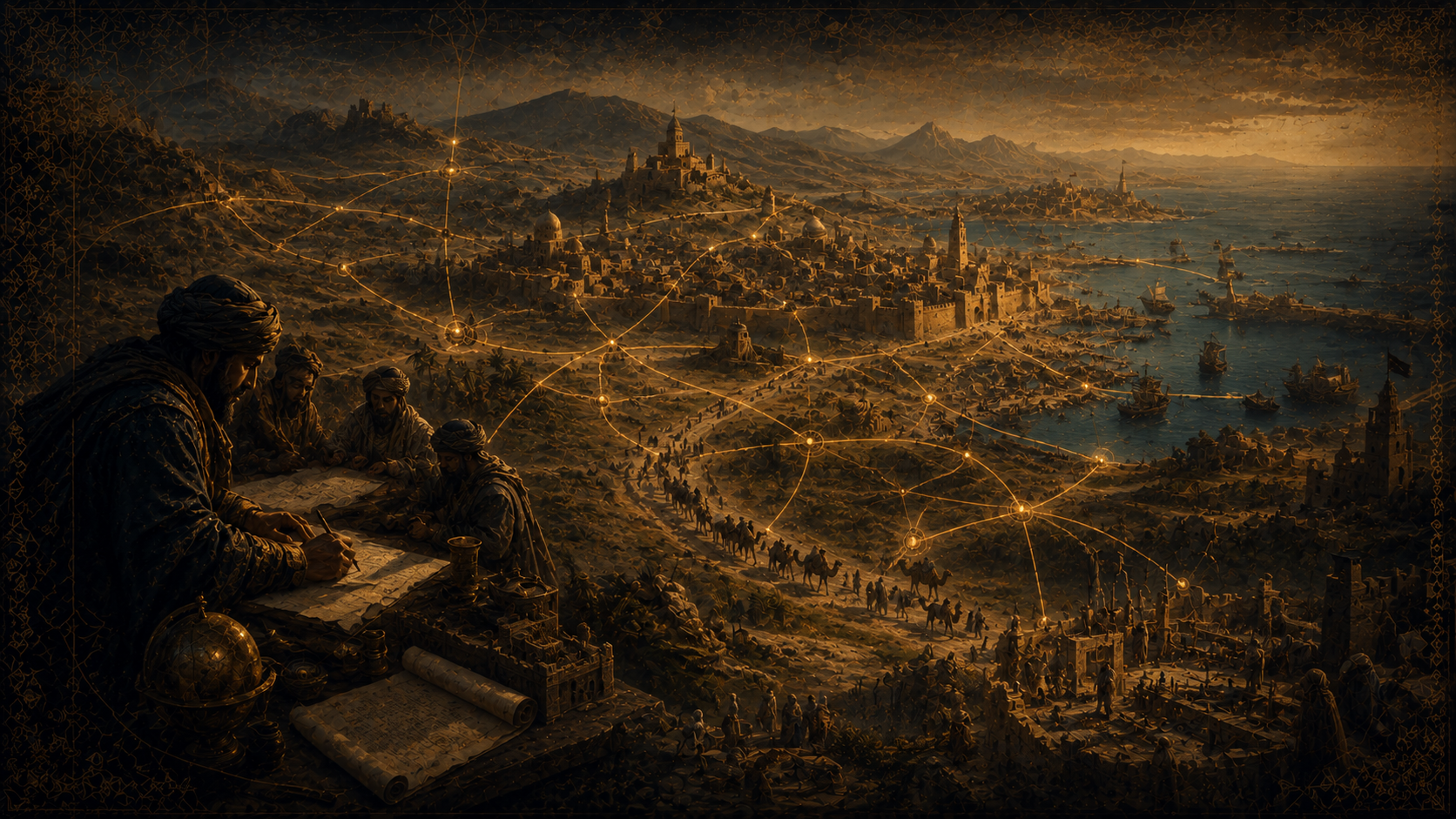
Phase 03Expansion and Administration
Territory expands. Complexity rises.
Power becomes offices, law, taxation, and command. The system grows while the founding mission still gives it direction.
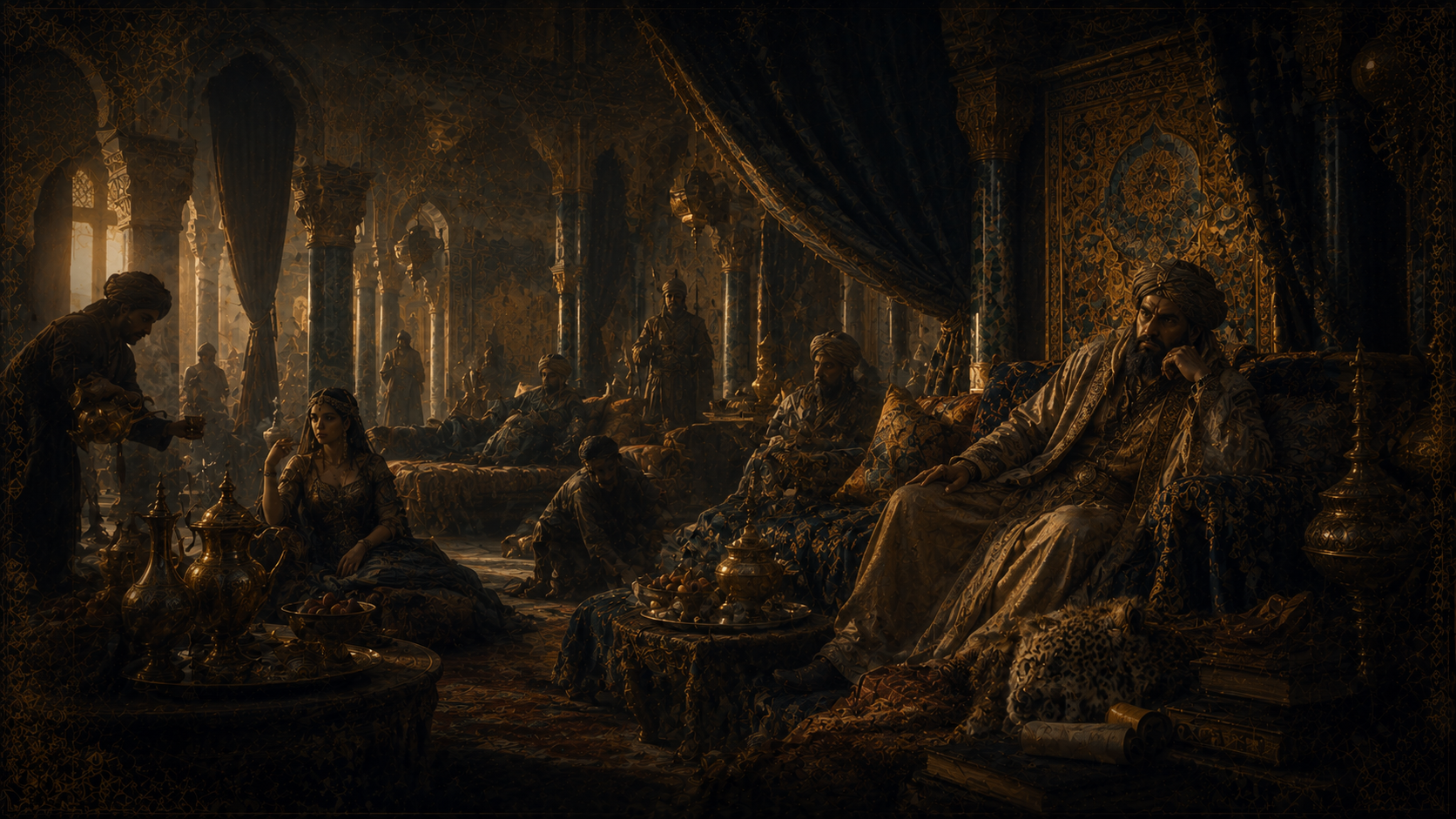
Phase 04Luxury and Comfort
Comfort replaces discipline.
Prosperity softens the habits that created power. Sacrifice becomes memory instead of practice.
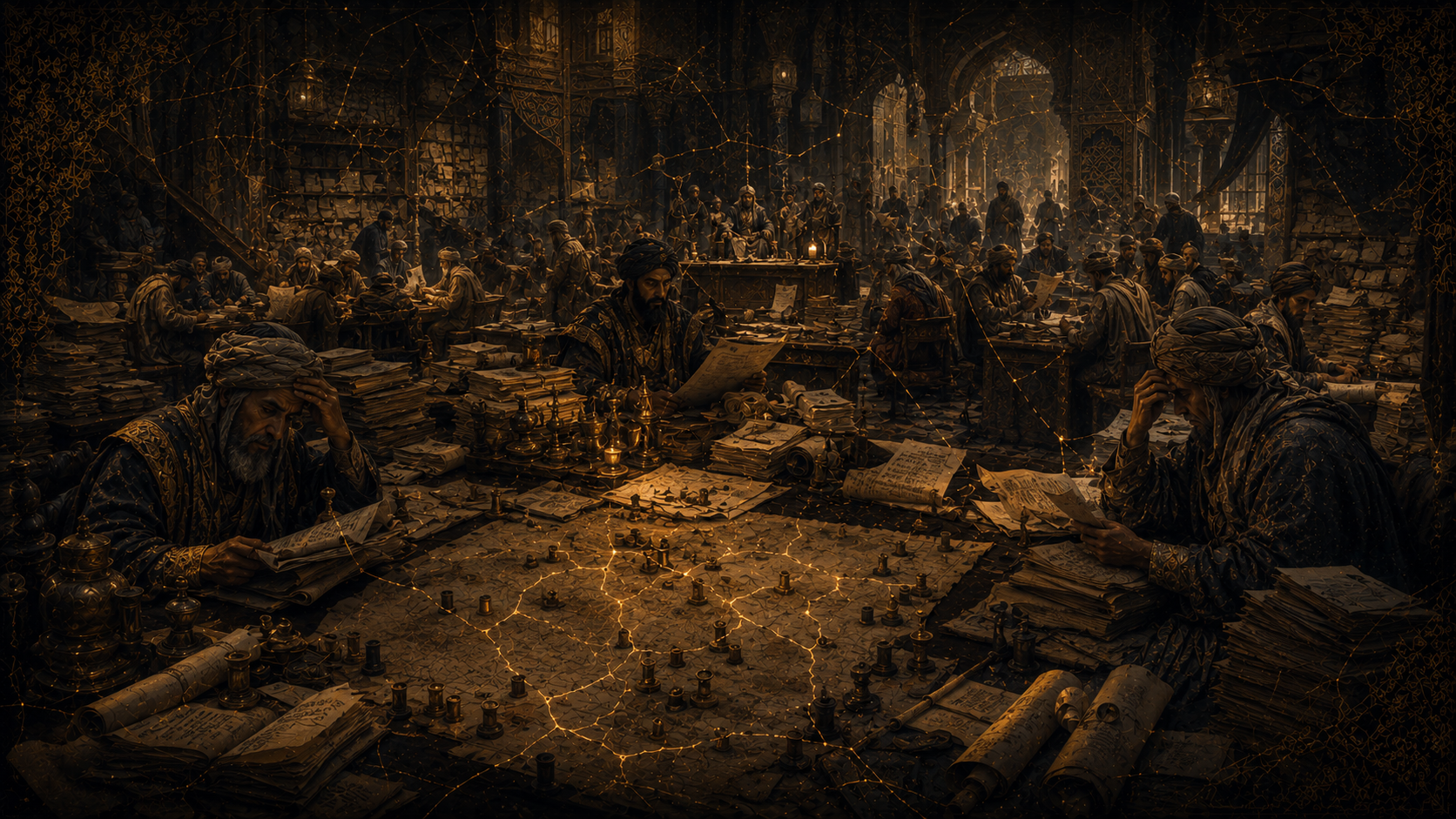
Phase 05Bureaucracy and Fragmentation
Process replaces trust.
Administrative layers multiply as cohesion weakens. Factions begin to replace shared purpose.
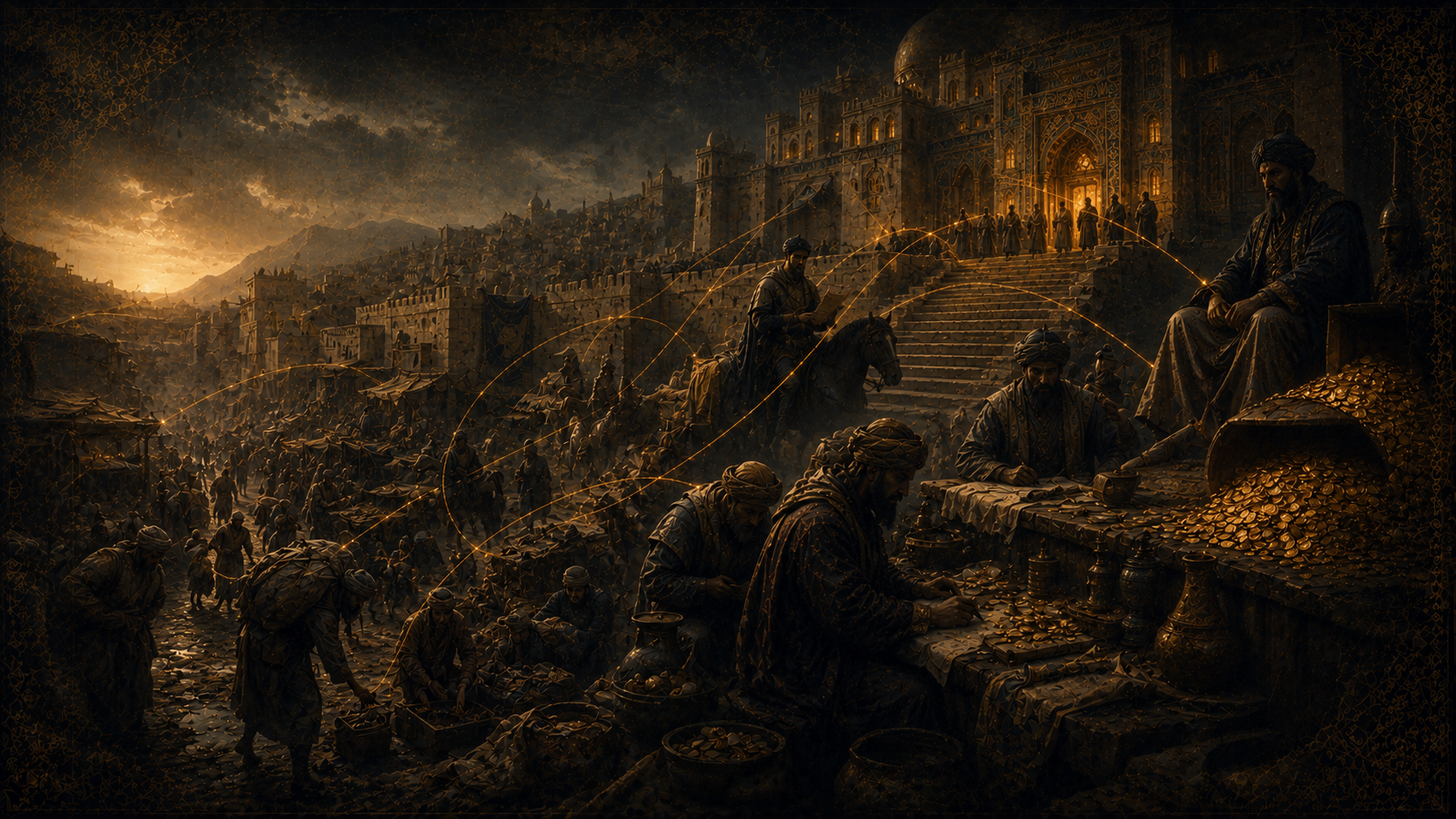
Phase 06Fiscal Strain and Overreach
Taxes rise. Revenue falls.
The state extracts more to preserve a weakening system. Trust, production, and compliance decline together.
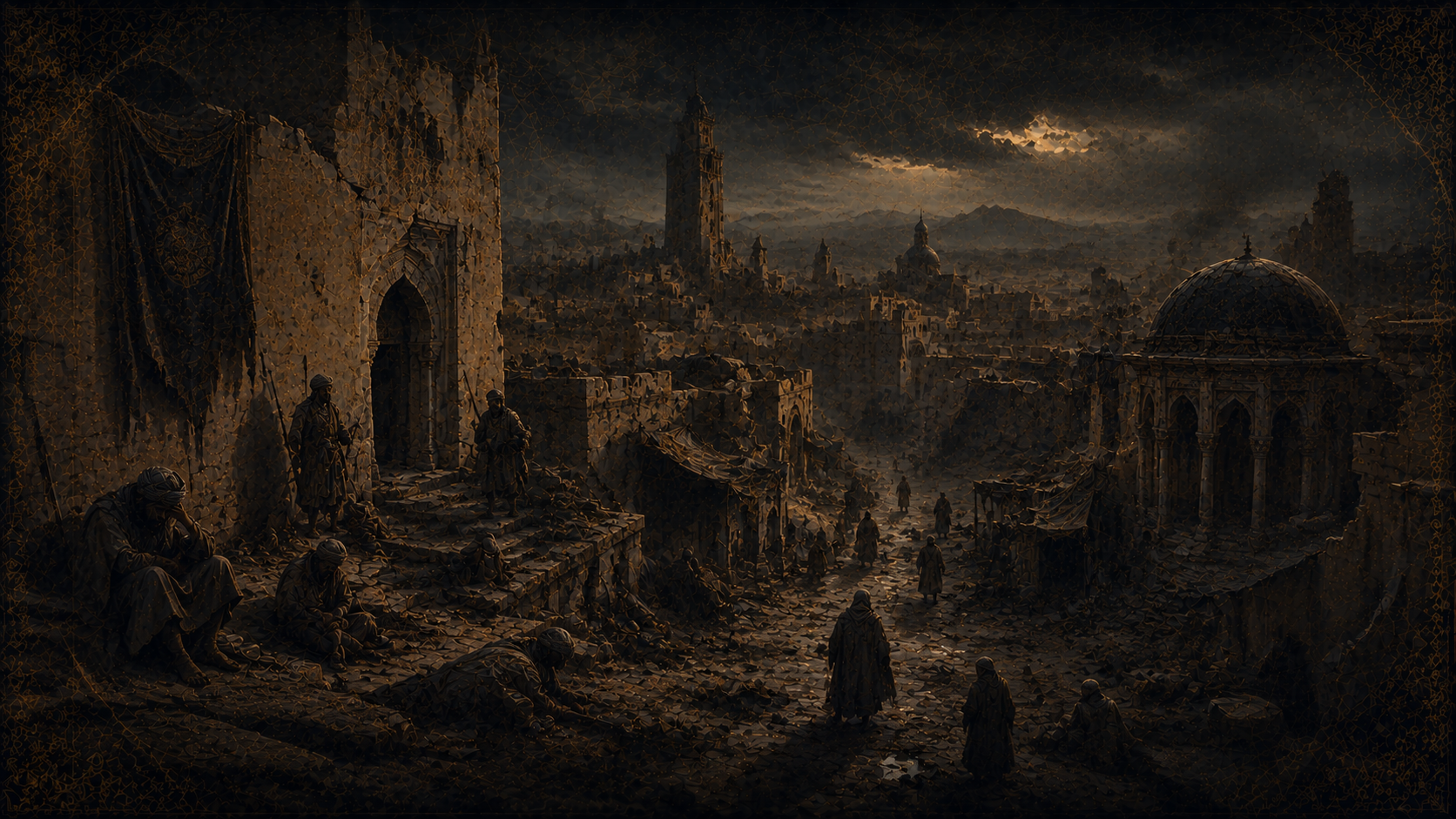
Phase 07Collapse and Disintegration
Institutions lose force.
The forms of power remain after their inner force has faded. Succession conflict and external pressure expose the hollow centre.
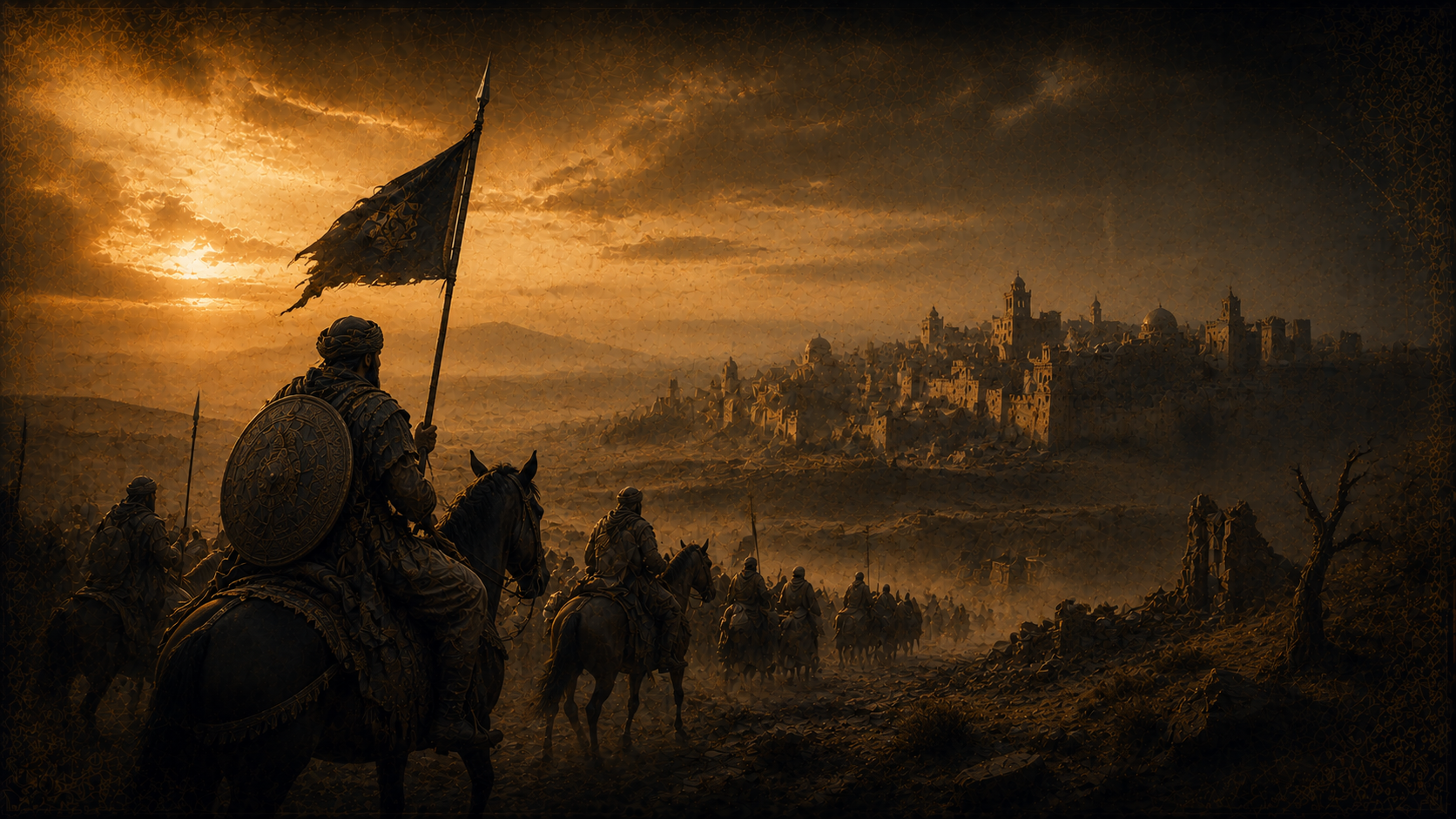
Phase 08Replacement and Renewal
A harder group emerges.
A more cohesive outsider replaces the softened order. The cycle resets through renewed discipline and collective force.
Ibn Khaldun observed that dynasties carry their decline inside their success. The force that wins power is slowly consumed by the comfort that power creates.
Ibn Khaldun, Muqaddimah (1377)
Historical evidence
The cycle Ibn Khaldun saw in the Maghreb and beyond
Ibn Khaldun was not building theory from a quiet distance. He lived inside the turbulence he explained. The Maghreb and al-Andalus gave him repeated examples of frontier power turning into dynastic power, then losing the discipline that produced it. Desert, mountain, coast, tribe, city, trade, and court were not background scenery. They were the operating environment of his thought.
The Almoravids rose in the eleventh century from the Saharan and western Maghrebi frontier. Their strength came from religious reform, Berber tribal cohesion, military austerity, and movement across hard terrain. They expanded across Morocco and into al-Andalus because their social density was greater than that of many richer settled powers. Their early force was not urban luxury. It was disciplined asabiyyah turned into conquest.
The Maghreb gave Ibn Khaldun living evidence of frontier power becoming dynastic rule.
Once the Almoravids ruled cities, the mechanism shifted. Administration, taxation, court culture, urban settlement, and political compromise became unavoidable. The same movement that had been sharpened by frontier pressure became softened by the responsibilities and temptations of rule. Their decline opened space for the Almohads, another Berber reform movement with renewed ideological intensity and stronger cohesion. The replacement was not random. It followed the pattern Ibn Khaldun described: a harder group enters history where an incumbent group has lost its inner force.
The Almohads then repeated the pattern at a larger scale. They rose through mission, discipline, and collective identity. They built imperial reach across North Africa and al-Andalus. But imperial success brought succession struggles, elite competition, city politics, and administrative weight. Force became form. Solidarity became hierarchy. The Hafsid dynasty in Ifriqiya, centered around Tunis, inherited part of this fractured world and became another case in the Maghrebi rhythm of consolidation, prestige, faction, and vulnerability.
This matters for Darja Rihla because the Maghreb was not merely a location for Ibn Khaldun. It was his laboratory. The same structural eye can be turned toward Carthage and network power, where maritime wealth, ports, trade, and technical sophistication could not remove the deeper question of civic cohesion.
The Mongol case shows the same mechanism on a continental scale. Mongol power began with extraordinary nomadic cohesion, discipline, mobility, and command loyalty inside a severe environment. That cohesion produced rapid conquest across Eurasia. Yet conquest forced settlement, administration, succession politics, regional division, and court formation. The original frontier engine could not remain unchanged once it became imperial machinery. The empire fragmented into successor states because the force that conquered space could not indefinitely govern the weight of what it had conquered.
Reform as cohesion multiplier
Almoravid and Almohad reform systems generated new asabiyyah
The Almoravids and Almohads were not simply dynasties. They were reform systems. The Almoravid movement gathered power through Abdallah ibn Yasin, Maliki discipline, ribat culture, and the moral severity of the Saharan frontier. It fused tribal solidarity with legal-religious reform and turned scattered energy into political direction.
The Almohads came later through a different ideological architecture. Ibn Tumart’s doctrine of tawhid created a sharper universal mission, a disciplined movement, and a reformist language capable of challenging an incumbent order that had begun to look compromised. In Khaldunian terms, ideology acted as a cohesion multiplier. It did not replace asabiyyah. It intensified it.
This pattern survives in modern systems. Startups, activist networks, open-source ecosystems, insurgent political movements, and security teams all require more than competence. They need a shared story that converts effort into meaning. Without that story, coordination becomes expensive. With it, people absorb cost before bureaucracy has to compel them.
Frozen asabiyyah
Almohad architecture turned ideology into stone
Architecture is not only aesthetic. It is social energy given durable form. The Kutubiyya Mosque in Marrakesh, the Giralda in Seville, the Hassan Tower in Rabat, and the geometric language of Almohad monumental design show how doctrine, power, labor, and collective identity become infrastructure.
In this sense, architecture is frozen asabiyyah. A monument survives after the founding intensity has faded. It stores discipline, technical skill, symbolic order, and institutional ambition in material form. But the survival of the structure does not guarantee the survival of the will that built it.
This is one of the deepest infrastructure lessons in Ibn Khaldun. Roads, ports, mosques, walls, software platforms, security architectures, and states can outlive the social energy that created them. Late systems inherit the artifact but not always the discipline. They occupy the monument while forgetting the furnace.
Ibn Khaldun’s core claim
Ibn Khaldun’s core claim is that civilizations rise through shared discipline, institutionalize that discipline into power, then decay when comfort dissolves the cohesion that made power possible.
Crystallized effort
Labor, infrastructure, and the maintenance trap
Ibn Khaldun treated labor as the source of value because human effort transforms raw material into social wealth. Land alone does not create civilization. Resources alone do not produce institutions. Wealth is crystallized effort, and capital is stored labor organized across time.
Early systems are dominated by kinetic labor. They build, move, conquer, design, invent, and expand. Their energy is outward. Their structures are still close to purpose. People remember why the work matters because the work is connected to survival, mission, or founding pressure.
Late systems are dominated by static labor. They maintain layers. They preserve procedures. They service debt, repair complexity, defend reputation, manage inherited architecture, and keep old machinery operational. The system may still consume enormous effort, but more of that effort goes into preserving the system itself.
This is the maintenance trap. Empires experience it as administrative burden and infrastructure exhaustion. Companies experience it as process overload. Software teams experience it as technical debt. Security teams experience it as compliance theater and alert fatigue. Late systems spend more energy preventing collapse than generating vitality.
The economic dimension
Ibn Khaldun on taxation: fiscal entropy and the extraction spiral
Ibn Khaldun did not separate political cohesion from economic production. For him, the fiscal health of a dynasty was a visible symptom of its internal condition. Early dynasties collect high revenue from low tax rates because the population still believes the ruling order is connected to collective purpose. Production expands, trade moves, compliance remains bearable, and the state receives more because it demands less.
Ibn Khaldun saw taxation as a symptom of dynastic strength or decay.
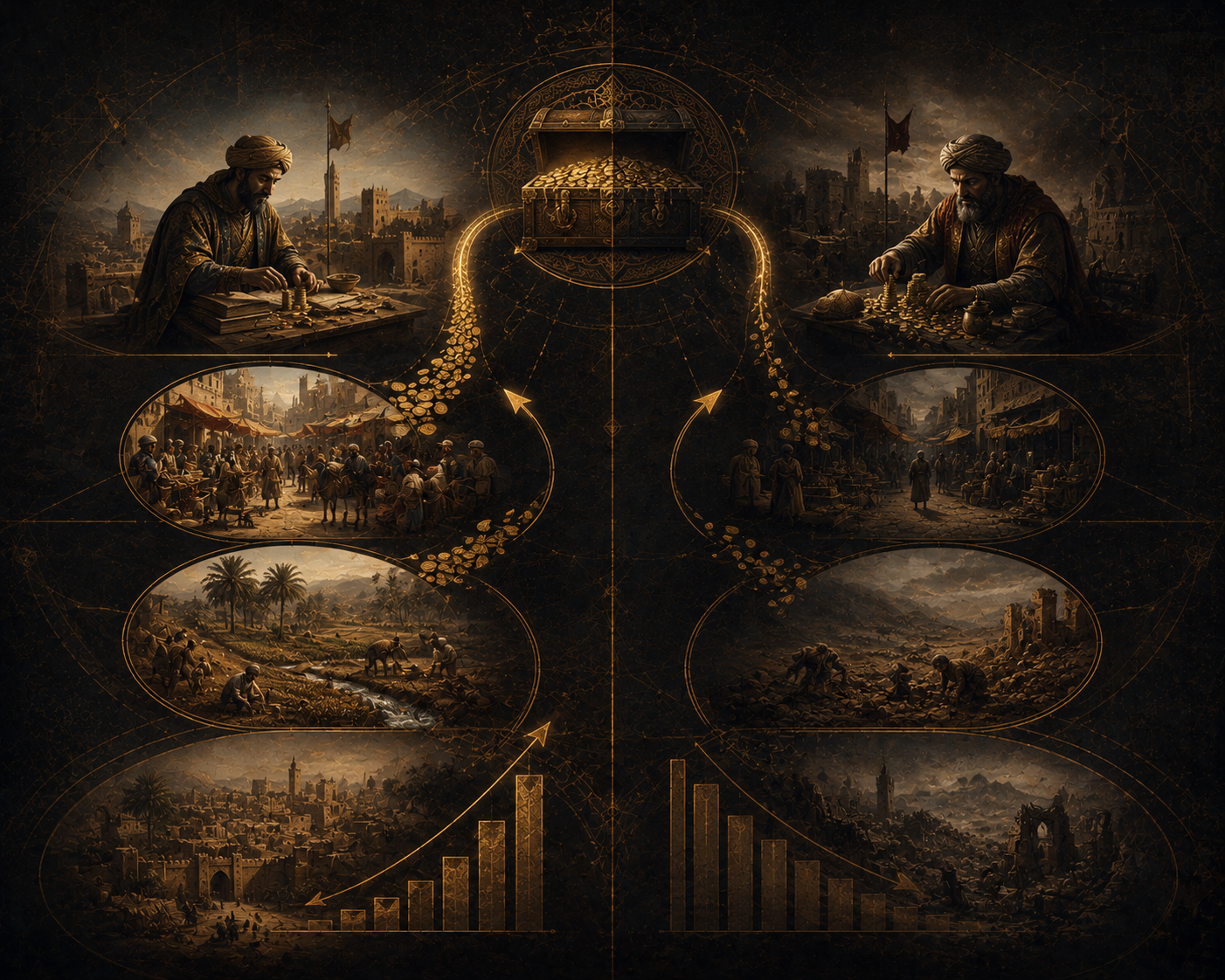
Late dynasties invert the mechanism. As court luxury, bureaucracy, military expense, and elite consumption rise, rulers increase tax burdens to preserve a system that is losing its living force. The state demands more from a society that trusts it less. Production weakens. Evasion rises. Compliance becomes reluctant. Revenue falls precisely when extraction becomes more aggressive.
The reason is structural: asabiyyah governs both the willingness to produce and the willingness to comply. A cohesive society does not merely fight better. It works, trades, pays, builds, and cooperates with less friction. Ibn Khaldun also treated labor as the source of value, because human effort transforms raw material into social wealth. Division of labor expands when trust expands. As cohesion weakens, economic complexity turns from shared productivity into administrative drag.
This is why his fiscal theory belongs beside modern systems thinking. Arthur Laffer named the Laffer Curve in 1974, but Ibn Khaldun described the same revenue dynamic in 1377. Modern institutions show the same pattern when bureaucratic overhead and compliance debt grow faster than usefulness. The system extracts more effort while producing less vitality.
The same death spiral appears in digital platforms. A young platform grows by creating value, reducing friction, and giving participants room to build. A late platform often shifts toward extraction: more fees, more ads, more lock-in, more algorithmic control, more monetization of trust. The productive base weakens because the platform begins taxing the ecosystem that made it powerful.
Historical distance
397 years earlier than the Laffer Curve, Ibn Khaldun identified the same mechanism.
The Khaldunian fiscal observation
At the beginning of a dynasty, taxation is light and total revenue is high; toward the end of a dynasty, taxation becomes heavy and total revenue declines because production, trust, and compliance have been damaged.
The generational state machine
Ibn Khaldun’s three-generation arc becomes a predictive model
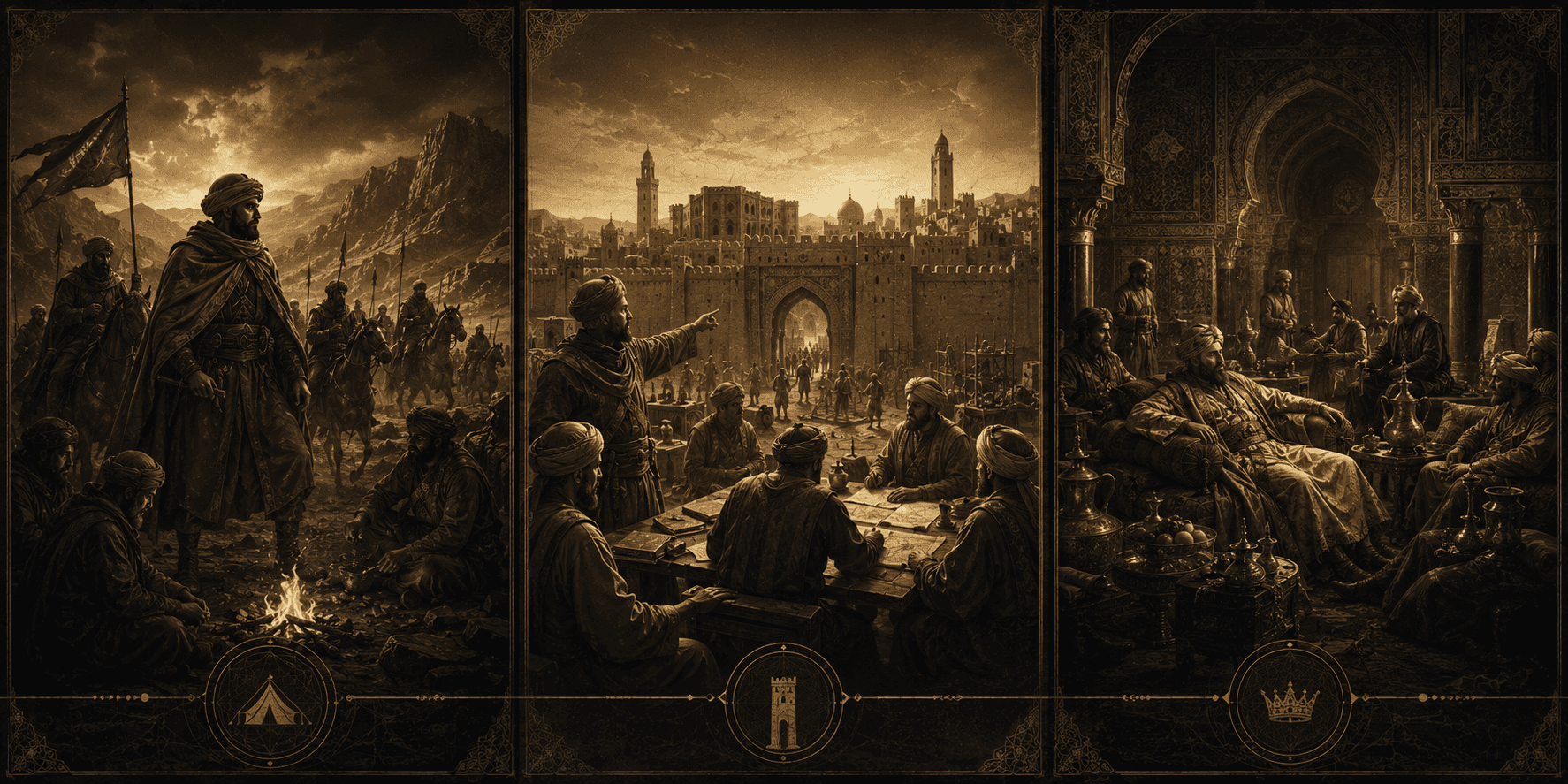
Ibn Khaldun treated decline as a generational tendency, not a mechanical clock. The pattern matters because memory weakens when comfort becomes normal. In Darja Rihla terms, the three generations form a state machine: builders create the system, managers preserve it, consumers inherit it without carrying its original discipline.
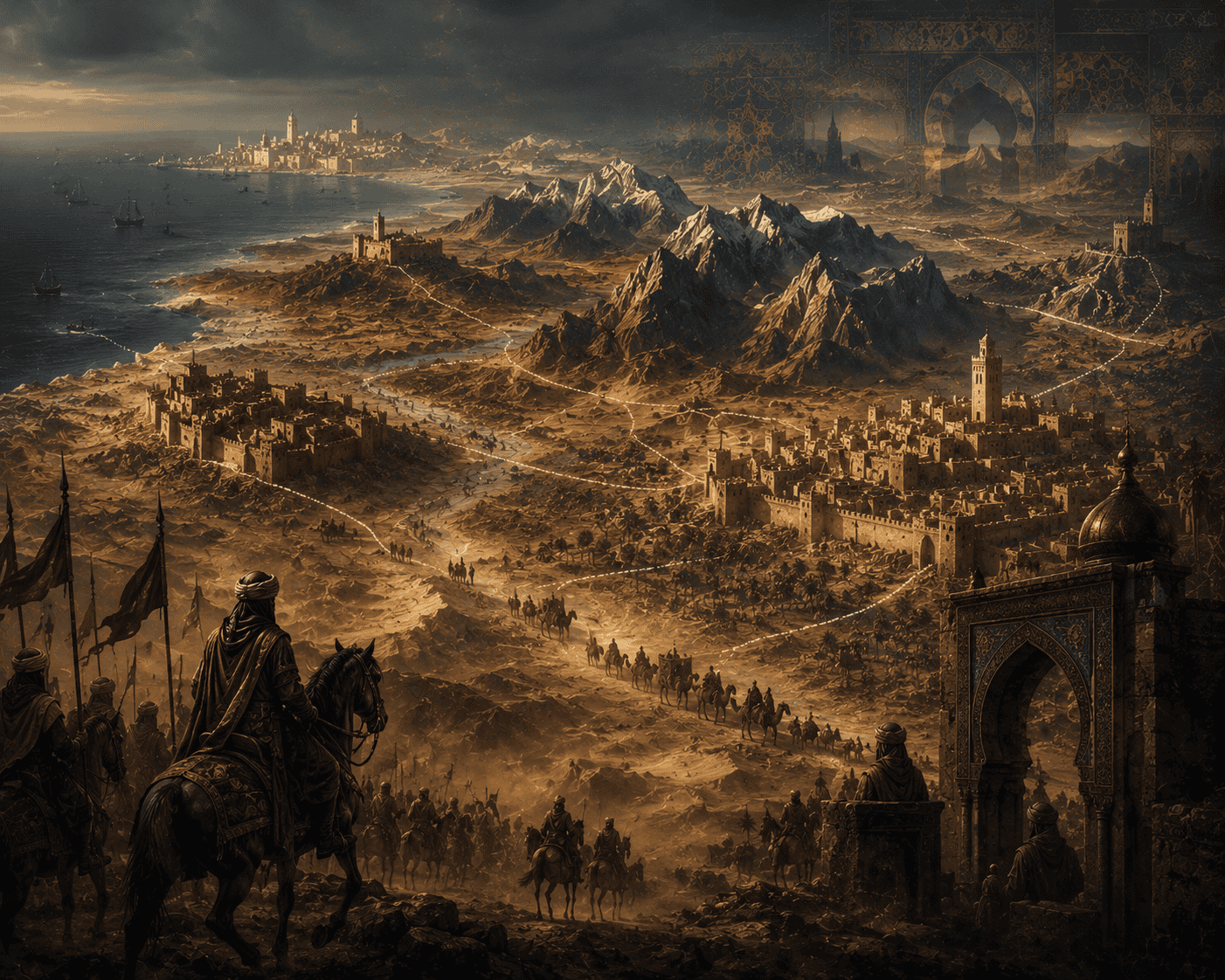
The builders remember hardship, the inheritors manage structure, and the consumers inherit comfort.
Generation 01 · BuildersFrontier memory intact
The first generation built under pressure. Leadership is direct, sacrifice is recent, and authority is tied to danger survived together. Members remember hunger, risk, movement, and dependence. Duty is not yet ceremonial because the cost of failure is still vivid.
The second generation manages what was built. It can still be competent because it was raised near the founders and often understands the language of discipline. But it is already removed from the original conditions. Bureaucracy begins to substitute for direct loyalty.
Generation 03 · ConsumersComfort as the only reality
The third generation knows the benefits without knowing the furnace that produced them. Hardship becomes a story, not an operating memory. The institution begins to exist for its heirs rather than through them. Status replaces service, and power becomes inheritance instead of responsibility.
The Mughal Empire gives the arc another form. Babur entered North India as a frontier conqueror with military discipline and outsider force. Akbar consolidated that inheritance into imperial administration, legitimacy, and scale. After Aurangzeb, the empire entered fragmentation as succession conflict, regional autonomy, fiscal pressure, and elite strain exposed the weakening centre.
Modern systems application
Software architecture through Ibn Khaldun
A codebase also moves through a Khaldunian lifecycle. It begins as a frontier system: a small team, high trust, low process, direct ownership, and a simple architecture shaped by urgency. The early code may not be perfect, but it is alive. The people building it understand the whole system because the system is still close to the mission.
Then success creates scale. More users arrive. More features appear. More teams touch the same surface. The architecture must formalize. Documentation, interfaces, permissions, release processes, infrastructure, security controls, and observability become necessary. This is the consolidation phase of software.
Decay begins when structure separates from purpose. Teams inherit services they did not design. Nobody fully owns the old decisions. Complexity becomes political. Technical debt becomes institutional debt. Meetings replace shared understanding. Roadmaps preserve the machine instead of renewing it. The codebase still runs, but its asabiyyah has weakened.
Eventually a leaner system appears: a rewrite, a competitor, an open-source alternative, a simpler protocol, or a new architecture built by a smaller group with higher trust and lower overhead. The old system is not defeated only by code. It is defeated by a group with fresher cohesion.
Security before tools
Cybersecurity begins as institutional cohesion
Cybersecurity makes the Khaldunian pattern visible because technical controls only work when social systems maintain them. A fragmented organization with weak ownership is easier to manipulate than one with living discipline. Tools matter, but tools are maintained by people. Policies matter, but policies must survive contact with incentives, fatigue, hierarchy, and confusion.
A security program without asabiyyah becomes a shell. Dashboards glow. Controls are documented. Training exists. Compliance reports are filed. But responsibility diffuses across departments. Nobody fully owns the risk. The attacker does not need to defeat the entire system. The attacker only needs to find the seam where cohesion has failed.
This is why the real attack surface is institutional fragmentation. Phishing, insider threat, social engineering, misconfiguration, shadow IT, and delayed patching are not only technical problems. They are signs of coordination decay. Darja Rihla treats cybersecurity and technology as part of a wider civilizational problem because systems fail first as human systems.
The new frontier
Digital Bedouins and the future of power
The modern frontier is not only desert, steppe, mountain, or sea. It is also digital. Decentralized teams, encrypted communities, open-source ecosystems, blockchain networks, remote-first founders, and protocol movements often behave like frontier groups inside the old institutional landscape.
They have low overhead, high mission density, rapid coordination, outsider contempt for inherited excuses, and a willingness to absorb cost before institutions understand what is happening. Their advantage is not simply technology. It is cohesion under pressure.
But Ibn Khaldun prevents romanticism. Digital Bedouins can also become settled powers. The open network becomes a foundation. The foundation becomes a bureaucracy. The protocol becomes a governance war. The startup becomes a compliance machine. The insurgency becomes the incumbent. The cycle does not disappear online. It accelerates.
Psychological infrastructure
Empires need stories because narrative lowers coercion costs
Narrative legitimacy is the psychological layer of asabiyyah. A system with a believable story does not need to force every action through command. People comply because the system still feels connected to meaning, order, mission, justice, origin, reform, survival, or destiny.
When the story is alive, legitimacy lowers friction. It reduces enforcement costs. It makes sacrifice intelligible. It explains why people should endure hardship for something larger than themselves. When the story breaks, the system must replace belief with management, propaganda, surveillance, incentives, or coercion.
This is why late empires often become louder as they become weaker. They produce more ceremony because natural loyalty has declined. They repeat the story because fewer people live inside it. The myth becomes a performance after it stops being a binding force.
Why it still holds
The mechanism survives because institutions still depend on cohesion
The value of Ibn Khaldun is not that every modern organization is a medieval dynasty. The value is that the mechanism still appears wherever human groups build systems. A political party begins as a movement with shared risk, direct loyalty, and ideological clarity. If it succeeds, it becomes an institution. Then it must manage offices, donors, procedures, factions, public language, and reputation. The mission does not disappear immediately. It becomes one layer among many.
Startup culture often imitates the frontier phase. Small teams work under pressure, absorb personal cost, and move quickly because trust is dense. They do not need heavy process because the group understands the mission directly. When scale arrives, management replaces intimacy. Process replaces trust. The structural question becomes whether the organization can preserve enough asabiyyah while growing, or whether growth itself begins the entropy.
Systems thinking gives this pattern a modern vocabulary. Ibn Khaldun gives it historical depth. Collapse is rarely one clean event. It is usually a process of weakened feedback loops, misaligned incentives, declining trust, detached leadership, and institutions that continue to perform legitimacy after they have lost living force. That is why this essay belongs beside the wider Darja Rihla work on systems thinking in a complex world.
Knowledge check · Ibn Khaldun and the Cycle
1. What does Ibn Khaldun mean by asabiyyah?
2. According to Ibn Khaldun, what weakens asabiyyah over time?
3. Which dynasties did Ibn Khaldun use as direct evidence for his cycle in North Africa?
4. What is the best modern translation of asabiyyah in systems terms?
5. What does Ibn Khaldun’s model predict follows civilizational collapse?
Score:
Apply the framework
Where is your system in the cycle?
Apply these signals to any organization, institution, political movement, software system, security team, platform, or digital community you are part of. Ibn Khaldun did not prescribe easy remedies. He described structure. Recognizing the stage is the beginning of any serious response.
The Khaldunian cycle can be used to diagnose institutions, movements, software systems, and organizations.
Signal 01 · Mission or memory?
Do members still operate from a shared mission they would sacrifice for, or are they preserving an inherited structure because it already exists? Frontier groups run on mission because survival and purpose remain connected. Late-cycle institutions run on memory, ritual, and the prestige of earlier sacrifice.
Signal 02 · Leadership distance
Is leadership close to operational reality, or insulated by layers of management, language, ceremony, and reporting? Ibn Khaldun observed that the moment rulers stop sharing the pressures of the governed, cohesion begins its final erosion. Distance makes failure easier to rationalize.
Signal 03 · Bureaucratic weight
Is administrative complexity growing faster than the value it produces? Late-cycle institutions generate process to fill the space left by declining trust. When documentation replaces ownership, the system may still look controlled while its real responsiveness is collapsing.
Signal 04 · Maintenance overload
How much energy goes into creating new value compared with preserving old structure? When maintenance consumes imagination, the system has entered the preservation trap. This appears as technical debt, compliance fatigue, infrastructure exhaustion, and endless internal coordination.
Signal 05 · Extraction pressure
Is the system creating value, or monetizing inherited trust? Late systems often raise taxes, fees, friction, reporting burdens, ads, or internal demands while producing less vitality. Extraction rises when legitimacy falls.
Signal 06 · Outsider energy
Are smaller, newer, less comfortable groups outperforming the incumbent on the dimensions the incumbent has stopped caring about? A frontier group does not announce itself as destiny. It appears first as discipline, speed, hunger, and contempt for inherited excuses.
Signal 07 · Narrative decay
Does the system still have a story people believe, or does it rely on branding, ceremony, compliance, and repetition? When natural loyalty fades, propaganda expands. Narrative failure increases coercion costs.
Signal 08 · The luxury test
What does the group optimize for: survival and mission, or comfort and status? Ibn Khaldun did not moralize about luxury. He observed that it reliably reorganizes incentives away from collective durability and toward private insulation.
Reading the signals
Signals 1, 2, and 6 pointing toward shared mission, close leadership, and outsider hunger suggest frontier or consolidation energy. Signals 3, 4, 5, 7, and 8 dominating suggest descent. The cycle does not wait for recognition.
Why this matters
Power does not last because it appears permanent. It lasts when the people inside the system still believe, sacrifice, coordinate, maintain, defend, and renew. Ibn Khaldun gives Darja Rihla a civilizational laboratory: history becomes structure, structure becomes diagnosis, and diagnosis becomes strategy.
Darja Rihla doctrine
From history to systems intelligence
The purpose of this article is not to leave Ibn Khaldun inside the fourteenth century. It is to carry his method into every system that rises, coordinates, hardens, extracts, fragments, and gets replaced. Empires, startups, codebases, security programs, platforms, bureaucracies, and digital communities all face the same structural question: can they preserve living cohesion while scaling complexity?
Darja Rihla treats history as a diagnostic archive. Carthage becomes a study in network power and elite strain. The Almoravids become a study in frontier cohesion. Almohad architecture becomes a study in frozen asabiyyah. Taxation becomes a theory of extraction spirals. Cybersecurity becomes an institutional cohesion problem. Software architecture becomes a map of technical debt and social decay.
This is the wider frame: history is not only memory. It is a laboratory for survival, coordination, infrastructure, and institutional resilience.
Frequently asked
Ibn Khaldun: common questions
Asabiyyah is Ibn Khaldun’s concept of group solidarity, collective discipline, and shared social force. It is not simply solidarity but the invisible bond that makes coordinated action, institutional building, and collective survival possible. In systems terms, it is social anti-entropy: the force that keeps complexity from falling apart.
Ibn Khaldun was one of the first thinkers to treat history as a system with structural causes rather than a sequence of events driven by rulers and battles. His method anticipated sociology, institutional economics, systems theory, and civilizational analysis by several centuries.
Groups rise through discipline and shared purpose, build institutions during their peak, then decline as luxury, bureaucracy, extraction, and inherited comfort replace the solidarity that built them. When cohesion collapses, so does the capacity to maintain and defend what was built.
Cybersecurity depends on institutional discipline, trust, and shared ownership of security responsibilities. An organization with weak internal cohesion is easier to manipulate through phishing, social engineering, insider threat, and misconfiguration than a technically advanced but fragmented one.
The Muqaddimah is the introduction to Ibn Khaldun’s larger universal history, the Kitab al-Ibar. Written in 1377 during a period of seclusion in Qal’at Ibn Salama in western Algeria, it stands alone as one of the most rigorous pre-modern attempts to treat civilization as something governed by observable structural laws.
Ibn Khaldun described three generations as the typical arc: roughly 100 to 120 years. This is a structural tendency, not a fixed law. Some dynasties collapse faster. Others extend the plateau through external pressure, reform, or renewed ideological intensity.
Ibn Khaldun connects the civilizational, the institutional, and the structural. Darja Rihla builds on the same logic across culture, cybersecurity, infrastructure, software systems, and strategic diagnosis.
The question of why empires need stories matters because every durable system must turn power into accepted authority. A ruler can seize land. A fleet can control sea lanes. A bureaucracy can collect taxes. A police force can suppress dissent. But none of these mechanisms can explain why people should accept the system as normal.
That explanation is the work of narrative.
Narrative tells people what the system means. It tells them why obedience is lawful, why sacrifice is noble, why hierarchy is natural, why taxation is necessary, why borders are sacred, why enemies are dangerous, why the future belongs to the system, and why collapse would be worse than submission.
This is why empires need stories more than armies. Armies can impose obedience. Stories make obedience feel like order.
Why Empires Need Stories: Most People Misunderstand Empire
Most people misunderstand empire because they study the visible machinery first. They see armies, flags, weapons, borders, ships, governors, forts, courts, taxes, and maps. They conclude that empire is a military machine.
That is only the surface.
Armies can start conquest, but armies do not maintain rule by themselves. Soldiers can occupy cities, guard roads, suppress revolts, and defend frontiers. But permanent domination through force alone becomes too expensive. It consumes money, loyalty, manpower, and attention. It creates resentment. It turns administration into permanent emergency.
Empire becomes durable only when people accept the system as lawful, sacred, necessary, profitable, civilizing, protective, inevitable, or better than the alternative. This is why empires need stories. Not as decoration. As infrastructure.
Without belief, empire becomes occupation. With belief, occupation becomes order.
Darja Rihla Doctrine
Key Takeaway
Empire is not sustained by force alone. It is sustained by strategic legitimacy, shared memory, institutional continuity, and a story people are willing to live inside.
Why Empires Need Stories: The Four-Layer Empire Framework
Darja Rihla analyzes empire through four layers. This framework explains how power is captured, converted, stabilized, and justified.
Capture, Convert, Stabilize, Justify
Layer 1: Energy Capture
Empire begins by controlling flows: grain, silver, ports, trade routes, taxation, oil, data, and attention.
Layer 2: Energy Conversion
Raw wealth becomes fleets, law, bureaucracy, surveillance, administration, logistics, schools, courts, and institutions.
Layer 3: Entropy Management
Empires decay through corruption, distance, succession crisis, elite fragmentation, institutional fatigue, and administrative overload.
Layer 4: Narrative Control
Religion, law, identity, education, civilization myths, national purpose, and moral justification explain why rule should exist.
Layer 1 gives empire material capacity. Layer 2 turns capacity into institutions. Layer 3 prevents decay. But Layer 4 tells people why the system deserves obedience.
This is why Narrative Control is not propaganda in the shallow sense. It is the operating system of legitimacy.
Why Empires Need Stories: Rome and the Power of Identity
Rome is usually remembered for its legions. That memory is understandable, but incomplete. The legions conquered. Roman identity integrated.
Rome created a world people could enter. Roman law created predictability. Citizenship created aspiration. Roads connected provinces. Ritual gave imperial power symbolic weight. Public architecture made authority visible in stone.
To become Roman became valuable. That was the genius.
This is another example of why empires need stories to sustain legitimacy beyond force.
The strongest empire is not the one that makes everyone afraid. It is the one that makes outsiders want admission.
Darja Rihla
Why Empires Need Stories: The Ottoman Empire and Continuity
The Ottoman Empire shows another dimension of legitimacy: continuity. Empires do not survive for centuries by staying unchanged. They survive by making change feel continuous.
Ottoman power rested on dynastic legitimacy, religious authority, administrative memory, provincial governance, legal pluralism, and imperial ritual.
This is another example of why empires need stories to sustain legitimacy beyond force.
Key Takeaway
Continuity is not nostalgia. Continuity is the ability of a system to change without convincing its people that the world has collapsed.
The VOC Was Not a Company
The Dutch East India Company, the VOC, must not be understood as a normal business. It was a governance machine.
The VOC merged commerce, law, state violence, finance, maritime infrastructure, and imperial legitimacy.
It captured flows through ports, ships, spices, routes, and commercial chokepoints. Then it converted those flows into institutional power through contracts, armed force, legal authority, accounting systems, and imperial logistics.
The VOC proves that empire does not always arrive wearing a crown. Sometimes it arrives with a charter, a ledger, and a cannon.
The Soviet Union is one of the clearest modern examples of legitimacy failure. It had nuclear weapons, intelligence networks, military reach, ideological institutions, surveillance capacity, and geopolitical depth.
Yet the system collapsed because the ideological story stopped convincing enough people. The promise no longer matched reality. The future no longer felt inevitable.
This is another example of why empires need stories to sustain legitimacy beyond force.
Strategic Legitimacy
A system collapses when the cost of pretending becomes higher than the cost of disobedience.
Why Empires Need Stories in Modern Digital Empires
Modern empires rarely announce themselves as empires. They prefer softer language: platforms, standards, ecosystems, partnerships, compliance, security, development, modernization, connectivity, and user experience.
Empires moved from ports to protocols. From governors to interfaces. From colonies to dependencies. From flags to terms of service. From imperial roads to cloud infrastructure.
Between Detachment and Sincerity – Part 1 of 7 A doctrine series on validation, identity, and inner stability.
An ultra-minimal philosophical scene representing the illusion of emotional control through detachment.
The Myth of Detachment
“The myth of detachment is one of the most misunderstood ideas in modern thinking.”
In recent years, the idea that strength means detachment has spread everywhere.
Don’t care too much. Don’t depend on anyone. Stay emotionally independent. Be unbothered.
This is the modern definition of strength.
And it sounds convincing.
Controlled. Disciplined. Untouchable.
But it is built on a misunderstanding.
What is presented as strength is often just withdrawal.
Detachment as a Defense
Most people don’t become detached because they mastered themselves.
They become detached because they got hurt.
They trusted and were let down. They gave and weren’t met equally. They opened up and got burned.
So they adapt.
Not by becoming stronger, but by reducing exposure.
They stop expecting. They stop investing. They stop opening.
This isn’t transcendence.
It’s protection.
The Illusion of Control
Detachment feels like control.
If you expect nothing, you can’t be disappointed. If you need no one, you can’t be rejected. If you stay distant, you can’t be hurt.
But this control is conditional.
It depends on distance.
The moment something meaningful enters your life, the stability disappears.
Which raises a critical question:
Was it ever real control to begin with?
Or was it stability that only existed in the absence of risk?
Strength or Avoidance
This is where the myth becomes dangerous.
Because avoidance often looks like strength.
Silence looks like discipline. Distance looks like independence. Emotional suppression looks like control.
But these are not the same.
Avoidance reduces friction. Strength handles it.
Avoidance removes exposure. Strength remains stable within it.
Real strength is not feeling less.
It’s staying grounded while you feel.
The Hidden Cost
Detachment doesn’t lead to freedom.
It leads to disconnection.
From people. From meaning. From parts of yourself.
You become harder to hurt, but also harder to reach.
The same wall that protects you from pain also blocks depth, intimacy, and responsibility.
This is the hidden cost of detachment.
A symbolic visual of emotional detachment as a barrier.
The Deeper Problem
This is not just about behavior.
It is structural.
As introduced in Part 0, many people operate within what can be described as the Validation Dependency Loop.
Their internal state is still influenced by external reactions.
Detachment does not resolve this.
It only reduces interaction with it.
The dependence is still there.
It is simply less visible.
This is why detachment can feel like strength while leaving the underlying instability untouched.
The System Behind the Myth
Detachment is not just a personal coping strategy. It is reinforced by the environment people move in.
In a culture shaped by individualism and constant exposure, emotional control is treated as a requirement rather than a byproduct of growth. The resurgence of Stoic language, stripped from its original philosophical depth has been repackaged into short, consumable rules: feel less, need less, depend on no one.
This framing aligns perfectly with systems that benefit from emotionally self-regulating individuals.
Platforms reward simplicity. Self-help industries monetize clarity without depth. Economic structures function more smoothly when frustration is internalized instead of expressed.
Who benefits is clear: those who offer simplified control as a product, and systems that face less resistance from individuals who withdraw instead of confront.
Who pays the price is less visible: individuals who suppress their need for connection, reinterpret meaning as weakness, and slowly detach not only from others, but from themselves.
What is presented as independence often becomes isolation with better branding.
Why People Accept It
The appeal of detachment is not accidental.
It solves a real problem pain but does so by redefining it.
Instead of asking why something hurts, detachment teaches you to treat the source as irrelevant.
This reduces internal conflict.
If nothing matters, nothing can destabilize you.
This is psychologically efficient.
It removes cognitive dissonance. It creates a sense of control. It is socially reinforced as strength.
But it comes with a condition:
you only remain stable as long as you stay distant.
The moment something breaks through that distance something real, something meaningful: the system is exposed.
Because the stability was never built to handle presence.
Only absence.
The System Sustains Itself
Detachment persists because it is self-confirming.
People who adopt it experience short-term relief. That relief is interpreted as proof of strength. That proof is repeated and shared.
What remains unseen are the long-term effects:
emotional flattening, reduced depth in relationships, a quiet sense of disconnection that is hard to name.
The more this becomes normalized, the harder it is to challenge.
Because any alternative, openness, sincerity, emotional presence, risks being interpreted as weakness within the same framework.
The system closes itself.
A Necessary Distinction
There is a critical difference between:
Being free from unhealthy dependence, and being closed off.
The first is development. The second is defense.
Toward a Different Framework
If detachment isn’t the answer, what is?
That’s the question behind this series.
The goal is not dependence. And it’s not detachment.
It’s something harder:
connection without dependency.
To care without losing stability. To engage without needing validation.
What Is at Stake
Detachment is not neutral.
It reshapes how people relate to themselves and to others.
As long as it is framed as strength, individuals will continue to mistake withdrawal for growth and suppression for control.
The systems that benefit from this will remain unchallenged.
And the cost will continue to accumulate in silence. In disconnected relationships, in reduced meaning, in lives that feel stable but empty.
The real danger is not that people feel less.
It is that they forget what it means to be fully present at all.
A society that calls emotional distance strength does not produce resilient individuals: it produces people who have learned to avoid life while believing they have mastered it.
Series Navigation
Series Navigation Part 1 → Part 2 → Part 3 → Part 4 → Part 5 → Part 6 → Part 7
“A persistent idea dominates modern thinking: detachment vs sincerity is often framed as strength versus vulnerability.”
This assumption shapes how people approach relationships, ambition, identity, and inner stability.
But it is incomplete.
It reduces a complex psychological and spiritual reality to a false binary: either you detach and remain in control, or you connect and risk losing yourself.
This series begins from a different position.
Not by accepting that binary, but by questioning it.
Is it possible to remain grounded without disconnecting?
Across philosophy, psychology, and Islamic thought, different answers have been proposed.
Stoic philosophy emphasizes control and detachment from external outcomes. Modern psychology highlights attachment, emotional regulation, and relational meaning. Islamic thought introduces reliance (tawakkul), intention (niyyah), and an internal anchoring that is not dependent on human validation.
Each of these frameworks captures part of the truth.
But none fully resolves the central tension.
Each framework solves a symptom, but not the structure.
This framework of detachment vs sincerity is not just theoretical, but deeply practical.
The Structural Problem
Most people are not choosing between detachment and sincerity.
They are oscillating between both.
They detach to protect themselves, and reconnect when they seek meaning. They attempt control, then fall back into emotional dependence.
This creates a hidden instability.
What appears as balance is often just fluctuation.
And this is where the debate around detachment vs sincerity becomes misleading.
The problem is not choosing the right side.
The problem is that both sides, as commonly understood, fail to resolve the underlying issue.
Most frameworks break at the same point.
They cannot answer a simple but critical question:
How do you remain stable without becoming cold, and how do you remain sincere without becoming dependent?
The Illusion of Detachment
What makes detachment persuasive is that it often works, at least in the short term.
It reduces emotional volatility. It creates the appearance of control. It protects the self from disappointment, rejection, and instability.
But this apparent strength hides a deeper weakness.
A person who feels stable only when emotionally unexposed is not necessarily free.
That person may simply be less affected because less is at stake.
This is the illusion at the center of modern detachment.
Reduced exposure is mistaken for inner strength. Distance is mistaken for discipline. Emotional restraint is mistaken for resolution.
But unresolved dependence does not disappear when contact is reduced.
It becomes less visible.
The Validation Dependency Loop
This is where the real problem appears.
The Validation Dependency Loop.
People often believe they are independent, while their emotional state is still shaped by external validation, reactions, outcomes, and approval.
Their mood follows attention. Their confidence follows feedback. Their sense of self follows perception.
Modern psychology attempts to regulate emotion through awareness, attachment theory, and behavioral adjustment.
Modern psychology highlights attachment and emotional regulation (see attachment theory).
Islamic thought, however, introduces a different anchor, one that is not rooted in human reaction, but in divine reliance.
Each approach identifies part of the problem.
But the question remains unresolved:
Can stability exist without emotional distance, and can sincerity exist without dependency?
This is the question that this framework attempts to answer.
Structure of the Series
This framework will be developed step by step through philosophy, psychology, and Islamic thought.
Each part builds on the previous one:
Part 1 – The Myth of Detachment Part 2 – Philosophy Misunderstood Part 3 – What Psychology Actually Says Part 4 – The Validation Dependency Loop Part 5 – The Islamic Framework Part 6 – Connection Without Dependency Part 7 – Conclusion
This introduction serves as the entry point into that exploration.
To provide the best experiences, we use technologies like cookies to store and/or access device information. Consenting to these technologies will allow us to process data such as browsing behavior or unique IDs on this site. Not consenting or withdrawing consent, may adversely affect certain features and functions.
Functional
Always active
The technical storage or access is strictly necessary for the legitimate purpose of enabling the use of a specific service explicitly requested by the subscriber or user, or for the sole purpose of carrying out the transmission of a communication over an electronic communications network.
Preferences
The technical storage or access is necessary for the legitimate purpose of storing preferences that are not requested by the subscriber or user.
Statistics
The technical storage or access that is used exclusively for statistical purposes.The technical storage or access that is used exclusively for anonymous statistical purposes. Without a subpoena, voluntary compliance on the part of your Internet Service Provider, or additional records from a third party, information stored or retrieved for this purpose alone cannot usually be used to identify you.
Marketing
The technical storage or access is required to create user profiles to send advertising, or to track the user on a website or across several websites for similar marketing purposes.



 Cultural Kernel

 Financial Abstraction

 Juridical API

 Infrastructure Compression




 Phase 01
Frontier Strength
Phase 01
Frontier Strength
 Phase 02
Conquest and Consolidation
Phase 02
Conquest and Consolidation
 Phase 03
Expansion and Administration
Phase 03
Expansion and Administration
 Phase 04
Luxury and Comfort
Phase 04
Luxury and Comfort
 Phase 05
Bureaucracy and Fragmentation
Phase 05
Bureaucracy and Fragmentation
 Phase 06
Fiscal Strain and Overreach
Phase 06
Fiscal Strain and Overreach
 Phase 07
Collapse and Disintegration
Phase 07
Collapse and Disintegration
 Phase 08
Replacement and Renewal
Phase 08
Replacement and Renewal