Tyrian Purple Meninx: 7 Ways Luxury Built Maritime Power in Ancient Djerba
Tyrian purple Meninx is not only a story about dye. It is a story about how luxury became infrastructure. On the island of Djerba, the ancient city of Meninx turned marine biology into elite status, elite status into maritime trade, and maritime trade into durable political power.
Ports Are Not Always Built by Necessity
Most people think ports are built for necessity. Grain feeds cities. Water sustains life. Armies require harbors. Empires need naval bases. This is true, but incomplete.
Some ports were not built primarily for survival. They were built because prestige created demand, and demand created routes.
Tyrian purple Meninx became powerful because it transformed a rare marine resource into elite political symbolism across the Mediterranean.
That sounds less serious only if prestige is misunderstood. In the ancient world, prestige was not vanity. Prestige was political technology. It organized hierarchy, legitimized rule, and made power visible to everyone who saw it.
A ruler who could display rare goods was not simply rich. He appeared elevated above ordinary men. Luxury was never just consumption. It was architecture.
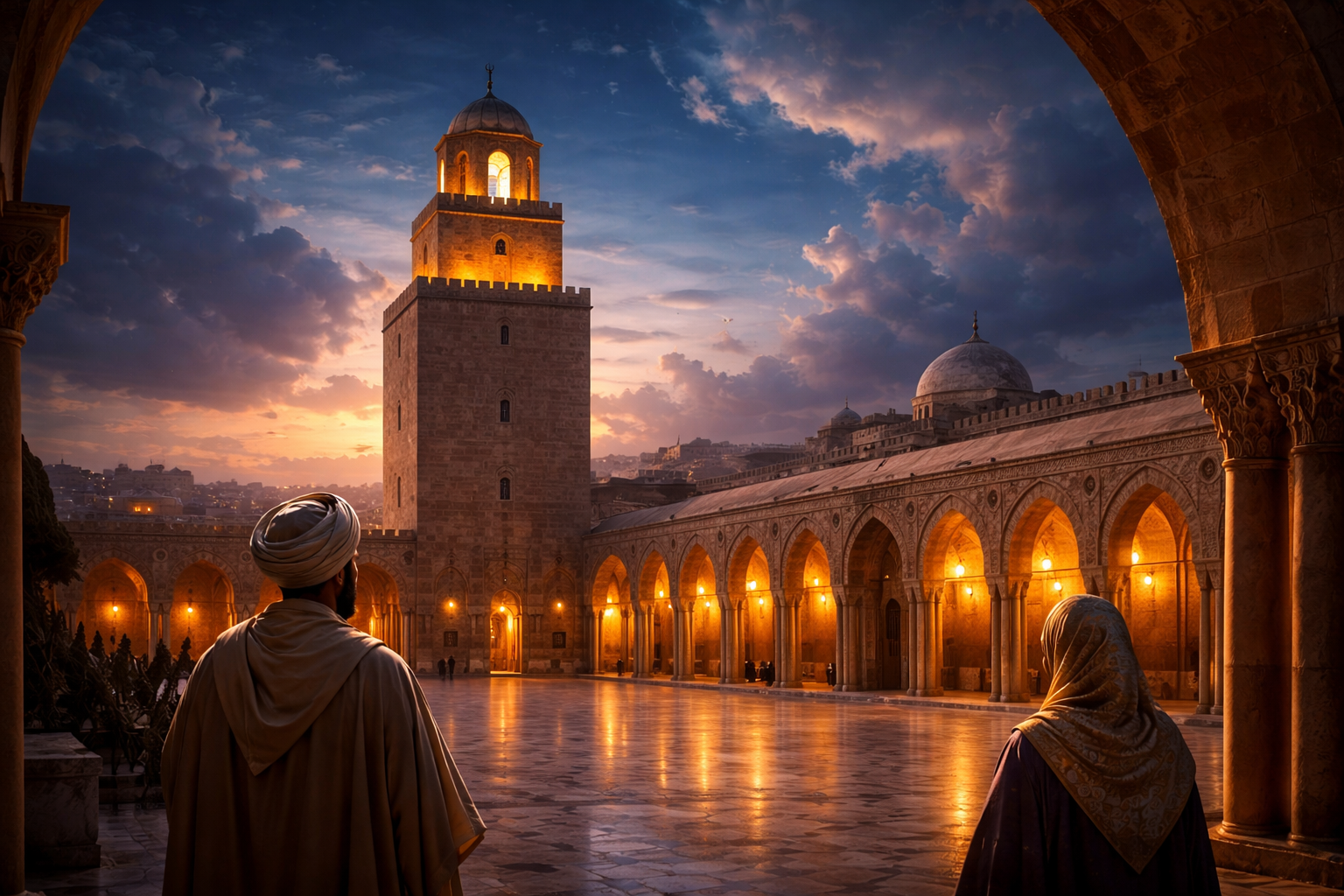
This is why Meninx matters. The ancient city on Djerba became one of the Mediterranean’s important maritime centers because it supplied one of the most politically valuable luxury goods in the ancient world: Tyrian purple dye.
Purple was not fashion. It was authority made visible.
Darja Rihla · Hidden Mediterranean Infrastructure
To wear purple was to announce rank. It marked emperors, governors, aristocrats, priests, and the highest levels of political society. It transformed cloth into hierarchy.
Meninx was not simply producing color. It was producing visible legitimacy. It was exporting status.
Meninx did not become powerful because it made something beautiful. It became powerful because it supplied a material that helped ancient elites display authority.
Before Meninx, Before Empire
To understand Meninx, you must begin before Meninx. This is where weak history often fails.
Many historical narratives begin where ruins become visible. Roman columns survive, so people assume history starts with Rome. Written records feel safer, so the story begins with conquerors, administrators, and imperial inscriptions.
That creates false beginnings.
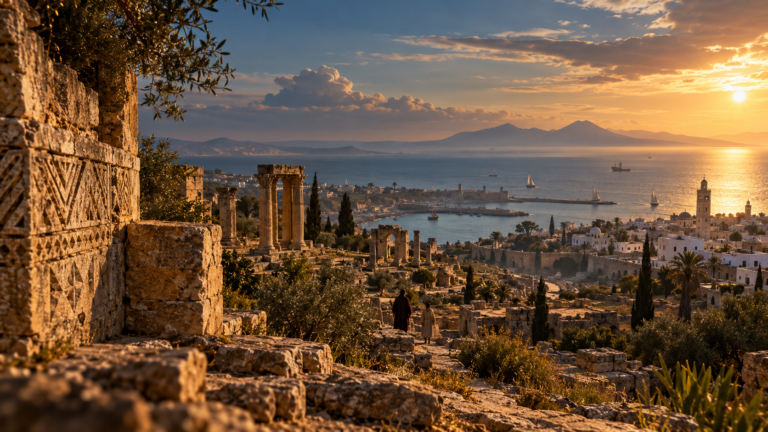
Djerba mattered long before Rome, long before Carthage, and long before Phoenician merchants named routes. Its importance began with geography.
Protected coastlines, fish-rich waters, cultivable land, maritime visibility, and survivable water systems made permanence possible. These were not decorative advantages. They were the foundations of settlement.
A place becomes historically important when different communities keep choosing it across time because its geography solves practical problems better than surrounding alternatives.
This matters because too much Mediterranean history begins only when outsiders arrive. Phoenicians did not create Djerba. Carthage did not create Djerba. Rome did not create Djerba.
They entered an already functioning human landscape.
Civilization rarely arrives from outside fully formed. More often, it accumulates.
For the deeper historical foundation of this island logic, read History of Tunisia.
The Sea Before the State
Before Rome was a superpower, before Carthage dominated western trade, the Mediterranean already operated like a living machine.
The sea was not empty water between civilizations. It was the civilization.
Movement shaped power more than borders did. A city that could move goods, information, sailors, and trust across water could become powerful without controlling vast inland territory.
This is where the Phoenicians become essential. They were not empire builders in the Roman sense. They did not think first in terms of conquered land. They thought like sailors.
Their power came from ships, ports, routes, and trust systems that made long-distance trade repeatable. Tyre, Sidon, Utica, Gades, and eventually Carthage were not isolated cities. They were nodes in a distributed maritime operating system.
Djerba fit perfectly into that logic.
Its protected coasts offered stopping points. Its position between eastern and western Mediterranean zones made it useful. Its existing settlement systems made continuity possible.
The island was not glorious in the way imperial capitals were glorious. It was reliable.
Reliability matters more than beauty in maritime history. Sailors do not ask whether a coast is poetic. They ask whether movement can be trusted there.
That is why Djerba entered the Mediterranean machine. Not as a capital, but as a node.
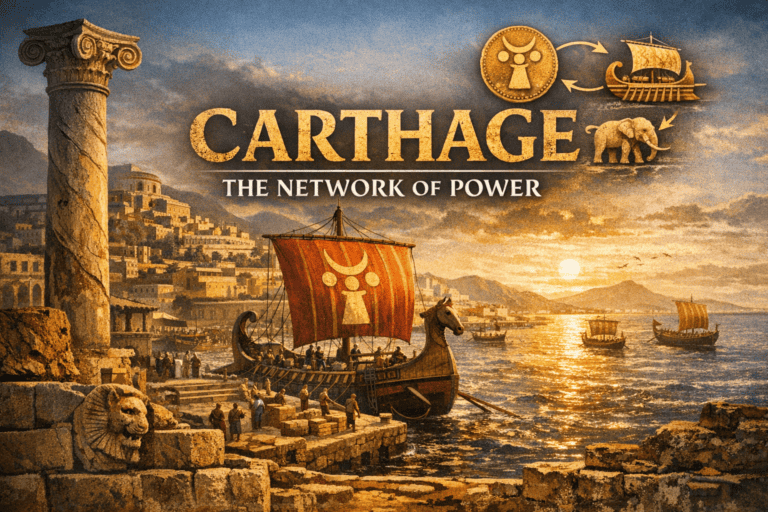
For the wider maritime network behind this logic, read Carthage Network Power.
Carthage Converted Trade into Power
Carthage inherited Phoenician network logic and hardened it into empire.
Carthage was not only a city. It was a distributed operating system.
Its real power lived in circulation: Sicily, Sardinia, Ibiza, Utica, North African coastlines, and strategic maritime nodes like Djerba.
Carthage did not rule the sea by owning everything. It ruled by making movement depend on it.
This is the difference between possession and power. Possession says: this territory is mine. Power says: your movement must pass through my system.
Djerba mattered because it sat near movement between western Mediterranean trade zones, Sicily, Tripolitania, and North African coastal routes.
That created three imperial advantages: observation, interruption, and taxation.
Observation means you see movement. Interruption means you can stop movement. Taxation means you convert movement into durable power.
Meninx likely began as a Punic trading settlement before Roman monumental expansion made it archaeologically louder. Rome did not invent Meninx. It inherited a working machine.
The Trade Routes That Carried Tyrian Purple from Meninx
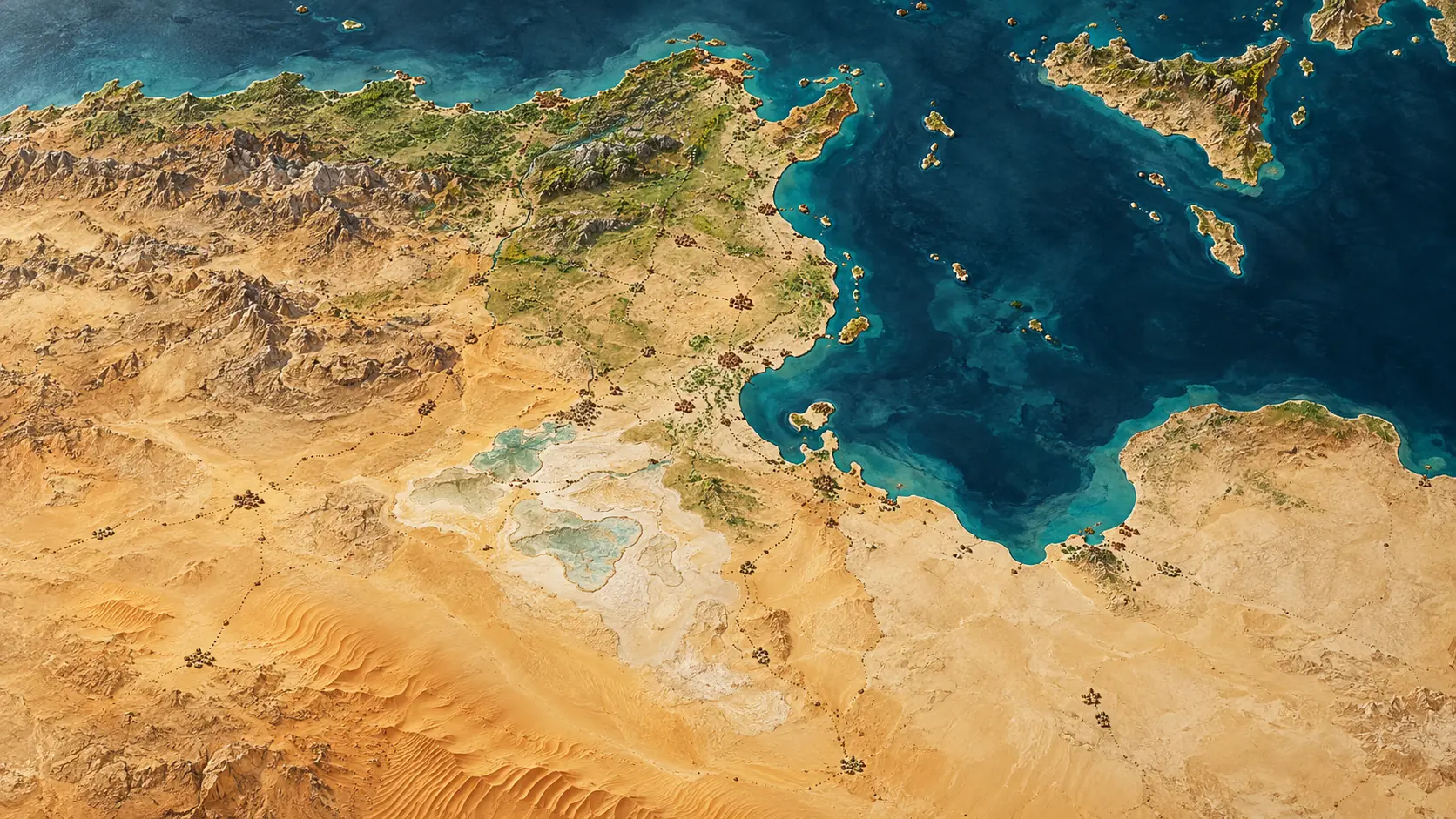
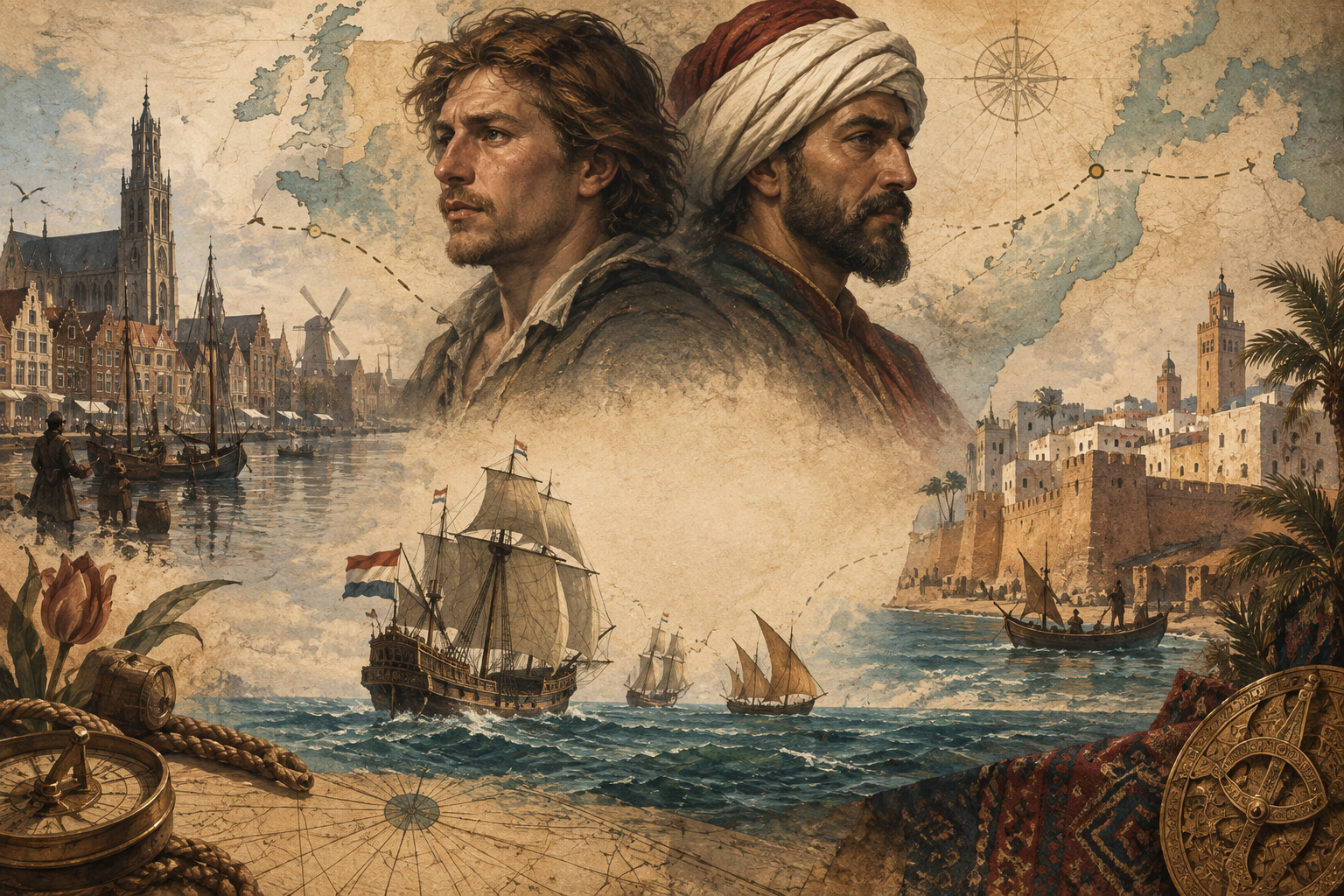
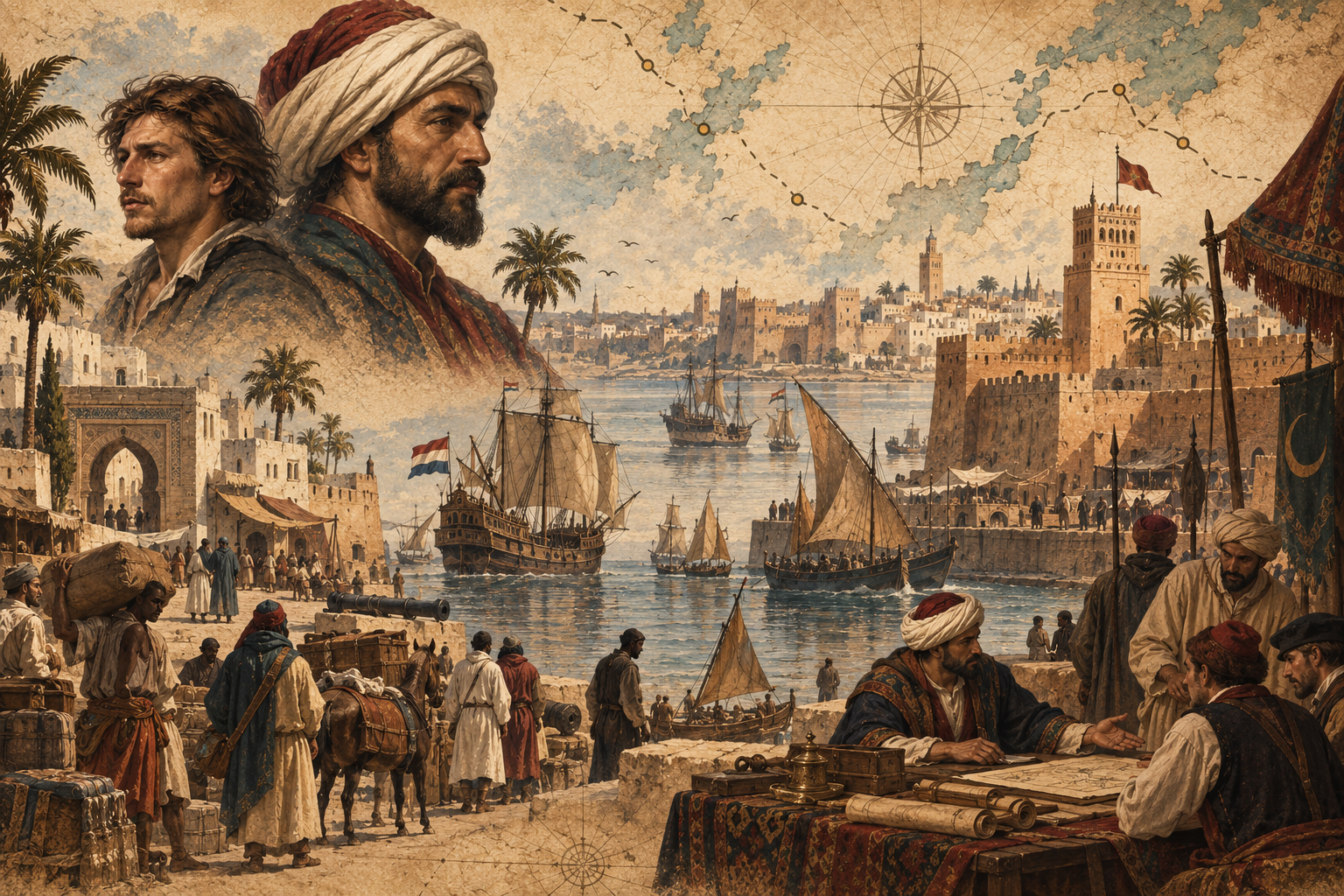
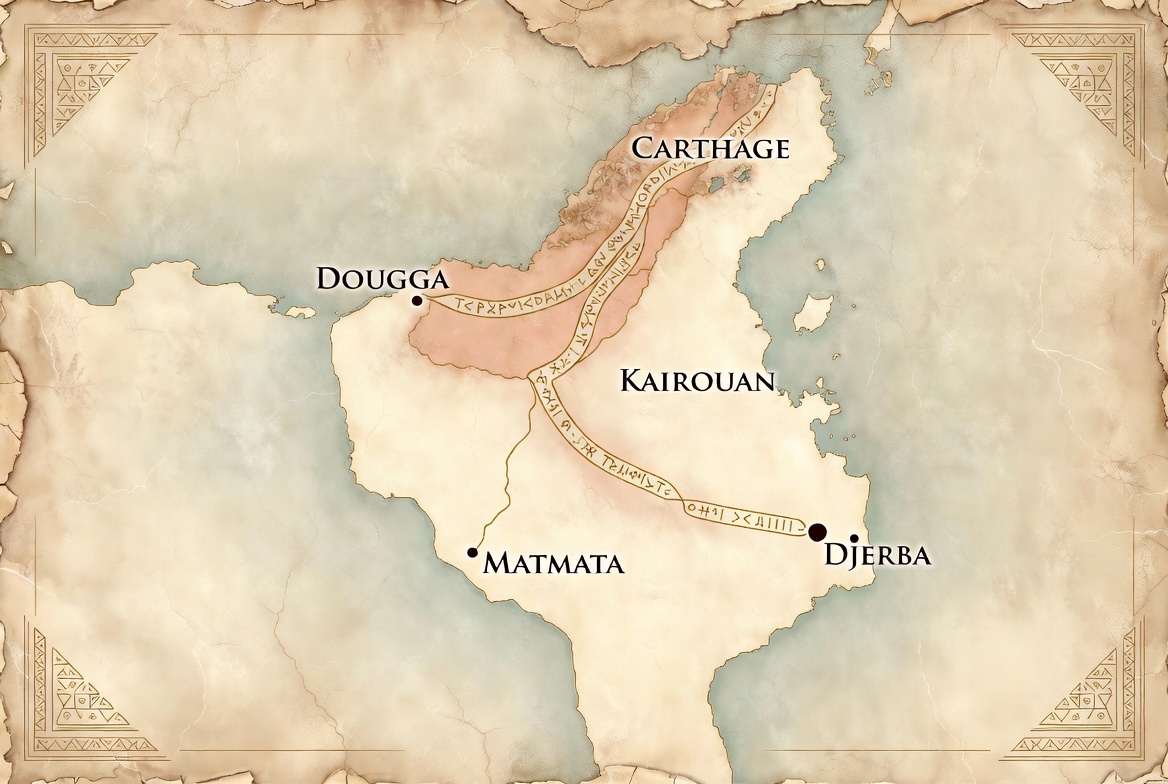
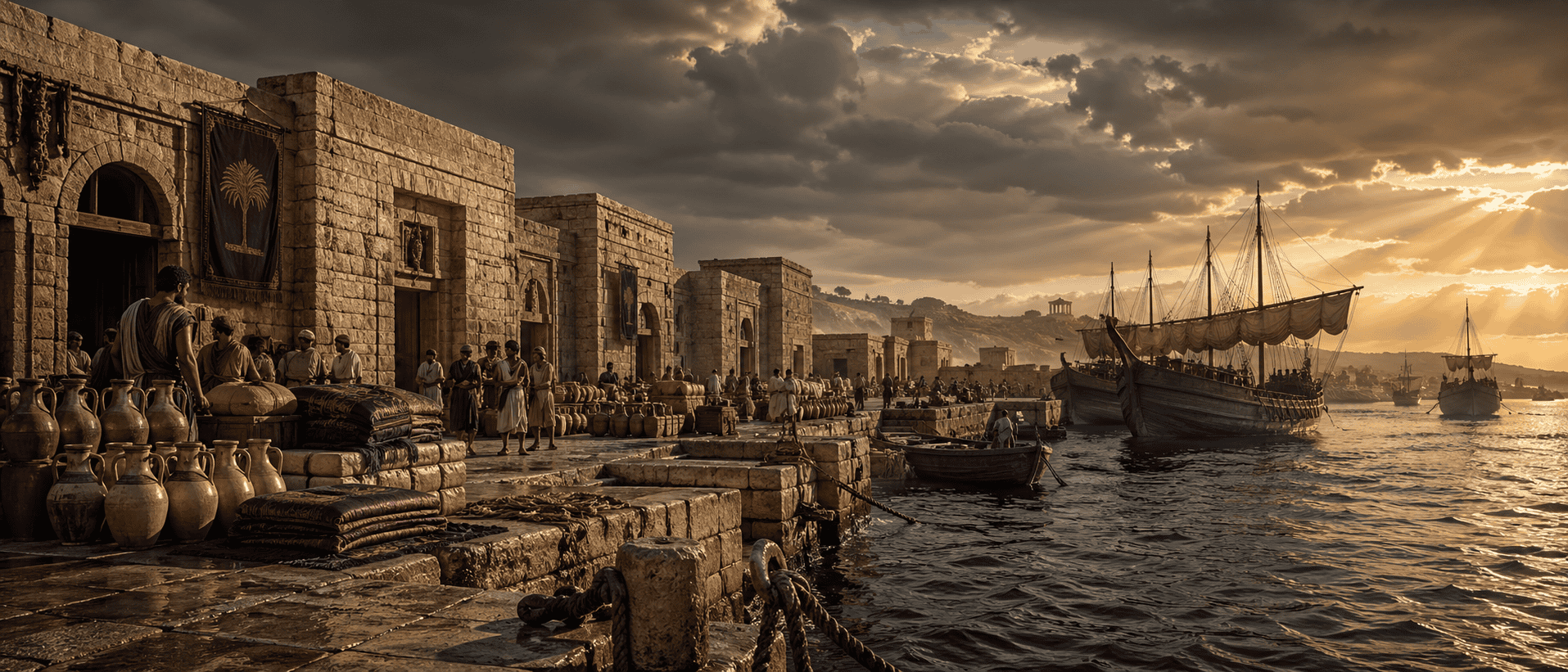
Tyrian purple from Meninx did not move randomly across the sea. It followed the logic of Mediterranean routes: short coastal movements, trusted island stops, protected harbors, and commercial corridors already used for olive oil, grain, ceramics, salted fish, textiles, and elite goods.
From Djerba, ships could move northwest toward Carthage and the Tunisian coast, connecting Meninx to one of the most important commercial command points in the western Mediterranean. From there, purple goods could continue toward Sicily, Sardinia, and the Italian peninsula.
Another route connected Meninx eastward toward Tripolitania and the wider North African coast. This mattered because the coast was not an empty edge of empire. It was a chain of ports, anchorages, markets, and storage points that allowed goods to move in stages.
Luxury Route Map
Route logic: the dye was local, but the demand was imperial. Meninx mattered because it connected North African production to elite Mediterranean consumption.
The final elite buyer did not need to know the labor of the murex worker, the smell of the dye vats, or the difficulty of the harbor. They only saw the cloth. But behind that cloth stood a maritime system.
The Snail That Funded Hierarchy
The product that made Meninx extraordinary came from something almost absurdly small: the murex sea snail.
Thousands of murex shells were required to produce even a small amount of Tyrian purple dye. The process was slow, violent, and unpleasant.
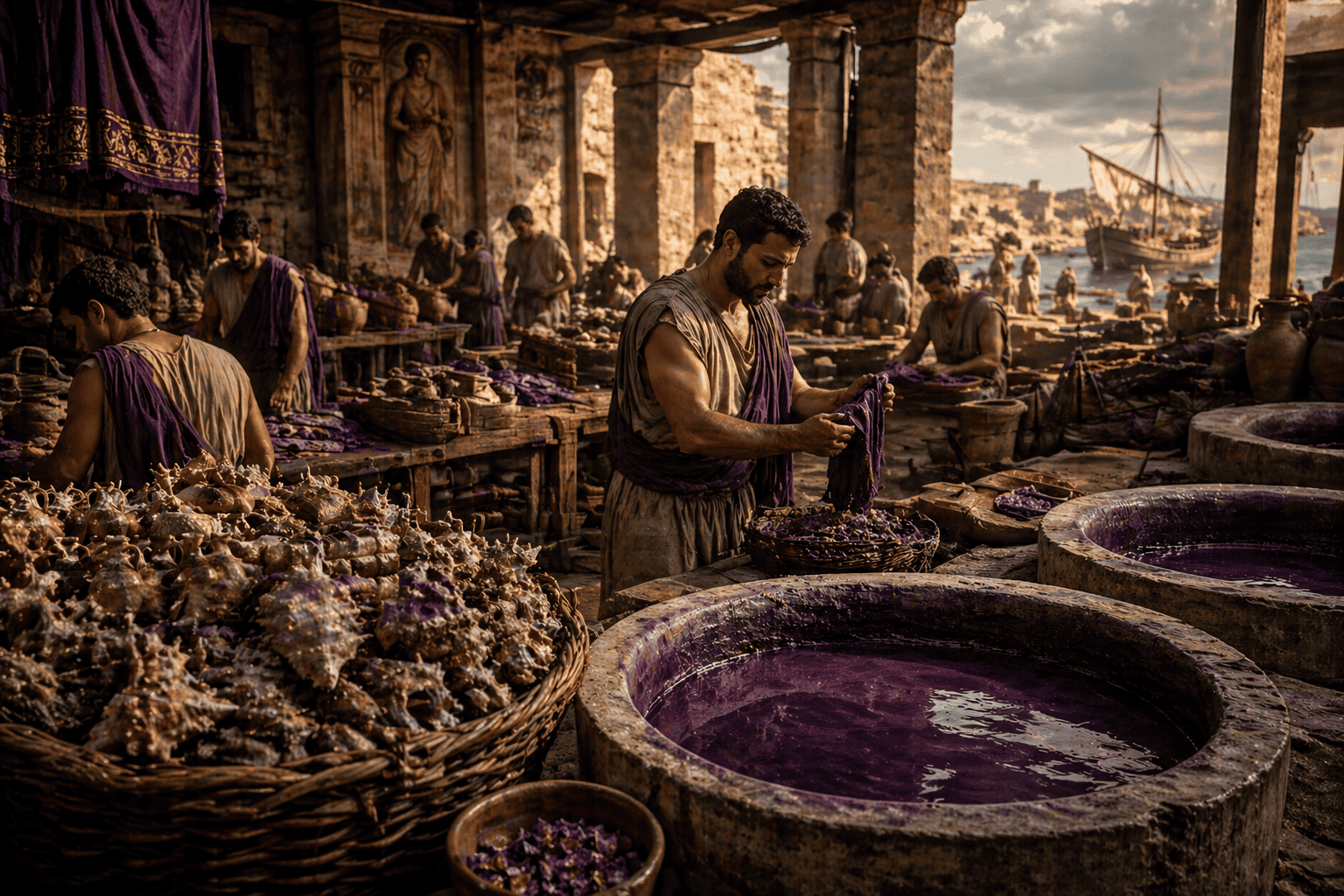
It was not artisanal elegance. It was chemical brutality.
Scarcity creates hierarchy. Difficulty creates exclusivity. Exclusivity creates symbolic power.
Luxury begins where inefficiency becomes power.
Darja Rihla · Systems of Prestige
Purple mattered because it was hard to make, expensive to buy, and instantly recognizable. It turned cloth into a social border.
The Production Chain Behind the Prestige
Luxury becomes politically powerful when it hides labor behind elegance. The purple border on a garment looked effortless, but every visible thread depended on an invisible chain of work.
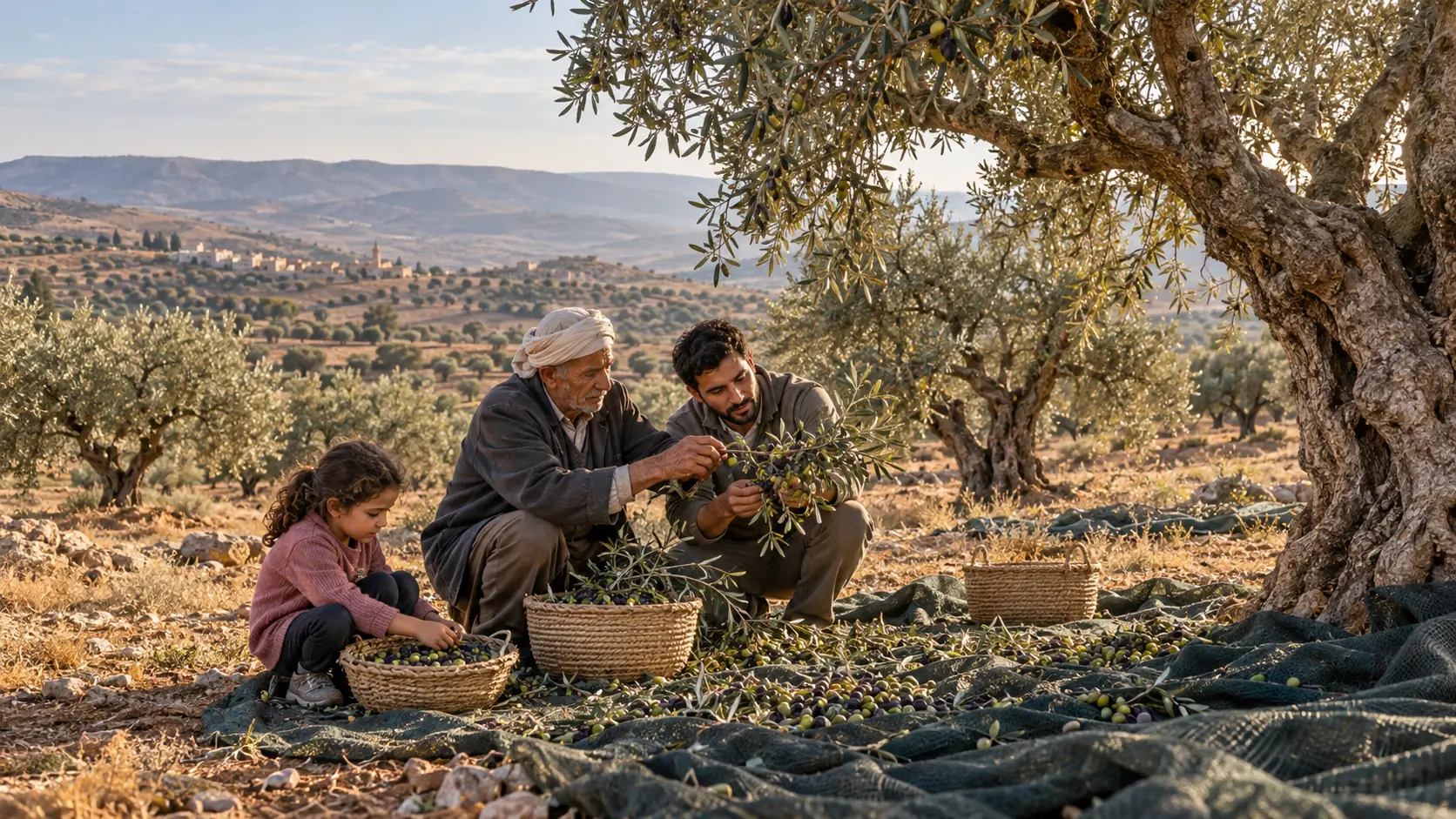
First came coastal extraction. Workers had to collect shellfish in large quantities. This required knowledge of tides, rocks, coastal pools, and fishing grounds.
Second came biological processing. The valuable material came from a small internal gland. The work was repetitive, unpleasant, and probably socially low status compared with the rank of those who eventually wore the finished dye.
Third came chemical transformation. The dye precursor had to be fermented and exposed through controlled processes. Purple was beautiful at the end because it was ugly at the beginning.
From Shell to Sovereignty
Coastal labor turns local marine ecology into raw material.
Fermentation and controlled production transform biology into value.
Cloth moves through merchants, ships, warehouses, and taxation points.
Status becomes visible on bodies, courts, temples, and imperial ceremonies.
This is why purple is a perfect Darja Rihla object. It is beautiful on the surface, but structural underneath.
Tyrian Purple Meninx and the Political Economy of Status
Tyrian purple Meninx matters because it names the intersection between material production and political symbolism.
The importance of Tyrian purple Meninx was never only economic. It was political, because purple functioned as visible legitimacy for emperors, governors, and aristocratic elites.
Meninx was not simply a production site. It was a conversion point. It converted marine extraction into elite consumption, elite consumption into long-distance maritime demand, and maritime demand into port infrastructure.
A luxury object does not remain symbolic by itself. It requires a system behind it: extraction, labor, storage, transport, merchants, taxation, security, and repeatable demand.
Status always hides infrastructure.
Meninx shows that visible authority depends on hidden systems. Your website works the same way: trust, security, performance, and structure decide whether your platform can carry real value.
Book a WordPress Security Quick CheckWhy Luxury Needed Administration
A luxury economy cannot survive on desire alone. Desire creates demand, but administration makes demand repeatable.
Meninx needed more than shells and ships. It needed predictable systems for storage, accounting, security, labor, and movement.
The Hidden Infrastructure of Status
Elite View
Purple means rank, beauty, privilege, and social distance.
Port View
Purple means labor, storage, ships, taxes, customs, and repeatable routes.
Luxury is never only symbolic. It becomes powerful when symbols require infrastructure.
Why Tyrian Purple Meninx Still Matters
Meninx was never truly about color. It was about hierarchy.
It transformed a coastal island into a strategic machine because elites across the Mediterranean were willing to pay for visible legitimacy.
That demand created routes. Routes created taxation. Taxation created urban permanence. Urban permanence created imperial relevance.
This is why Tyrian purple Meninx remains one of the clearest examples of how luxury goods can create real geopolitical infrastructure.
That is why purple built ports.
Why This Matters
Meninx changes how we read Mediterranean history. It shows that North Africa was not a passive edge of empire, but an operational zone where geography, luxury, trade, taxation, and political legitimacy converged.
Sources & Further Reading
- Pliny the Elder, Natural History
- David Mattingly, Tripolitania
- Hédi Dridi, Carthage and the Punic World
- University of Munich archaeological research on Meninx, Djerba
- Studies on Roman North African trade, purple dye production, and murex shell deposits
- Encyclopaedia Britannica — Tyrian Purple
- Encyclopaedia Britannica — Djerba