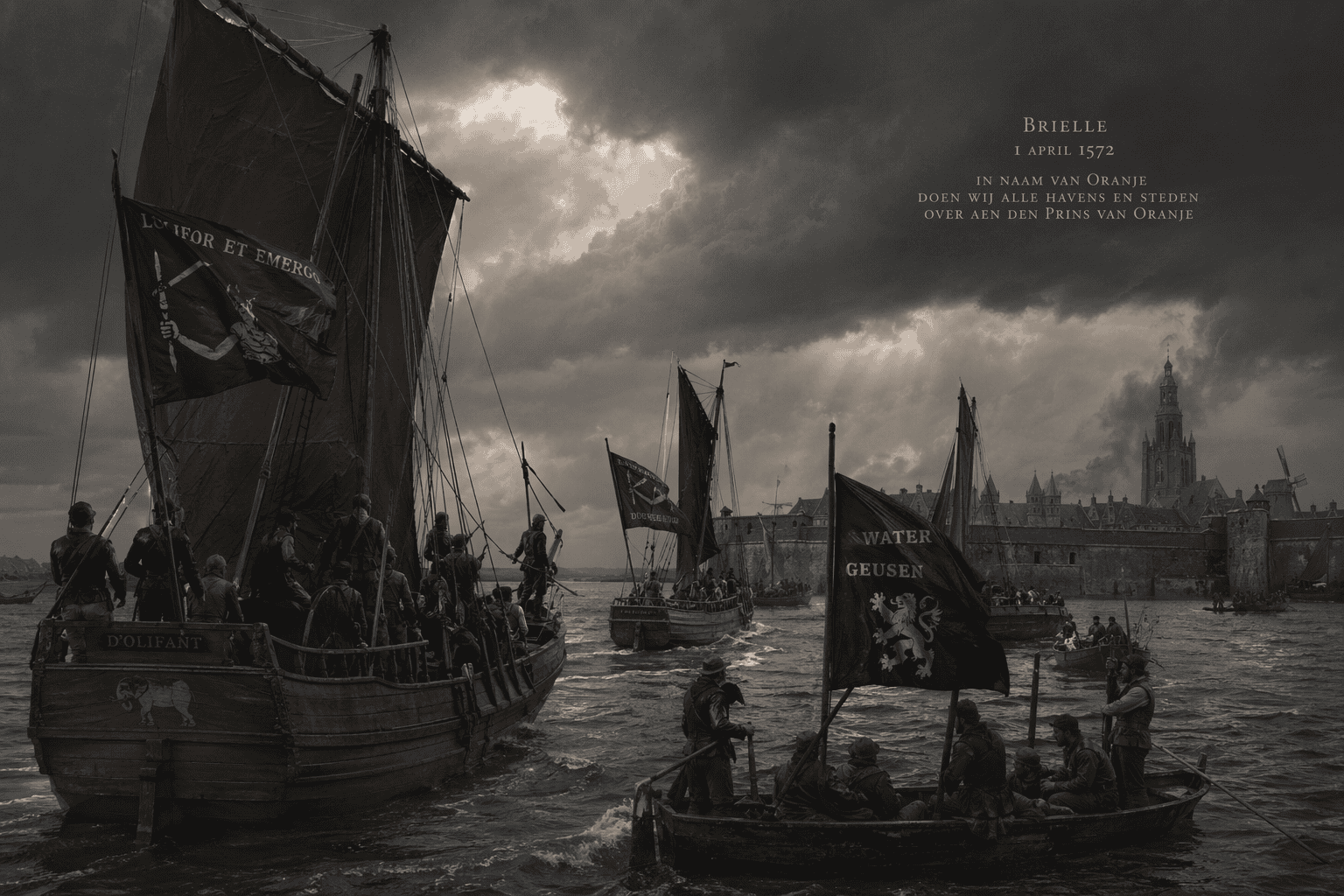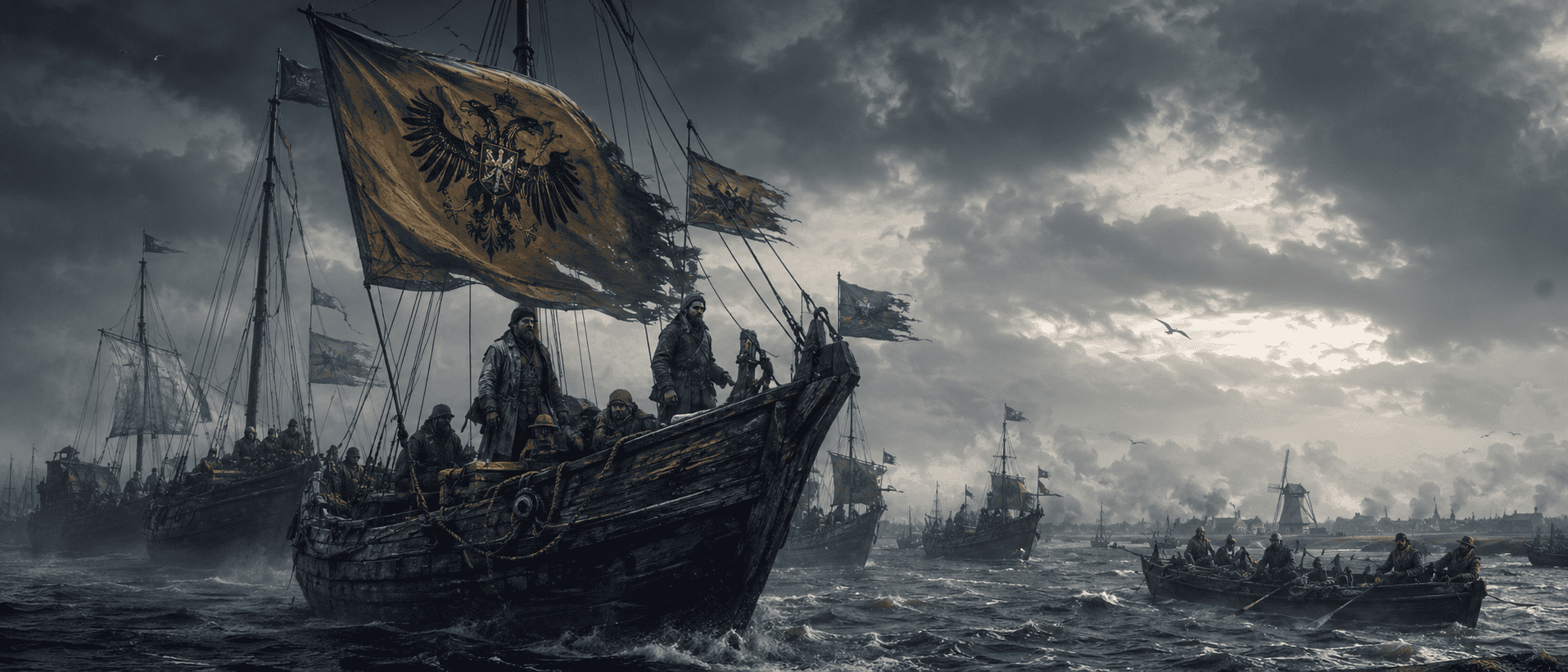
Sea Beggars as a Maritime Power System
The Sea Beggars were not merely pirates or rebels. They were an adaptive maritime network that transformed decentralized naval violence into political leverage during the Dutch Revolt. Their rise shows how maritime infrastructure, ideology, commerce, and irregular warfare shaped Dutch maritime power.
A simplified national memory of rough Protestant fighters resisting Spanish power.
A distributed structure of ships, ports, intelligence, finance, religious support, and tactical mobility.
Local maritime action could trigger wider rebellion by changing control of ports and supply lines.
Informal networks often reveal the future shape of formal institutions.
The Sea Beggars Emerged from Maritime Fracture
The Sea Beggars, known in Dutch as the Watergeuzen, are often remembered through simplified national mythology: rough Protestant rebels fighting Spanish power during the Dutch Revolt. That image is powerful, but incomplete. It reduces a complex maritime system into a heroic symbol.
They operated between piracy, privateering, commerce, intelligence gathering, religious resistance, and political warfare. They were not outside the system. They emerged from the fractures inside European maritime order itself.
Four Forces Made the Sea Beggars Dangerous
Maritime Disruption Stack
Shallow coastal waters and fragmented shorelines favored local navigators over large imperial fleets.
Small vessels moved quickly between ports, estuaries, river mouths, and trade corridors.
Privateering licenses, exile politics, and fragmented authority created legal gray zones.
Merchants, sympathizers, financiers, sailors, and political factions formed a hidden support layer.
The Dutch Revolt Created Maritime Space for Irregular Warfare
In the sixteenth century, the Habsburg Empire attempted to centralize political and religious authority across the Low Countries. Tax pressure, religious repression, regional resistance, and political fragmentation created escalating instability.
On land, Spanish military power remained formidable. At sea, the situation was more fluid. Coastal cities, river systems, estuaries, fishing routes, merchant fleets, and shallow-water navigation created operational environments that conventional imperial structures struggled to fully control.
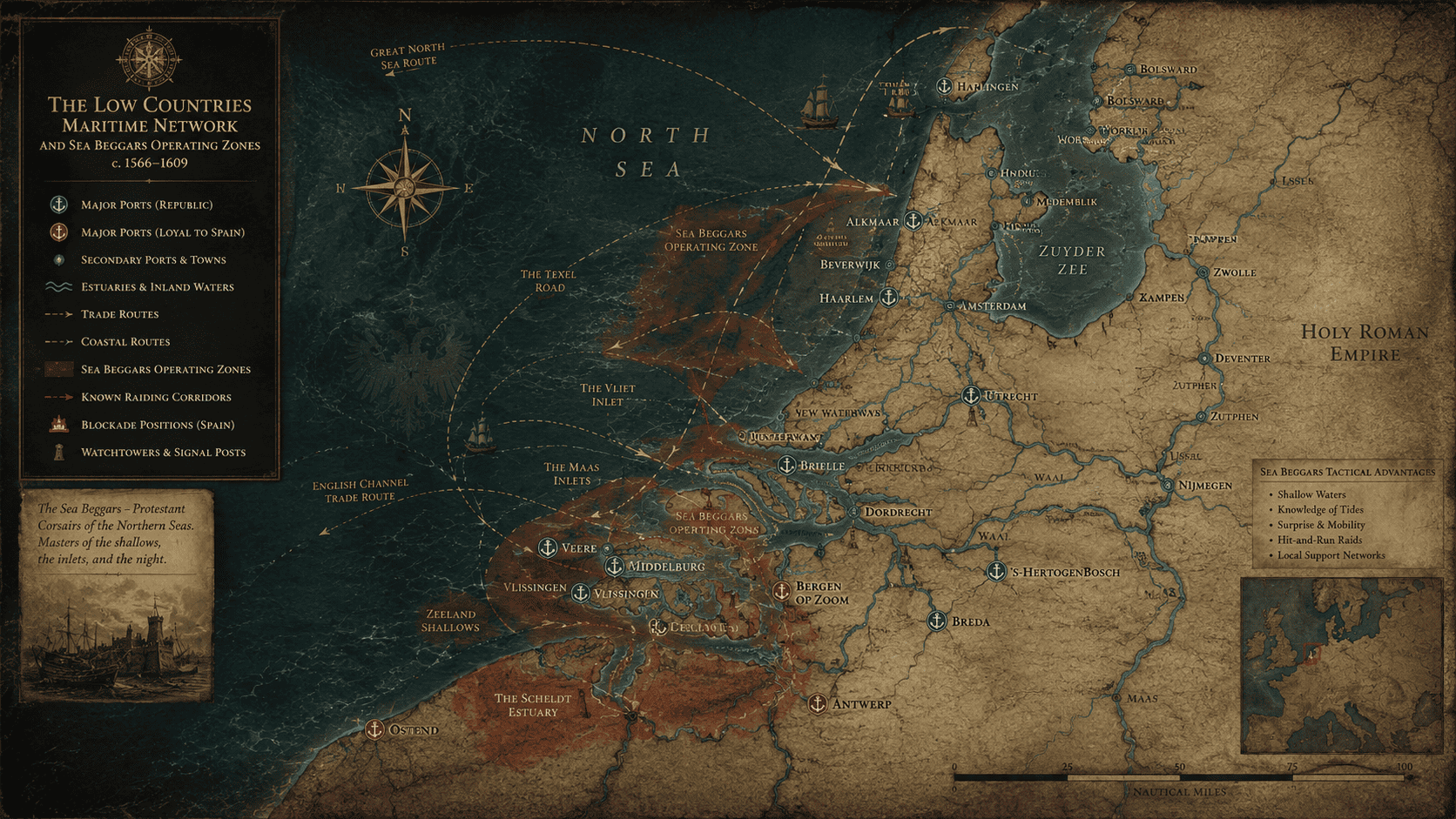
Maritime power rarely begins as a clean state structure. It often emerges from semi-legal networks operating in contested zones.
From Exile Network to Political Shockwave
Spanish authority intensifies taxation, religious enforcement, and political control.
Centralization creates resistance, displacement, and opportunities for irregular actors.
Displaced sailors, dissidents, and privateers form mobile maritime communities.
People pushed out of fixed institutions build power through movement and maritime access.
Legal ambiguity lets maritime actors operate between rebellion, commerce, and violence.
When law is fragmented, flexible actors can move faster than formal institutions.
The capture of Brielle turns maritime action into a political signal.
A port seizure changes confidence, supply, legitimacy, and rebellion dynamics.
Why this matters
The Sea Beggars show how states often inherit infrastructure and tactics first developed by irregular actors operating in unstable systems.
How Maritime Disruption Became Political Leverage
Their advantage did not come from overwhelming force. It came from system fit. They operated where imperial control was weakest: shallow waters, coastal routes, contested ports, semi-legal violence, and communities that already depended on maritime exchange.
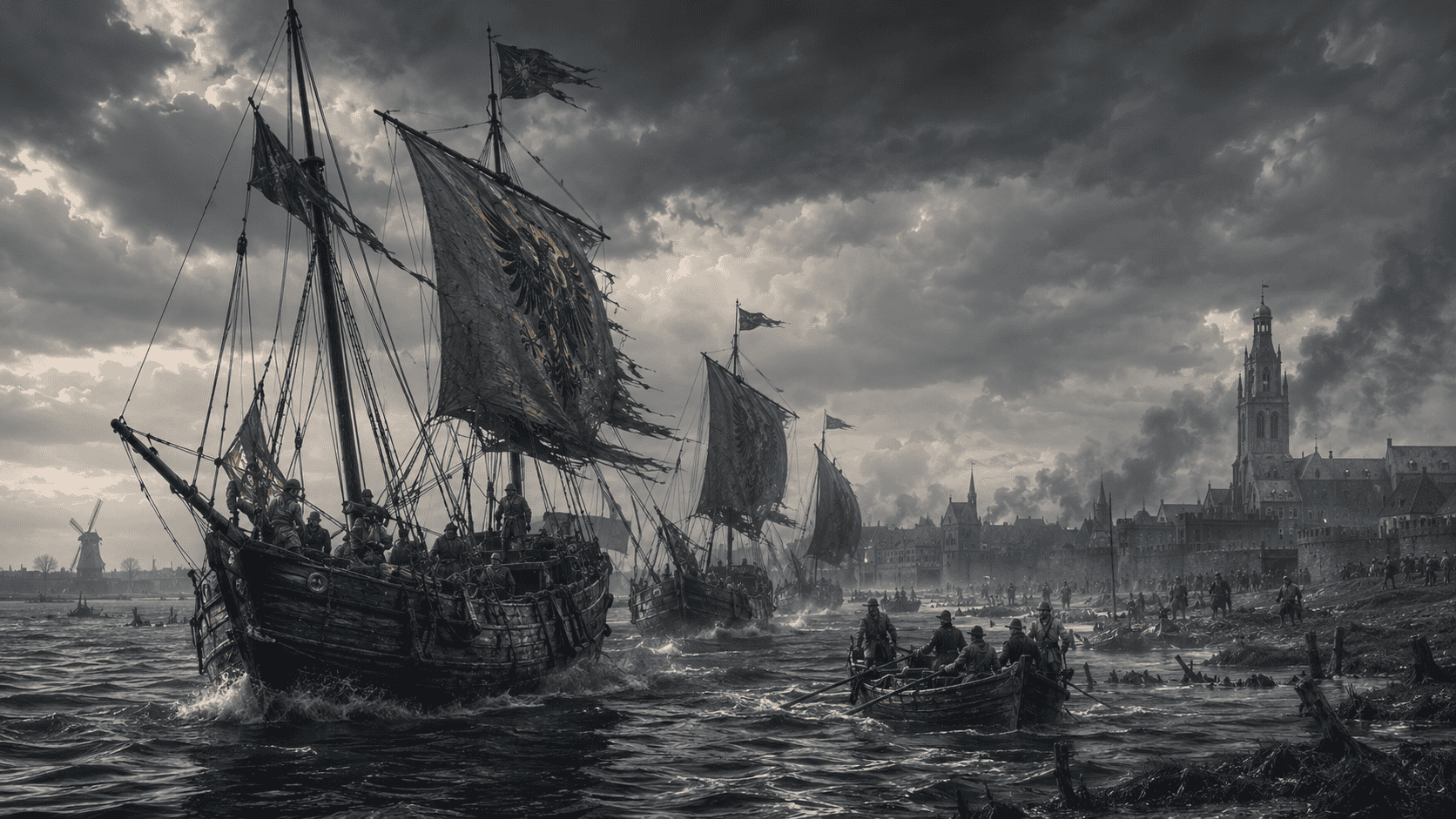
Political Cascade
A local maritime strike changes who controls access, shelter, and logistics.
Merchants, towns, rebels, nobles, and imperial officials reassess Spanish control.
Ports and waterways alter the flow of goods, movement, and military pressure.
The image of imperial inevitability breaks, making rebellion more thinkable.
National Myth Simplified a More Complex Reality
Later Dutch national memory often transformed the Sea Beggars into heroic freedom fighters. Elements of that narrative are true, but the reality was more ambiguous.
Maritime violence, opportunism, smuggling, private profit, religious identity, and political rebellion were deeply intertwined. The same actors could function as patriots, pirates, merchants, diplomats, and raiders depending on context.
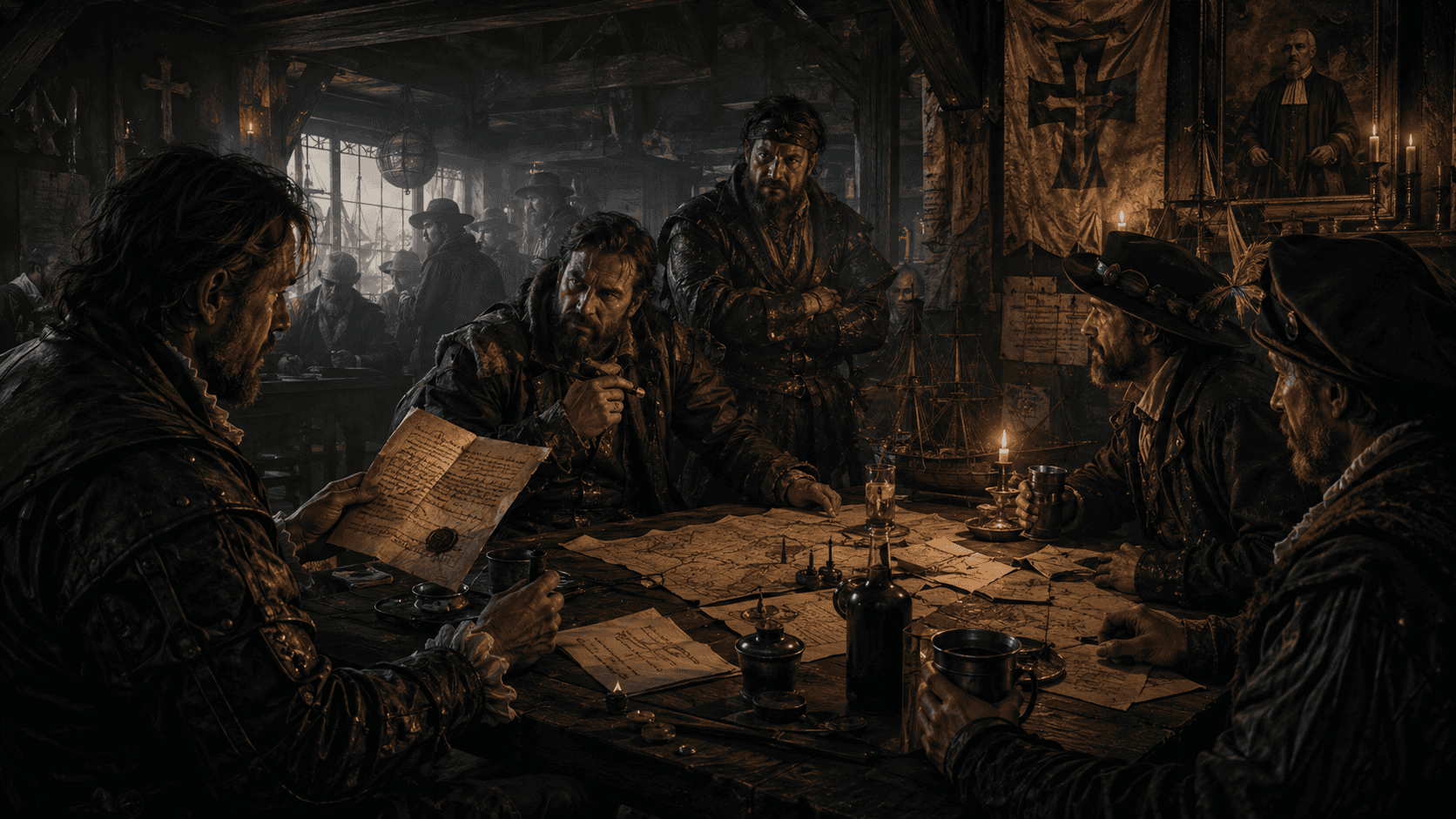
Threatening actors outside imperial legitimacy.
Useful semi-legal force against a shared enemy.
Founding figures in a story of liberation.
Mobile operators exploiting infrastructure gaps.
Why Maritime Rebellion Attracted Followers
Maritime systems create a different psychological environment from land empires. Sailors move between jurisdictions, cultures, languages, and legal systems. Identity becomes more fluid. Loyalty becomes more transactional.
Displaced people needed income, protection, and new routes into security.
Religious and political pressure made anti-imperial alignment meaningful.
The sea offered escape from fixed social order and local repression.
Raiding, trade, privateering, and patronage created material incentives.
The Hidden Infrastructure Behind Maritime Power
Ships alone do not create maritime dominance. Ports, financing systems, intelligence flows, repair capacity, cartography, merchant relationships, and political protection all matter.
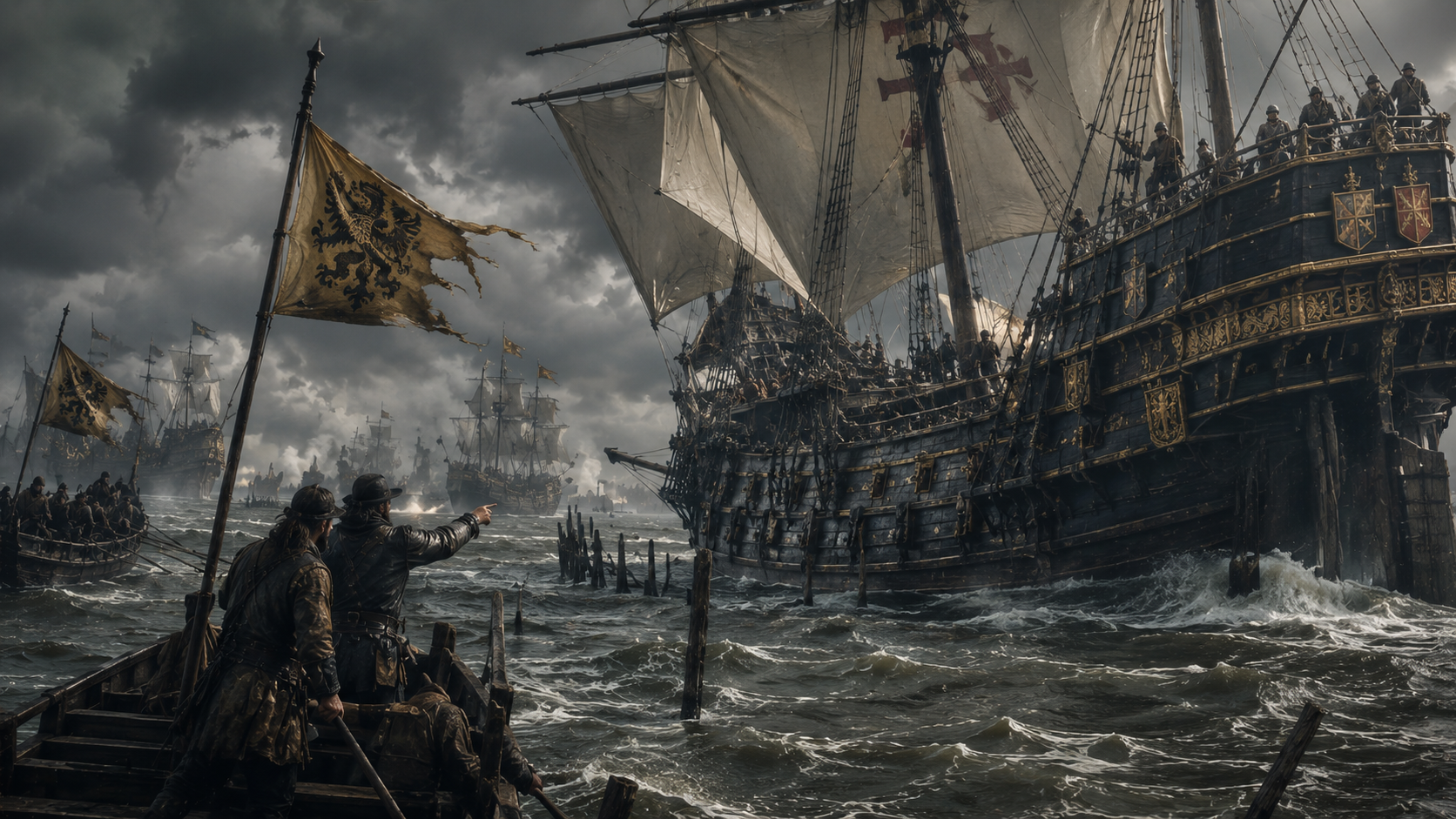
Hidden Support Layer
Harbors created shelter, logistics, intelligence, repair, and escape options.
Commercial actors helped redirect trade, finance risk, and support maritime pressure.
Local navigational knowledge turned shallow waters into defensive advantage.
Shared identity created trust, shelter, messages, and legitimacy across distance.
Who Benefited from the Sea Beggars System
Maritime disruption stretched Spanish attention and gave rebellion a pressure tool.
Coastal communities gained bargaining power when imperial control weakened.
Some merchants used instability to redirect trade and align with emerging power.
Protestant resistance found protection and movement through maritime routes.
From Maritime Raiders to Modern Network Actors
Today, power increasingly flows through networks rather than rigid hierarchies. Small distributed actors can exploit vulnerabilities inside larger systems. Cyber groups, digital insurgencies, decentralized information operations, and infrastructure disruptions reflect similar dynamics.
Ports, estuaries, ships, pilots, legal ambiguity, and trade routes shaped leverage.
Identity systems, session cookies, admin panels, vendors, and cloud services shape leverage.
Strategic relevance
Understanding the Sea Beggars helps explain how adaptive networks challenge centralized systems across both maritime and digital environments.
The Sea Beggars Were a Transitional Power Layer
The Sea Beggars existed at the edge of empire, legality, commerce, and rebellion. They were neither fully state actors nor simple criminals. They represented a transitional layer between fragmented maritime violence and organized Dutch naval-commercial power.
Civilizational Pattern
Centralized systems lose control at the edges.
Small groups move faster than formal institutions.
Survival structures become operational infrastructure.
What begins as irregular practice can become official power.
Understand Infrastructure Before Crisis Hits
Modern digital systems face many of the same structural problems as historical maritime systems: dependency, interconnection, ambiguity, and asymmetric disruption.
The WordPress Security Quick Check helps identify hidden vulnerabilities before they become operational risks.
Explore the WordPress Security Quick CheckFuture Routes
Suggested future URL: /dutch-republic-network-state/
Suggested future URL: /privateering-corporate-warfare/
Suggested future URL: /north-sea-strategic-system/
Suggested future URL: /maritime-networks-early-globalization/
Suggested future URL: /cybersecurity-and-naval-strategy/