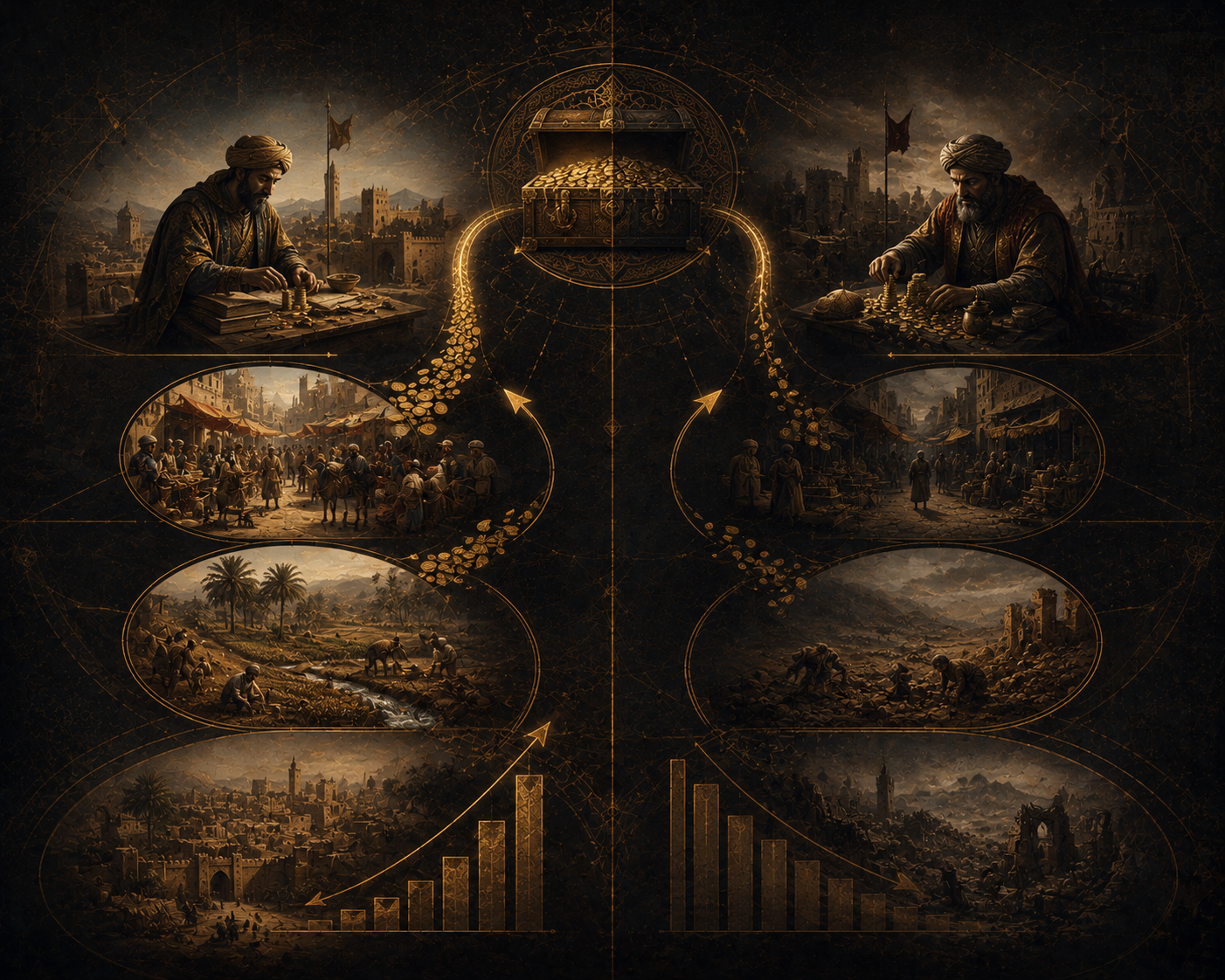
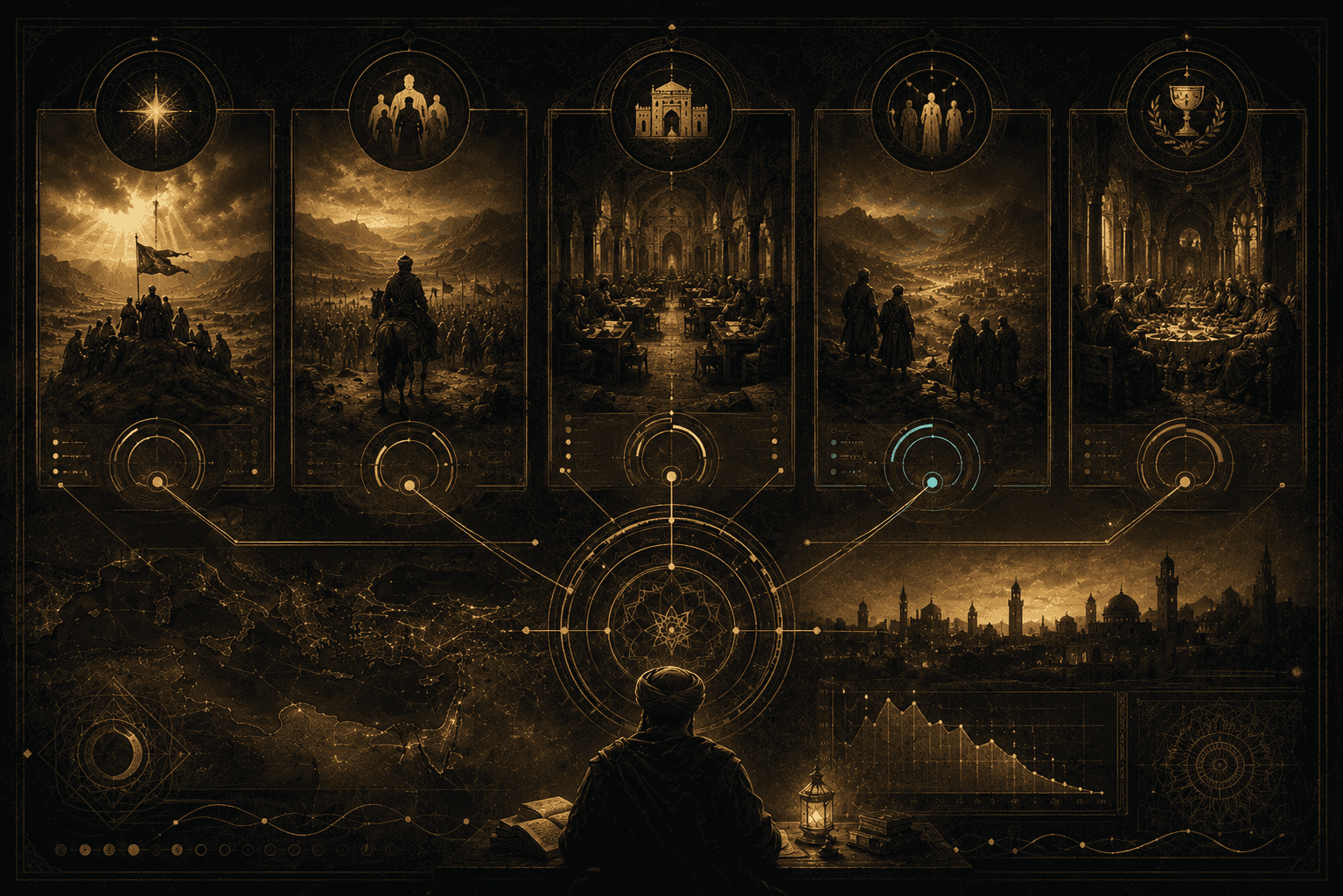
Tag: systems thinking

  • Trust Is Infrastructure

    Systems & Strategy · Civilizational Systems Analysis

    Trust Is Infrastructure

    The hidden operating layer beneath civilization, cybersecurity, and power.

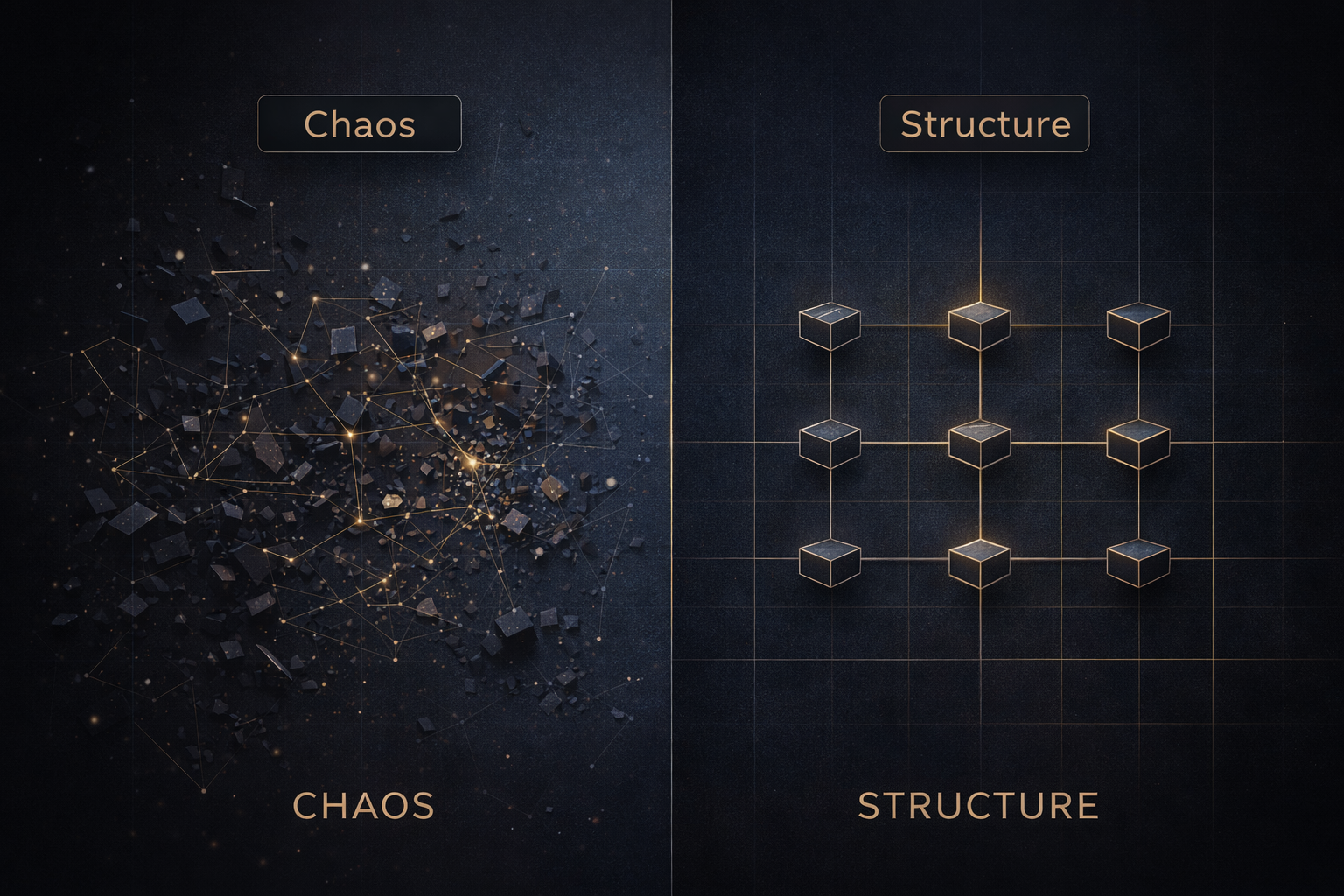
    Core thesis: civilization is not only a story of technology, markets, armies, laws, or culture. It is a trust-scaling problem. Every durable system must answer one question: how can strangers coordinate at scale without collapsing into suspicion, fraud, verification overload, or institutional paralysis?

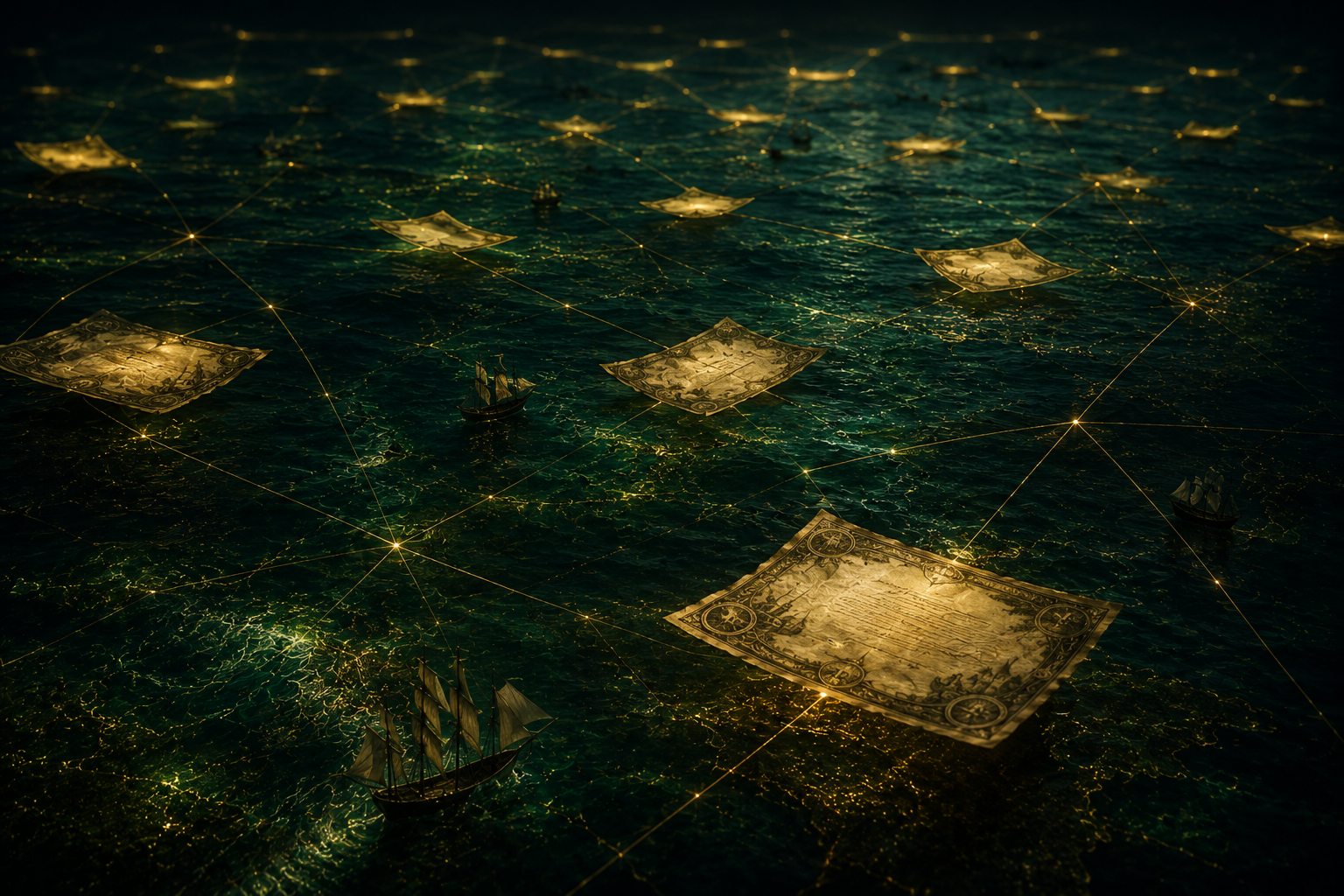
    Abstract dark infrastructure map showing ledgers, identity paths, trade routes, and digital verification layers
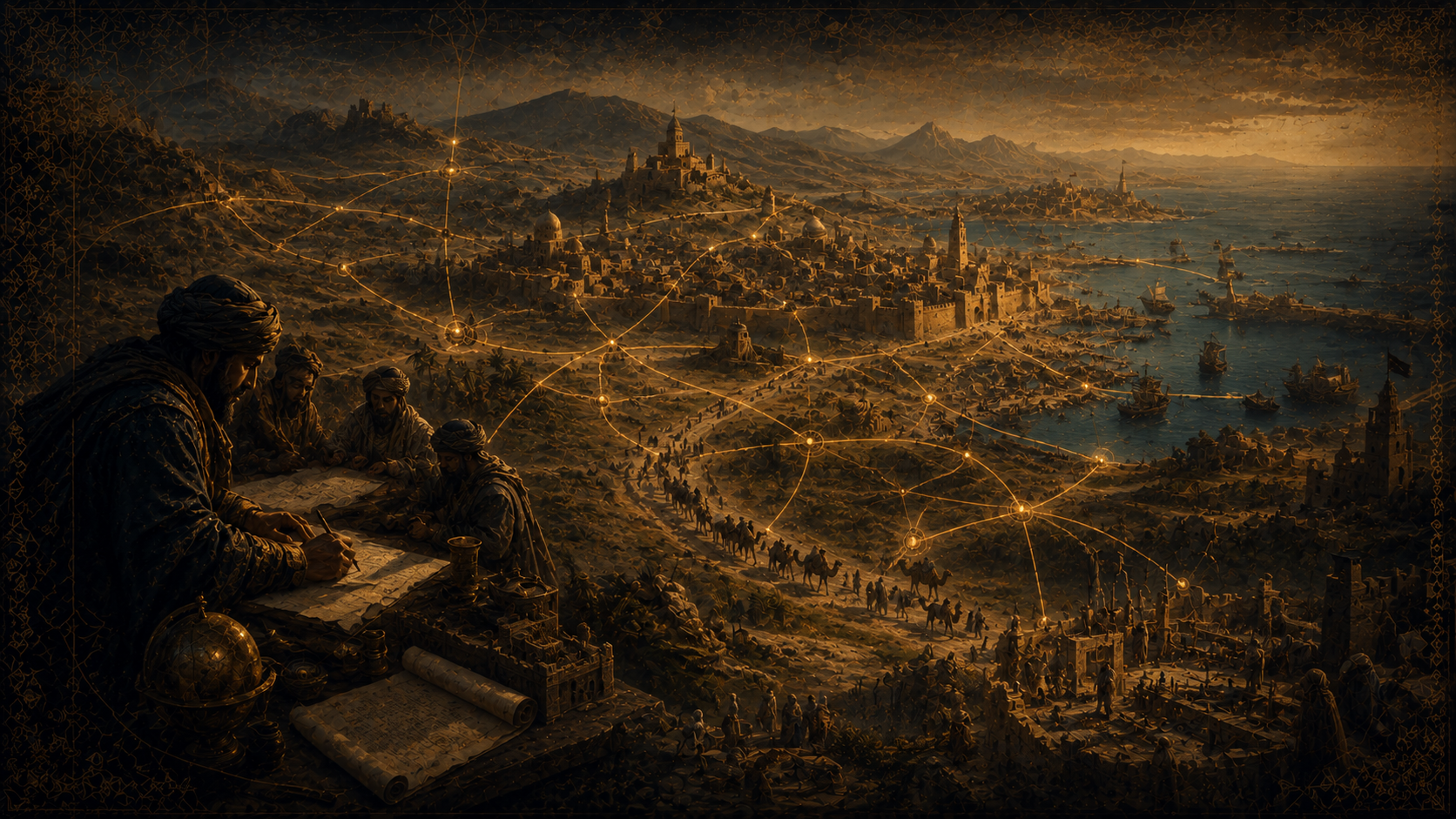
    Suggested hero image: a cinematic map of invisible trust infrastructure connecting ledgers, ports, cities, cloud nodes, and identity systems.

    The world does not run on technology first

    People assume modern civilization runs on technology.

    It does not.

    Technology is only the visible surface layer. Underneath every cloud platform, banking system, institution, trade network, border checkpoint, government database, corporate hierarchy, and digital identity system sits something older and more fundamental: trust.

    Not trust as emotion. Not trust as a warm personal feeling. Not trust as a moral slogan placed inside leadership books. Trust as infrastructure. Trust as the hidden operating layer that allows human beings, institutions, machines, and records to coordinate across distance and time.

    Most people never notice this layer because functioning systems hide their own coordination costs. A person taps a payment terminal and assumes money moved because software worked. An employee logs into Microsoft 365 and assumes access exists because the password was accepted. A cargo ship enters Rotterdam and unloads containers because global trade appears routine. A citizen crosses a border because a passport scanner flashes green. A customer signs a contract because the legal system behind the signature is assumed to exist.

    But underneath each interaction sits a massive invisible architecture of verification, legitimacy, assumptions, permissions, records, institutional memory, legal continuity, and coordinated belief.

    Civilization itself depends on strangers behaving as if invisible ledgers are real. Money only functions because populations trust that numerical abstractions stored inside institutional systems will retain meaning tomorrow morning. Legal systems only function because people assume enforcement mechanisms still possess legitimacy. Cloud identity systems only work because authentication chains, certificates, session states, permissions, device posture, and conditional access decisions are continuously validated across infrastructures most users never see.

    The modern world feels technological because its trust systems have become abstract. A medieval trader physically saw the guards protecting a city gate. A Roman citizen saw imperial roads, tax collectors, soldiers, and legal officials enforcing the state. A Venetian merchant saw the Rialto, the banker, the ledger, the seal, the contract, and the maritime convoy. Today the infrastructure is hidden behind interfaces. The trust layer became informational.

    Yet the underlying problem never changed.

    How do human beings coordinate at scale without collapsing into suspicion, fragmentation, fraud, or paralysis?

    That question sits underneath empires, cybersecurity, financial systems, bureaucracies, religions, trade routes, digital platforms, AI systems, supply chains, nation-states, and corporations.

    Every scalable human system eventually becomes a trust architecture. Every systemic collapse eventually becomes a trust failure.

    Trust is not the opposite of infrastructure. Trust is what infrastructure is built to preserve.

    Civilization begins where personal trust ends

    A small tribe does not require advanced institutional infrastructure because trust remains local. People know each other directly. Reputation is immediate. Betrayal carries visible social consequences. Shared rituals, kinship, religion, language, and geographic proximity create low-cost coordination environments. Trust exists organically because the human field is small enough for memory and reputation to function.

    Scale changes everything.

    Once systems grow beyond direct human familiarity, trust becomes expensive. A merchant trading across oceans cannot personally verify every sailor, warehouse operator, investor, translator, port authority, tax collector, and regional governor involved in the chain. A government managing millions of citizens cannot rely on personal relationships. A multinational company cannot operate purely through sincerity and memory. An online platform serving billions cannot assume every identity is legitimate. A hospital cannot assume that every login request is safe because it appears to come from a known employee.

    Scale destroys intimacy. Distance destroys certainty. Time destroys memory.

    Once scale increases, civilizations face a structural problem: verification overhead. How much energy must a system spend confirming legitimacy before coordination becomes too expensive to sustain?

    This is where infrastructure emerges. Passports emerge because humans need portable identity verification. Ledgers emerge because memory cannot scale. Contracts emerge because verbal promises fail across distance. Bureaucracies emerge because institutional continuity must outlive individuals. Cybersecurity emerges because digital systems cannot assume legitimacy by default. Archives emerge because power requires memory. Courts emerge because trust needs adjudication when conflict appears. Seals, stamps, signatures, certificates, tokens, and identity providers all solve the same ancient problem in different materials.

    The deeper one looks into history, the clearer the pattern becomes: civilization advances by externalizing trust into systems.

    That externalization takes many forms: accounting, law, seals, contracts, archives, protocols, cryptography, authentication, compliance frameworks, audit trails, bank reserves, citizenship records, tax systems, religious law, corporate governance, and diplomatic recognition. The visible forms change. The structural function remains the same.

    Visible layer

    Ports, platforms, passports, courts, banks, clouds, borders, dashboards, offices, markets, armies, and interfaces.

    Hidden trust layer

    Ledgers, credentials, legitimacy, identity, reputation, certificates, audit trails, rituals, laws, session states, and institutional memory.

    Failure mode

    Runs, fraud, fragmentation, paralysis, corruption, social panic, identity compromise, legitimacy collapse, and systemic entropy.

    This is why high-trust environments move faster. A system with high trust density can coordinate with low friction. Contracts are shorter. Payments settle faster. Rules are obeyed with less enforcement. Leaders require fewer coercive mechanisms. Organizations need fewer defensive procedures. Information moves with less suspicion. The system spends less energy verifying the obvious and more energy producing value.

    Low-trust environments behave differently. Every transaction requires proof. Every claim requires verification. Every employee needs monitoring. Every institution needs layers of compliance. Every border becomes harder. Every payment becomes more fragile. Every platform becomes more defensive. Every political statement becomes suspect. The cost of coordination rises until the system becomes trapped inside its own defensive architecture.

    Trust reduces friction. Suspicion increases latency.

    That is true in a market. It is true in a cloud tenant. It is true in a family business. It is true in a bureaucracy. It is true in an empire.

    Darja Rihla can therefore read civilizations not only through monuments and battles, but through their trust architecture. What did a civilization allow strangers to do together? How did it verify identity? How did it preserve memory? How did it punish betrayal? How did it transmit legitimacy? How did it keep ledgers credible? How did it prevent suspicion from becoming more expensive than cooperation?

    These questions reveal the infrastructure beneath the story.

    Cybersecurity is the governance of digital trust

    Cybersecurity is usually described as the protection of systems, networks, identities, devices, and data. That description is correct, but incomplete. At a deeper level, cybersecurity is trust engineering. It is the discipline of deciding which identities, devices, sessions, networks, applications, locations, and behaviors should be trusted under which conditions.

    This is why identity has moved to the center of modern security. The perimeter has dissolved. Work is remote. Cloud applications sit outside the old corporate network. Devices move between homes, airports, offices, hotels, and mobile networks. Employees use SaaS platforms, identity providers, APIs, collaboration tools, and third-party integrations. The old castle wall no longer contains the whole system.

    In that world, every access request becomes a trust decision.

    A password is not enough because passwords can be phished. A device is not enough because devices can be compromised. A location is not enough because attackers can proxy traffic. A session is not enough because session cookies can be stolen. An employee identity is not enough because identity itself can be impersonated. The system must evaluate context continuously.

    This is the logic behind Conditional Access. It is not just a technical control. It is an automated trust checkpoint. The system asks: who are you, from where, on what device, with what risk signal, for what application, under what policy, and with what recent behavior?

    This is also the logic behind Zero Trust. Zero Trust does not mean trust nothing in a literal philosophical sense. It means do not grant durable implicit trust merely because something is inside a network, known from yesterday, or labeled as internal. Trust must be evaluated, constrained, and renewed.

    The historical analogy is clear. A session cookie is a temporary passport. A token is a perishable unit of legitimacy. A certificate is a formalized trust statement. An identity provider is a digital registry of recognition. Multi-factor authentication is a ritual of re-verification. Conditional Access is a gatehouse that changes its answer depending on context.

    Cyberattacks exploit this architecture. Many attacks do not begin by breaking mathematics. They begin by forging legitimacy. Adversary-in-the-Middle phishing does not need to destroy the entire system if it can capture a valid session. Token theft does not need to know the user’s password if the token convinces the platform that legitimacy has already been established. Session hijacking is not only a technical exploit. It is a forged passport accepted by the border.

    Darja Rihla reframing

    Identity attacks are legitimacy attacks. They succeed when the infrastructure cannot distinguish real authority from a captured symbol of authority.

    That is why the relationship between cybersecurity and civilization is not metaphorical decoration. It is structural. Both face the same question: how do you coordinate across distance when the visible sign of trust can be forged?

    A medieval city needed seals because messengers could lie. A maritime republic needed ledgers because merchants could disappear. A bank needed records because memory could be manipulated. A cloud environment needs conditional verification because a login request may not represent the human it claims to represent.

    The medium changes. The problem remains.

    This allows Darja Rihla to connect its cybersecurity cluster to its systems and civilization clusters without forcing the connection. The link is natural. Cybersecurity is the modern laboratory where old civilizational trust problems become technical, measurable, automated, and brutally visible.

    When a tenant lacks Conditional Access, it resembles a city that trusts every traveler once they know the password to the gate. When an organization ignores session cookies, it misunderstands the real object of trust. When users fall for AiTM phishing, the attacker has not simply tricked a person. The attacker has inserted themselves into a chain of legitimacy and persuaded the infrastructure to accept a false continuity.

    That is the heart of modern cyber risk. The machine may function perfectly while the trust layer has already failed.

    Venice, Carthage, and the VOC were trust machines before they were empires

    History often presents maritime powers through ships, ports, weapons, spices, colonies, markets, and wealth. Those visible elements matter, but they are not enough. Ships do not create empire by themselves. Ports do not create confidence by themselves. Trade routes do not maintain themselves through geography alone. The real power of maritime civilizations came from their ability to make strangers coordinate across distance.

    Carthage was not only a city of merchants and sailors. It was a coordination system stretched across the western Mediterranean. Its power depended on routes, agreements, naval credibility, colonial links, commercial memory, and repeated trust between distant nodes. The visible layer was maritime movement. The hidden layer was network reliability.

    Venice made this pattern even more explicit. The Venetian Republic became a trust machine because it combined maritime power with administrative credibility. The Rialto was not merely a market. It was a place where records, reputation, money, contracts, political authority, and merchant expectation converged. Venetian banking and trade relied on ledgers, state oversight, legal mechanisms, maritime convoys, public debt, and reputational enforcement.

    Money could move through entries rather than constant physical transfer. Credit could circulate because records had authority. Merchants could invest in distant ventures because the system created ways to reduce uncertainty. The state itself became part of the trust architecture by protecting routes, enforcing rules, regulating markets, and maintaining institutional continuity.

    This is why Venice belongs inside the Darja Rihla framework. Venice was not simply picturesque water, masks, palaces, and trade. It was a historical operating system for scalable trust.

    The VOC later expressed a related logic in corporate form. Its ships, forts, uniforms, and routes were the visible layer. The deeper system was legal fiction, chartered authority, accounting, shareholder expectation, bureaucratic continuity, contracts, documentation, and administrative memory. The VOC allowed investors and agents to participate in a system larger than direct personal trust. That was its breakthrough and its danger.

    The VOC did not require every participant to know every other participant. It created an institutional machine that could hold capital, contracts, rights, obligations, and expectations across oceans. It was a belief system before it was a company because people had to believe that the legal and administrative framework would still mean something after a ship had crossed the world and returned months or years later.

    That belief was not soft. It was operational. It determined whether capital flowed, whether risk could be pooled, whether distant agents could act, whether investors would wait, and whether the organization could survive beyond individual lifespans.

    Carthage

    Network power through maritime routes, colonial links, commercial memory, and repeated coordination across the Mediterranean.

    Venice

    Ledger trust, public oversight, state-backed credibility, merchant reputation, and banking infrastructure around the Rialto.

    The VOC

    Chartered authority, accounting discipline, shareholder belief, contracts, documentation, and administrative continuity.

    The comparison with modern platforms is direct. A cloud provider, a payment network, a bank, or an identity provider also depends on invisible trust layers. Users do not inspect every server, certificate chain, policy engine, and database replication process. They trust the platform because institutional signals and technical systems create confidence.

    That trust can be earned, abused, automated, monetized, or lost. Historical empires and modern platforms share that vulnerability.

    A civilization becomes powerful when it can reduce the cost of coordination. It becomes fragile when the infrastructure that produced that reduction becomes opaque, rigid, corrupt, or detached from legitimacy.

    Ibn Khaldun saw the trust layer before modern systems theory named it

    Ibn Khaldun did not write about session tokens, banking protocols, cloud identity, or corporate governance. Yet his insight into asabiyyah belongs at the center of any serious theory of trust infrastructure. Asabiyyah is often translated as social cohesion, group feeling, solidarity, or collective bond. In Darja Rihla terms, it can also be understood as pre-institutional trust density.

    Young groups often begin with strong cohesion. They share hardship, memory, obligation, sacrifice, and purpose. The bond is not merely ideological. It is operational. It lowers coordination costs. People act together because they trust the group, recognize its authority, and accept its internal order.

    As civilizations become wealthier and more complex, that original trust density often weakens. Institutions grow. Bureaucracies expand. Legal systems become more elaborate. Enforcement becomes more professional. Administration replaces intimacy. Procedure replaces shared instinct. The state, company, or civilization must spend more energy doing what cohesion once did cheaply.

    This is not an argument against bureaucracy. Complex systems need administration. But it explains why bureaucracy expands in predictable ways. Some bureaucracy is the memory of civilization. Some bureaucracy is the prosthetic limb of declining trust.

    When organic trust is strong, systems can operate with lighter formal control. When organic trust weakens, formal control expands. More forms, more audits, more permissions, more checkpoints, more monitoring, more escalation paths, more compliance rituals, more internal suspicion. The system does not always become more secure. It often becomes more tired.

    Bureaucracy is not only organization. In aging systems, bureaucracy can become the visible scar tissue of lost trust.

    This is the Khaldunian dimension of modern organizations. A young company with strong mission cohesion may coordinate quickly. People know the direction, trust each other, and act with shared purpose. As it grows, the company requires process, compliance, approvals, reporting layers, and governance. Some of that is necessary. But when process expands faster than legitimacy, the organization enters trust decay.

    The same pattern appears inside states. The same pattern appears inside empires. The same pattern appears inside families, movements, religions, platforms, and institutions. Once the invisible bond weakens, visible control multiplies.

    Cybersecurity shows the pattern in technical form. A system that can no longer rely on perimeter trust moves toward continuous verification. This is often necessary. But it also reveals a deeper shift: the environment has become too complex and adversarial for implicit trust to survive.

    Zero Trust is therefore not only a security architecture. It is a civilizational mood. It is the technical expression of a world where scale, distance, speed, impersonation, and adversarial pressure have made implicit trust dangerous.

    Ibn Khaldun helps explain why that shift feels bigger than technology. When trust density falls, systems compensate with verification infrastructure. When legitimacy becomes unstable, systems compensate with control. When cohesion weakens, administration grows. When shared assumptions collapse, every interaction becomes a security question.

    This is not nostalgia for small communities or premodern life. It is structural analysis. Large systems cannot return to pure intimacy. They must design trust consciously.

    Trust collapse is rarely one event

    Trust collapse rarely begins with total destruction. It begins with friction.

    People stop believing the numbers. Employees stop believing leadership. Citizens stop believing institutions. Users stop believing platforms. Investors stop believing ledgers. Customers stop believing promises. States stop believing treaties. Teams stop believing each other. Once that happens, the system may still appear intact from the outside, but its coordination layer has already begun to fracture.

    Bank runs are trust collapse in financial form. The bank may have buildings, counters, accounts, employees, and systems. But if depositors no longer believe that claims can be honored, the visible institution becomes secondary. The trust layer determines the outcome.

    Cyber panic follows a similar logic. An organization may not know whether tokens are compromised, which sessions are valid, which devices are safe, which identities are genuine, or which logs can be trusted. Once uncertainty spreads, normal operations slow down. Access is revoked. Passwords are reset. Sessions are killed. Applications are disabled. Meetings multiply. Every interaction becomes suspect.

    Political polarization can also be read as trust decay. A society loses shared assumptions about evidence, authority, fairness, memory, media, law, and identity. When the interpretive layer fractures, every institution becomes contested. The system no longer disagrees only about policy. It disagrees about which reality is legitimate.

    Corporate decay follows the same logic. A company loses trust between teams, leadership, employees, customers, and systems. Work still happens, but coordination becomes defensive. People document more than they decide. They copy more people on email. They avoid ownership. They protect themselves from blame. The organization becomes slower not because people suddenly became less intelligent, but because trust latency increased.

    In civilizational terms, trust collapse produces entropy. Entropy does not always mean sudden collapse. It can mean rising disorder, rising overhead, declining coherence, and increasing energy required to maintain the same output.

    Diagnostic principle

    When a system spends more energy proving legitimacy than producing value, its trust infrastructure is under strain.

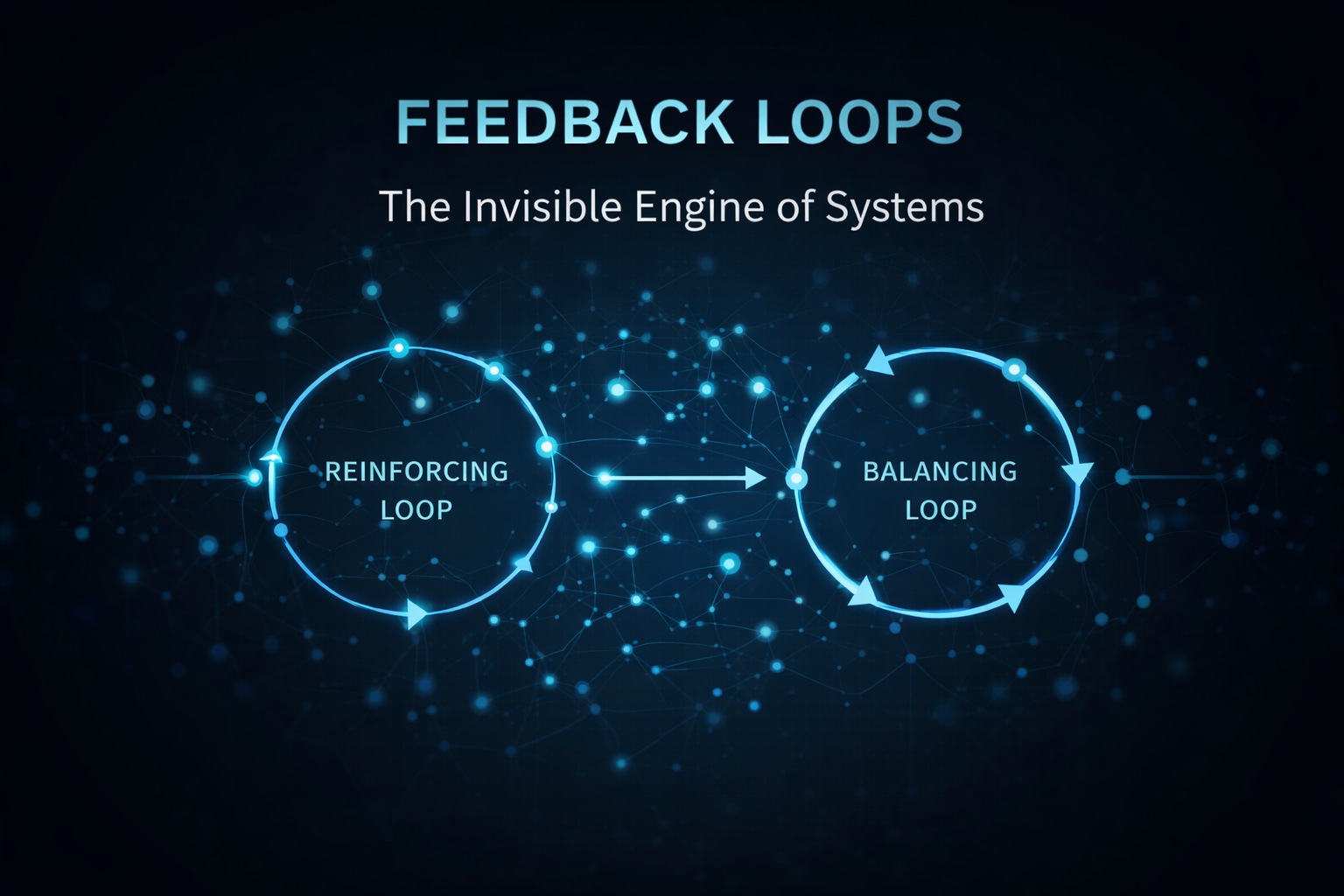
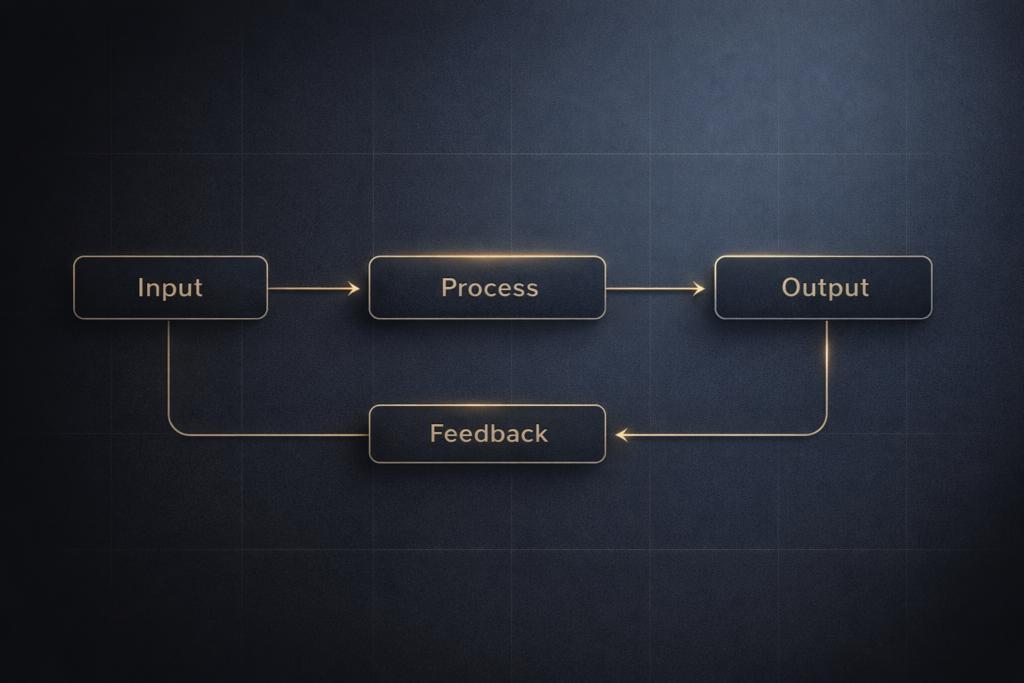
    This is where Darja Rihla’s systems thinking cluster becomes essential. Trust decay often behaves like a feedback loop. Low trust creates more controls. More controls create more friction. More friction creates more frustration. More frustration creates more workarounds. More workarounds create more risk. More risk creates more controls. The system locks itself inside a defensive spiral.

    This does not mean controls are bad. Controls are necessary. The question is whether controls are restoring trust or merely compensating for its absence. A healthy trust architecture verifies what must be verified while preserving the ability to move. An unhealthy trust architecture turns every action into a checkpoint and every participant into a suspect.

    The art of durable systems is not maximum trust or maximum control. It is calibrated trust.

    Too much trust becomes naivety. Too much control becomes suffocation. Strong systems design verification in a way that protects coordination rather than destroying it.

    From default trust to continuous verification

    The modern world is moving from implicit trust environments toward explicit verification environments.

    Premodern societies relied heavily on proximity, kinship, guilds, religion, local reputation, shared ritual, and face-to-face recognition. Trust was local, embodied, and socially enforced. The weakness of those systems was scale. They struggled when coordination had to cross unfamiliar boundaries.

    Modern systems solved scale through abstraction. Money became numbers. identity became documents. authority became records. trade became contracts. communication became networks. memory became databases. legitimacy became institutional. This allowed coordination to expand far beyond direct human familiarity.

    Digital systems intensified the abstraction. A person can now access an enterprise environment from another continent. A transaction can settle without physical presence. A platform can host billions of identities. An attacker can imitate legitimacy through a browser session. AI systems can produce convincing language at scale. The visible sign of authenticity is easier to simulate than ever.

    This creates the Zero Trust condition. The system cannot safely assume that a familiar signal is genuine. It must verify context, behavior, device health, risk, identity, and session integrity continuously.

    The philosophical shift is enormous. Traditional social trust often began from recognition: you are part of us, therefore we trust you. Modern digital trust increasingly begins from verification: prove that this request should be allowed under current conditions.

    That shift is not limited to cybersecurity. It appears in finance through fraud detection and transaction monitoring. It appears in borders through biometric passports. It appears in media through source verification. It appears in supply chains through provenance tracking. It appears in institutions through audit trails. It appears in AI through questions of authenticity, model integrity, and generated content. It appears in politics through disputes over legitimacy and information.

    We are building verification societies because the cost of impersonation has fallen.

    This is the deep link between AI, cybersecurity, institutional theory, and civilization. As systems become more powerful and more abstract, trust must become more explicit. The hidden layer must be designed rather than assumed.

    But there is a danger. A civilization that solves every trust problem through surveillance, control, and verification can become efficient but spiritually brittle. It may protect transactions while losing sincerity. It may secure identities while weakening social bonds. It may reduce fraud while increasing alienation. It may authenticate every action and still fail to produce meaning.

    That is why the philosophy cluster matters. Trust is not only a technical problem. It is also a moral and civilizational problem. A society cannot survive on verification alone. It also needs legitimacy, sincerity, shared purpose, restraint, and forms of trust that cannot be fully automated.

    The future will belong to systems that understand both sides: trust as infrastructure and trust as moral ecology.

    Digital systems need Zero Trust because impersonation is cheap. Human societies still need earned trust because meaning cannot be reduced to access control.

    How to read any system through its trust infrastructure

    The purpose of this article is not only to make a philosophical claim. It is to introduce a Darja Rihla method. Instead of asking only what a system looks like, ask what trust problem it is solving.

    1 · Identity

    Who is allowed to act?

    Look for passports, accounts, roles, citizenship, tokens, seals, credentials, membership, and recognition systems.

    2 · Memory

    What records are trusted?

    Look for ledgers, archives, logs, contracts, sacred texts, databases, audit trails, and institutional memory.

    3 · Legitimacy

    Why do people obey?

    Look for law, religion, authority, consent, fear, competence, ritual, reputation, and shared belief.

    4 · Verification

    How is trust checked?

    Look for audits, MFA, signatures, witnesses, courts, certificates, inspections, monitoring, and policy engines.

    5 · Failure

    What happens when trust breaks?

    Look for runs, breaches, revolt, fraud, corruption, paralysis, fragmentation, misinformation, and institutional fatigue.

    6 · Repair

    How is trust restored?

    Look for reform, transparency, punishment, re-authentication, leadership change, debt restructuring, renewed ritual, and improved architecture.

    This framework can be applied to a state, a startup, a family business, a mosque community, a university, a cloud tenant, a bank, a maritime republic, a social platform, or an empire. The visible forms differ, but the diagnostic questions remain stable.

    Who is trusted? Who verifies? What is recorded? What can be forged? What happens when memory fails? Where does legitimacy come from? How expensive has cooperation become? Does the system require more control because trust is low, or does it use control wisely to protect trust?

    These questions convert history into systems analysis and cybersecurity into civilizational theory.

    Where this article connects inside Darja Rihla

    Cybersecurity & Tech

    This post connects directly to identity, session hijacking, AiTM phishing, and Conditional Access as digital trust infrastructure.

    Systems & Strategy

    This is the primary cluster. Trust behaves like a hidden system with feedback loops, emergence, friction, and entropy.

    Culture & Identity

    Carthage, Venice, and maritime systems become case studies in distributed trust and network power.

    Philosophy & Legacy

    Sincerity, legitimacy, cohesion, and moral infrastructure prevent this from becoming only a technical article.

    FAQ

    It means trust is not only a feeling between people. In scalable systems, trust becomes embedded in ledgers, laws, credentials, institutions, protocols, identity systems, audit trails, and verification processes.

    The article is primarily about coordination, verification, legitimacy, feedback loops, and systemic fragility. Philosophy and history enrich the argument, but the core frame is structural.

    Cybersecurity makes old trust problems visible in technical form. Identity, access, session state, phishing, tokens, and Conditional Access are all mechanisms for deciding who should be trusted under changing conditions.

    Technically, Zero Trust is a security architecture. Conceptually, it reflects a broader shift from implicit trust toward continuous verification in complex, digital, adversarial environments.

    They show that trade and power depend on more than ships and wealth. They depend on trust architectures: ledgers, contracts, reputation, routes, legal authority, and institutional memory.

    Sources to add or verify before publishing

    • NIST Special Publication 800-207: Zero Trust Architecture.
    • Microsoft Learn documentation on Conditional Access and identity protection.
    • Research on Adversary-in-the-Middle phishing and session token theft.
    • Historical research on Venetian banking, Banco di Rialto, Banco del Giro, and Rialto ledger systems.
    • Historical research on the VOC, joint-stock governance, charters, accounting, and maritime administration.
    • Ibn Khaldun, The Muqaddimah, especially the concept of asabiyyah and dynastic decay.
    • Darja Rihla internal articles on complex systems, feedback loops, cybersecurity, Carthage, and philosophy.

    Protect the trust layer of your WordPress website

    A business website depends on trusted access, maintained plugins, and reliable security controls. The WordPress Security Quick Check identifies preventable risks and gives you clear priority actions.

    Request a WordPress Security Quick Check


  • The VOC Was a Belief System Before It Was a Company

    The VOC Was a Belief System Before It Was a Company

    Philosophy & Legacy · Systems Doctrine

    The VOC Was a Belief System Before It Was a Company

    The VOC belief system did not spread through ideology or scripture. It spread through ledgers, charters, and share certificates – instruments that taught millions of people to place their trust not in kings or gods, but in an abstract, immortal institution. Understanding how that shift happened is understanding how the modern world was built.

    Charter document transforming into a tree-shaped maritime trade network over green ocean currents
    Institutions scale when their rules begin to behave like natural systems.

    The VOC Belief System: From Blood to Protocol

    Before 1602, power was personal. A Venetian merchant trusted his partner because he knew his family. A Carthaginian trader sealed agreements through kinship networks and sworn oaths. A Hanseatic guild member paid his dues to a community of faces, not a board of anonymous investors. Trust was human, embodied, and bounded by geography and mortality.

    The VOC belief system dissolved all of that. When the States-General of the Dutch Republic chartered the Vereenigde Oost-Indische Compagnie in 1602, they did not simply create a trading company. They created a protocol for civilization-scale trust: a legal architecture that allowed strangers, separated by oceans and centuries, to coordinate around an abstract entity that could not bleed, could not die, and could not be bribed with wine or kinship.

    The Darja Rihla doctrine is clear on this: the architecture of complex systems is never about what moves through the network. It is about how trust is verified across it. The VOC belief system solved that problem first, and everything that followed from modern finance to cloud infrastructure is an elaboration of its answer.

    This is why the VOC belongs not only to maritime history, but to the Darja Rihla map of culture and identity, systems thinking and strategy, and Ibn Khaldun’s cycle of asabiyyah. It reveals how abstraction replacing human proximity becomes civilizational infrastructure.

    Maritime ledger and green compass merging with botanical root systems symbolizing institutional trust
    Financial systems become durable when they disappear into culture and infrastructure.
    Concept · Protocol Trust

    The shift from trust anchored in persons, family, blood, oath, and presence, to trust anchored in systems: archives, ledgers, charters, and certificates. The VOC belief system was the first institution to achieve this at civilizational scale. It is one of the founding acts of modernity.

    The Trust Stack: Six Layers of Institutional Scale

    The VOC belief system did not emerge from genius alone. It was assembled, layer by layer, from existing Dutch capacities, each one amplifying the next. Understanding the architecture explains why it worked and why modern systems replicate it so faithfully.

    Seventeenth-century Dutch merchant study with candlelight, ledger, and Bible Cultural Kernel

    Discipline, deferred gratification, and profit as moral signal.

    Ledger lines merging into botanical root systems across parchment

    Calvinism did not cause the VOC belief system. But it helped create the cohesion architecture that made it possible: sober capital, reinvested surplus, procedural trust, and a merchant class trained to see discipline as destiny.

    Historical share certificate with botanical elements and green glass objects Financial Abstraction

    Permanent capital and transferable shares made trust liquid.

    Floating share certificates connected across a dark emerald ocean network

    Before the VOC, capital followed voyages. The VOC belief system locked capital inside an institution and made ownership transferable. The company could now outlive investors, captains, directors, and fleets.

    Wax-sealed VOC charter with bronze seal and maritime silhouette Juridical API

    The Dutch Republic delegated war, treaties, territory, and justice.

    State seal and merchant ship connected by glowing legal infrastructure lines

    The VOC charter exported sovereignty through a corporate interface. The company became a state that could file accounts, wage war, sign treaties, and administer distant territories.

    VOC harbor transformed into a botanical ecosystem with ships, vines, and misty green water Infrastructure Compression

    Ports and stations became latency reduction nodes in a global network.

    Overgrown VOC trading post functioning like a historical network node

    The VOC did not conquer geography. It administered it through resupply nodes, repair depots, intelligence hubs, and coercive checkpoints. Infrastructure made distance governable.

    VOC harbor transformed into a botanical ecosystem with ships, vines, and misty green water
    Trade networks often outlive the political structures that created them.
    L5 · Data Layer The Archive as Weapon

    The VOC belief system produced one of the most comprehensive archives of maritime, commercial, and geographic data in the world. Whoever held the logbooks held the routes. The data layer was not a record of the empire. It was the instrument of control.

    L6 · Institutional Immortality The System Outlives the People

    When a VOC director died, the company continued. When a fleet sank, the company continued. When wars reshaped Europe, the company continued. This was not resilience by accident. It was designed immortality.

    Doctrine · The Share Certificate as a Form of Faith

    A VOC share was not a claim on ships or pepper. It was a claim on the future continuity of a system. Buying one required you to believe that an abstract legal entity would outlast your own life. That act of belief, repeated by thousands of investors, is what made the VOC function as a civilization.

    Banda: Where the VOC Belief System Rewrote Reality

    Banda Islands landscape overlaid with symbolic colonial ledger patterns
    Extraction systems reshape landscapes long before they reshape politics.

    Every belief system eventually confronts a moment where its internal logic collides with human reality. For the VOC belief system, that moment was the Banda Islands in 1621.

    The Banda archipelago in the Maluku sea was, at that time, the only place on earth where nutmeg and mace grew in commercial quantities. The VOC had promised its investors a monopoly. The Bandanese, a maritime trading people with centuries of commercial relationships across Asia, declined to honor that monopoly. They sold to whoever offered better terms. From the Bandanese perspective, this was rational commerce. From the VOC perspective, it was a systems error.

    Jan Pieterszoon Coen’s response was not emotionally chaotic. It was administratively rational. Between 1609 and 1621, VOC campaigns destroyed or displaced an estimated 90 percent of the Banda population. The islands were then repopulated with enslaved labor and managed by perkeniers: Dutch operators who held plantation licenses from the VOC.

    Doctrine Warning · The Abstraction Wall

    Banda reveals what happens when a system’s internal logic becomes more real to its operators than the human world outside. In Amsterdam, directors saw dividend projections. In Batavia, administrators saw supply chain reports. On Banda, soldiers executed orders. Nobody saw the complete picture. The system fragmented moral responsibility until nobody felt personally accountable for any of it.

    The genocide was not an act of passion. It was an act of optimization. The Bandanese were not enemies to be defeated. They were variables that disrupted a function.

    Darja Rihla Doctrine on the Banda Conversion

    The Perkenier Stack: The First Platform Dependency Model

    The perkenier system that replaced the Bandanese trading networks was structurally remarkable. The VOC provided infrastructure, military security, and exclusive distribution. The perkeniers provided labor and local management. In exchange, perkeniers were required to sell all their nutmeg to the VOC at prices set by the VOC. They could not trade with anyone else.

    This is platform logic. It predates the App Store by centuries, but the architecture is familiar: access to a captive market, controlled through infrastructure ownership, with the platform extracting margin from every transaction while the operator bears production risk. The perkenier thought he was a free citizen building a business. He was an API-dependent contractor inside someone else’s system.

    Concept · The Banda Conversion

    The process by which a living, high-entropy ecosystem, characterized by distributed relationships, flexible exchange, and human negotiation, is reduced to a low-entropy administrative grid: auditable, controllable, predictable, and extractable. Systems scale by flattening reality into manageable objects.

    Cybersecurity as Maritime Governance

    Maritime convoy routes transforming into encrypted digital network infrastructure
    Modern digital trust networks inherit more from maritime systems than they appear to admit.

    The most counterintuitive layer of this doctrine is also the most structurally precise. The architecture of modern cybersecurity is not a product of the digital age. It is a translation of maritime governance into digital infrastructure.

    Both systems are built to solve the same problem: trusted movement through hostile environments. A VOC fleet crossing the Indian Ocean and a data packet crossing the internet face structurally identical challenges: identity verification, payload protection, routing through adversarial territory, and logging every transaction for later audit.

    The VOC did not merely move spices. It scaled trust, governance, contracts, risk, information, and belief across oceans. Modern digital platforms operate similarly. They transform human coordination into abstract infrastructure. A cloud platform, app store, payment processor, or certificate authority is not simply a service provider. It is institutional software: an administrative belief system that decides who can enter, what can move, which identities are trusted, and which forms of exchange become legitimate.

    VOC · Convoy System VPN / Secure Tunnel

    Armed convoys protected cargo through waters controlled by rival powers. Secure tunnels encrypt and route data through networks controlled by adversaries.

    VOC · Charter and Seal Certificate / PKI

    A VOC seal verified a captain’s authority without the Heeren XVII being physically present. A TLS certificate verifies a server’s identity without the certificate authority being present.

    VOC · Factorij Edge Server / HSM

    Each fortified trading station was a trusted point of interaction inside an untrustworthy region. Edge servers and Hardware Security Modules perform the same function.

    VOC · Nutmeg Monopoly Vendor Lock-in

    Control the source, control the market. The Banda monopoly made the VOC indispensable by eliminating alternatives. Cloud vendor lock-in uses the same logic.

    Doctrine · Cybersecurity Is Maritime Governance

    Cybersecurity is the continuation of maritime governance by digital means. The shift from seals to certificates, from convoys to VPNs, from factorijen to edge servers, is not metaphor. It is the same institutional logic operating in a different medium.

    This connects directly to the systems thinking framework at the core of Darja Rihla. The VOC belief system’s lasting innovation was not its ships or its spices. It was its verification architecture: a set of protocols that allowed trust to operate at scale without requiring personal knowledge of any individual actor.

    The Entropy Engine: Why Systems That Outlive Humans Eventually Destroy Themselves

    The Ibn Khaldun framework at Darja Rihla provides the terminal equation. His theory of asabiyyah, the social cohesion and collective energy that builds institutions, describes a cycle that the VOC followed with mechanical precision.

    Phase 1 · Founding High Asabiyyah

    The early VOC was built by merchants who understood the sea, the cargo, and the risk. High cohesion. Direct operational knowledge. Decisions made by people who knew what a sinking ship actually meant.

    Phase 2 · Expansion Institutionalization

    Success produces bureaucracy. Bureaucracy produces procedure. Procedure replaces judgment. The system begins to serve its own administrative logic rather than its original purpose.

    Phase 3 · Abstraction Elite Detachment

    The bewindhebbers in Amsterdam become rent-seekers. Dividends are extracted from an empire they can no longer understand. Operational reality is replaced by financial reporting.

    Phase 4 · Collapse Administrative Obesity

    The VOC dissolved in 1799, bankrupt and institutionally exhausted. Not because it ran out of spices, but because the abstraction layer had become heavier than the infrastructure could support.

    Why This Matters

    The Ibn Khaldun entropy cycle is observable in large institutions: corporations, states, platforms, and empires. The question is never whether a system will enter the abstraction phase. The question is how long it takes, and what the abstraction cost will be for the people operating inside and beneath the system.

    Test the VOC Belief System Doctrine

    VOC Belief System · Doctrine Assessment

    What was the VOC’s most structurally significant innovation?

    What does the Banda Conversion describe in Darja Rihla doctrine?

    The perkenier system most closely resembles which modern structure?

    Is It a Company or a Belief System? The Diagnostic Engine

    The institutional architecture the VOC belief system pioneered did not disappear when the company dissolved in 1799. It was inherited. The indicators below are drawn from the VOC’s structural profile. Apply them to any institution, corporate, governmental, or digital, and assess the answer honestly.

    The VOC controlled the ports, supply chains, and fortified nodes. Without VOC infrastructure, trade in the Indo-Pacific could not operate at scale. When the infrastructure is yours, the dependency is theirs.

    The VOC controlled what counted as legitimate commerce in the regions it dominated. Today, payment processors decide what commerce is acceptable. App stores decide what software can exist. Certificate authorities decide what servers are trusted.

    The VOC’s Heeren XVII changed composition constantly. Individual directors died, retired, and were replaced. The system continued. That is institutional immortality.

    The VOC turned the Banda Islands into rows in a ledger: nutmeg production per perkenier, shipping costs per route, profit per year. Every modern platform performs a related operation when human attention becomes engagement data.

    The VOC’s true product was not nutmeg. It was the belief that your investment would retain value across decades, that the institution would persist, and that the system was stable.

    The Final Doctrine: Empires No Longer Needed Kings

    The VOC belief system completed a civilizational transition. Power no longer needed a person at its center. No king. No dynasty. No sacred bloodline. Only protocol, ledger, charter, and archive: instruments that could outlive any human being and continue generating compliance, profit, and order across generations.

    Banda was not an aberration. It was the doctrine made visible. When the system’s internal logic becomes more real than human reality, the system begins to rewrite the world rather than serve it. That process did not end in 1621. The actors change. The architecture persists.

    The most important question for anyone studying philosophy and the nature of institutional power is not historical. It is diagnostic: at what point does the institution you work inside, invest in, or depend upon cross the threshold from company to belief system?

    Final Doctrine

    Empires no longer needed kings once systems learned how to outlive humans. The VOC belief system was the proof of concept. The cloud is the current iteration. The architecture is the same. Only the medium has changed.

    The Scope of the First Trust Machine

    VOC Share Capital at Founding, 1602

    0 in founding capital.

    VOC Operational Years

    0 of continuous operation, outlasting every human who built it.

    Estimated Banda Population Lost, 1621

    Approximately 0 of the indigenous Banda population.

    Connected Essays

    The VOC belief system is part of a larger Darja Rihla doctrine: civilizations are not held together by territory alone, but by cohesion architecture, institutional memory, scalable trust, network legitimacy, and the abstraction layers that turn human proximity into civilizational infrastructure.

    Philosophy & Legacy Ibn Khaldun and the Cycle of Asabiyyah

    How cohesion, discipline, and legitimacy determine the rise and decline of civilizations.

    Culture & Identity Culture & Identity Archive

    How civilizations survive through shared meaning, memory, language, and collective identity.

    Systems Thinking Systems Thinking & Strategy

    Institutional systems, abstraction, governance, feedback loops, and strategic infrastructure.

    Cybersecurity & Tech Cybersecurity & Tech

    How verification, protocols, networks, and digital trust continue the logic of maritime governance.

    Enter the Darja Rihla Doctrine Map

    The VOC belief system is one node in a larger civilizational analysis. Follow the complete architecture from Carthage to the cloud across the Darja Rihla cluster map.

  • Ibn Khaldun and the Cycle of Asabiyyah

    Ibn Khaldun and the Cycle of Asabiyyah

    Philosophy & Legacy · Civilizational Systems Intelligence

    Ibn Khaldun and the Cycle

    Ibn Khaldun watched dynasties fracture and asked why power often looks strongest just before it begins to decay. He did not see history as a loose chain of kings, battles, and accidents. He saw a structure beneath events: cohesion hardens a group, conquest expands it, wealth softens it, and a harder force eventually replaces it.

    The cluster this pillar anchors

    This post is the structural centre of the Empires Need Stories cluster. Each post in the cluster connects back to the asabiyyah framework established here. The cluster grows as new posts are published.

    Pillar · Live Ibn Khaldun and the Cycle

    The master framework: asabiyyah, institutional entropy, fiscal decline, maintenance overload, and why civilizations follow a predictable arc from cohesion to replacement.

    Supporting · In progress Why Empires Need Stories More Than Armies

    Narrative legitimacy as psychological infrastructure. What happens when the story breaks before the army does.

    Supporting · Planned Carthage Through Ibn Khaldun

    Maritime asabiyyah, elite decay, network power, and why technical sophistication cannot replace civic cohesion.

    Supporting · Planned Digital Asabiyyah

    Online communities as frontier groups: high-cohesion outsiders disrupting low-solidarity legacy institutions.

    Darja Rihla Ibn Khaldun archive of civilization and systems thinking
    Ibn Khaldun connects philosophy, civilization, systems thinking, and institutional power.

    The Muqaddimah was not only history. It was a science of civilization.

    The Muqaddimah, written in 1377 during Ibn Khaldun’s retreat at Qal’at Ibn Salama in present-day Algeria and later revised in Tunis, was the introduction to his larger universal history, the Kitab al-Ibar. But it became something more independent and more dangerous: an attempt to identify the structural laws beneath civilization itself.

    Ibn Khaldun called this field ilm al-umran: the science of human civilization, social organization, settlement, power, labor, economy, and decline. He was not satisfied with chronicles that copied court narratives or repeated heroic myths. He wanted method. He criticized traditional historiography because it often accepted reports without testing whether they fit the material limits of geography, economy, population, psychology, and institutional capacity.

    This is why Ibn Khaldun belongs inside a modern systems architecture conversation. He treated civilization as a dynamic system with inputs, constraints, feedback loops, failure modes, and phase changes. Rulers, battles, and dynasties were visible outputs. The deeper system was cohesion, production, climate, taxation, legitimacy, and institutional memory.

    Darja Rihla frame

    The Muqaddimah is not merely a historical text. It is an early diagnostic engine for human systems: how groups coordinate, scale, harden, extract, fragment, and get replaced.

    Ibn Khaldun turned civilizational decline into a structural law

    Most historical writing begins with the visible surface: a ruler takes power, a city expands, an army marches, a dynasty falls. Ibn Khaldun began somewhere colder. He asked why the same sequence seemed to repeat across different lands, peoples, climates, and courts. Hard groups rise from the frontier. They conquer softer settled societies. They build law, taxation, armies, palaces, and administrative order. Their children inherit the structure. Their grandchildren inherit the comfort. Then the inner force that made the system possible begins to disappear.

    His answer was not nostalgia for austerity. It was a systems claim. Power begins before institutions. It begins in the bond that allows people to absorb hardship together, obey under pressure, trust one another without paperwork, and sacrifice for a common future. This bond is asabiyyah. When it is strong, a group can coordinate faster than richer enemies. When it weakens, even wealthy states become brittle because their institutions no longer carry living loyalty.

    The cycle starts in the frontier condition. Scarcity, danger, mobility, exposure, and dependence make social life severe. People cannot afford ornamental status games because survival is collective. Narrative also matters here. The group tells itself a story about origin, loyalty, honor, divine mission, tribe, reform, or revenge. That story is not decorative. It converts hardship into meaning and binds the group psychologically.

    Victory changes the structure. The frontier group becomes a ruling class. It must collect taxes, govern cities, manage succession, distribute offices, and convert raw cohesion into durable administration. This is the consolidation phase. The first generation still remembers danger, so institutions remain connected to the discipline that built them.

    Then prosperity alters incentives. Luxury is not merely wealth. It is the condition in which status, comfort, court politics, bureaucracy, and inherited entitlement begin to replace shared danger. The ruling group still possesses symbols of power, but the invisible infrastructure has weakened. The state can look grand while its internal coordination decays. In Darja Rihla terms, Ibn Khaldun was reading history as a complex system: cohesion creates expansion, expansion creates wealth, wealth weakens cohesion, weakened cohesion invites replacement.

    Concept · Asabiyyah as negative entropy

    Asabiyyah is not simply solidarity. It is the social anti-entropy that holds complexity together. It is the zero-layer force beneath armies, courts, companies, software teams, security programs, institutions, and states.

    Asabiyyah social cohesion in Ibn Khaldun's theory
    Asabiyyah is the invisible social force behind visible power.

    Institutions are stored cohesion, not living cohesion

    The most important upgrade to Ibn Khaldun is not to reduce asabiyyah to tribal feeling. It is to read it as negative entropy. Every complex system tends toward disorder unless energy keeps it coordinated. In human systems, that energy is not only money, command, or policy. It is trust, shared discipline, common memory, credible leadership, and the willingness to absorb cost for the group.

    An institution is what happens when living cohesion becomes structure. A movement becomes a party. A war band becomes an army. A founder team becomes a company. A security culture becomes policy. A working codebase becomes architecture. The structure is useful because it stores past coordination. But stored cohesion is not the same as living cohesion.

    This distinction explains why late systems often look strongest near decay. They still have buildings, titles, dashboards, rituals, compliance documents, diagrams, budgets, and historical prestige. But the social energy that once made those forms meaningful has thinned. The institution is still standing. The internal force that made it adaptive is no longer regenerating.

    Geography, climate, and the forging of asabiyyah

    Ibn Khaldun did not treat geography as decoration. Climate, terrain, mobility, and scarcity shape the social psychology of groups. Harsh environments impose consequences. They make dependency visible. They reduce the space for theatrical comfort. In desert, mountain, and frontier conditions, cohesion is not a moral slogan. It is a survival technology.

    The Maghreb gave Ibn Khaldun a living laboratory. The Sahara produced mobile discipline, long-distance endurance, and religious austerity. The High Atlas produced hard mountain cohesion, outsider energy, and reformist intensity. Ifriqiya and the coastal cities produced trade, scholarship, administration, and refinement, but also the softening that comes when order becomes inherited.

    The Almoravids rose from the Saharan and western Maghrebi frontier in the eleventh century. Their force came from Berber tribal cohesion, Maliki reform, ribat discipline, and hard environmental pressure. The Almohads later rose from the High Atlas with a different ideological engine, but the same Khaldunian mechanism: frontier austerity became political force.

    The modern bridge is direct. Climate stress, migration, supply chains, energy systems, and urban fragility still shape institutional resilience. Systems built in comfort often assume continuity. Systems forged under pressure often preserve deeper coordination until success makes that pressure disappear.

    The eight structural phases of Ibn Khaldun’s cycle

    Ibn Khaldun’s cycle can be read through eight recurring structural phases. Each phase has its own strength, psychological atmosphere, institutional logic, and failure mode.

    Ibn Khaldun four phases of civilizational energy
    The structural phases of Ibn Khaldun’s cycle: frontier strength, consolidation, expansion, luxury, fragmentation, fiscal strain, collapse, and renewal.
    Ibn Khaldun frontier strength phase Phase 01 Frontier Strength

    High hardship. High trust. Low luxury.

    Frontier life creates discipline because survival depends on the group. Trust is dense and loyalty is direct.

    Ibn Khaldun conquest and consolidation phase Phase 02 Conquest and Consolidation

    Power secured. Institutions built.

    The founding group turns cohesion into rule. Institutions still carry the pressure and memory of conquest.

    Ibn Khaldun expansion and administration phase Phase 03 Expansion and Administration

    Territory expands. Complexity rises.

    Power becomes offices, law, taxation, and command. The system grows while the founding mission still gives it direction.

    Ibn Khaldun luxury and comfort phase Phase 04 Luxury and Comfort

    Comfort replaces discipline.

    Prosperity softens the habits that created power. Sacrifice becomes memory instead of practice.

    Ibn Khaldun bureaucracy and fragmentation phase Phase 05 Bureaucracy and Fragmentation
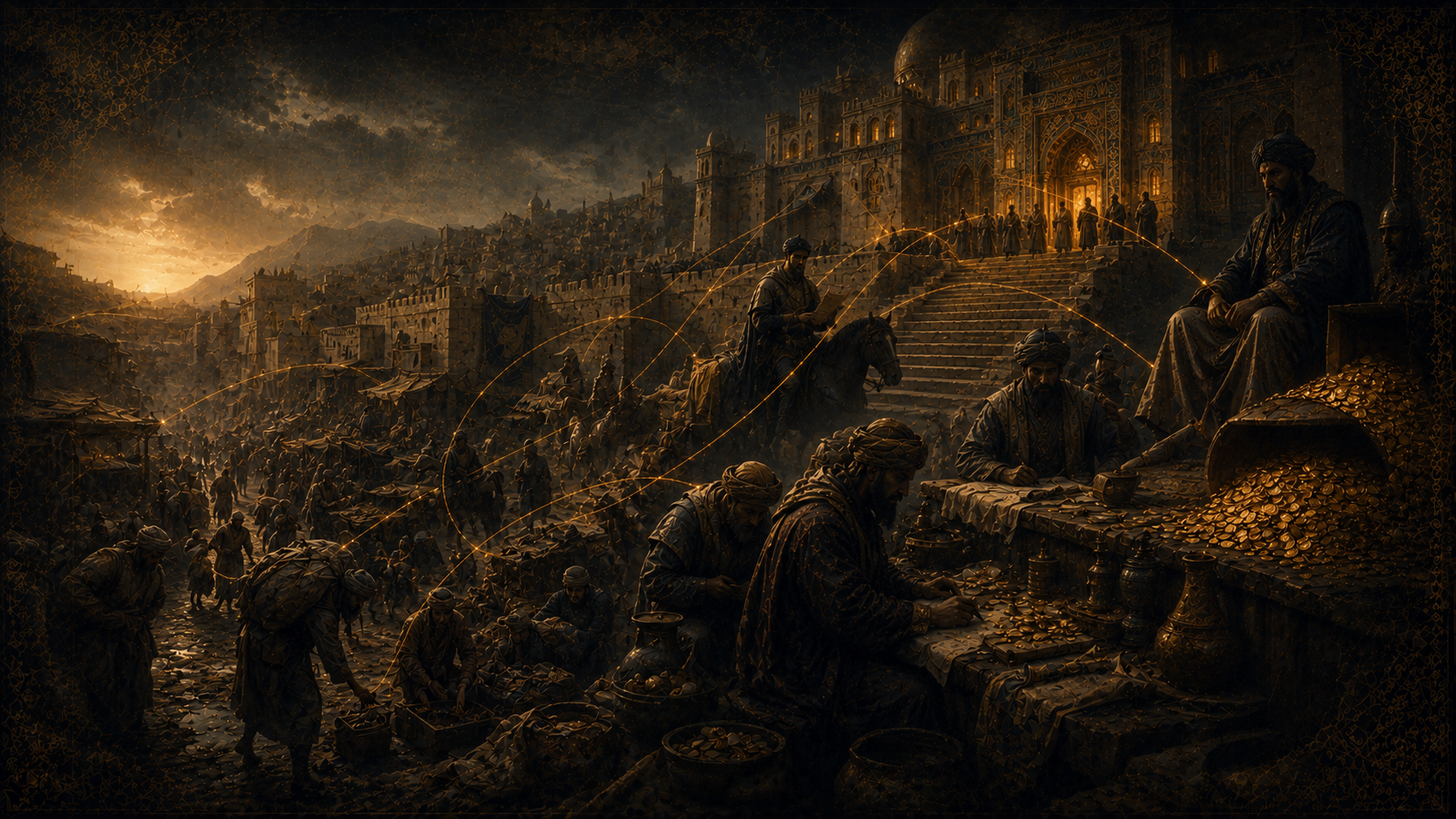
    Process replaces trust.

    Administrative layers multiply as cohesion weakens. Factions begin to replace shared purpose.

    Ibn Khaldun fiscal strain and overreach phase Phase 06 Fiscal Strain and Overreach

    Taxes rise. Revenue falls.

    The state extracts more to preserve a weakening system. Trust, production, and compliance decline together.

    Ibn Khaldun collapse and disintegration phase Phase 07 Collapse and Disintegration

    Institutions lose force.

    The forms of power remain after their inner force has faded. Succession conflict and external pressure expose the hollow centre.

    Ibn Khaldun replacement and renewal phase Phase 08 Replacement and Renewal

    A harder group emerges.

    A more cohesive outsider replaces the softened order. The cycle resets through renewed discipline and collective force.

    Ibn Khaldun observed that dynasties carry their decline inside their success. The force that wins power is slowly consumed by the comfort that power creates.

    Ibn Khaldun, Muqaddimah (1377)

    The cycle Ibn Khaldun saw in the Maghreb and beyond

    Ibn Khaldun was not building theory from a quiet distance. He lived inside the turbulence he explained. The Maghreb and al-Andalus gave him repeated examples of frontier power turning into dynastic power, then losing the discipline that produced it. Desert, mountain, coast, tribe, city, trade, and court were not background scenery. They were the operating environment of his thought.

    The Almoravids rose in the eleventh century from the Saharan and western Maghrebi frontier. Their strength came from religious reform, Berber tribal cohesion, military austerity, and movement across hard terrain. They expanded across Morocco and into al-Andalus because their social density was greater than that of many richer settled powers. Their early force was not urban luxury. It was disciplined asabiyyah turned into conquest.

    Ibn Khaldun Maghreb cycle with Almoravids and Almohads
    The Maghreb gave Ibn Khaldun living evidence of frontier power becoming dynastic rule.

    Once the Almoravids ruled cities, the mechanism shifted. Administration, taxation, court culture, urban settlement, and political compromise became unavoidable. The same movement that had been sharpened by frontier pressure became softened by the responsibilities and temptations of rule. Their decline opened space for the Almohads, another Berber reform movement with renewed ideological intensity and stronger cohesion. The replacement was not random. It followed the pattern Ibn Khaldun described: a harder group enters history where an incumbent group has lost its inner force.

    The Almohads then repeated the pattern at a larger scale. They rose through mission, discipline, and collective identity. They built imperial reach across North Africa and al-Andalus. But imperial success brought succession struggles, elite competition, city politics, and administrative weight. Force became form. Solidarity became hierarchy. The Hafsid dynasty in Ifriqiya, centered around Tunis, inherited part of this fractured world and became another case in the Maghrebi rhythm of consolidation, prestige, faction, and vulnerability.

    This matters for Darja Rihla because the Maghreb was not merely a location for Ibn Khaldun. It was his laboratory. The same structural eye can be turned toward Carthage and network power, where maritime wealth, ports, trade, and technical sophistication could not remove the deeper question of civic cohesion.

    The Mongol case shows the same mechanism on a continental scale. Mongol power began with extraordinary nomadic cohesion, discipline, mobility, and command loyalty inside a severe environment. That cohesion produced rapid conquest across Eurasia. Yet conquest forced settlement, administration, succession politics, regional division, and court formation. The original frontier engine could not remain unchanged once it became imperial machinery. The empire fragmented into successor states because the force that conquered space could not indefinitely govern the weight of what it had conquered.

    Almoravid and Almohad reform systems generated new asabiyyah

    The Almoravids and Almohads were not simply dynasties. They were reform systems. The Almoravid movement gathered power through Abdallah ibn Yasin, Maliki discipline, ribat culture, and the moral severity of the Saharan frontier. It fused tribal solidarity with legal-religious reform and turned scattered energy into political direction.

    The Almohads came later through a different ideological architecture. Ibn Tumart’s doctrine of tawhid created a sharper universal mission, a disciplined movement, and a reformist language capable of challenging an incumbent order that had begun to look compromised. In Khaldunian terms, ideology acted as a cohesion multiplier. It did not replace asabiyyah. It intensified it.

    This pattern survives in modern systems. Startups, activist networks, open-source ecosystems, insurgent political movements, and security teams all require more than competence. They need a shared story that converts effort into meaning. Without that story, coordination becomes expensive. With it, people absorb cost before bureaucracy has to compel them.

    Almohad architecture turned ideology into stone

    Architecture is not only aesthetic. It is social energy given durable form. The Kutubiyya Mosque in Marrakesh, the Giralda in Seville, the Hassan Tower in Rabat, and the geometric language of Almohad monumental design show how doctrine, power, labor, and collective identity become infrastructure.

    In this sense, architecture is frozen asabiyyah. A monument survives after the founding intensity has faded. It stores discipline, technical skill, symbolic order, and institutional ambition in material form. But the survival of the structure does not guarantee the survival of the will that built it.

    This is one of the deepest infrastructure lessons in Ibn Khaldun. Roads, ports, mosques, walls, software platforms, security architectures, and states can outlive the social energy that created them. Late systems inherit the artifact but not always the discipline. They occupy the monument while forgetting the furnace.

    Ibn Khaldun’s core claim

    Ibn Khaldun’s core claim is that civilizations rise through shared discipline, institutionalize that discipline into power, then decay when comfort dissolves the cohesion that made power possible.

    Labor, infrastructure, and the maintenance trap

    Ibn Khaldun treated labor as the source of value because human effort transforms raw material into social wealth. Land alone does not create civilization. Resources alone do not produce institutions. Wealth is crystallized effort, and capital is stored labor organized across time.

    Early systems are dominated by kinetic labor. They build, move, conquer, design, invent, and expand. Their energy is outward. Their structures are still close to purpose. People remember why the work matters because the work is connected to survival, mission, or founding pressure.

    Late systems are dominated by static labor. They maintain layers. They preserve procedures. They service debt, repair complexity, defend reputation, manage inherited architecture, and keep old machinery operational. The system may still consume enormous effort, but more of that effort goes into preserving the system itself.

    This is the maintenance trap. Empires experience it as administrative burden and infrastructure exhaustion. Companies experience it as process overload. Software teams experience it as technical debt. Security teams experience it as compliance theater and alert fatigue. Late systems spend more energy preventing collapse than generating vitality.

    Ibn Khaldun on taxation: fiscal entropy and the extraction spiral

    Ibn Khaldun did not separate political cohesion from economic production. For him, the fiscal health of a dynasty was a visible symptom of its internal condition. Early dynasties collect high revenue from low tax rates because the population still believes the ruling order is connected to collective purpose. Production expands, trade moves, compliance remains bearable, and the state receives more because it demands less.

    Ibn Khaldun taxation theory and dynastic decline
    Ibn Khaldun saw taxation as a symptom of dynastic strength or decay.

    Late dynasties invert the mechanism. As court luxury, bureaucracy, military expense, and elite consumption rise, rulers increase tax burdens to preserve a system that is losing its living force. The state demands more from a society that trusts it less. Production weakens. Evasion rises. Compliance becomes reluctant. Revenue falls precisely when extraction becomes more aggressive.

    The reason is structural: asabiyyah governs both the willingness to produce and the willingness to comply. A cohesive society does not merely fight better. It works, trades, pays, builds, and cooperates with less friction. Ibn Khaldun also treated labor as the source of value, because human effort transforms raw material into social wealth. Division of labor expands when trust expands. As cohesion weakens, economic complexity turns from shared productivity into administrative drag.

    This is why his fiscal theory belongs beside modern systems thinking. Arthur Laffer named the Laffer Curve in 1974, but Ibn Khaldun described the same revenue dynamic in 1377. Modern institutions show the same pattern when bureaucratic overhead and compliance debt grow faster than usefulness. The system extracts more effort while producing less vitality.

    The same death spiral appears in digital platforms. A young platform grows by creating value, reducing friction, and giving participants room to build. A late platform often shifts toward extraction: more fees, more ads, more lock-in, more algorithmic control, more monetization of trust. The productive base weakens because the platform begins taxing the ecosystem that made it powerful.

    Historical distance

    397 years earlier than the Laffer Curve, Ibn Khaldun identified the same mechanism.

    The Khaldunian fiscal observation

    At the beginning of a dynasty, taxation is light and total revenue is high; toward the end of a dynasty, taxation becomes heavy and total revenue declines because production, trust, and compliance have been damaged.

    Ibn Khaldun’s three-generation arc becomes a predictive model

    Ibn Khaldun treated decline as a generational tendency, not a mechanical clock. The pattern matters because memory weakens when comfort becomes normal. In Darja Rihla terms, the three generations form a state machine: builders create the system, managers preserve it, consumers inherit it without carrying its original discipline.

    Ibn Khaldun three generation arc of dynastic decline
    The builders remember hardship, the inheritors manage structure, and the consumers inherit comfort.
    Generation 01 · Builders Frontier memory intact

    The first generation built under pressure. Leadership is direct, sacrifice is recent, and authority is tied to danger survived together. Members remember hunger, risk, movement, and dependence. Duty is not yet ceremonial because the cost of failure is still vivid.

    Generation 02 · Managers Structure holding, memory fading

    The second generation manages what was built. It can still be competent because it was raised near the founders and often understands the language of discipline. But it is already removed from the original conditions. Bureaucracy begins to substitute for direct loyalty.

    Generation 03 · Consumers Comfort as the only reality

    The third generation knows the benefits without knowing the furnace that produced them. Hardship becomes a story, not an operating memory. The institution begins to exist for its heirs rather than through them. Status replaces service, and power becomes inheritance instead of responsibility.

    The Mughal Empire gives the arc another form. Babur entered North India as a frontier conqueror with military discipline and outsider force. Akbar consolidated that inheritance into imperial administration, legitimacy, and scale. After Aurangzeb, the empire entered fragmentation as succession conflict, regional autonomy, fiscal pressure, and elite strain exposed the weakening centre.

    Software architecture through Ibn Khaldun

    A codebase also moves through a Khaldunian lifecycle. It begins as a frontier system: a small team, high trust, low process, direct ownership, and a simple architecture shaped by urgency. The early code may not be perfect, but it is alive. The people building it understand the whole system because the system is still close to the mission.

    Then success creates scale. More users arrive. More features appear. More teams touch the same surface. The architecture must formalize. Documentation, interfaces, permissions, release processes, infrastructure, security controls, and observability become necessary. This is the consolidation phase of software.

    Decay begins when structure separates from purpose. Teams inherit services they did not design. Nobody fully owns the old decisions. Complexity becomes political. Technical debt becomes institutional debt. Meetings replace shared understanding. Roadmaps preserve the machine instead of renewing it. The codebase still runs, but its asabiyyah has weakened.

    Eventually a leaner system appears: a rewrite, a competitor, an open-source alternative, a simpler protocol, or a new architecture built by a smaller group with higher trust and lower overhead. The old system is not defeated only by code. It is defeated by a group with fresher cohesion.

    Cybersecurity begins as institutional cohesion

    Cybersecurity makes the Khaldunian pattern visible because technical controls only work when social systems maintain them. A fragmented organization with weak ownership is easier to manipulate than one with living discipline. Tools matter, but tools are maintained by people. Policies matter, but policies must survive contact with incentives, fatigue, hierarchy, and confusion.

    A security program without asabiyyah becomes a shell. Dashboards glow. Controls are documented. Training exists. Compliance reports are filed. But responsibility diffuses across departments. Nobody fully owns the risk. The attacker does not need to defeat the entire system. The attacker only needs to find the seam where cohesion has failed.

    This is why the real attack surface is institutional fragmentation. Phishing, insider threat, social engineering, misconfiguration, shadow IT, and delayed patching are not only technical problems. They are signs of coordination decay. Darja Rihla treats cybersecurity and technology as part of a wider civilizational problem because systems fail first as human systems.

    Digital Bedouins and the future of power

    The modern frontier is not only desert, steppe, mountain, or sea. It is also digital. Decentralized teams, encrypted communities, open-source ecosystems, blockchain networks, remote-first founders, and protocol movements often behave like frontier groups inside the old institutional landscape.

    They have low overhead, high mission density, rapid coordination, outsider contempt for inherited excuses, and a willingness to absorb cost before institutions understand what is happening. Their advantage is not simply technology. It is cohesion under pressure.

    But Ibn Khaldun prevents romanticism. Digital Bedouins can also become settled powers. The open network becomes a foundation. The foundation becomes a bureaucracy. The protocol becomes a governance war. The startup becomes a compliance machine. The insurgency becomes the incumbent. The cycle does not disappear online. It accelerates.

    Empires need stories because narrative lowers coercion costs

    Narrative legitimacy is the psychological layer of asabiyyah. A system with a believable story does not need to force every action through command. People comply because the system still feels connected to meaning, order, mission, justice, origin, reform, survival, or destiny.

    When the story is alive, legitimacy lowers friction. It reduces enforcement costs. It makes sacrifice intelligible. It explains why people should endure hardship for something larger than themselves. When the story breaks, the system must replace belief with management, propaganda, surveillance, incentives, or coercion.

    This is why late empires often become louder as they become weaker. They produce more ceremony because natural loyalty has declined. They repeat the story because fewer people live inside it. The myth becomes a performance after it stops being a binding force.

    The mechanism survives because institutions still depend on cohesion

    The value of Ibn Khaldun is not that every modern organization is a medieval dynasty. The value is that the mechanism still appears wherever human groups build systems. A political party begins as a movement with shared risk, direct loyalty, and ideological clarity. If it succeeds, it becomes an institution. Then it must manage offices, donors, procedures, factions, public language, and reputation. The mission does not disappear immediately. It becomes one layer among many.

    Startup culture often imitates the frontier phase. Small teams work under pressure, absorb personal cost, and move quickly because trust is dense. They do not need heavy process because the group understands the mission directly. When scale arrives, management replaces intimacy. Process replaces trust. The structural question becomes whether the organization can preserve enough asabiyyah while growing, or whether growth itself begins the entropy.

    Systems thinking gives this pattern a modern vocabulary. Ibn Khaldun gives it historical depth. Collapse is rarely one clean event. It is usually a process of weakened feedback loops, misaligned incentives, declining trust, detached leadership, and institutions that continue to perform legitimacy after they have lost living force. That is why this essay belongs beside the wider Darja Rihla work on systems thinking in a complex world.

    Knowledge check · Ibn Khaldun and the Cycle

    1. What does Ibn Khaldun mean by asabiyyah?

    2. According to Ibn Khaldun, what weakens asabiyyah over time?

    3. Which dynasties did Ibn Khaldun use as direct evidence for his cycle in North Africa?

    4. What is the best modern translation of asabiyyah in systems terms?

    5. What does Ibn Khaldun’s model predict follows civilizational collapse?

    Where is your system in the cycle?

    Apply these signals to any organization, institution, political movement, software system, security team, platform, or digital community you are part of. Ibn Khaldun did not prescribe easy remedies. He described structure. Recognizing the stage is the beginning of any serious response.

    Ibn Khaldun system diagnostic for institutional decline
    The Khaldunian cycle can be used to diagnose institutions, movements, software systems, and organizations.
    Signal 01 · Mission or memory?

    Do members still operate from a shared mission they would sacrifice for, or are they preserving an inherited structure because it already exists? Frontier groups run on mission because survival and purpose remain connected. Late-cycle institutions run on memory, ritual, and the prestige of earlier sacrifice.

    Signal 02 · Leadership distance

    Is leadership close to operational reality, or insulated by layers of management, language, ceremony, and reporting? Ibn Khaldun observed that the moment rulers stop sharing the pressures of the governed, cohesion begins its final erosion. Distance makes failure easier to rationalize.

    Signal 03 · Bureaucratic weight

    Is administrative complexity growing faster than the value it produces? Late-cycle institutions generate process to fill the space left by declining trust. When documentation replaces ownership, the system may still look controlled while its real responsiveness is collapsing.

    Signal 04 · Maintenance overload

    How much energy goes into creating new value compared with preserving old structure? When maintenance consumes imagination, the system has entered the preservation trap. This appears as technical debt, compliance fatigue, infrastructure exhaustion, and endless internal coordination.

    Signal 05 · Extraction pressure

    Is the system creating value, or monetizing inherited trust? Late systems often raise taxes, fees, friction, reporting burdens, ads, or internal demands while producing less vitality. Extraction rises when legitimacy falls.

    Signal 06 · Outsider energy

    Are smaller, newer, less comfortable groups outperforming the incumbent on the dimensions the incumbent has stopped caring about? A frontier group does not announce itself as destiny. It appears first as discipline, speed, hunger, and contempt for inherited excuses.

    Signal 07 · Narrative decay

    Does the system still have a story people believe, or does it rely on branding, ceremony, compliance, and repetition? When natural loyalty fades, propaganda expands. Narrative failure increases coercion costs.

    Signal 08 · The luxury test

    What does the group optimize for: survival and mission, or comfort and status? Ibn Khaldun did not moralize about luxury. He observed that it reliably reorganizes incentives away from collective durability and toward private insulation.

    Reading the signals

    Signals 1, 2, and 6 pointing toward shared mission, close leadership, and outsider hunger suggest frontier or consolidation energy. Signals 3, 4, 5, 7, and 8 dominating suggest descent. The cycle does not wait for recognition.

    Why this matters

    Power does not last because it appears permanent. It lasts when the people inside the system still believe, sacrifice, coordinate, maintain, defend, and renew. Ibn Khaldun gives Darja Rihla a civilizational laboratory: history becomes structure, structure becomes diagnosis, and diagnosis becomes strategy.

    From history to systems intelligence

    The purpose of this article is not to leave Ibn Khaldun inside the fourteenth century. It is to carry his method into every system that rises, coordinates, hardens, extracts, fragments, and gets replaced. Empires, startups, codebases, security programs, platforms, bureaucracies, and digital communities all face the same structural question: can they preserve living cohesion while scaling complexity?

    Darja Rihla treats history as a diagnostic archive. Carthage becomes a study in network power and elite strain. The Almoravids become a study in frontier cohesion. Almohad architecture becomes a study in frozen asabiyyah. Taxation becomes a theory of extraction spirals. Cybersecurity becomes an institutional cohesion problem. Software architecture becomes a map of technical debt and social decay.

    This is the wider frame: history is not only memory. It is a laboratory for survival, coordination, infrastructure, and institutional resilience.

    Ibn Khaldun: common questions

    Asabiyyah is Ibn Khaldun’s concept of group solidarity, collective discipline, and shared social force. It is not simply solidarity but the invisible bond that makes coordinated action, institutional building, and collective survival possible. In systems terms, it is social anti-entropy: the force that keeps complexity from falling apart.

    Ibn Khaldun was one of the first thinkers to treat history as a system with structural causes rather than a sequence of events driven by rulers and battles. His method anticipated sociology, institutional economics, systems theory, and civilizational analysis by several centuries.

    Groups rise through discipline and shared purpose, build institutions during their peak, then decline as luxury, bureaucracy, extraction, and inherited comfort replace the solidarity that built them. When cohesion collapses, so does the capacity to maintain and defend what was built.

    Cybersecurity depends on institutional discipline, trust, and shared ownership of security responsibilities. An organization with weak internal cohesion is easier to manipulate through phishing, social engineering, insider threat, and misconfiguration than a technically advanced but fragmented one.

    The Muqaddimah is the introduction to Ibn Khaldun’s larger universal history, the Kitab al-Ibar. Written in 1377 during a period of seclusion in Qal’at Ibn Salama in western Algeria, it stands alone as one of the most rigorous pre-modern attempts to treat civilization as something governed by observable structural laws.

    Ibn Khaldun described three generations as the typical arc: roughly 100 to 120 years. This is a structural tendency, not a fixed law. Some dynasties collapse faster. Others extend the plateau through external pressure, reform, or renewed ideological intensity.

    Continue through the civilizational laboratory

    Ibn Khaldun connects the civilizational, the institutional, and the structural. Darja Rihla builds on the same logic across culture, cybersecurity, infrastructure, software systems, and strategic diagnosis.

  • The Sea Beggars and Dutch Maritime Power

    The Sea Beggars and Dutch Maritime Power

    Sea Beggars as a Maritime Power System

    The Sea Beggars were not merely pirates or rebels. They were an adaptive maritime network that transformed decentralized naval violence into political leverage during the Dutch Revolt. Their rise shows how maritime infrastructure, ideology, commerce, and irregular warfare shaped Dutch maritime power.

    Visible Story Pirates and Rebels

    A simplified national memory of rough Protestant fighters resisting Spanish power.

    Hidden System Maritime Network

    A distributed structure of ships, ports, intelligence, finance, religious support, and tactical mobility.

    Strategic Effect Political Leverage

    Local maritime action could trigger wider rebellion by changing control of ports and supply lines.

    Civilization Pattern Infrastructure Becomes Power

    Informal networks often reveal the future shape of formal institutions.

    The Sea Beggars Emerged from Maritime Fracture

    The Sea Beggars, known in Dutch as the Watergeuzen, are often remembered through simplified national mythology: rough Protestant rebels fighting Spanish power during the Dutch Revolt. That image is powerful, but incomplete. It reduces a complex maritime system into a heroic symbol.

    They operated between piracy, privateering, commerce, intelligence gathering, religious resistance, and political warfare. They were not outside the system. They emerged from the fractures inside European maritime order itself.

    Core insight: The Sea Beggars succeeded because they combined mobility, maritime knowledge, political ambiguity, and networked operations into a flexible anti-imperial system.

    Four Forces Made the Sea Beggars Dangerous

    Maritime Disruption Stack

    Geography

    Shallow coastal waters and fragmented shorelines favored local navigators over large imperial fleets.

    Mobility

    Small vessels moved quickly between ports, estuaries, river mouths, and trade corridors.

    Ambiguity

    Privateering licenses, exile politics, and fragmented authority created legal gray zones.

    Networks

    Merchants, sympathizers, financiers, sailors, and political factions formed a hidden support layer.

    The Dutch Revolt Created Maritime Space for Irregular Warfare

    In the sixteenth century, the Habsburg Empire attempted to centralize political and religious authority across the Low Countries. Tax pressure, religious repression, regional resistance, and political fragmentation created escalating instability.

    On land, Spanish military power remained formidable. At sea, the situation was more fluid. Coastal cities, river systems, estuaries, fishing routes, merchant fleets, and shallow-water navigation created operational environments that conventional imperial structures struggled to fully control.

    Sea Beggars maritime network map in the Low Countries
    Trade routes, estuaries, and coastal infrastructure helped transform maritime insurgency into political leverage.

    Maritime power rarely begins as a clean state structure. It often emerges from semi-legal networks operating in contested zones.

    From Exile Network to Political Shockwave

    Stage 01 Imperial Pressure

    Spanish authority intensifies taxation, religious enforcement, and political control.

    System Meaning Crisis Creates Openings

    Centralization creates resistance, displacement, and opportunities for irregular actors.

    Stage 02 Exile and Sea Mobility

    Displaced sailors, dissidents, and privateers form mobile maritime communities.

    System Meaning Loss Becomes Network

    People pushed out of fixed institutions build power through movement and maritime access.

    Stage 03 Privateering Logic

    Legal ambiguity lets maritime actors operate between rebellion, commerce, and violence.

    System Meaning Ambiguity Becomes Force

    When law is fragmented, flexible actors can move faster than formal institutions.

    Stage 04 Brielle 1572

    The capture of Brielle turns maritime action into a political signal.

    System Meaning Local Action Cascades

    A port seizure changes confidence, supply, legitimacy, and rebellion dynamics.

    Why this matters

    The Sea Beggars show how states often inherit infrastructure and tactics first developed by irregular actors operating in unstable systems.

    How Maritime Disruption Became Political Leverage

    Their advantage did not come from overwhelming force. It came from system fit. They operated where imperial control was weakest: shallow waters, coastal routes, contested ports, semi-legal violence, and communities that already depended on maritime exchange.

    Sea Beggars fleet near Brielle during the Dutch Revolt
    The capture of Brielle in 1572 demonstrated how maritime disruption could trigger wider political rebellion across the Low Countries.

    Political Cascade

    Port seized

    A local maritime strike changes who controls access, shelter, and logistics.

    Signal spreads

    Merchants, towns, rebels, nobles, and imperial officials reassess Spanish control.

    Supply shifts

    Ports and waterways alter the flow of goods, movement, and military pressure.

    Authority weakens

    The image of imperial inevitability breaks, making rebellion more thinkable.

    Systems definition: The Sea Beggars operated as a distributed maritime disruption network capable of converting local tactical victories into broader political destabilization.

    National Myth Simplified a More Complex Reality

    Later Dutch national memory often transformed the Sea Beggars into heroic freedom fighters. Elements of that narrative are true, but the reality was more ambiguous.

    Maritime violence, opportunism, smuggling, private profit, religious identity, and political rebellion were deeply intertwined. The same actors could function as patriots, pirates, merchants, diplomats, and raiders depending on context.

    Sea Beggars privateering and maritime resistance network
    The Sea Beggars operated between rebellion, commerce, privateering, and political warfare.
    Empire says Pirates

    Threatening actors outside imperial legitimacy.

    Allies say Privateers

    Useful semi-legal force against a shared enemy.

    Nation says Heroes

    Founding figures in a story of liberation.

    Systems view Network actors

    Mobile operators exploiting infrastructure gaps.

    Why Maritime Rebellion Attracted Followers

    Maritime systems create a different psychological environment from land empires. Sailors move between jurisdictions, cultures, languages, and legal systems. Identity becomes more fluid. Loyalty becomes more transactional.

    Motivation Survival

    Displaced people needed income, protection, and new routes into security.

    Motivation Resistance

    Religious and political pressure made anti-imperial alignment meaningful.

    Motivation Mobility

    The sea offered escape from fixed social order and local repression.

    Motivation Reward

    Raiding, trade, privateering, and patronage created material incentives.

    The Hidden Infrastructure Behind Maritime Power

    Ships alone do not create maritime dominance. Ports, financing systems, intelligence flows, repair capacity, cartography, merchant relationships, and political protection all matter.

    Spanish naval forces facing Sea Beggars tactics in the North Sea
    Large imperial fleets struggled against smaller decentralized naval actors operating in shallow coastal waters.

    Hidden Support Layer

    Ports

    Harbors created shelter, logistics, intelligence, repair, and escape options.

    Merchants

    Commercial actors helped redirect trade, finance risk, and support maritime pressure.

    Coastal pilots

    Local navigational knowledge turned shallow waters into defensive advantage.

    Religious networks

    Shared identity created trust, shelter, messages, and legitimacy across distance.

    Hidden system: Maritime insurgency became a training ground for future commercial and naval infrastructure.

    Who Benefited from the Sea Beggars System

    Political Layer Rebel Leaders

    Maritime disruption stretched Spanish attention and gave rebellion a pressure tool.

    Urban Layer Port Cities

    Coastal communities gained bargaining power when imperial control weakened.

    Economic Layer Merchants

    Some merchants used instability to redirect trade and align with emerging power.

    Religious Layer Dissidents

    Protestant resistance found protection and movement through maritime routes.

    From Maritime Raiders to Modern Network Actors

    Today, power increasingly flows through networks rather than rigid hierarchies. Small distributed actors can exploit vulnerabilities inside larger systems. Cyber groups, digital insurgencies, decentralized information operations, and infrastructure disruptions reflect similar dynamics.

    Sixteenth Century Maritime Chokepoints

    Ports, estuaries, ships, pilots, legal ambiguity, and trade routes shaped leverage.

    Modern System Digital Chokepoints

    Identity systems, session cookies, admin panels, vendors, and cloud services shape leverage.

    Strategic relevance

    Understanding the Sea Beggars helps explain how adaptive networks challenge centralized systems across both maritime and digital environments.

    The Sea Beggars Were a Transitional Power Layer

    The Sea Beggars existed at the edge of empire, legality, commerce, and rebellion. They were neither fully state actors nor simple criminals. They represented a transitional layer between fragmented maritime violence and organized Dutch naval-commercial power.

    Civilizational Pattern

    1. Crisis weakens authority

    Centralized systems lose control at the edges.

    2. Mobile actors exploit gaps

    Small groups move faster than formal institutions.

    3. Informal networks mature

    Survival structures become operational infrastructure.

    4. States institutionalize methods

    What begins as irregular practice can become official power.

    Theme Hub Culture & Identity

    The broader civilization and identity cluster.

    Sibling Article Jan Janszoon / Murad Reis

    The mobile maritime operator between Europe and North Africa.

    Sibling Article Salé and the Dutch Maritime World

    How corsair systems and commerce fused into transnational maritime order.

    Pillar Link Carthage Network Power

    The deeper lineage of Mediterranean seapower systems.

    Systems Systems Thinking in a Complex World

    Why adaptive systems outperform rigid linear structures.

    Future Routes

    Systems & Strategy The Dutch Republic as a Network State

    Suggested future URL: /dutch-republic-network-state/

    Systems & Strategy Privateering and the Birth of Corporate Warfare

    Suggested future URL: /privateering-corporate-warfare/

    Culture & Identity The North Sea as a Strategic System

    Suggested future URL: /north-sea-strategic-system/

    Culture & Identity How Maritime Networks Created Early Globalization

    Suggested future URL: /maritime-networks-early-globalization/

    Cybersecurity & Tech Cybersecurity and Naval Strategy

    Suggested future URL: /cybersecurity-and-naval-strategy/

    Sources

  • Why Modern Society Runs on Invisible Trust Systems

    Why Modern Society Runs on Invisible Trust Systems

    Civilization Infrastructure

    Invisible Trust Systems

    The hidden architecture behind identity, cybersecurity, institutions, memory, verification, infrastructure, and civilization itself.

    Select a system layer to expose the infrastructure hidden beneath ordinary life.
    Observation

    Modern Society Runs on Systems Most People Never See

    A login screen. A passport scan. A browser lock. A QR code. A traffic light. A diploma. A cloud account. These objects feel ordinary because the systems behind them work silently.

    Most people do not personally inspect the infrastructure supporting their daily lives. They trust the airport scanner to recognize identity. They trust the bank application to preserve balances. They trust the browser lock to represent a secure connection. They trust legal records to survive beyond individual memory.

    This is the foundation of invisible trust systems: civilization operates because people continue behaving as if the hidden order still functions.

    Key Observation

    Modern civilization is not built on universal understanding. It is built on scalable delegated trust.

    This connects directly to What Is a Complex System?. Invisible trust systems are complex systems because they emerge from interaction, dependency, adaptation, memory, coordination, and recursive legitimacy.

    Structure

    The Civilization Trust Stack

    Civilization scales when trust survives distance, complexity, and time. Small communities rely on direct memory. Large civilizations require layered trust architecture.

    Layer 1 Identity

    Names, biometrics, accounts, passports, credentials, and behavioral patterns establish who a system believes a person is.

    Layer 2 Verification

    Passwords, certificates, signatures, records, and tokens transform claims into accepted facts.

    Layer 3 Institutional Memory

    Courts, archives, registries, universities, mosques, and databases preserve continuity beyond individual lifespan.

    Layer 4 Infrastructure Coordination

    Ports, telecom systems, roads, APIs, payment rails, logistics, and electrical grids move trust across distance.

    Layer 5 Narrative Legitimacy

    Symbols, interfaces, rituals, flags, brands, and public language explain why the system deserves continued belief.

    Layer 6 Cybersecurity Resilience

    Authentication, audit logs, monitoring, recovery systems, and defensive infrastructure preserve trust during attack and disruption.

    Civilization is what happens when trust survives beyond direct human visibility.

    Darja Rihla
    Modern Trust Objects

    Everyday Objects Compress Entire Institutions Into Small Symbols

    Most people do not interact with the full infrastructure. They interact with trust objects representing the infrastructure.

    Trust Object Browser Lock

    A tiny symbol representing encryption, domain verification, browser trust chains, and certificate authority legitimacy.

    Trust Object Diploma

    A compressed signal representing educational legitimacy, institutional memory, and recognized competence.

    Trust Object Traffic Light

    A coordination symbol that only functions because millions of people collectively obey the same system logic.

    Trust Object Cloud Login

    A digital identity checkpoint connected to APIs, infrastructure providers, permissions, sessions, and databases.

    Humans use symbolic trust shortcuts constantly. Interfaces, uniforms, signatures, certificates, browser locks, logos, and official portals reduce complexity into recognizable signals.

    Cybersecurity Angle

    Cybersecurity Functions as the Immune System of Digital Civilization

    Invisible trust systems inside cybersecurity infrastructure
    Authentication, sessions, tokens, permissions, and audit logs preserve digital trust continuity.

    Cybersecurity is often explained through attacks: phishing, ransomware, malware, credential theft, and data breaches. But these are symptoms.

    The deeper question is: who is allowed to be trusted inside the system?

    This is why How Cybersecurity Shapes the Modern World matters here. Cybersecurity protects the hidden digital infrastructure beneath finance, healthcare, logistics, governance, cloud systems, communication, and identity itself.

    Trust Protocol Layers

    Authentication

    The system verifies whether an identity should enter.

    Sessions

    The system decides how long trust remains active after entry.

    Tokens

    Portable trust objects carrying temporary authority between systems.

    Audit Logs

    Institutional memory for digital environments.

    This directly connects to Session vs Credential Theft. Attackers increasingly target accepted trust states instead of only passwords.

    Human behavior also matters. Human Error in Cybersecurity explains why mistakes are often system outputs shaped by workload, design pressure, fatigue, incentives, and organizational structure.

    SYSTEM SHOCK

    If certificate authorities fail, the browser lock itself becomes uncertain. The symbol of safety becomes part of the attack surface.

    The NIST Cybersecurity Framework is useful because it treats cybersecurity as governance, resilience, risk management, and continuity.

    Check your own trust layer

    Your WordPress site is also a trust system: identity, updates, plugins, backups, permissions, reputation, and continuity.

    Run a WordPress Security Check
    Institutions and Memory

    Institutions Are Long-Term Memory Machines

    Invisible trust systems in institutions preserving law, memory, identity, and civilizational continuity
    Institutions turn memory, law, records, borders, education, and legitimacy into long-term trust systems.

    Courts preserve legal continuity. Archives preserve historical continuity. Universities preserve educational continuity. Ports preserve commercial continuity. Registries preserve administrative continuity.

    Institutions allow civilization to remember beyond individual lifespan.

    This is why History of Tunisia belongs inside the same intellectual map. Civilizational continuity depends on preserved systems of law, memory, infrastructure, governance, and legitimacy.

    The institutional logic becomes even clearer in Kairouan Islamic Civilization. Scholarship, law, architecture, education, and religious legitimacy become trust infrastructure.

    The network version appears in Carthage Network Power. Maritime coordination, contracts, ports, routes, and commercial credibility form another trust architecture.

    Historical Systems

    Every Civilization Builds Trust Architecture

    Rome Roads, law, citizenship

    Rome scaled trust through administration, taxation, military organization, and legal identity.

    Carthage Maritime coordination

    Ports, contracts, logistics, and commercial memory transformed the Mediterranean into a network system.

    Kairouan Scholarship and continuity

    Religious learning, urban structure, legal scholarship, and educational legitimacy created civilizational durability.

    Dutch Republic Finance and shipping

    Commercial reputation, insurance, maritime power, and financial coordination created scalable trade trust.

    Digital Civilization Cloud, identity, cryptography

    APIs, certificates, cloud systems, payment rails, and identity infrastructure coordinate modern civilization.

    Hidden Dependency Map

    Logging Into a Bank Account Activates an Entire Civilizational Chain

    The user sees a login screen. The system activates an infrastructure corridor.

    User Identity

    The person claims recognized ownership.

    Device Trust

    The system evaluates device legitimacy and risk.

    Telecom Network

    The request moves through routing infrastructure.

    DNS

    The device resolves the destination system.

    Certificate Authority

    The connection is cryptographically validated.

    Bank Infrastructure

    The request reaches institutional systems.

    Fraud Scoring

    Behavior and risk are evaluated.

    Settlement Infrastructure

    The action connects to financial coordination systems.

    Audit Trail

    The event becomes institutional memory.

    SYSTEM SHOCK

    If DNS fails, authentication systems, payment rails, APIs, and cloud services begin failing simultaneously.

    Mechanism

    Trust Is a Feedback Loop

    Invisible trust systems feedback loop showing use dependence legitimacy and reinforced trust
    Trust becomes powerful when it loops: trust creates use, use creates dependence, and dependence reinforces legitimacy.

    Trust creates use. Use creates familiarity. Familiarity creates dependence. Dependence increases normalization. Normalization makes power invisible.

    This is the same systems logic explored in Why Systems Thinking Matters.

    Input

    Repeated interaction with infrastructure.

    Mechanism

    Reliability reduces suspicion.

    Output

    The system disappears into normality.

    Failure

    Dependence becomes vulnerability.

    Failure

    People Usually Notice Trust Systems Only When They Break

    A payment outage turns money into waiting. A corrupted archive turns memory into uncertainty. A hacked account turns identity into dispute. A broken institution turns procedure into suspicion.

    SYSTEM SHOCK

    Trust failure rarely remains isolated. Pressure spreads into law, customer service, leadership, reputation, public confidence, and narrative control.

    Cyber attacks exploit accepted trust. Institutional corruption transforms procedure into doubt. Broken records transform continuity into conflict.

    Trust Decay

    Civilizations Can Also Erode Through Slow Trust Exhaustion

    Trust does not only collapse dramatically. It can decay slowly through bureaucracy, overload, corruption, legitimacy fatigue, security exhaustion, and institutional contradiction.

    Decay Corruption

    Procedure begins serving insiders instead of continuity.

    Decay Overload

    Systems become too complex to navigate efficiently.

    Decay Legitimacy Fatigue

    People continue obeying systems they no longer emotionally trust.

    Decay Security Exhaustion

    Excessive warnings and friction reduce effective security behavior.

    Darja Rihla Corridors

    Continue Through the Hidden Architecture

    Cybersecurity and Tech How Cybersecurity Shapes the Modern World

    Enter the invisible defense layer protecting finance, communication, healthcare, logistics, cloud systems, and digital civilization itself.

    Systems Thinking Systems Thinking and Strategy

    Follow the deeper logic of emergence, hidden dependencies, recursive systems, incentives, and civilizational coordination.

    Culture and Identity History of Tunisia

    Explore how geography, institutions, ports, identity, administration, and continuity preserve civilization across centuries.

    Philosophy and Legacy Philosophy and Legacy

    Ask the deepest question beneath every trust system: what deserves continuation after power, technology, and memory shift?

    Final Thesis

    The Twenty-First Century Is a Battle Over Believable Systems

    Power is no longer only command. Power is the ability to make systems believable enough that people continue participating while they cannot inspect the machinery underneath.

    Modern civilization depends on scalable symbolic trust: certificates, institutions, interfaces, laws, identity systems, infrastructure coordination, and digital verification.

    Civilization is not only technological. It is psychological. Philosophical. Institutional. Narrative.

    Civilization survives when trust survives distance, complexity, and time.

    Darja Rihla

    Why This Matters

    The future battle is not only over weapons, resources, data, or territory. It is over believable systems. The systems people still trust enough to use.

    Frequently Asked Questions About Invisible Trust Systems

    What are invisible trust systems?

    Hidden systems allowing people to rely on identity, money, infrastructure, law, and institutions without directly inspecting them.

    Why does cybersecurity matter for trust?

    Cybersecurity protects the digital infrastructure preserving modern verification, communication, identity, and continuity systems.

    Why are institutions memory machines?

    Institutions preserve records, legitimacy, authority, and continuity beyond individual lifespan.

    Why do trust systems become invisible?

    Reliable systems fade into background normality until failure reveals dependency.

    What is a trust object?

    A visible symbol compressing larger infrastructure into a recognizable signal: passports, browser locks, diplomas, contracts, and bank cards.

    What happens when trust fails?

    Identity becomes disputed, money becomes delayed, records become uncertain, and legitimacy begins eroding.

    How does systems thinking help explain trust?

    Systems thinking reveals feedback loops, dependencies, emergence, hidden coordination, and failure propagation.

    Why does modern civilization depend on invisible systems?

    Civilization has become too complex for direct personal verification. Scalable trust infrastructure becomes necessary.

    Continue the Hidden Architecture

    Systems What Is a Complex System?

    Learn why emergence, dependency, adaptation, and feedback loops shape hidden infrastructure.

    Cybersecurity How Cyber Attacks Happen

    See how attackers exploit accepted trust, hidden permissions, sessions, and infrastructure assumptions.

    Human Systems Human Error in Cybersecurity

    Explore why organizational structure, overload, fatigue, and interface design shape security behavior.

    Infrastructure Audit WordPress Security Quick Check

    Audit your own digital trust infrastructure: updates, permissions, backups, plugins, identity, and continuity.

    Sources & Further Reading

    • National Institute of Standards and Technology. NIST Cybersecurity Framework 2.0. 2024.
    • North, D. Institutions, Institutional Change and Economic Performance. Cambridge University Press, 1990.
    • Fukuyama, F. Trust: The Social Virtues and the Creation of Prosperity. Free Press, 1995.
    • Scott, J. Seeing Like a State. Yale University Press, 1998.
  • Why Systems Thinking Matters in a Complex World

    Why Systems Thinking Matters in a Complex World

    Read the article as structure, not as isolated events

    This in-content layer is designed to enhance your existing WordPress article template, not replace it. It gives the page a sharper technical atmosphere, stronger hierarchy, and a more premium analytical rhythm while leaving your theme title, featured image, and article header intact.

    Core Lens events → structure → patterns
    Cyber Use map cascading dependencies
    Strategic Mode see second-order effects earlier
    Reader Benefit premium analysis without clutter
    Core Lens
    Systems thinking explains how hidden structures shape visible events.
    Cyber Angle
    Cyber incidents become dangerous when they move through dependencies and governance gaps.
    Reader Promise
    Clear, structured, premium analysis of complexity without empty jargon.

    Table of Contents

    Systems thinking is no longer a niche intellectual framework. In a world shaped by interconnected technologies, fragile infrastructure, geopolitical shocks, and cascading cyber risks, it has become one of the most essential ways to understand reality.

    The modern world is not built from isolated events. Economies, digital networks, societies, institutions, and individual decisions continuously influence one another through hidden structures, delayed effects, and feedback loops. What appears simple on the surface is often the visible expression of a much deeper system.

    Yet many people are still trained to think in fragments: isolated problems, simple causes, and quick solutions. This mismatch between reality and the way we think is one of the defining challenges of the twenty-first century.

    Systems thinking offers a different approach. Instead of looking at parts in isolation, it focuses on the relationships between those parts. It asks not only what is happening, but how things influence each other over time, what patterns repeat, where hidden dependencies exist, and why certain outcomes keep returning even when we think we have solved the problem.

    That is exactly why systems thinking matters: it gives us a way to understand complexity without pretending the world is simple.

    Complexity is rarely chaos. More often, complexity is structure moving faster than surface-level thinking can follow. Systems thinking helps make that structure visible.

    Systems Thinking vs Linear Thinking

    Traditional problem-solving often follows a linear model:

    Problem → Cause → Solution

    This approach works well in simple environments. If a machine stops working, you identify the faulty part and replace it. The cause is clear, the intervention is direct, and the effect is immediate.

    But many real-world problems do not behave like machines.

    Linear Model

    Simple cause, direct fix

    • single cause
    • short-term intervention
    • visible event chain
    • limited dependency awareness
    Systems Thinking

    Patterns, loops, dependencies

    • multiple interacting causes
    • feedback loops
    • delays and hidden dependencies
    • emergent outcomes

    Consider climate change, economic crises, cybersecurity threats, energy grid congestion, migration pressure, geopolitical conflict, and supply chain disruption. These issues involve multiple actors, competing incentives, feedback loops, delayed effects, and unpredictable interactions.

    A single cause rarely explains the outcome. What looks like one problem is often the result of a structure that has been developing over time.

    Linear thinking struggles in these environments because it assumes simplicity where complexity exists. It focuses on visible events rather than the structures that produce those events. That is why many solutions only treat symptoms, while the deeper dynamics remain untouched.

    Systems thinking begins with a different assumption: problems are rarely isolated. They are embedded within larger structures.

    To understand recurring problems, we must stop asking only what happened and start asking what system made this outcome likely.

    How Systems Thinking Explains Complex Systems

    A system is a collection of elements that interact with one another to produce a pattern of behavior over time. The parts matter, but the relationships between the parts matter even more.

    Examples of systems include ecosystems, financial markets, transportation networks, organizations, digital platforms, national economies, healthcare systems, and energy infrastructure.

    Even a city is a system. Infrastructure, governance, culture, technology, law, and human behavior interact continuously. Change one part of that web, and the effects can travel far beyond the original intervention.

    The key insight of systems thinking is that the behavior of the whole cannot be understood by examining its parts separately. A system is not just a sum of components. It is a pattern of relationships.

    Actors
    Relationships
    Patterns
    Outcomes

    Systems thinking helps us see that relationships generate patterns, and patterns generate outcomes.

    Systems thinking shows that small changes in one area can produce large and unexpected consequences elsewhere. In complex systems, outcomes are shaped not only by what exists, but by how everything connects.

    That idea matters across nearly every major domain of modern life. It matters in economics, where confidence and policy interact. It matters in technology, where software, users, incentives, and law collide. It matters in history, where institutions outlive leaders. And it matters in culture, where identities are not static facts but evolving social systems.

    If you want to build better institutions, understand social change, or navigate technological disruption, you need to see systems rather than fragments.

    Systems Thinking, Feedback Loops and Emergence

    One of the core concepts in systems thinking is the feedback loop.

    Feedback loops occur when the output of a system influences its own future behavior. In other words, the consequences of an action do not disappear. They feed back into the system and shape what happens next.

    Reinforcing Loop

    Systems thinking and amplification

    Reinforcing loops amplify change. Innovation attracts investment, which accelerates innovation, which attracts even more investment.

    Balancing Loop

    Systems thinking and stability

    Balancing loops stabilize systems. Supply and demand adjustments help absorb excess movement and restore equilibrium.

    These loops create patterns that are often difficult to predict when we focus only on individual events. They are one reason complex systems behave differently from simple mechanical systems.

    This is where systems thinking becomes powerful: it teaches us to look for loops, recurring patterns, and system-wide effects rather than one-off explanations.

    Another key concept is emergence. Emergent behavior arises when interactions between components create outcomes that were not explicitly designed or centrally planned.

    Traffic jams appear without a central controller. Financial bubbles emerge from collective behavior. Social media outrage spreads through network effects. Institutional cultures form without a single author. Market panic can grow from many rational local decisions.

    No single actor controls these outcomes, yet they shape entire societies. This is one of the most important lessons of systems thinking: the world is often governed by interaction effects rather than direct command.

    Why Systems Thinking Matters for Cybersecurity and Infrastructure

    This is where systems thinking becomes operational. Systems thinking is not just abstract theory. It becomes real in cyber risk, infrastructure fragility, identity exposure, and cascading failure across modern institutions.

    One reason systems thinking matters so much today is that modern risk rarely emerges from a single isolated failure. In critical infrastructure, cybersecurity, finance, and public governance, failures are often cascading rather than local.

    In cybersecurity, an incident is rarely just a technical problem. A phishing email might seem small at first, but its real consequences depend on identity management, employee awareness, access rights, network segmentation, vendor exposure, backup resilience, incident response maturity, and leadership decisions under pressure.

    That means a cyberattack is not only about malicious code. It is about the interaction between technology, process, governance, and human behavior. The system determines the severity of the breach.

    Phishing
    Identity Exposure
    Privilege Expansion
    Operational Impact

    Systems thinking shows that cyber incidents move through dependencies. They are not isolated technical moments.

    In cybersecurity, systems thinking is essential because incidents spread through dependencies, permissions, human behavior, governance weaknesses, and technical architecture at the same time.

    The same applies to infrastructure. Energy systems are no longer simple industrial machines operating in isolation. They are embedded in regulatory systems, investment cycles, climate policy, geopolitical dependence, data systems, labor capacity, public trust, and digital control environments.

    Take energy grid congestion as an example. It is not caused by one bad decision. It emerges from interacting pressures: electrification, renewable integration, permit delays, physical grid limitations, industrial demand, spatial planning, regulatory frameworks, and long infrastructure lead times. Looking for one single cause misses the real system.

    That is why systems thinking is becoming a strategic necessity for risk management. It helps organizations move beyond checkbox compliance and start understanding how vulnerabilities propagate through interconnected structures.

    For cybersecurity professionals, policymakers, and infrastructure operators, this shift matters. It means asking not only, “Where is the fault?” but also, “What dependencies made this failure dangerous?”

    For more on security, governance, and infrastructure strategy, see our broader work on Cybersecurity & Technology.

    Systems Thinking and Global Interconnection

    Supply chains, financial markets, communication platforms, and digital infrastructure now operate on a global scale. Events in one region can influence outcomes thousands of kilometers away.

    A disruption in semiconductor production can affect the automotive industry worldwide. A conflict near a shipping corridor can reshape prices and delivery schedules far beyond the immediate region. A software vulnerability in one vendor can cascade across thousands of dependent organizations.

    Understanding these relationships requires more than event-based analysis. It requires a systemic perspective capable of seeing dependencies, delays, and second-order effects.

    Systems Thinking and Technological Acceleration

    Artificial intelligence, automation, cloud infrastructure, and digital platforms are transforming industries at extraordinary speed. But technological systems do not operate in isolation. They interact with legal systems, labor markets, public institutions, financial incentives, and cultural norms.

    Decisions made in one domain often produce consequences in another. A new AI deployment may affect productivity, privacy, regulatory risk, and social trust all at once. Without systems thinking, it becomes difficult to anticipate these interactions before they become problems.

    Systems Thinking and Policy Consequences

    Governments increasingly face challenges that cannot be solved with simple interventions. Energy transitions, migration, housing shortages, climate adaptation, public health, and digital sovereignty all involve interacting systems.

    Policies designed without systemic awareness often create unintended consequences. A rule that solves one local issue may produce friction elsewhere. A short-term political fix may worsen a long-term structural problem. Systems thinking does not eliminate trade-offs, but it helps make them visible before they become crises.

    The Strategic Advantage of Systems Thinking

    For individuals, organizations, and institutions, systems thinking provides a major strategic advantage. It encourages long-term thinking, pattern recognition, anticipation of indirect effects, awareness of hidden dependencies, smarter prioritization, and more resilient intervention design.

    Instead of reacting only to visible events, systems thinkers analyze the structures that produce those events. This shift, from events to structures, is transformative.

    When you understand the structure of a system, you gain insight into where meaningful change can occur. These leverage points are often small interventions that produce disproportionately large outcomes because they affect the logic of the system itself.

    The value of systems thinking lies in helping decision-makers move from reactive judgment to structural understanding.

    The deepest advantage of systems thinking is not that it predicts everything. It is that it helps us stop being surprised by patterns we should have recognized earlier.

    Systems Thinking in Practice

    Applying systems thinking does not require advanced mathematics or complex software. It begins with a change in perspective and a better set of questions.

    At its core, systems thinking is a practical discipline: it changes the questions we ask before we try to force solutions onto complex environments.

    Can You Spot the System?

    1. What are the visible events?
    2. What hidden structure keeps producing them?
    3. Who are the actors in this system?
    4. Where do delays make the problem harder to see?
    5. What incentives reinforce the current outcome?
    6. Which small intervention could change the pattern?

    This is how systems thinking starts in practice: not with abstraction for its own sake, but with learning to see the architecture beneath recurring outcomes.

    Even a simple system map can reveal insights that linear analysis misses. Over time, this approach develops a deeper understanding of how complex environments behave.

    If you are leading a team, studying policy, analyzing infrastructure, researching history, or thinking seriously about cybersecurity, this perspective becomes increasingly valuable. The world rewards people who can see relationships others miss.

    Why Systems Thinking Matters in a Complex World

    The challenges of the twenty-first century are not simply larger versions of older problems. They are structurally different.

    They involve networks rather than simple hierarchies. They evolve faster than traditional institutions. They produce effects that spread across borders, sectors, and disciplines. They are shaped by interactions rather than isolated causes.

    To navigate such a world, we need tools that match its complexity. Systems thinking is one of those tools.

    It allows us to move beyond fragmented perspectives and see the patterns that shape our collective future. It helps us understand why short-term fixes often fail, why hidden dependencies matter, and why resilience must be designed at the level of structure rather than image.

    Understanding systems does not make the world simple. But it makes complexity more intelligible, and that is the first step toward acting wisely within it.

    For a foundational introduction to systems thinking, Donella Meadows’ work remains essential, especially Thinking in Systems. For applied cybersecurity guidance in complex environments, resources from NIST and ENISA are also highly valuable.

    Conclusion

    The goal of systems thinking is not to simplify reality. It is to understand how complexity actually works.

    In a world where technology, economies, infrastructure, and societies are increasingly interconnected, the ability to think in systems may become one of the most valuable skills of this century.

    That is not because systems thinking gives us total control. It does not. But it gives us something more realistic and more powerful: a better map of the forces we are moving through.

    And in a complex world, a better map is often the difference between reacting blindly and acting with intelligence.

    If you are building Darja Rihla from the beginning, this article is one of the foundations. It is not only about analysis. It is about learning to see the world as it really behaves.

    You can also explore related work on Culture & Identity and the wider logic of structure, history, and modern systems across the platform.

    Extend the Darja Rihla systems layer

    Darja Rihla · Systems Thinking · Cybersecurity · Infrastructure · Hidden Structure
  • The Hidden Logic of Complex Systems | How Systems Really Work

    The Hidden Logic of Complex Systems | How Systems Really Work

    Darja Rihla Systems Thinking

    The Hidden Logic of Complex Systems

    Why outcomes in complex systems rarely follow the intentions of the people inside them, and why the modern world increasingly punishes linear thinking.

    Article Type Systems essay
    Core Lens Feedback, emergence, incentives
    Applies To Institutions, markets, platforms, policy
    Reading Time 12 min read
    Core principle Intentions fail When structures, incentives, and interactions overpower individual plans.
    Driver Feedback loops Outputs do not end the process. They alter the next round.
    System effect Emergence Patterns appear that no participant explicitly designed.
    Strategic lesson Read structure Outcomes make more sense when you follow relationships, not events.

    Opening observation

    Modern life runs on systems we rarely see clearly. Governments operate through bureaucratic systems. Economies move through financial systems. Platforms scale through algorithmic systems. Even daily routines are shaped by networks of incentives and habits that become invisible through repetition.

    Yet these systems keep producing outcomes that surprise the people inside them. Policies generate unintended consequences. Technologies reorganize social behavior. Institutions built to solve problems begin reproducing them in new forms.

    The hidden logic of complex systems begins where intention stops being enough.

    01 · Context

    The World We Built Runs on Systems

    At first glance, many outcomes in society look like the result of individual decisions. A company launches a product. A government introduces regulation. A platform deploys an algorithm. These moves are easy to narrate because they can be attached to visible actors.

    But once we step back, patterns emerge that no single decision can explain. Financial crises rarely happen because one person failed. They emerge through networks of expectations, leverage, incentives, and mutual dependence across thousands of actors. Each participant may behave rationally inside a local context while the broader system drifts toward fragility.

    The same holds for digital platforms. Social media systems did not begin with the explicit goal of destabilizing discourse. Yet the interaction between ranking algorithms, user behavior, monetized attention, and emotional contagion produced precisely the kinds of environments that reward amplification over reflection.

    Systems become decisive when the pattern matters more than any single participant.
    02 · Structure

    When Intentions Collide with System Behavior

    One of the most persistent misunderstandings about complex systems is the assumption that outcomes follow intentions. In simple systems that often seems true. Replace a broken part in an engine and the machine may work again. Cause and effect remain close together.

    In complex systems, causality is distributed. Reforms introduced to improve efficiency can interact with institutional culture, hidden incentives, informal power networks, and reporting metrics in ways that produce the opposite of what leaders wanted. A policy can be sincere and still fail because the system it enters is already configured to reinterpret, resist, or distort it.

    Once structures, feedback, and incentives begin interacting, the system develops a logic of its own. Participants still matter, but they no longer control the full field of consequences.

    Linear thinking
    • Looks for one clear cause
    • Assumes direct chains of effect
    • Focuses on visible actors
    • Overestimates intention
    • Misreads delayed consequences
    Systems thinking
    • Tracks distributed causality
    • Follows networks of interaction
    • Reads structures and incentives
    • Expects unintended outcomes
    • Looks for propagation patterns
    In complex systems, what people want and what the system produces are often different questions.
    03 · Mechanism

    The Role of Feedback Loops

    A key part of hidden system logic is the presence of feedback loops. Outputs do not simply conclude a process. They return to influence future behavior. Some loops stabilize a system. Others accelerate it toward instability.

    A thermostat offers the simplest case. Temperature falls, heating activates, equilibrium is restored. But social, financial, and digital systems are rarely so clean. There, feedback often reinforces behavior instead of dampening it.

    Financial markets provide a classic example. Rising prices attract new investors. New capital pushes prices even higher. The increase itself becomes evidence in favor of the trend. What began as movement becomes belief, and belief feeds further movement. The system amplifies itself.

    Online platforms work similarly. Content that triggers high engagement receives wider distribution. Wider distribution creates further engagement. The loop rewards intensity, speed, outrage, and emotional charge because those behaviors fit the internal metric logic of the platform.

    signal reaction amplification reinforcement new baseline
    System warning Small inputs can create disproportionate outcomes when a reinforcing loop is already in motion.
    A system reveals its priorities through the behaviors its feedback loops repeatedly reward.
    04 · Emergence

    When the Whole Becomes Something Else

    Another defining characteristic of complex systems is emergence. Emergence appears when the interactions between many components generate patterns that cannot be explained by inspecting the parts in isolation.

    Cities are a familiar example. No single planner determines the exact cultural, economic, or social identity of a large metropolis. Yet through migration, infrastructure, capital flows, informal behavior, and daily coordination, a city develops a recognizable character and systemic logic of its own.

    Digital networks behave the same way. Millions of users interact through simple interface rules, yet the aggregate result can reshape elections, cultural trends, social norms, and political discourse. The whole becomes something that no individual user intended to build.

    Emergent behavior often surprises designers because it is not coded directly. It arises from relationships. A system is never just a collection of parts. It is a field of interactions.

    Emergence begins where interaction starts producing realities that no participant explicitly authored.
    05 · Institutions

    Institutions as Systems of Incentives

    Institutions such as governments, corporations, financial markets, and platforms do not simply contain behavior. They shape it. Their hidden logic often lives inside incentive structures more than inside mission statements.

    If an organization rewards quarterly performance above long-term resilience, people will optimize for immediate gain. If a platform rewards engagement above truth, content will gradually adapt toward attention capture. If a bureaucracy rewards procedural compliance above strategic learning, reports may improve while reality worsens.

    Over time, institutions become ecosystems optimized around their internal reward architecture. From the outside this can look irrational. From the inside it often feels normal because each local actor is responding to what the system makes legible, measurable, and desirable.

    Government

    Compliance over consequence

    When systems reward procedural success more than real-world outcomes, institutions can look orderly while problems deepen underneath the reporting layer.

    Platform

    Attention over accuracy

    Once engagement becomes the dominant metric, the platform does not merely host behavior. It gradually selects for emotionally efficient content.

    Market

    Yield over resilience

    Short-term reward systems routinely compress risk visibility. Fragility becomes visible only after the reinforcing loop has matured.

    Organization

    Metrics over mission

    Teams rarely betray goals on purpose. They adapt to what gets measured, promoted, funded, and defended.

    Institutions do not simply express values. They operationalize incentives.
    06 · Case Studies

    Three Real-World System Patterns

    Cybersecurity

    Supply-chain exposure

    One trusted vendor can become an attack path into thousands of organizations. Local trust creates global vulnerability when dependency chains are tightly coupled.

    Finance

    Bubble mechanics

    Expectation attracts capital. Capital lifts price. Price validates expectation. By the time the narrative breaks, the system has already built its own instability.

    Platforms

    Outrage amplification

    Emotion drives interaction. Interaction drives visibility. Visibility rewards emotional formatting. The platform optimizes what users slowly become.

    A modern system often fails at the point where local efficiency creates network-wide fragility.
    07 · Psychology

    The Limits of Linear Thinking

    One reason the hidden logic of systems remains difficult to see is that human intuition favors linear explanations. We prefer stories with one cause, one decision point, and one identifiable actor. These narratives are cognitively cheap and morally satisfying.

    Complex systems rarely cooperate with that preference. Small changes can produce large consequences if they propagate through tightly connected networks. Large interventions can produce weak results if the structural configuration remains unchanged. Delays, loops, indirect effects, and hidden constraints all obscure straightforward causality.

    This mismatch between human intuition and systemic reality is one reason policy failures, technological misjudgments, and strategic errors recur so often. We keep acting as if events are primary when structure is often the more powerful layer.

    The mind wants a story. The system runs on interactions.
    08 · Reflection

    Seeing the Structure Beneath Events

    When viewed from a systems perspective, many recurring historical patterns begin to look less mysterious. Economic cycles, platform crises, political polarization, institutional drift, and technological disruption often emerge from tensions already embedded within the system itself.

    Growth creates pressure. Innovation rearranges incentive structures. Networks amplify some behaviors while muting others. Over time the accumulation of interactions alters the trajectory of the whole.

    Recognizing these dynamics does not eliminate uncertainty. Complex systems remain partly unpredictable because they evolve through countless distributed interactions. But structural understanding gives us something more useful than false certainty. It gives pattern recognition.

    And pattern recognition changes what becomes thinkable, actionable, and visible.

    Systems thinking does not promise perfect prediction. It offers deeper intelligibility.
    09 · Final position

    The Defensible Claim

    My position is that the hidden logic of complex systems lies in the relationships between their parts, not in the intentions of the individuals moving inside them. Outcomes emerge through the interaction of incentives, feedback loops, network effects, and institutional constraints. This is why modern societies repeatedly misread their own crises. They explain events at the level of actors while the decisive logic operates at the level of structure. Those who focus only on events remain trapped in reaction. Those who understand systems begin to see where change truly begins.

    10 · FAQ

    Frequently Asked Questions

    Why do complex systems create unintended consequences?

    Because many interacting components alter one another over time. A decision enters an environment shaped by incentives, hidden constraints, delays, and feedback loops. The result is rarely a direct extension of the original intention.

    What is emergence in a complex system?

    Emergence is the appearance of larger patterns that cannot be explained by examining individual parts in isolation. The pattern exists because of interaction, not because any single element contains the whole design.

    Why do institutions behave irrationally?

    They often behave rationally relative to their internal metrics and incentive structures while producing outcomes that appear irrational from the outside. The mismatch comes from what the institution optimizes for.

    Explore the full Systems Thinking pillar

    Continue through Darja Rihla’s systems essays on complex systems, feedback loops, emergence, institutions, and structural analysis.

    Darja Rihla · Systems Thinking · Premium Editorial Layout
  • Feedback Loops in Systems: The Invisible Force Behind Complex Systems

    Feedback Loops in Systems: The Invisible Force Behind Complex Systems

    Darja Rihla Systems Thinking

    Feedback Loops in Systems

    The invisible engine behind growth, stability, collapse, and emergence across markets, institutions, technologies, ecosystems, and everyday life.

    Core concept Circular causality
    Loop types Reinforcing + balancing
    Applies to Systems, markets, habits
    Reading time 9 min read
    Mechanism Feedback Outputs re-enter the system and shape what happens next.
    Loop A Reinforcing Amplifies movement, growth, bubbles, and virality.
    Loop B Balancing Pushes the system back toward equilibrium.
    Result Emergence Complex patterns arise from recursive interaction.
    01 · Introduction

    The Hidden Engine of Complex Systems

    Feedback loops are one of the most important mechanisms in systems thinking. Many systems appear stable and predictable on the surface, yet beneath that stability lies a structure that continuously reshapes behavior.

    Governments, companies, ecosystems, digital platforms, and even personal routines all depend on feedback. These loops determine whether a system corrects itself, accelerates, or drifts into collapse.

    If you understand the feedback structure, you begin to understand the system itself.
    02 · Definition

    What Is a Feedback Loop?

    A feedback loop occurs when the output of a system influences its future behavior. Instead of a straight line of cause and effect, the relationship becomes circular.

    action result feedback new action

    This circular structure exists in biological systems, economic networks, organizations, ecosystems, and technological infrastructures. Without feedback, systems cannot adapt or regulate themselves over time.

    03 · Core types

    Two Fundamental Types of Feedback

    Type A

    Reinforcing loops

    These loops amplify movement in the same direction. They accelerate growth, virality, speculation, momentum, and sometimes collapse.

    Type B

    Balancing loops

    These loops stabilize the system by counteracting drift and pushing behavior back toward equilibrium.

    Every complex system is shaped by the tension between amplification and correction.
    04 · Reinforcement

    Reinforcing Feedback Loops

    Reinforcing loops amplify change. The result of an action increases the probability that the same action will happen again.

    growth more resources more growth
    Platforms

    Social media algorithms

    Content receives engagement, the algorithm boosts visibility, and the added visibility generates even more engagement.

    Economy

    Economic growth

    Investment increases productivity, which increases profits, enabling further investment.

    Finance

    Asset bubbles

    Rising prices attract buyers, pushing prices even higher until confidence breaks.

    Reinforcing loops often produce exponential behavior, both positive and destructive.
    05 · Stabilization

    Balancing Feedback Loops

    Balancing loops act as correction mechanisms. They reduce drift and move the system back toward equilibrium.

    change correction stabilization
    Biology

    Body temperature

    Sweating and shivering regulate body heat to maintain internal stability.

    Markets

    Supply and demand

    High prices suppress demand, low prices stimulate it, creating market correction.

    Organizations

    Operational controls

    Monitoring and corrective processes prevent drift in large institutions.

    Balancing loops do not remove change. They shape the boundaries within which change remains stable.
    06 · Systemic risk

    When Feedback Loops Become Dangerous

    Poorly designed feedback structures can create systemic failure. Policy incentives, financial leverage, and algorithmic amplification often contain hidden reinforcing loops.

    Examples include subsidy cycles, speculative bubbles, panic selling, and political polarization on digital platforms.

    Systems often fail not because of one event, but because loops intensify the event over time.
    07 · Emergence

    Feedback Loops and Emergence

    Feedback loops are central to emergence. Simple local interactions can create sophisticated collective behavior.

    Ant colonies, cities, digital ecosystems, and financial markets all exhibit emergent order driven by recursive signals and repeated feedback.

    Emergence is what feedback looks like at scale.
    08 · Everyday systems

    Seeing Feedback Loops in Daily Life

    Feedback loops also shape habits and routines.

    Exercise increases energy, energy improves motivation, and motivation reinforces the habit. Stress can create negative loops that intensify unhealthy behavior.

    Recognizing these structures helps design better personal systems and routines.

    09 · Conclusion

    Why Feedback Is Central to Systems Thinking

    Feedback loops are the hidden engines of complex systems. Reinforcing loops accelerate change. Balancing loops maintain stability.

    Together they explain how systems grow, stabilize, adapt, and sometimes collapse.

    Once you begin to see feedback loops, it becomes difficult to see systems any other way.

    Continue the systems pillar

    Move deeper into how complex systems behave through hidden logic, emergence, and structural dynamics.

    Darja Rihla · Feedback Loops · Premium Systems Editorial
  • How Cybersecurity Shapes the Modern World

    How Cybersecurity Shapes the Modern World

    Darja Rihla Cybersecurity Pillar

    How Cybersecurity Shapes the Modern World

    Cybersecurity shapes the modern world by protecting the invisible digital infrastructure that modern societies depend on for communication, finance, healthcare, energy, logistics, and governance.

    Focus keyword How cybersecurity shapes the modern world
    Article type Pillar post
    Framework Systems, infrastructure, power
    Reading time 16 min read
    Core claim Infrastructure Cybersecurity protects the hidden systems behind modern life.
    Risk model Interdependence Connected systems turn local weaknesses into systemic threats.
    Strategic layer Trust Digital economies function only when users believe systems are secure.
    Analytical frame Complex systems Cybersecurity must be read through networks, feedback, and emergence.
    Cybersecurity infrastructure protecting global digital networks and showing how cybersecurity shapes the modern world
    Cybersecurity protects the invisible infrastructure that powers modern societies.
    01 · Observation

    How Cybersecurity Shapes the Modern World

    How cybersecurity shapes the modern world begins with a simple observation: modern civilization now runs on digital systems that most people never see directly. Payments clear through networked platforms. Hospitals rely on digital records. Governments coordinate through large administrative systems. Energy networks, logistics chains, and communication platforms all depend on software, data flows, and connected infrastructure.

    Cybersecurity shapes the modern world because it protects the operational layer beneath daily life. Without that protective layer, efficiency turns into fragility. Convenience turns into dependence. Interconnection turns into exposure.

    That is why cybersecurity is no longer a niche technical issue. It is a structural condition of modern social order.

    02 · Context

    Digitalization Turned Infrastructure into Attack Surface

    To understand why cybersecurity shapes the modern world, we must first understand what digitalization has done to society. Over the past decades, nearly every sector has become dependent on digital infrastructure. Banking systems process transactions at planetary scale. Hospitals store and move medical data digitally. Public administration, transport systems, education, supply chains, and media all operate through connected platforms.

    This digitalization created speed, scale, coordination, and convenience. It also created systemic vulnerability. When a society becomes dependent on digital infrastructure, its critical functions inherit the weaknesses of that infrastructure.

    The more society digitizes, the more cybersecurity becomes a public stability problem rather than a private IT problem.
    03 · Drivers

    Why Cybersecurity Became Central

    Technology

    Complexity expanded

    Cloud environments, APIs, software supply chains, identity systems, and connected devices dramatically widened the attack surface.

    Economics

    Digital assets gained value

    Data, financial transactions, credentials, and intellectual property created strong incentives for cybercrime.

    Geopolitics

    States entered cyberspace

    Governments increasingly treat cyber capabilities as tools of espionage, disruption, and strategic competition.

    Psychology

    Humans remain attack vectors

    Phishing, deception, and social engineering show that many successful intrusions exploit behavior more than code.

    Together these forces created a permanent cyber environment in which attackers, defenders, institutions, and infrastructures continuously adapt to one another.

    Digital world of cyber threats showing network vulnerability and global cybersecurity risk
    Digital dependence creates a world where cyber threats can move across sectors and borders with extraordinary speed.
    04 · Structure

    Cybersecurity as a Complex System

    Cybersecurity cannot be understood through isolated incidents alone. Modern digital infrastructure behaves like a complex system: many interacting components, distributed dependencies, and outcomes that are difficult to predict from individual parts. A weakness in one supplier can expose hundreds of firms. A compromised update can reach thousands of systems at once. A single credential theft can unlock wider institutional access.

    This is why the logic explained in The Hidden Logic of Complex Systems matters here. In cybersecurity, outcomes rarely follow intentions cleanly. A tool built for efficiency can enlarge systemic exposure. A defensive control in one layer may shift attackers toward a softer dependency in another.

    Cybersecurity shapes the modern world because digital risk is now networked, distributed, and cumulative.

    05 · Feedback

    Cybersecurity Runs on Feedback Loops

    Cybersecurity is shaped by reinforcing and balancing loops. The logic outlined in Feedback Loops in Systems applies directly.

    Reinforcing loop

    Attack success attracts more attack

    Profitable ransomware campaigns attract imitators, tooling improves, underground services expand, and the ecosystem becomes more capable.

    Balancing loop

    Defense reduces exposure

    Monitoring, patching, segmentation, user training, and incident response reduce the attacker’s room to operate and push systems back toward stability.

    Once you see cybersecurity through feedback, cyber incidents stop looking random. They start looking like the visible output of deeper system dynamics.

    06 · Emergence

    Threat Landscapes Are Emergent

    Cybersecurity also displays the logic described in Emergence in Complex Systems. No single actor designed the global cyber threat environment as a whole. It emerged from millions of interacting incentives: software complexity, state competition, criminal markets, automation, user behavior, platform dependence, and data concentration.

    The result is a constantly shifting environment in which new patterns appear without central direction. Botnet structures, phishing waves, zero-day trading, and coordinated influence operations all show how local decisions can generate global cyber behavior.

    Cyber threat is not just a collection of incidents. It is an emergent environment.
    07 · Psychology

    The Human Factor Is Not Secondary

    Despite the technical framing, many cybersecurity failures begin with human decisions. Staff click phishing links. Leaders delay updates. Organizations prioritize convenience, speed, or growth over resilience. Security culture remains uneven, and attackers know it.

    This means cybersecurity shapes the modern world not only through firewalls and encryption, but through institutional discipline, awareness, incentives, and trust boundaries. Human behavior is part of the system, not a side issue.

    08 · Institutions

    Cybersecurity Is Now a Governance Question

    As more critical functions move online, cybersecurity becomes inseparable from governance. Boards must treat it as operational risk. Governments must treat it as resilience policy. Hospitals, transport networks, banks, utilities, and educational institutions must treat it as continuity infrastructure.

    Useful public references on this broader institutional dimension include the Cybersecurity and Infrastructure Security Agency, the European Union Agency for Cybersecurity, and the NIST Cybersecurity Framework. These help show that cybersecurity is now embedded in national and organizational resilience planning, not only in technical operations.

    09 · Future

    What This Means for the Future of Society

    Artificial intelligence, cloud concentration, industrial control systems, digital identity infrastructure, and the Internet of Things will deepen dependency on networked systems. That means the answer to how cybersecurity shapes the modern world will only grow more consequential.

    The future challenge is not merely stopping attacks. It is maintaining trust, continuity, and resilience inside an increasingly complex digital civilization.

    10 · Position

    The Clear Position

    My position is that cybersecurity has evolved from a technical specialty into a foundational condition of modern civilization. It shapes economic resilience, institutional legitimacy, geopolitical stability, and everyday social trust. To treat cybersecurity as a back-office function is to misunderstand the architecture of the present.

    Cybersecurity does not merely protect computers. It protects the systems that make modern life possible.

    Continue through the systems architecture

    Move from cyber infrastructure into the deeper logic of complexity, feedback, emergence, and system behavior.

    Systems Series Flashcards
    Card 1 of
    Question
    Loading…
    Click or press space to reveal
    1
    Answer
    Answer
    1
    Did you know it?
    ← → Navigate Space Flip J Known N Not yet S Shuffle
    Session complete
    Correctly known
    0 known 0 not yet
    Darja Rihla · Cybersecurity Pillar · Systems, Infrastructure, Power